What Is a Teahouse? Nepal's Trekking Lodges Explained
What is a teahouse in Nepal? A plain-English guide to the family-run mountain lodges where trekkers eat, sleep, and warm up along the trail.
A teahouse is the Himalaya's answer to the inn: a family kitchen that grew a few spare rooms and a warm bench by the stove.
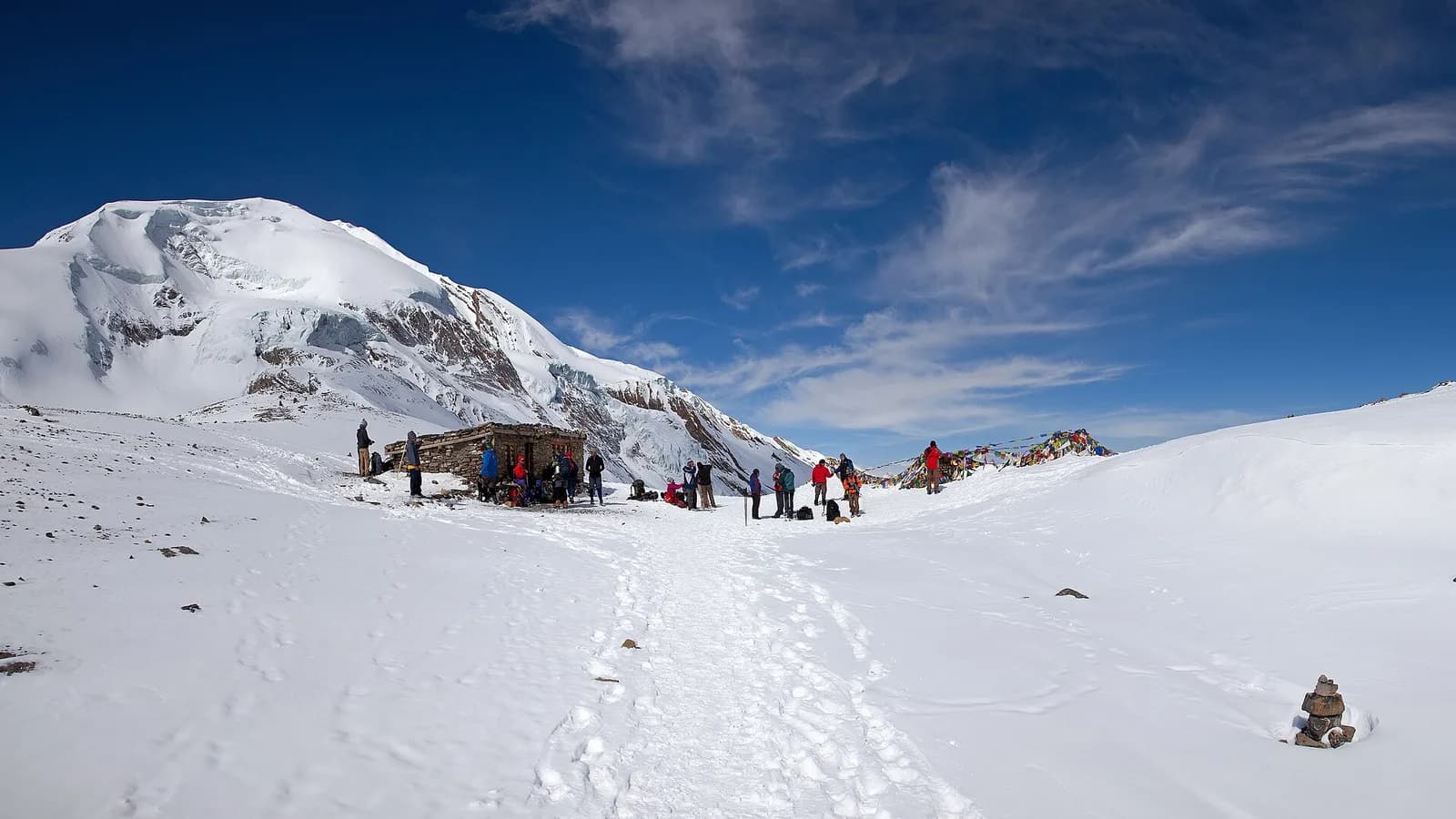
If you have started reading about trekking in Nepal, one word keeps appearing with almost no explanation: teahouse. So what is a teahouse, exactly? In the simplest terms, it is a small, family-run mountain lodge along a walking trail that gives trekkers three things — a basic room to sleep in, hot home-cooked meals, and a warm common room to gather in at night. You do not pitch a tent or carry a stove; you walk from village to village by day and let a local family feed and shelter you by night.
This post is a plain-language definition of what a teahouse actually is — where the name comes from, who runs them, how they differ from hotels and homestays, and why that smoky dining room matters more than the bedroom. For the full practical walkthrough of booking, prices, showers, wifi, and trail etiquette, see our companion guide to teahouse trekking in Nepal.
Key takeaways
- A teahouse is a basic family-run lodge on a trekking trail offering a bed, cooked meals, and a heated dining room — not a hotel and not a campsite.
- The name is historical: early stops mainly sold tea and snacks to porters and traders before they added rooms for foreign trekkers.
- They grew from Sherpa and other mountain families opening their homes from roughly the 1970s onward, spreading across Everest, Annapurna, Langtang, and Manaslu.
- On mainstream routes, "teahouse," "lodge," and "guesthouse" mean nearly the same thing; a true homestay is closer to living inside a family's house.
- The heart of every teahouse is the central stove and shared dining room, which doubles as the social and cultural hub of the trek.
A teahouse in one paragraph
Picture a two- or three-storey building of stone, timber, or concrete on the edge of a mountain village. Downstairs is a large dining room ringed with benches and low tables, with a single stove in the middle. Upstairs are simple bedrooms, usually twin beds with a thin mattress and a blanket, plain walls, and shared toilets down the corridor. A local family lives and works there: cooking in the kitchen, carrying water, lighting the stove at dusk. You arrive on foot in the afternoon, take a room, order dinner from a handwritten menu, eat in the warm dining room with other trekkers, sleep, eat breakfast, and walk on the next morning. That is a teahouse.
The bedroom is deliberately plain because it is not where the value is. As our companion guide explains in more detail, owners earn their living from food rather than from beds, which is why rooms are so cheap and why there is an unwritten expectation that you eat dinner and breakfast where you sleep.
Where the name comes from
The word can be misleading, because a modern teahouse is far more than a place to drink tea. The name is a leftover from how these places began. Long before mass tourism, the high trails of Nepal were trading and porter routes, and simple roadside stops sold tea, snacks, and a bench to rest on. As foreign trekkers started arriving from the 1970s — first heavily in the Everest (Khumbu) region and soon in the Annapurna foothills — local families began offering meals and a place to sleep alongside the tea.
Those informal arrangements, where a household simply made room for a few strangers walking past the door, gradually grew into a dedicated lodging network. By the 1980s, family-run lodges had spread along the major routes of Everest, Annapurna, Langtang, and Manaslu, and through the 1990s improving access and conservation-led tourism in areas such as the Annapurna Conservation Area helped formalise them further. The tea stayed in the name; the beds, menus, and stoves were added on top.
Teahouse, guesthouse, lodge, or homestay?
These words get used loosely, and on the big trekking routes the differences are small. Here is a rough guide to how they tend to be used.
| Term | What it usually means | Typical feel | | --- | --- | --- | | Teahouse | Basic family-run trail lodge with rooms, meals, and a stove-heated dining room | Simple, social, trekker-focused | | Lodge / guesthouse | Often used interchangeably with teahouse on mainstream routes; sometimes a touch more comfortable | Similar to a teahouse, occasionally with more rooms or en-suite bathrooms | | Homestay | A room inside a working family home, sharing the household's space and meals | More personal and immersive, fewer rooms | | Hotel | A larger commercial property, mostly in towns and trailheads rather than high on the trail | Closer to standard travel accommodation |
In practice, on routes like the Annapurna Circuit or the trail to Everest Base Camp, you can treat "teahouse," "lodge," and "guesthouse" as near-synonyms. The clearer distinction is the genuine homestay, which places you inside a family's living space rather than a purpose-built lodge — a deeper cultural experience that our Nepal homestay guide covers in full.
What a teahouse offers — and what it doesn't
A teahouse is defined as much by what it leaves out as by what it provides. Knowing this upfront prevents disappointment.
Rooms and sleeping
Expect a plain room with two single beds, a mattress, a pillow, and a blanket. Walls are often thin plywood, so sound carries. At lower altitudes some lodges have private or attached bathrooms; the higher and more remote you go, the more basic this becomes, with shared squat toilets the norm up high. Most experienced trekkers still carry their own sleeping bag for warmth and hygiene.
Food and the menu
Nearly every teahouse offers a similar menu built around dal bhat (rice, lentil soup, vegetable curry, and sides), plus noodles, fried rice, soups, momos, pasta, and simple pizza, with breakfasts of porridge, eggs, bread, and pancakes. Dal bhat is the staple for good reason — it is filling, freshly cooked, and on many menus comes with refills. Vegetarian eating is easy; meat is best avoided higher up the trail, where there is no reliable cold storage. Our companion guide breaks down trekking food and what to expect at altitude in more detail.
Heat, power, and connectivity
Bedrooms are not heated. Warmth lives in the dining room, around a single central stove burning wood or, higher up, dried yak dung, usually lit only in the evening. Electricity for charging and any wifi tends to be available mainly in that common room, often for a small fee, and gets slower and pricier with altitude. Treat hot showers, charging, and internet as paid extras that thin out the higher you climb, not as guaranteed features.
The dining room is the real teahouse
If the bedroom is the least important part of a teahouse, the dining room is the most. It is the one heated space, so everyone gravitates there after the day's walk. Trekkers, guides, porters, and often the host family share the same benches, eat the same food, and swap trail stories late into the evening. For many visitors this room — not any single mountain pass — is where the trek's friendships and memories actually form.
It is also where local mountain culture quietly shows itself: the food being cooked, the family's routines, the languages spoken around you. Many lodge families come from Nepal's mountain communities — Sherpa households in the Everest region, Gurung and Magar families across the Annapurna foothills, and Thakali and Tamang families elsewhere — so a night in a teahouse is also a small, unforced window into how these communities live.
A few unwritten rules of the room
Because the stove and the space are shared, a gentle etiquette has grown up around them. A short version:
- Share the warmth. Everyone is cold after walking, so do not hog the seats nearest the stove.
- Never burn your rubbish in the stove; carry trash out or use the bins provided.
- Keep noise down at night and while packing in the morning — plywood walls hide nothing.
- Order your meals where you sleep; it is how the family makes a living from very cheap rooms.
For the complete set of trail and lodge manners — including tipping and how to treat your crew — see our notes on trekking etiquette and tipping in Nepal.
Where you'll find teahouses
The dense, reliable teahouse network is concentrated on Nepal's classic trekking routes. The clearest examples are the trails of the Annapurna region, the path to Everest Base Camp, and the Langtang Valley, with the Manaslu Circuit and others also well served. On these routes you can walk for days with a light pack, confident that a lodge and a hot dinner wait at the end of each stage.
Off these mainstream trails, accommodation thins out into simpler lodges, basic teahouses, or community homestays, and on remote routes you may need a tent and a support crew instead. That contrast is exactly why teahouse trekking is so beloved: it makes the high Himalaya accessible to ordinary walkers without the weight and cost of full camping expeditions. If you are weighing your first route, our overview of trekking in Nepal is a good next step.
So, what is a teahouse?
Put simply, a teahouse is the Himalaya's version of a trailside inn: a modest, family-run lodge that hands you a bed, cooks you dinner, and gives you a warm room full of fellow travellers to spend the evening in. The name is a historical hangover from the days of tea-and-snack stops, the comfort is deliberately basic, and the real magic is social rather than luxurious. Understand that, and you understand the backbone of trekking in Nepal. When you are ready for the practical detail — costs, booking, showers, and the day-to-day rhythm — head to the full teahouse trekking guide.
Sources
- OneSeed Expeditions — Tea Houses in Nepal: Everything You Need to Know
- Footprint Adventure — Teahouses in Nepal: Guide to Mountain Lodges
- Mosaic Adventure — Nepal Teahouse Trekking Guide
- Himalayan Recreation — Nepal Trekking Teahouses: Rooms, Meals, Cost & Comfort
- The Longest Way Home — Nepali trekking lodges, tea houses & accommodation
- Marvel Adventure — Teahouse Accommodation: The Unwritten Rules
Frequently asked questions
- What is a teahouse in simple terms?
- It is a small family-run lodge on a Nepali trekking trail that gives you a basic bedroom, hot cooked meals, and a heated common room for the night.
- Why is it called a teahouse and not a hotel?
- The name comes from the early roadside stops that mainly sold tea and snacks to porters and traders before they grew into places offering beds.
- Are teahouses the same as homestays or guesthouses in Nepal?
- They overlap a lot; on busy trekking routes teahouse, lodge, and guesthouse mean almost the same thing, while a true homestay puts you inside a working family home.
- Who runs the teahouses on a trek?
- Most are owned and staffed by local mountain families, often from communities like the Sherpa, Gurung, Magar, Thakali, or Tamang depending on the region.
- Do teahouses really have a wood stove in the middle?
- Yes, most have one central stove in the dining room that is lit in the evening and is usually the only heated spot in the whole building.
- Is staying in a teahouse a cultural experience or just a place to sleep?
- It is both; the shared dining room is where trekkers, guides, and the host family eat together, so it doubles as a window into local mountain life.
- Can I find teahouses outside the famous treks?
- The dense network is on routes like Annapurna, Everest, and Langtang, but simpler lodges and homestays exist on quieter trails and in many hill villages too.
Related posts
Mountain Lodge Everest: Where You Sleep on the EBC Trail
A mountain lodge on the Everest trail can mean a basic teahouse or a heated luxury suite. Here is the full range, costs, and what to expect.
Read postDal Bhat — Nepal's National Meal Explained for Travelers
What dal bhat is, what's on the plate, why trekkers live on it, and how to order Nepal's national meal like a local. A practical traveler's guide.
Read postDhido — Nepal's Hill-Country Porridge, Explained
What dhido is, the millet and buckwheat it is made from, how to eat the dhido thali by hand, and why this gluten-free Nepali staple is back in style.
Read post