Kathmandu to Pokhara — Bus, Flight, or Tourist Bus? Honest Cost-Time-Comfort Breakdown
Five transport options for the most-traveled route in Nepal. Tourist bus, local bus, Sajha Yatayat, microbus, or flight — what each one is really like.
The flight is 25 minutes. The bus is 7 hours. The right answer depends on what you're trying to do.
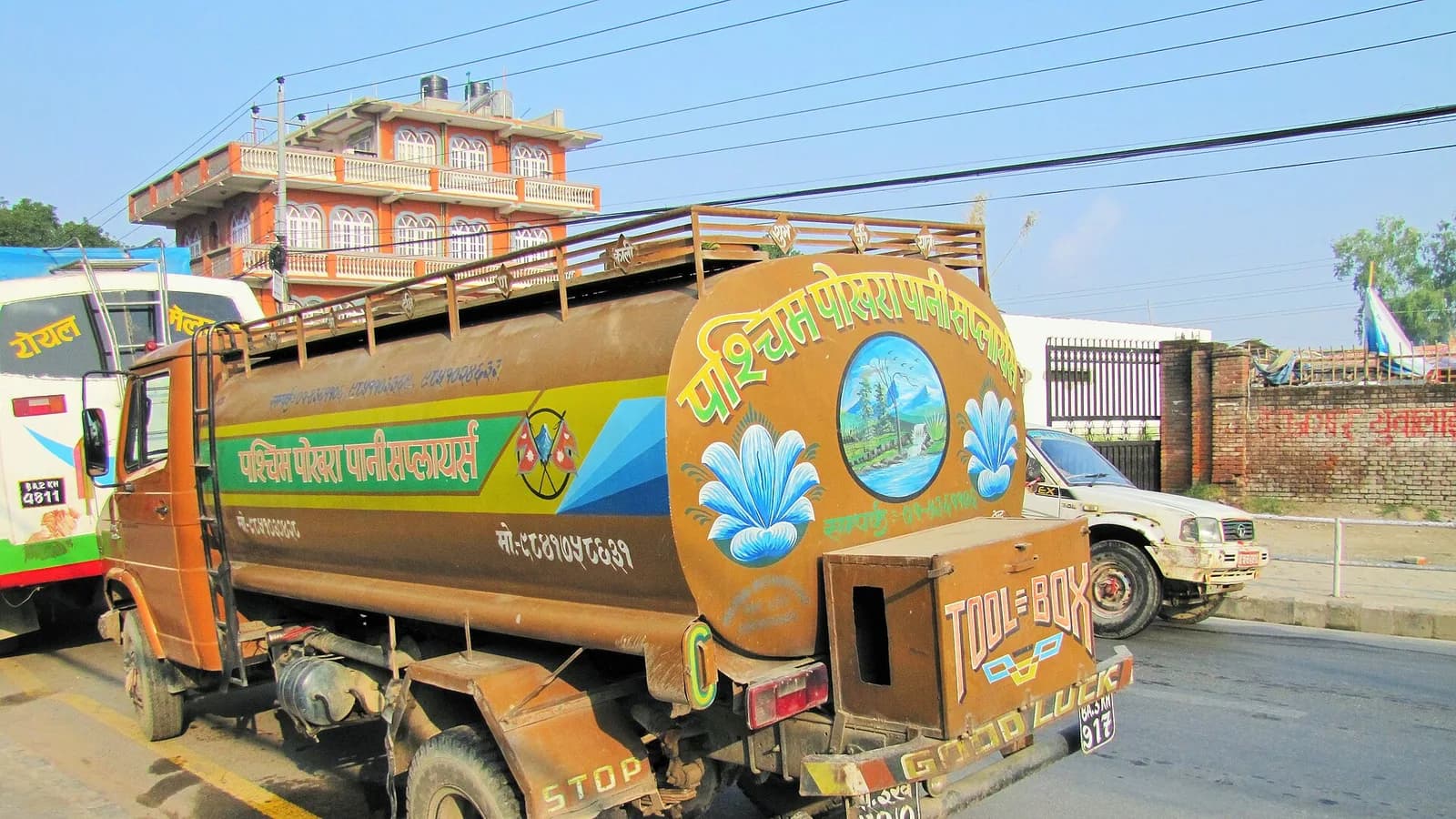
Pokhara is 200 km from Kathmandu as the crow flies. On the ground, the route winds through hills, around landslides, through a single-lane mountain road that's been "being upgraded" for the last decade. The journey takes anywhere from 25 minutes (flight) to 9 hours (cheap bus), with several middle options.
Here's the honest breakdown for 2026.
The five options
| Option | Time | Cost | Comfort | |---|---|---|---| | Tourist bus | 7-8 hours | NPR 1,200-2,500 ($9-18) | Decent — air-con, comfortable seats | | Local bus | 8-9 hours | NPR 500-700 ($4-5) | Basic — crowded, slow | | Sajha Yatayat (cooperative) | 7-8 hours | NPR 700-1,000 ($5-7) | Better than local, less than tourist | | Microbus / shared jeep | 6-7 hours | NPR 800-1,500 ($6-11) | Faster but cramped | | Flight (Buddha Air, Yeti Air) | 25 minutes + 2-hour transfers | NPR 7,000-12,000 ($50-90) | Comfortable but weather-dependent |
Tourist bus — the default for most travelers
The Greenline and other tourist bus services are designed specifically for Western backpacker travelers. They're noticeably better than local buses:
- Air-conditioning that actually works
- Reclining seats with reasonable legroom
- Departure from a specific tourist hub (Thamel)
- Lunch stop at a tourist-friendly restaurant (extra cost — typically NPR 300-500)
- Wifi sometimes (slow but exists)
- Free water bottle on departure
Departure times: typically 7:00-8:00 AM from Thamel. Arrival in Pokhara around 3:00-4:00 PM.
Cost: NPR 1,200-2,500 ($9-18) depending on the operator. Greenline is the most established; Niglo, Mountain Travels, and others compete on price.
Book: any hotel or Thamel travel agency. No need to book more than 1-2 days ahead in most seasons.
Local bus — the cheap option
The local non-tourist buses leave from Naya Bus Park or other Kathmandu bus stations:
- Cheapest option (NPR 500-700)
- Crowded, often standing-room-only
- Take longer because of more stops
- No air-con
- Departure times throughout the day
- Hindi-Nepali music played at significant volume
Best for: budget travelers who genuinely don't mind the conditions and want a more local-flavor experience. Solo female travelers might prefer the tourist bus for safety.
Cost: NPR 500-700. Cash only, paid on the bus.
Sajha Yatayat — the cooperative option
Sajha Yatayat is a public transport cooperative founded after the 2008 revolution to provide better quality at low cost. Their buses run between Kathmandu and Pokhara with:
- Better-maintained vehicles than local buses
- Slightly cheaper than tourist buses
- Less commercial / tourist-targeted experience
- Fewer English-speaking staff
Best for: travelers who want better quality than local buses but don't need the tourist-bus polish. Often used by middle-class Nepali travelers and students.
Departure: from Sundhara in central Kathmandu. Cost NPR 700-1,000.
Microbus / shared jeep — faster but cramped
Shared 4WD jeeps and microbuses leave from Naya Bus Park bound for Pokhara, taking 6-7 hours:
- Faster than buses (smaller, more maneuverable on the winding road)
- Significantly more cramped (10-15 passengers in a small vehicle)
- Aggressive driving on the mountain road
- Cash payment to driver
- No fixed schedule — leaves when full
Best for: travelers in a hurry who don't fly. Not recommended for those prone to motion sickness or back issues — the small vehicle on the bumpy road can be punishing.
Cost: NPR 800-1,500 depending on negotiation.
Flight — the time-saver
Two main carriers fly Kathmandu-Pokhara: Buddha Air and Yeti Airlines. Smaller carriers (Shree, Saurya) also run the route.
- Flight time: 25 minutes
- Total time including airport transfers: 2-3 hours
- Cost: NPR 7,000-12,000 ($50-90) one-way
The big caveat: weather cancellations are frequent. The Kathmandu-Pokhara route flies through the foothills with limited visibility in monsoon or bad weather. October-November (peak tourist season) is most reliable. June-September (monsoon) cancellations are common.
If you have a tight schedule, build a buffer. If your flight cancels, you're typically transferred to a bus or rebooked on the next day's flight — but you've lost time.
Departure: Tribhuvan domestic terminal in Kathmandu, Pokhara airport. The Pokhara airport sits a 15-minute drive from Lakeside.
The roadside reality
The Kathmandu-Pokhara road is a single-lane mountain highway in many sections. Traffic, breakdowns, and landslides make journey times unpredictable.
- Best case: 6-7 hours
- Average: 7-8 hours
- Worst (with breakdowns or landslides): 10-12+ hours
The route passes through:
- Trishuli valley (rafting country)
- Mugling (bridge town, lunch stop point)
- The hills before Pokhara
Lunch stop options:
- Mugling has many roadside restaurants — tourist bus stops are at chain restaurants like Riverside or the Holiday Inn-style stops
- Average meal cost: NPR 300-500
Best timing for the journey
- Early morning departure (7-8 AM) lets you arrive in Pokhara by afternoon
- Avoid Friday afternoon and Sunday evening departures — heavy local traffic
- Festival days (Dashain, Tihar) bring extreme congestion — add 2-3 hours
- Monsoon season (June-August) — road landslides occasional, add time buffer
What to bring
- Water bottle (the AC bus provides one, but you'll want more)
- Snacks (lunch stops have food, but bringing your own gives flexibility)
- Headphones (the bus plays Nepali music; you'll want options)
- Light layer (AC can be cold even when outside is warm)
- Phone with offline maps loaded
- Power bank
- Motion sickness tablets if you're susceptible
Booking the return
If you're staying in Pokhara for several days, book your return at the tourist bus office in Lakeside on arrival. Same prices, similar quality. Most operators run both directions daily.
If flying both directions, book both flights together — sometimes you get a small discount on round-trip.
What about the new highway?
A new partially-built expressway between Kathmandu and Pokhara has been "almost complete" since 2020. As of 2026, sections are open but the full route isn't. Some buses now use new highway sections to shave 1-2 hours off the journey.
When the full expressway opens (estimated 2026-2027), journey time drops to about 4 hours. Until then, the old road is the reality.
Combining with trekking
Many travelers do Kathmandu → Pokhara → trek → Pokhara → Kathmandu. The pattern:
- Day 1: Kathmandu to Pokhara (bus or fly)
- Days 2-12: Trek (ABC, Mardi Himal, or Annapurna Circuit)
- Day 13: Return to Pokhara
- Day 14: Pokhara to Kathmandu
Pokhara is the natural staging point for Annapurna Base Camp and Mardi Himal. The trek permits (ACAP and TIMS) are bought in Pokhara, the agencies are based there, and the trailheads start nearby.
A few useful Nepali phrases for the journey
- Pokhara jaana paaiunchha? — "Can we get to Pokhara?" (asking at bus station)
- Kati paisa? — "How much?"
- Kati ghanta? — "How many hours?"
- Bistari! — "Slowly!" (to a fast driver, in extreme cases)
- Yahaan rokna paaiunchha? — "Can we stop here?" (for a bathroom break)
The scenarios phrasebook covers the broader transport vocabulary.
Pre-trip checklist
- Decide flight vs bus based on budget and timing
- Book the tourist bus 1-2 days ahead in peak season
- Pack water, snacks, layer for AC
- Check the road condition (any landslides reported) the day before
- The Pokhara guide for what to do on arrival
- The scenarios for transport phrases
The journey is unavoidable for most Nepal trips. Pick your method based on what you value — time vs cost — and bring patience.
Related posts
Kathmandu to Pokhara Bus: 2026 Road & Booking Update
A 2026 update on the Kathmandu to Pokhara bus — how the highway widening changed the trip, current fares, and how to choose between bus, flight and car.
Read postKathmandu to Pokhara by Car: A Practical Guide
Going Kathmandu to Pokhara by car? Real distance, driving time, private-hire costs, the Prithvi Highway route, stops, and monsoon road tips.
Read postKathmandu to Pokhara Private Vehicle: Cost & Tips
How to hire a Kathmandu to Pokhara private vehicle — car, SUV or Hiace van costs, travel time, stops, and road-safety tips for tourists.
Read post