Fewa Lake Boating: Boats, Prices & Tips (2026)
A practical guide to Fewa Lake boating in Pokhara: boat types, hiring a boatman, fair prices, life jackets, kayaks and the best time to push off.
Pick a painted wooden boat, agree the price before you push off, and let the fishtail peak drift past you on the water.
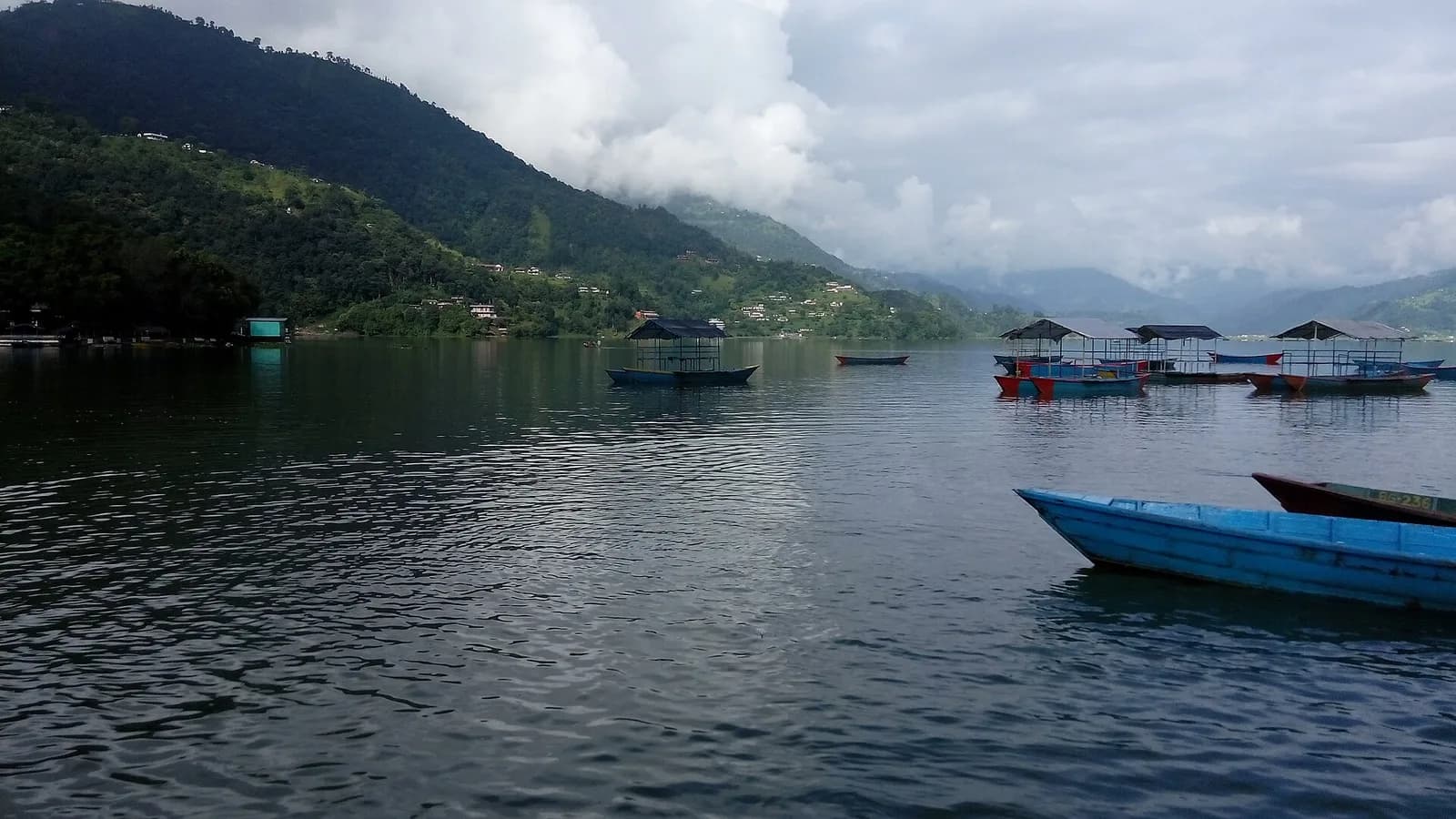
A painted wooden boat on green water, the white spire of the fishtail peak hanging above the hills, the slap of a paddle and not much else: Fewa Lake boating is the single most loved thing to do in Pokhara, and it asks almost nothing of you. You do not need to book ahead, you do not need to be sporty, and you do not need a guide. You walk to the shore, pick a boat, agree a price and push off. This guide is the practical companion to our full Phewa Lake guide — it focuses purely on getting out on the water: the boat types, how the hiring works, paying a fair rate, staying safe and choosing the right hour to set off.
Key takeaways
- Boating is organised by a local boat operators association at jetties along the Lakeside shore, with brightly painted wooden boats (doonga) as the staple.
- You can paddle yourself or hire a boatman — self-paddling is cheaper and freer, a boatman is easier and adds a guide.
- Prices are set by boat type, duration and whether you take a boatman; always confirm the figure at the counter before you push off.
- Life jackets are provided and should be worn; the lake is deep in the middle and swimming in the busy zone is discouraged.
- Kayaks and stand-up paddleboards are available from a few private operators if you want a more active option.
- Go at sunrise for calm water and reflections or sunset for golden light; the drier months, roughly October to April, give the clearest mountains.
Where the boats are: the Lakeside jetties
All the action happens along the Lakeside strip (locally Baidam), the tourist district that runs along the eastern and northern shore of the lake. Small jetties spill off the lakefront at intervals, each crowded with painted wooden boats waiting for hire. Boating here is run through a local boat operators association based around the Hallan Chowk area of Lakeside, which means there is a recognised counter to deal with rather than a free-for-all of touts. On a normal day, hundreds of boats work the lake, so you will rarely struggle to find one.
You do not need to walk far. From most Pokhara lakeside hotels the nearest jetty is a few minutes on foot, and the whole shore is flat and easy. Just head for the water, look for the boat counters, and you are in business.
The boat types
Fewa offers a small, simple menu. Knowing the options before you arrive saves time at the counter.
| Boat type | What it is | Good for | |---|---|---| | Wooden rowboat (doonga) | The classic hand-built painted boat; paddle it yourself or take a boatman | The signature experience, any pace | | Paddle / pedal boat | Pedal-powered, stable, no rowing skill needed | Families, kids, an easy potter | | Shared barge to the island | A cheap ferry that shuttles people to the Tal Barahi temple and back | A quick crossing, pilgrims | | Kayak / stand-up paddleboard | Rented by private operators by the hour | Active paddlers, a workout |
The wooden rowboat is what most people picture and the one to take if you want the postcard. Pedal boats suit families who would rather not row. The shared barge is purely transport to the island shrine. And for something more energetic, see the kayak and paddleboard note further down.
Self-paddle or take a boatman?
This is the one real decision. Both are easy.
Paddling yourself
Hiring a boat and rowing it yourself is cheaper and gives you complete freedom — drift where you like, stop where you like, stay as long as you have paid for. The wooden boats are heavy and stable rather than fast, so you will not capsize, but they do take a bit of muscle to move against an afternoon breeze. If you have never rowed, the calm of an early morning is the time to try. It is genuinely part of the fun.
Taking a boatman
For a little more money, a boatman does the rowing and often acts as an informal guide, pointing out the temple, the Peace Pagoda above the far shore and the line of peaks. This is the relaxed choice: you sit back, take photos and let someone who knows the lake handle the boat. Many visitors take a boatman on the first trip to learn the lay of the water, then self-paddle on a later day. Families with small children frequently prefer a boatman for the extra steadiness.
What it costs, and paying fairly
Rates are set by the boat operators association and posted at the counters, but they vary by boat type, how long you stay out, and whether you take a boatman. As a rough hierarchy: a self-paddled wooden boat is the cheapest, adding a boatman costs more, and a full day on the water costs several times the price of a single hour. Some independent guides quote figures in the region of a few hundred Nepali rupees per hour for a boat (as of mid-2025), but these change with the season, with festivals and over time, so treat any number you read online as a ballpark only.
The golden rules are simple:
- Confirm the price at the official counter, not from a roaming tout.
- Pin down the duration — by the hour, half day or full day — and the boatman fee if any.
- Clarify one-way versus return for an island trip, so there is no surprise on the way back.
A short hop to the island and back costs far less than a leisurely half-day of open-water paddling, so match the deal to what you actually want. If you would like to feel confident you are paying the local rate rather than a marked-up one, skim our guide to common tourist scams in Nepal and brush up on the numbers and bargaining basics before you go — a few words of Nepali and a calm "how much per hour?" go a long way.
Safety on the water
Fewa is a benign lake, but it is a real one, and a few habits keep it that way.
- Wear the life jacket. Operators hand them out and you should keep yours on for the whole trip. The lake is shallow at the edges but deep in the middle, dropping to around two dozen metres at its deepest, so this is not optional kit.
- Mind the wind. The surface can turn choppy when the afternoon wind picks up, which makes self-paddling hard work and a small boat livelier. The calmest water is early in the day.
- Do not swim in the busy zone. Boat traffic and uncertain water quality near Lakeside make swimming a poor idea. Treat Fewa as a place to be on the water, not in it.
- Watch your footing on the island. Stone steps at the Tal Barahi jetty can be wet and slippery when crowds are coming and going.
None of this should put you off — thousands of visitors boat here every week without trouble. It simply means picking a calm hour, keeping the jacket on, and not treating the lake like a swimming pool.
The classic trip: rowing to Tal Barahi
The island in the middle of the lake holds the Tal Barahi temple, a two-tiered pagoda dedicated to the goddess Barahi, and reaching it is the boating trip everyone remembers. You have two ways across: jump on the shared barge, which shuttles a steady stream of visitors and pilgrims over for a small per-person fare, or row yourself out as part of a longer paddle and tie up at the island jetty. Saturdays and festival days are busiest, when local families come to make offerings.
It is an active Hindu shrine, so dress modestly, remove your shoes where indicated and follow the lead of the people around you. Our broader notes on temple etiquette for visitors cover the customs that apply across Nepal. Many people combine the crossing with the walk up to the World Peace Pagoda on the ridge above the far shore, rowing across, hiking up and looking back over the whole lake.
A simple boating plan
| Step | What to do | Rough time | |---|---|---| | Hire at a Lakeside jetty | Pick the boat, agree price and duration | 10 min | | Row or barge to the island | Visit the Tal Barahi temple | 30–45 min | | Paddle the open lake | Drift toward the far shore for reflections | 30–60 min | | Return to Lakeside | Hand the boat back | 15 min |
Kayaks and stand-up paddleboards
If sitting in a rowboat feels too sedate, Fewa has a small but growing active paddling scene. A few private operators around Lakeside rent kayaks and stand-up paddleboards (SUP) by the hour and run short beginner sessions. A kayak lets you cover more of the quiet southern arms of the lake under your own steam, while a paddleboard is a calm-morning favourite for the balance and the workout. These are separate from the association rowboats, so ask at a dedicated paddle outfitter rather than the wooden-boat counters. As with any water activity, check the gear looks sound and wear the buoyancy aid provided.
Best time to go boating
Fewa is open and pleasant year-round, but the hour you choose matters as much as the season.
- Early morning is the sweet spot: the water is glassy, the air is clearest, and on a good day the Annapurna range and the fishtail peak mirror in the surface before haze and wind build.
- Late afternoon into sunset wins for atmosphere, when the light turns golden and the lakefront glows — a fine time for a gentle, photogenic drift.
- Midday is fine but tends to be hazier, busier and windier on the open water.
Seasonally, the drier months from roughly October to April bring the sharpest skies and the best chance of those mirror reflections, while the monsoon (around June to September) turns the hills lush but often hides the peaks behind cloud and can cut a paddle short with an afternoon downpour. Boating has occasionally been paused during spells of heavy monsoon when the lake runs high, so check locally in the wettest weeks. For the full seasonal picture, see our guide to the best time to visit Nepal.
Fitting boating into your Pokhara day
Boating is best as the anchor of a varied day rather than a standalone errand. A natural rhythm is a dawn paddle for the calm and the reflections, the climb to the Peace Pagoda from the far shore, and a lazy lakeside cafe afternoon to finish. If you are arriving from the capital, our Kathmandu to Pokhara transport guide compares the bus and the flight, and once you are in town the lake is walkable from almost any Lakeside bed.
Whatever else you do in Pokhara, give yourself one slow hour in a boat. A painted doonga, a still surface and the fishtail peak floating below you is the moment the lake town is remembered for — and the cheapest, easiest highlight of the trip.
Sources
Frequently asked questions
- How do you hire a boat on Fewa Lake?
- Walk to one of the jetties along the Lakeside shore, where the local boat association keeps a fleet of painted wooden boats. Tell the counter how long you want and whether you will paddle yourself or take a boatman, agree the price, put on the life jacket and push off.
- How much does Fewa Lake boating cost?
- Prices are set by the local boat operators association and depend on the boat type, the length of the trip and whether a boatman rows for you. Self-paddled wooden boats are the cheapest, a boatman adds to the rate and a full day costs much more than a quick hour, so always confirm the figure at the counter first.
- Can you paddle yourself or do you need a boatman?
- Both options exist. You can hire a wooden boat and row it yourself, which is cheaper and gives you freedom, or pay extra for a boatman who rows and points out the sights. Beginners and families often take a boatman for the first trip and self-paddle later.
- Are life jackets provided for boating on Fewa Lake?
- Yes, the boat operators normally hand out life jackets and you should wear yours the whole time. The lake is deep in the middle, swimming in the busy zone is discouraged, so the life jacket is your main safety item on the water.
- Can you kayak or stand-up paddleboard on Fewa Lake?
- Yes. Alongside the association rowboats, a few private operators rent kayaks and stand-up paddleboards by the hour and run short lessons. These are a good active alternative if you would rather propel yourself than sit in a doonga.
- What is the best time of day for Fewa Lake boating?
- Early morning is calmest and clearest, when the Annapurna peaks can mirror in the still water before the haze and wind build. Late afternoon into sunset is the other favourite for golden light. Avoid being out in the open during strong midday wind.
- Can you boat out to the Tal Barahi temple?
- Yes, the island shrine is the classic short trip. A shared barge shuttles visitors across cheaply, or you can row yourself out as part of a longer paddle. It is an active Hindu temple, so dress modestly and move respectfully on the island.
- Is Fewa Lake boating safe?
- Boating is the main and safest way to enjoy the lake when you wear the provided life jacket and stay off the water in strong wind. Swimming in the busy lakeside area is not advised because of boat traffic and uncertain water quality, so treat Fewa as a place to be on the water rather than in it.
Related posts
Phewa Lake Pokhara: Boating, Tal Barahi & Guide
A guide to Phewa Lake (Fewa Lake) in Pokhara: boating, the Tal Barahi island temple, mountain reflections, costs, best times and practical tips.
Read postPokhara Lakeside: A Tourist's Guide to Baidam
A guide to Pokhara Lakeside (Baidam): how the strip is laid out, where to eat, sleep and stroll, plus the lake, viewpoints and practical tips.
Read postPokhara Tour Package: A Smart Planning Guide (2026)
How to plan a Pokhara tour package — what to include, days needed, getting there from Kathmandu, costs to verify, and the season for clear mountain views.
Read post