Nepali Language: A Traveller's Guide to Nepal's Tongue
The Nepali language explained for visitors: where it comes from, how its grammar works, the Devanagari script, and the handful of words that open doors.
One Indo-Aryan tongue, born in a Himalayan valley, now the bridge between 124 mother tongues.
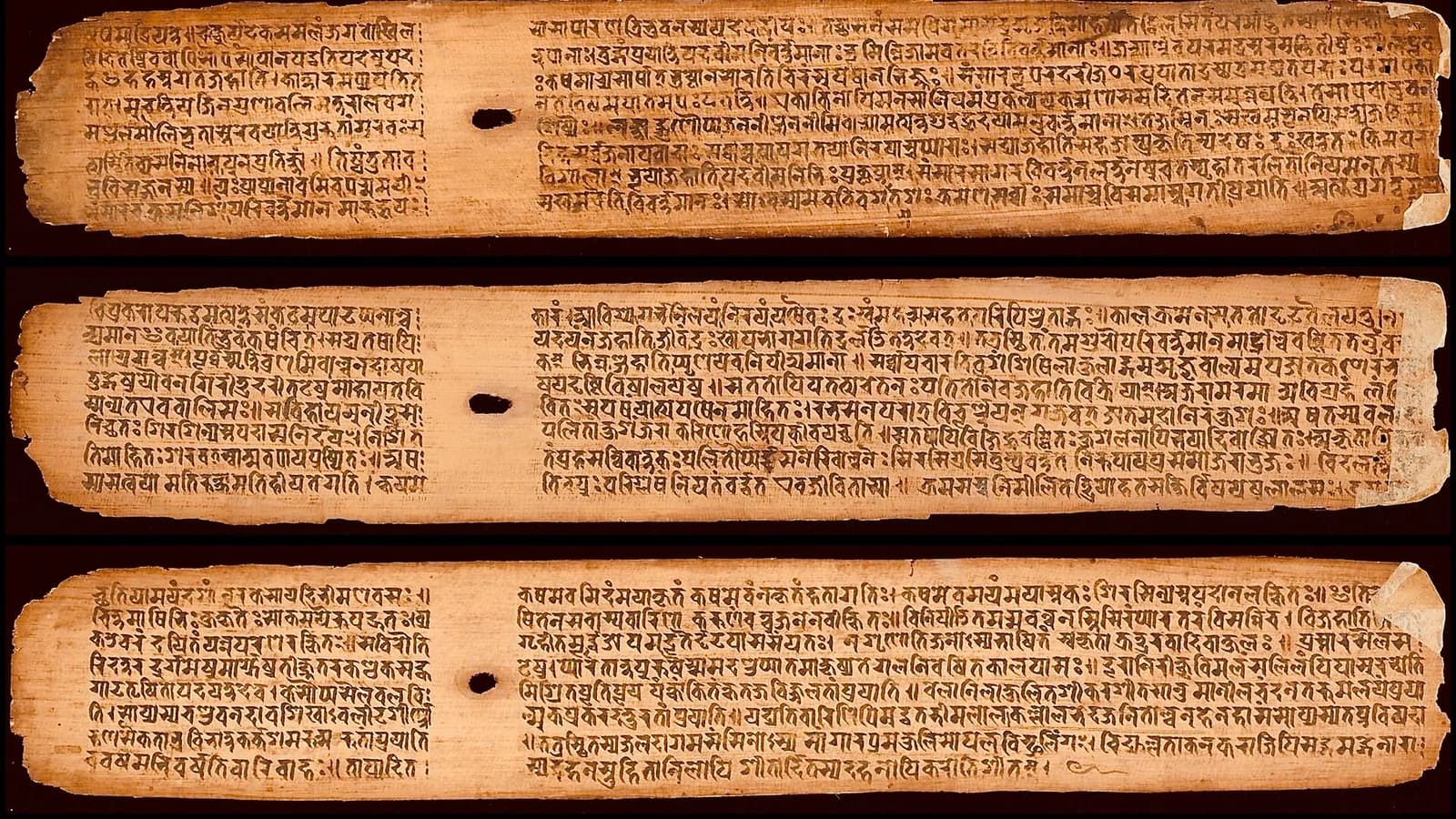
The Nepali language is the thread that ties a famously diverse country together. Written in the flowing Devanagari script and descended ultimately from Sanskrit, it is the official language of Nepal and the shared tongue that lets people from more than a hundred different mother-tongue communities understand one another. For a visitor, you do not need to master it — English will carry you a long way — but understanding where Nepali comes from, how it works, and which handful of words to learn turns a trip into something warmer. This guide walks through the essentials: the language's origins, its family tree, its script, the parts of its grammar that surprise newcomers, and the practical Nepali worth knowing before you arrive.
Key takeaways
- Nepali is an Indo-Aryan language, written in Devanagari, and the official language of Nepal.
- Britannica estimates more than 17 million speakers, mostly in Nepal and neighbouring parts of India.
- In Nepal's 2021 census, Nepali was the mother tongue of about 44.86% of people and a second language for many millions more.
- It grew out of Khas Kura, the speech of the medieval Khas people, with roots traced to the Sinja Valley in Karnali.
- The grammar is Subject-Object-Verb, has no articles, and uses a three-level politeness system (tapai, timi, ta).
- For travellers, a few words like namaste and dhanyabad go a surprisingly long way; English fills the rest.
What is the Nepali language?
Nepali (नेपाली) is the official language of Nepal and, in the words of the country's constitution, "the Nepali language in the Devanagari script shall be the official language of Nepal." It is the language of the federal government, the courts, national media and the school system. Just as importantly, it is Nepal's lingua franca — the common language that a Tamang farmer, a Newar shopkeeper and a Maithili trader can all fall back on when they meet.
That role matters because Nepal is extraordinarily multilingual. The 2021 census counted 124 mother tongues spoken across the country, and Nepali itself is the first language of only about 44.86% of the population. What pushes its real reach so much wider is its second-language use: the same census found Nepali was spoken as an additional language by a large share of Nepalis. In other words, fewer than half the country grows up speaking Nepali at home, yet almost everyone can speak it. If you want the fuller picture of that diversity, our guide to the languages of Nepal maps out all 124 mother tongues and the two great families they belong to.
Where Nepali comes from
Nepali is an old language with a specific birthplace. It developed from Khas Kura (खस कुरा), literally the "speech of the Khas people," who are associated with the medieval Khasa kingdom of western Nepal. Linguists trace the language's origins to the Sinja Valley in today's Karnali Province, a heartland of that kingdom roughly between the 10th and 14th centuries. Early inscriptions in the region — such as one at Dullu in Dailekh — date back around a thousand years, marking some of the oldest written traces of the language.
Like its Indo-Aryan cousins, Nepali descends from Sanskrit, passing through the older intermediate stages that linguists call Prakrit and Apabhramsha before emerging as a distinct tongue. As the Khasa kingdom fragmented and people migrated eastward, the language spread across the hills and gradually became the shared medium of a linguistically mixed population. Centuries later it would be standardised, championed by Nepali poets and writers, and eventually anchored as the language of the modern state.
Why it was once called Khas Kura — and Gorkhali
You will sometimes see Nepali referred to by older names. Khas Kura points to its origins with the Khas people, while Gorkhali ties it to the Gorkha rulers who unified Nepal in the 18th century and carried the language across the territory they brought together. The name "Nepali" itself became dominant later. None of this is essential for a traveller to memorise, but it explains why the same language can appear under different labels in older books and inscriptions.
The Nepali language family tree
Nepali belongs to the Indo-Aryan branch of the vast Indo-European family — the same broad family that includes Hindi, Bengali, and, much further out, English itself. More precisely, scholars place Nepali in the Eastern Pahari group, the "Pahari" (hill) languages of the Himalayan foothills. This matters for two reasons.
First, it explains the resemblance to Hindi. Because both are Indo-Aryan and both draw heavily on Sanskrit, they share a great deal of everyday vocabulary and a similar underlying structure. A Hindi speaker landing in Kathmandu can pick up the gist of much written Nepali. But the two are genuinely separate languages, with different grammar habits, pronunciation and a chunk of distinct vocabulary — which is why fluency in one does not transfer wholesale. We unpack exactly how close they are in Nepali vs Hindi.
Second, it sets Nepali apart from many of Nepal's other languages. Tongues like Tamang, Gurung and Nepal Bhasa (the Newar language) belong to the Sino-Tibetan family — a completely different lineage. So while Nepali is the bridge language, it is not the ancestor of everything spoken in Nepal; it sits at one of two great linguistic crossroads meeting in a single small country.
The Devanagari script
Nepali is written in Devanagari (देवनागरी), the same script family used for Sanskrit, Hindi and Marathi, and read left to right. To a newcomer it can look impenetrable, but it has one enormous advantage over English: it is broadly phonetic. Each symbol maps reliably to a sound, so once you have learned the alphabet you can sound out almost any word, even one you have never seen and do not understand. English, with its tough / though / through, grants no such favour.
The script has roughly 33 consonants and 11 vowels, plus a set of conjunct forms where consonants stack together. The headline-grabbing feature for learners is the horizontal line running along the top of the words — the shirorekha — from which the letters hang. None of this takes years to crack. A couple of focused hours is enough to recognise the most common letters and begin reading shop signs in Thamel. If you want a realistic schedule, our Learn Devanagari roadmap lays out exactly how long each stage takes, and the interactive Devanagari script guide lets you practise letter by letter.
How Nepali grammar works
Here is the reassuring news for nervous learners: Nepali grammar is, in several respects, gentler than English. A few features stand out.
| Feature | How Nepali does it | Why it helps learners | |---|---|---| | Word order | Subject-Object-Verb (the verb comes last) | Consistent and predictable once your ear adjusts | | Articles | None — no a, an or the | One whole category of English errors simply disappears | | Verb conjugation | Regular patterns by tense and politeness level | Learn the pattern once, apply it widely | | Postpositions | Comes after the noun (not before, like English prepositions) | Logical and uniform |
The catch — and it is a real one — is the politeness system, which is woven directly into the grammar rather than left to tone of voice.
The three levels of "you"
Nepali has three main words for "you," and the verb changes with each:
- तपाईं (tapai) — respectful. Used for elders, strangers, and almost any service or formal setting.
- तिमी (timi) — neutral. Used among friends, peers and younger relatives.
- तँ (ta) — very informal or intimate, and easy to get wrong; best avoided by visitors.
So "you eat" is tapai khanuhunchha in the polite form but timi khanchau in the neutral one — same meaning, different verb. The good news for travellers is simple: default to tapai, the respectful form, and you will be correct in essentially every situation you encounter. Our piece on Nepali honorifics goes deeper if you want to feel the social texture of these choices.
The sounds that trip people up
Beyond the script, the other real hurdle is a few unfamiliar sounds. Nepali distinguishes aspirated from unaspirated consonants — the puff of air in kh versus k, or th versus t — and these are different letters that change a word's meaning. It also has retroflex consonants made with the tongue curled back, and a handful of nasal vowels. None of these are insurmountable; most Nepalis will happily understand an approximate version, the way an English speaker understands a learner wrestling with "th." We give an honest difficulty assessment in is Nepali hard to learn for English speakers.
Nepali for travellers: the words that matter
You can travel Nepal comfortably in English — it is widely used in hotels, tourism, signage and on the main trekking trails. But Nepali rewards the smallest effort out of all proportion to the work involved. Here are the essentials worth carrying in your head:
| Nepali | Pronunciation | Meaning | |---|---|---| | नमस्ते | namaste | Hello / greetings (palms together) | | धन्यवाद | dhanyabad | Thank you | | कति? | kati? | How much? | | राम्रो | ramro | Good / nice | | मिठो | mitho | Delicious | | पुग्यो | pugyo | Enough / that's plenty | | फेरि भेटौंला | pheri bhetaunla | See you again |
Say namaste slowly, with your palms pressed together and eye contact, and you have already started on the right foot. A genuine dhanyabad and a mitho! over a plate of dal bhat will earn you a smile almost anywhere. For the trail specifically, the phrases that actually change how porters and lodge owners treat you are gathered in Nepali phrases every trekker should know, and you can browse practical, situation-by-situation vocabulary in the site's phrasebook. If you would rather build from the ground up, the structured Nepali lessons start with the basics.
A note on "false friends"
If you already know some Hindi, watch one little word: छ (chha), meaning "is" or "exists." It appears in a huge proportion of Nepali sentences and is far more central than its rare Hindi lookalike. Master chha and you have unlocked a surprising amount of everyday Nepali. Most other overlaps between the languages are harmless, but this one is worth noticing early.
Beyond Nepali: a quick reality check
It is worth remembering that the person serving your tea may speak something else at home. Across the Kathmandu Valley, many Newar families speak Nepal Bhasa; in the hills you will find Tamang, Gurung and Magar communities; and across the southern plains, Maithili, Bhojpuri and Tharu dominate. Nepali is the language they all share, but it may well be their second language too — which means, in a quiet way, you are both meeting on common ground. That awareness, more than perfect pronunciation, is what makes a few words of Nepali land warmly. The broader cultural backdrop is sketched in our guide to Nepali culture.
Sources
Frequently asked questions
- What is the Nepali language?
- Nepali is an Indo-Aryan language and the official language of Nepal, written in the Devanagari script. It descends from Sanskrit through older stages of the language, and it serves as the shared tongue, or lingua franca, that Nepalis from different communities use to speak with one another.
- Is Nepali the same as Hindi?
- No. Both are Indo-Aryan languages written in Devanagari and they share a lot of everyday vocabulary, so a Hindi speaker can follow some Nepali. But they are separate languages with their own grammar, pronunciation and word choices, and being fluent in one does not make you fluent in the other.
- What script is Nepali written in?
- Nepali uses Devanagari, the same script family as Hindi, Sanskrit and Marathi, read from left to right. Devanagari is broadly phonetic, so once you learn the sound of each symbol you can sound out almost any word even before you know what it means.
- How many people speak Nepali?
- Britannica puts the figure at more than 17 million speakers, mostly in Nepal and neighbouring parts of India, with smaller communities elsewhere. Inside Nepal the 2021 census recorded Nepali as the mother tongue of about 44.86 percent of people and as a second language for many millions more.
- Do I need to learn Nepali to travel in Nepal?
- No. English is widely used in tourism, hotels, signage and on popular trekking routes, so most visitors get by comfortably. That said, learning even a few words of Nepali such as namaste and dhanyabad is easy and noticeably warms up the people you meet.
- Is Nepali hard for English speakers to learn?
- It sits in the middle. Nepali is far easier than Mandarin or Arabic but a bit harder than Spanish, with the tricky parts concentrated in the script and a few unfamiliar sounds. The grammar is friendlier than many expect, with no articles and fairly regular verbs.
- What are the politeness levels in Nepali?
- Nepali has three main ways of saying you, each with its own verb forms: tapai is respectful and used for elders, strangers and service settings, timi is neutral and used among friends and peers, and ta is very informal or intimate. As a visitor, sticking to the polite tapai form handles almost every situation.
- Where did the Nepali language come from?
- Nepali grew out of Khas Kura, the speech of the Khas people associated with the medieval Khasa kingdom in western Nepal, with its roots traced to the Sinja Valley in Karnali. Linguists trace its descent from Sanskrit through the older Prakrit and Apabhramsha stages, and early inscriptions in the region date back about a thousand years.
Related posts
Devanagari Script: A Traveler's Guide to Nepal's Letters
What the Devanagari script is, where it came from, and how Nepal uses it — the writing system behind every sign, menu, and newspaper you will see.
Read postLanguages of Nepal: Official Language & 124 Mother Tongues
Languages of Nepal explained: Nepali is the official language, but the 2021 census counted 124 mother tongues from Maithili to Newar. A clear guide.
Read postThe Nepali Alphabet: A Traveler's Plain-English Guide
The Nepali alphabet explained for tourists: how many letters, vowels, consonants, matras and numerals — and why the script is easier than it looks.
Read post