The Nepali Alphabet: A Traveler's Plain-English Guide
The Nepali alphabet explained for tourists: how many letters, vowels, consonants, matras and numerals — and why the script is easier than it looks.
Once you know the sounds, you can read any Nepali word — even before you know what it means.
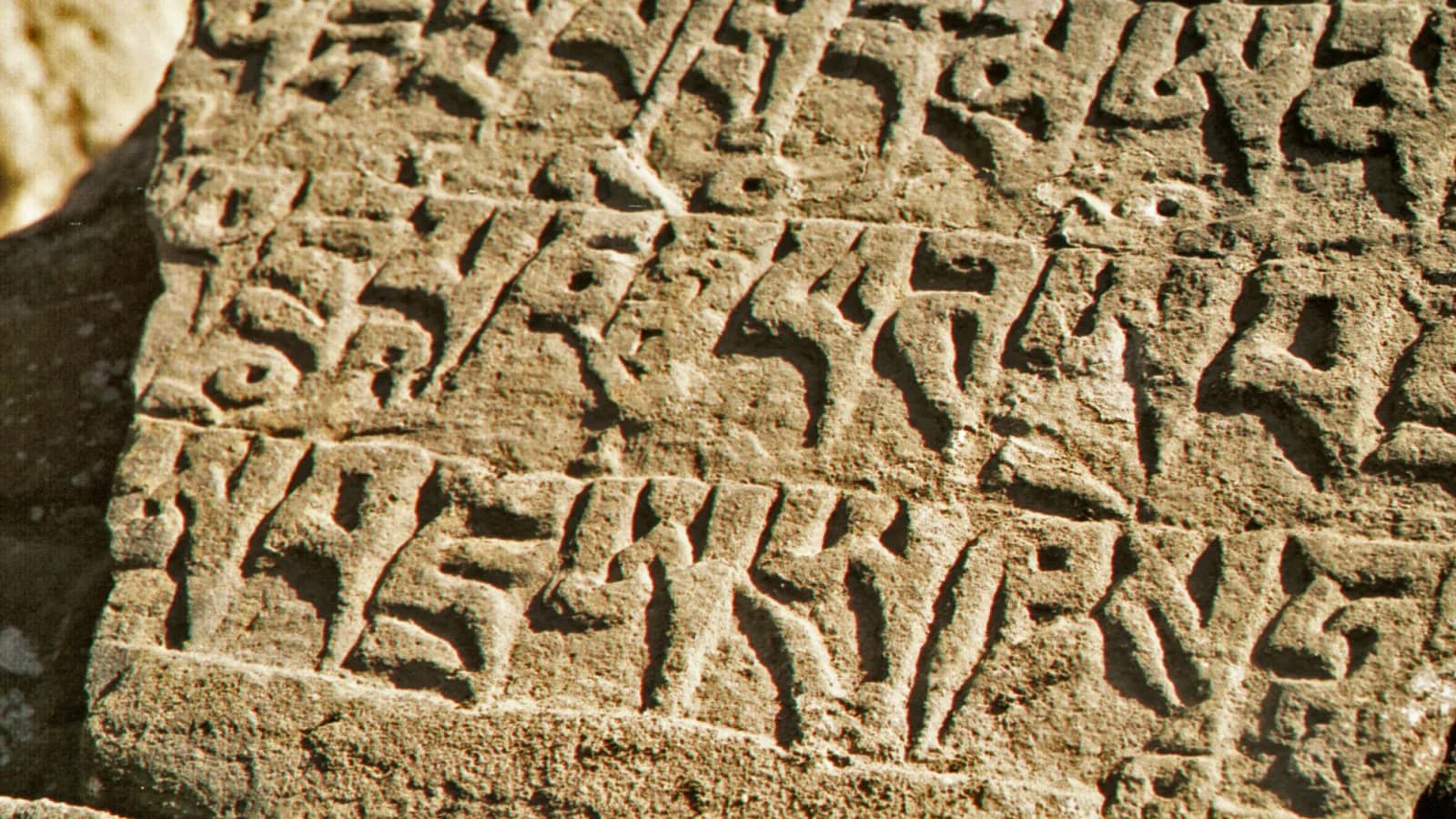
If the Nepali alphabet looks like an impossible tangle of curls and hooks on your first menu in Kathmandu, you are in good company — most visitors assume it will take years to crack. It won't. The Nepali alphabet is written in Devanagari, an alphabet-like system where each symbol maps to a sound far more reliably than English letters do. Learn the sounds and you can read any Nepali word aloud, even before you understand its meaning.
This guide is a plain-English overview for travelers and curious beginners: how many letters there are, how vowels and consonants are organised, what those little attached marks do, and how Nepali numerals work. For the interactive version — with audio for every letter, tracing practice and a confusables guide — see the full Devanagari script lesson on this site, which this post complements rather than replaces.
Key takeaways
- Nepali uses the Devanagari script, a left-to-right abugida shared with Hindi, Sanskrit and other South Asian languages.
- The Nepali alphabet (varnamala) is most commonly counted as 12 vowels and 36 consonants — about 48 letters, though counts vary by source.
- Each consonant carries a built-in "a" vowel (a schwa); small marks called matras swap in other vowel sounds.
- Nepali adds three conjunct letters — क्ष (ksha), त्र (tra) and ज्ञ (gya) — placed after ह (ha), a feature that distinguishes it from some other Devanagari languages.
- Nepali commonly uses Devanagari numerals (१ २ ३ …), though Western digits appear everywhere too.
- A tourist can become useful with the script in hours to a week — far faster than learning to speak the language.
What script does Nepali use?
Nepali is written in Devanagari, the same script family used for Hindi, Marathi and Sanskrit. According to Wikipedia's overview of the writing system, Devanagari is a left-to-right abugida descended from the ancient Brahmi script, and it is one of the most widely used writing systems in the world.
The word abugida is worth knowing because it explains why the script feels different from the Latin alphabet. In a true alphabet like English, vowels and consonants are written as separate, equal letters. In an abugida, the basic unit is a consonant that already includes a vowel — the inherent "a" sound. You then modify that built-in vowel with marks rather than writing a separate vowel letter each time. That single idea unlocks most of how Nepali reading works.
Nepali first appeared in writing around the 12th century, per the language overview on Omniglot, and Devanagari has been its standard script since. Today you will see it on everything from government signs to the prayers carved into mani stones along trekking trails.
How many letters are in the Nepali alphabet?
Here the honest answer is: it depends slightly on who is counting. The most common figure taught in Nepali schools is 12 vowels and 36 consonants, totalling 48 letters in the varnamala (वर्णमाला), as presented by Nepali-language references such as thenepal.io and other alphabet primers.
You will also see other numbers, and they are not wrong — they just count differently:
| Source style | Vowels | Consonants | Notes | |---|---|---|---| | Common Nepali school count | 12 | 36 | Includes the three conjunct letters | | Classic Devanagari count | 11 | 33 | Base consonants only, before the conjuncts | | Some chart makers | 13 | 34–36 | Count extra vowel signs or rare letters |
The variance comes down to a few editorial choices: whether you include rare or vestigial vowels, and whether you count the three conjunct letters (covered below) as full members of the alphabet. For a traveler, the takeaway is simple — there are roughly a dozen vowels and around three dozen consonants, and you do not need to settle the academic debate to start reading.
The vowels (स्वर / swar)
Vowels in Nepali are called swar (स्वर). They appear in two forms:
- Independent vowels — full letters used at the start of a syllable or word, such as अ (a), आ (aa), इ (i), उ (u), ए (e), ओ (o).
- Dependent vowels (matras) — small marks attached to a consonant when the vowel follows that consonant.
The independent set most learners start with looks like this:
| Letter | Sound | Rough English guide | |---|---|---| | अ | a | the 'u' in cup (a schwa) | | आ | aa | the 'a' in father | | इ | i | the 'i' in bit | | ई | ii | the 'ee' in machine | | उ | u | the 'u' in put | | ऊ | uu | the 'oo' in boot | | ए | e | the 'e' in say | | ऐ | ai | the 'i' in high | | ओ | o | the 'o' in go | | औ | au | the 'ow' in cow |
A couple of vowels (such as ऋ) are largely vestigial borrowings from Sanskrit and appear rarely in everyday Nepali. For a deeper, audio-supported walkthrough of just the vowels, see the dedicated Nepali vowels lesson.
The consonants (व्यंजन / vyanjan)
Consonants are called vyanjan (व्यंजन), and this is where Devanagari shows off its logic. The core consonants are arranged in five groups of five, organised by where in the mouth the sound is made — a structure that makes memorising them far easier than learning random shapes.
| Group | Place of articulation | Letters | |---|---|---| | Velar | back of the mouth | क ख ग घ ङ (ka kha ga gha nga) | | Palatal | middle of the mouth | च छ ज झ ञ (cha chha ja jha nya) | | Retroflex | tongue curled back | ट ठ ड ढ ण (ṭa ṭha ḍa ḍha ṇa) | | Dental | tongue at the teeth | त थ द ध न (ta tha da dha na) | | Labial | the lips | प फ ब भ म (pa pha ba bha ma) |
After these come the semivowels and sibilants: य र ल व श ष स ह (ya ra la va sha sha sa ha).
Within each group of five, the pattern is consistent: unaspirated, aspirated, voiced, voiced-aspirated, nasal. For English speakers, the two distinctions worth real practice are:
- Aspirated vs unaspirated — क (ka) versus ख (kha); the aspirated version adds a small puff of air.
- Retroflex vs dental — ट (ṭa, tongue curled back) versus त (ta, tongue at the teeth). Both sound like an English "t", but Nepali keeps them distinct.
If those puffs and curls feel slippery, the pronunciation tools include audio so you can hear the contrast rather than guess at it.
The three Nepali conjunct letters
Here is a genuinely Nepali-specific detail. As noted in Wikipedia's account of the script, three conjuncts that are merely combinations in some Devanagari languages have become full letters of the Nepali alphabet, traditionally placed at the very end, after ह (ha):
- क्ष (ksha) — from क + ष
- त्र (tra) — from त + र
- ज्ञ (gya) — from ज + ञ
This is one reason the Nepali count often lands at 36 consonants rather than the classic 33. You will meet these three constantly in real words, so it helps that tradition treats them as letters in their own right.
Matras: the marks that change the vowel
Because every consonant comes with a built-in "a", you need a way to say ki, ku or ko instead of just ka. That job belongs to the matra — a dependent vowel sign attached to the consonant. Linguistic references describe the matra as the mark that replaces the consonant's inherent schwa with a different vowel.
Using क (ka) as the base:
| Vowel | Matra | Result | |---|---|---| | आ (aa) | ा | का (kaa) | | इ (i) | ि | कि (ki) | | ई (ii) | ी | की (kii) | | उ (u) | ु | कु (ku) | | ऊ (uu) | ू | कू (kuu) | | ए (e) | े | के (ke) | | ओ (o) | ो | को (ko) |
One quirk to expect: the i matra (ि) is written before the consonant but pronounced after it. It looks backwards at first and then becomes automatic.
To silence the built-in vowel entirely — for example at the end of a word — Nepali uses a small mark beneath the consonant called the halanta (also known as virama, ्). For more on when that inherent "a" quietly disappears in speech, the schwa deletion rules lesson goes deeper than most beginners need on day one but explains a pattern you will hear everywhere.
Conjunct consonants
When two consonants sit together with no vowel between them, they fuse into a conjunct — a single combined shape. Beyond the three special letters above, common everyday examples include:
- प + र = प्र (pra)
- न + य = न्य (nya)
- स + त = स्त (sta)
There are dozens of conjuncts, but you do not memorise them as a list. Once you know the base consonants, your eye learns to break conjuncts apart with reading practice. This is usually the last piece to click — and the point at which Nepali text stops looking like decoration and starts looking like words.
Nepali numerals
Numbers deserve their own mention because they are the easiest early win and genuinely useful for bargaining and bus tickets. Nepali commonly uses Devanagari digits, which occupy their own Unicode range, according to Wikipedia's page on Devanagari numerals.
| Western | Devanagari (Nepali) | |---|---| | 0 | ० | | 1 | १ | | 2 | २ | | 3 | ३ | | 4 | ४ | | 5 | ५ | | 6 | ६ | | 7 | ७ | | 8 | ८ | | 9 | ९ |
A few digits (such as 5, 8 and 9) have shapes Nepali typesets slightly differently from other Devanagari traditions, but the set above is what you will see on price tags, license plates and rupee notes. In practice, Western digits appear alongside these almost everywhere in tourist areas, so you can lean on either. For the spoken side — counting, prices and haggling — pair this with Nepali numbers for bargaining.
How long does it really take?
The reassuring news for travelers is that reading the script is much faster than speaking the language. Because Devanagari is broadly phonetic, you are learning a sound-to-symbol map, not memorising thousands of irregular spellings.
| Time invested | What becomes possible | |---|---| | A focused hour or two | Recognise the most common letters and numerals | | About a week, short daily sessions | Sound out simple shop signs and bus destinations | | A few weeks | Read menus and basic signage with vocabulary help |
You may sound out a word perfectly and still not know what it means — that is a vocabulary gap, not a script gap, and many shop signs turn out to be English loanwords spelled in Devanagari (होटल = "hotel"). If you want a paced plan for adults, the companion post on a Devanagari learning roadmap lays out an honest schedule.
Why bother as a tourist?
Reading even a little Nepali script pays off in small, real ways: spotting your destination on a local bus, recognising trail signs in the mountains, ordering off-menu, and earning the warm surprise that comes when a visitor reads a word aloud. It is also a quiet act of respect that locals notice.
If you would rather focus on speaking than reading, that is a perfectly good choice for a short trip — start with the Nepali phrasebook and skip the script entirely. But if you have an hour to spare before you fly, the alphabet is the single highest-leverage thing you can study: it is the key that turns every sign, menu and stone-carved mantra in Nepal from a pattern into a sound.
Sources
Frequently asked questions
- How many letters are in the Nepali alphabet?
- The Nepali alphabet (varnamala) is most often counted as 48 letters: 12 vowels and 36 consonants. Counts vary slightly because some teachers exclude the three conjunct letters or count vowels differently.
- Is the Nepali alphabet the same as Hindi?
- Both languages use the Devanagari script, so the basic letters look the same. Nepali adds three conjunct letters and pronounces and spells many words differently from Hindi.
- What script does Nepali use?
- Nepali is written in Devanagari, a left-to-right abugida derived from the ancient Brahmi script and shared with Hindi, Marathi, Sanskrit and other languages.
- What is a matra in Nepali?
- A matra is a vowel sign attached to a consonant that replaces the consonant's built-in 'a' sound with a different vowel, such as turning 'ka' into 'ki' or 'ko'.
- Can I learn to read Nepali script before my trip?
- Yes. Most adults can recognise the common letters in a couple of focused hours and sound out simple shop signs within about a week of short daily practice.
- Does Nepal use different numerals?
- Yes. Nepali commonly uses Devanagari digits such as १ २ ३ for 1 2 3, though Western digits also appear widely on prices, signs and money.
- Do I need to read Devanagari to travel in Nepal?
- No. English is common in tourist areas, but reading even a little script helps with menus, bus destinations and trail signs and earns goodwill.
Related posts
Learn Devanagari Script — A Roadmap for Adults
Two hours to recognize 25 letters. A week to sound out shop signs. Two weeks to read children's books. The honest schedule for adult learners.
Read postDevanagari Script: A Traveler's Guide to Nepal's Letters
What the Devanagari script is, where it came from, and how Nepal uses it — the writing system behind every sign, menu, and newspaper you will see.
Read postNepali Language: A Traveller's Guide to Nepal's Tongue
The Nepali language explained for visitors: where it comes from, how its grammar works, the Devanagari script, and the handful of words that open doors.
Read post