Prime Minister of Nepal: The Office, Role and Holders
Who is the Prime Minister of Nepal? A neutral guide to the office: its role, how the PM is chosen under Article 76, notable holders and who holds it now.
The prime minister is the head of Nepal's government, chosen not by the public directly but by the House of Representatives that the public elects.
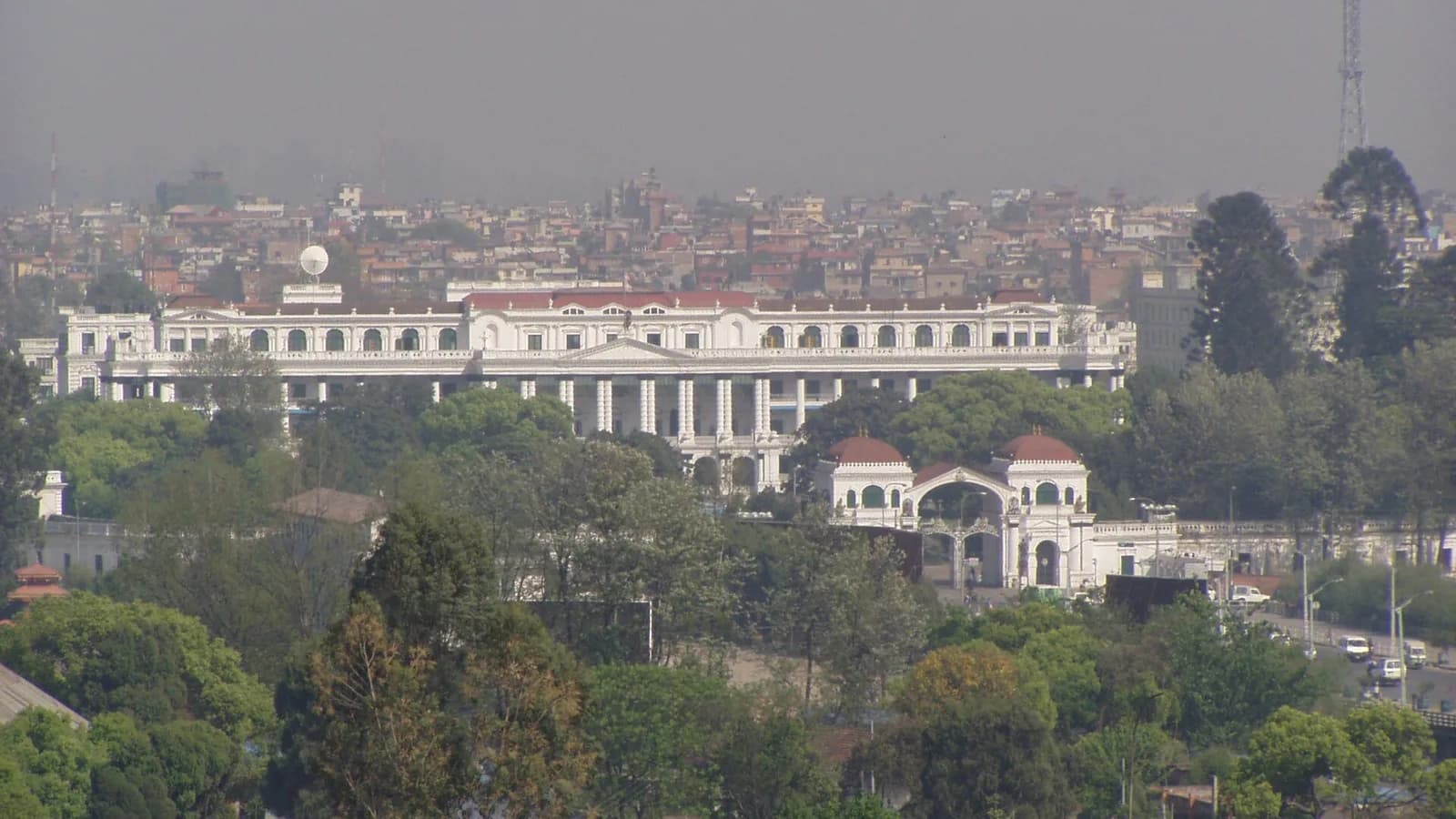
The Prime Minister of Nepal is the head of the country's government — the official who leads the cabinet, sets policy and runs the day-to-day business of the state. If you follow Nepali news or chat with locals in Kathmandu, the prime minister, or pradhanmantri, is the figure whose decisions and coalition deals dominate the headlines. This guide explains the office in neutral, encyclopedic terms: what the prime minister does, how the role is filled under Nepal's constitution, who has held it, and who holds it now.
It is written for travelers and curious readers rather than political partisans. It sticks to documented constitutional facts and well-reported events, describes the institution rather than taking sides, and pairs naturally with our overview of how Nepal is governed.
Key takeaways
- The prime minister is head of government in Nepal; the president is the ceremonial head of state.
- The PM is chosen by parliament, not by direct popular vote, under Article 76 of the 2015 constitution.
- A prime minister must hold the confidence of the House of Representatives and can be removed by a no-confidence vote.
- The office is based at Singha Durbar in Kathmandu, with an official residence in Baluwatar.
- As of June 2026, the prime minister is Balendra (Balen) Shah, in office since 27 March 2026.
What the Prime Minister of Nepal does
Nepal is a parliamentary federal democratic republic, which means executive power rests with a cabinet that is accountable to the elected legislature rather than with a directly elected president. The prime minister chairs that cabinet — formally the Council of Ministers — and is the central decision-maker in the executive branch.
In practice the prime minister appoints and dismisses ministers, sets the government's policy direction, represents Nepal in major foreign-policy decisions, and steers the national budget through parliament. The president, by contrast, performs a largely ceremonial role: appointing the prime minister, formally promulgating laws, and acting on the advice of the cabinet. This division — a powerful prime minister and a symbolic president — is a defining feature of Nepal's system and mirrors other parliamentary democracies.
Because the prime minister depends on a parliamentary majority, the office is bound up with coalition politics. Nepal's parties rarely win an outright majority alone, so prime ministers have historically led multi-party coalitions, which makes the role both powerful and politically demanding.
How the Prime Minister of Nepal is chosen
The selection process is set out in Article 76 of the Constitution of Nepal (2015), and it is worth understanding because it explains why Nepali governments can change without a general election.
- Majority party (Article 76(1)). The president appoints the leader of the party that holds a majority in the 275-seat House of Representatives as prime minister.
- Coalition (Article 76(2)). If no single party has a majority, the president appoints a member of the House who can command a majority with the support of two or more parties.
- Largest party (Article 76(3)). Failing that, the president appoints the parliamentary leader of the largest party in the House.
- Open claim (Article 76(5)). A further provision allows any member who can demonstrate the confidence of the House to be appointed.
Whichever route applies, a prime minister appointed without an outright majority must win a vote of confidence in the House of Representatives within 30 days. If they lose it, the process moves to the next option. This is why Nepal's premiership can pass between figures through parliamentary maneuvering rather than only at elections — a pattern that has produced frequent changes of government in the post-2008 era.
Crucially, the prime minister is not directly elected by the public. Voters elect members of the House of Representatives; those members, through their parties, determine who becomes prime minister.
Term length and how a prime minister leaves office
There is no fixed term for the prime minister. The office is held for as long as its occupant retains the confidence of the House of Representatives, within the chamber's maximum five-year cycle. A prime minister's tenure can end in several ways:
- A vote of no confidence passed by the House.
- Resignation, often amid political pressure or a coalition breakdown.
- Loss of a confidence vote they were required to win.
- Dissolution of the House and the holding of fresh elections.
Nepal has seen all of these outcomes in recent years, which is one reason the country has had many short-lived governments since the monarchy was abolished. For visitors, the practical effect is minimal, but it explains why the name of the sitting prime minister changes relatively often.
The current Prime Minister of Nepal
As of June 2026, the Prime Minister of Nepal is Balendra Shah, universally known as Balen Shah. He took the oath of office on 27 March 2026 after the March 2026 general election, in which his Rastriya Swatantra Party (RSP) won 182 of the 275 seats in the House of Representatives. He was appointed under Article 76(1) as the parliamentary leader of the largest party.
Shah, who was 35 years old when he took office, is widely reported as the youngest person to become prime minister in the era of the Federal Democratic Republic of Nepal. Before entering national politics he served as the Mayor of Kathmandu from 2022, and he is also known professionally as a structural engineer and a rapper. His path to the premiership came after the youth-led protests of September 2025 and the interim government that followed. For more on that transition, see our profiles of KP Sharma Oli, the previous long-serving prime minister, and Balen Shah.
As with any officeholder, this is stated as a dated fact: it is accurate as of June 2026, and any older article naming a different prime minister simply predates this change.
Notable Prime Ministers in Nepal's history
The office of prime minister in Nepal is far older than its current democratic form. It dates to 1806, with Bhimsen Thapa generally regarded as the first holder during the era when hereditary prime ministers — most famously the Rana dynasty — wielded power over a figurehead monarchy for more than a century.
The modern, democratic version of the office emerged in stages. A few widely recognized figures include:
| Prime Minister | Note | | --- | --- | | Bhimsen Thapa | Regarded as the first prime minister (early 19th century) | | B. P. Koirala | First popularly elected prime minister, after the 1959 election | | Girija Prasad Koirala | A dominant figure across several terms in the multiparty era | | Pushpa Kamal Dahal "Prachanda" | Former Maoist leader who served multiple terms after 2008 | | Sher Bahadur Deuba | Veteran Nepali Congress leader and multi-term premier | | KP Sharma Oli | Long-serving CPN-UML leader and multi-term prime minister | | Balendra (Balen) Shah | Current prime minister, in office since March 2026 |
This is a selective list rather than a complete one — Nepal has had many prime ministers, especially since 2008 — but it captures figures whose names recur in any discussion of the country's modern political history.
Why this matters for travelers
You can enjoy a wonderful trip to Nepal without thinking about the prime minister at all. Trekkers in the Annapurna region and sightseers in the Kathmandu Valley rarely feel any direct effect of who holds the office. Still, a little context helps.
Nepali politics is visible and lively: you may see party flags or rallies, especially in the capital, and occasionally a bandh (general strike) can briefly affect transport. These are usually announced in advance, so checking a local English-language news site each morning is enough to plan around any disruption. If conversation turns to politics over a cup of Nepali tea, the friendly approach as a guest is to ask, listen and stay neutral rather than to take sides.
Changes of prime minister rarely affect tourist services. Visa rules, trekking permits and flights are run by long-standing institutions that continue regardless of who leads the government, so rely on current official sources rather than political headlines when planning.
A few Nepali words for the news
Recognizing a handful of words makes Nepali headlines easier to follow. For more, see our Nepali language resources.
| Nepali (romanized) | Meaning | | --- | --- | | Pradhanmantri | Prime minister | | Rashtrapati | President | | Sarkar | Government | | Sansad | Parliament | | Chunav | Election | | Bandh | General strike or shutdown |
The bottom line
The Prime Minister of Nepal is the head of government in a parliamentary republic: chosen by the House of Representatives under Article 76, dependent on its confidence, and based at Singha Durbar in Kathmandu. The office is centuries old but assumed its modern democratic form after 1990 and again under the 2015 constitution. As of June 2026 it is held by Balen Shah, following the March 2026 election. For the wider picture of how the country is run, continue with our guides to Nepal's government, the 2026 election and the seven provinces.
Sources
Frequently asked questions
- Who is the Prime Minister of Nepal?
- As of June 2026 the Prime Minister of Nepal is Balendra Shah, widely known as Balen Shah, who took office on 27 March 2026 after his Rastriya Swatantra Party won the March 2026 general election. He is the head of government, while the president is the ceremonial head of state.
- How is the Prime Minister of Nepal chosen?
- The prime minister is not elected directly by voters. Under Article 76 of the 2015 constitution, the president appoints the leader of the party that holds a majority in the House of Representatives, and that person must win a vote of confidence in the House within 30 days of taking office.
- Is the Prime Minister or the President more powerful in Nepal?
- The prime minister holds the real executive power and runs the day-to-day government, while the president is largely a ceremonial head of state. Nepal follows a parliamentary system in which the cabinet, led by the prime minister, is accountable to parliament.
- How long is the Prime Minister of Nepal's term?
- There is no fixed term. A prime minister stays in office as long as they keep the confidence of the House of Representatives, within a maximum five-year parliamentary cycle. A government can fall earlier through a no-confidence vote, a coalition collapse or dissolution of the House.
- Where does the Prime Minister of Nepal work and live?
- The prime minister's official office is at Singha Durbar, the large government complex in central Kathmandu, and the official residence is in the Baluwatar area of the capital.
- Who was the first Prime Minister of Nepal?
- The office dates back to the early 19th century, with Bhimsen Thapa generally regarded as the first holder. In the modern democratic era, B. P. Koirala became the first popularly elected prime minister after the 1959 election.
- Do tourists need to follow Nepali politics to visit Nepal?
- No. Visa rules, trekking permits and tourist services are handled by long-standing institutions and continue regardless of who is prime minister. A little background simply helps you read the news and understand local conversations.
Related posts
Balen Shah: A Traveler's Guide to Nepal's Mayor-PM
Who is Balen Shah? A neutral, fact-checked profile of the rapper-turned-engineer who led Kathmandu and became Nepal's prime minister, for curious visitors.
Read postKP Sharma Oli: A Traveler's Guide to the Nepali Leader
Who is KP Sharma Oli? A neutral, fact-checked profile of the Nepali politician and four-time prime minister, with context for visitors to Nepal.
Read postNepal Election 2026: System and Results Explained
A factual guide to the Nepal election 2026: how the voting system works, the March 2026 general election timeline, and the reported results.
Read post