KP Sharma Oli: A Traveler's Guide to the Nepali Leader
Who is KP Sharma Oli? A neutral, fact-checked profile of the Nepali politician and four-time prime minister, with context for visitors to Nepal.
Understanding a country's politics is part of understanding the people who welcome you.
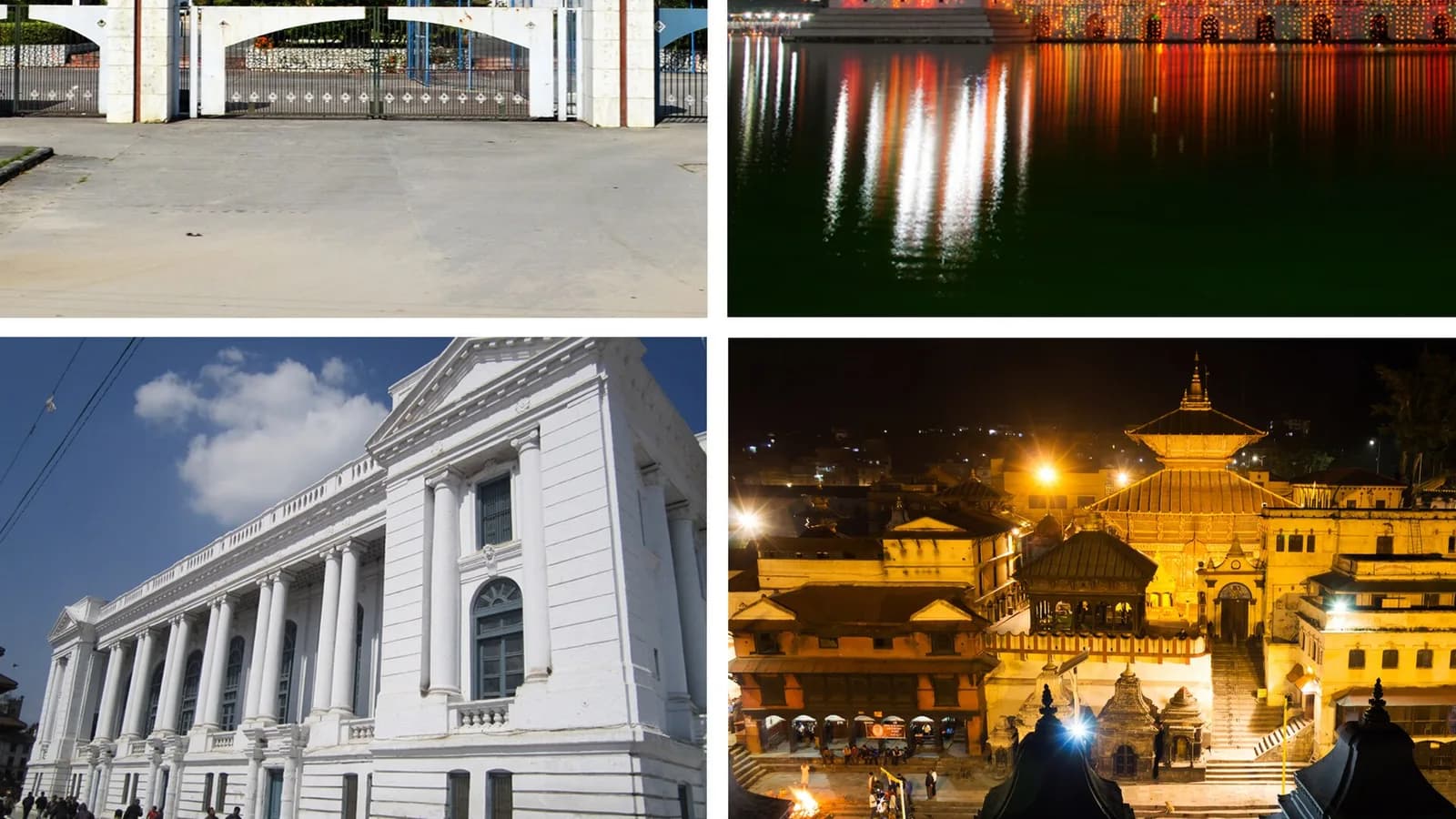
If you read the news or chat with locals during a trip to Nepal, one name comes up again and again: KP Sharma Oli. He is one of the most recognizable figures in modern Nepali politics, a four-time prime minister whose career spans more than half a century. For travelers, knowing who KP Sharma Oli is offers useful context for understanding headlines, street conversations, and the rhythm of public life in Kathmandu and beyond.
This guide is a neutral, fact-checked introduction written for visitors and curious readers. It sticks to well-documented biographical facts, avoids rumor and partisan spin, and focuses on the context a traveler actually needs. If you are also brushing up on the country before you arrive, our overview of Nepali culture pairs well with this piece.
Key takeaways
- KP Sharma Oli (full name Khadga Prasad Sharma Oli) was born on 22 February 1952 in Terhathum District, eastern Nepal.
- He has served as prime minister of Nepal three times: 2015 to 2016, 2018 to 2021, and 2024 to 2025.
- He has chaired the Communist Party of Nepal (Unified Marxist-Leninist), or CPN-UML, since 2014.
- He resigned as prime minister on 9 September 2025, and an interim government led by former Chief Justice Sushila Karki followed.
- For travelers, the practical takeaway is simple: stay informed, stay neutral, and check local news for any strikes or gatherings.
Who is KP Sharma Oli?
Khadga Prasad Sharma Oli, almost always shortened to KP Sharma Oli or simply KP Oli, is a Nepali politician and one of the longest-serving figures in the country's political life. He is best known internationally as a multi-term prime minister and domestically as the long-time chairman of the CPN-UML, one of Nepal's largest political parties.
Oli was born on 22 February 1952 in Iwa village in Terhathum District, in the hills of eastern Nepal, in what is today Koshi Province. He came from a farming family of modest means. His political involvement began young: he joined a communist political movement around 1970, and his early activism led to long periods of imprisonment during Nepal's pre-democracy era, including years in detention through the 1970s and 1980s.
That long arc, from a rural village to the highest office, is part of why his name is so widely known across Nepal. Whether or not a given Nepali supports him, almost everyone recognizes him.
A long career in Nepali politics
Oli's career stretches back more than five decades, which is unusual even by the standards of South Asian politics. After Nepal's return to multiparty democracy in 1990, he won election to parliament and held ministerial roles, including a stint as home minister in the 1990s.
He became chairman of the CPN-UML in 2014 and has remained one of the dominant figures in that party ever since. In October 2015, shortly after Nepal adopted its new federal constitution, he was elected prime minister for the first time in a parliamentary vote. That first term made him a central player in the new constitutional era.
Over the following decade he returned to the premiership twice more, leading governments built on shifting coalitions. His ability to remain at the center of power across multiple parliaments is a defining feature of his career, and it is why Nepali commentators often describe him as a political survivor.
How many times has KP Sharma Oli been prime minister?
This is a common point of confusion, partly because Nepali coalitions can be complex and partly because the same person returning to office is sometimes counted differently. The clear, documented record is that Oli served three separate terms as prime minister of Nepal.
| Term | Period | Context | | --- | --- | --- | | First | 2015 to 2016 | Elected soon after the new constitution was promulgated | | Second | 2018 to 2021 | Led a government following a strong communist showing | | Third | 2024 to 2025 | Took office in July 2024 under a coalition arrangement |
He was appointed prime minister for his most recent term on 14 July 2024 and took the oath of office the following day. That government grew out of a coalition agreement with the Nepali Congress, the country's other major party, under an arrangement to share the premiership over time.
The 2024 to 2025 term and its end
Oli's most recent government took office in mid-2024. Like many Nepali administrations, it operated within a coalition and faced the usual pressures of budgets, party negotiations, and public expectations.
In 2025, large public protests emerged, sparked in part by a government decision to restrict certain social media platforms and tied to a broader wave of frustration among younger Nepalis. Amid these widespread protests, Oli resigned as prime minister on 9 September 2025. This is a well-documented, widely reported event across reputable international and Nepali outlets.
After his resignation, an interim government was formed. Former Chief Justice Sushila Karki was sworn in as interim prime minister, becoming the first woman to hold the office in Nepal. Her interim administration was tasked with steering the country toward fresh elections. For visitors, the key point is straightforward: the person leading Nepal's government changed in late 2025, so any older article naming the sitting prime minister may be out of date.
Foreign policy: Nepal between two giants
One reason international readers follow Nepali leaders closely is geography. Nepal sits between two of the world's most populous nations, India to the south and China to the north, and every Nepali government has to balance relations with both.
During his most recent term, Oli made a notable state visit to China in December 2024, where he met senior Chinese leaders and signed a range of cooperation agreements covering trade, infrastructure, technology, and cultural exchange. Coverage at the time framed the trip as a continuation of his government's interest in closer economic ties with Beijing, including engagement with the Belt and Road framework.
His tenure was also marked by sensitive territorial and diplomatic questions with India. Travelers do not need to track the details, but it helps to know that Nepal's relationships with both neighbors are a recurring theme in local news and conversation. If you want the bigger cultural picture of how Nepal sits at this crossroads, our guide to the languages of Nepal shows how deeply both neighbors have influenced everyday life.
Why this matters to travelers
You can have a wonderful trip to Nepal without thinking about politics for a single minute. Trekkers on the trails and sightseers in the valleys rarely feel any direct effect. Still, a little awareness goes a long way.
Reading the news and the streets
Nepali politics is lively and visible. You may see party flags, rallies, or posters, especially in Kathmandu. Occasionally, political events lead to a bandh, a general strike where shops close and vehicles stay off the road. These are usually announced in advance, so checking a local English-language news site each morning helps you plan around any disruption.
Talking politics as a guest
Many Nepalis are warm, opinionated, and happy to discuss current affairs over a cup of tea. As a visitor, the friendly approach is to ask, listen, and stay neutral rather than to argue or take sides. Treat it the way you would any sensitive topic in someone else's home: with curiosity and respect.
Practical travel context
Changes in government rarely affect tourist services like flights, permits, or hotels in the short term. Visa rules and trekking permits are handled by long-standing institutions, so they tend to continue smoothly regardless of who is in office. When in doubt, rely on current official sources rather than headlines about any single politician.
A few Nepali words for following the news
Picking up a handful of words makes local headlines and conversations easier to follow. Here are some basics, with a nod to our Nepali language resources if you want to go further.
| Nepali (romanized) | Meaning | | --- | --- | | Pradhanmantri | Prime minister | | Sarkar | Government | | Neta | Leader or politician | | Sambidhan | Constitution | | Chunav | Election | | Bandh | General strike or shutdown |
These appear constantly in Nepali news, so even recognizing a few helps you make sense of what you read and hear.
Putting it in context
KP Sharma Oli is one of several towering figures in Nepal's post-1990 democratic era. His long career, from a rural childhood and years of imprisonment to repeated terms as prime minister, mirrors the broader story of Nepal's turbulent and dramatic political journey over the past few decades.
For a traveler, he is best understood not as a figure to praise or criticize but as a key character in the ongoing story of the country you are visiting. Knowing his name, his party, and the basic timeline gives you enough context to follow the conversation, appreciate the stakes, and engage respectfully with the people you meet.
If your trip plans are taking shape, balance this background reading with the fun stuff: explore our roundup of the best places to visit in Nepal, wander the temples of Kathmandu Durbar Square, and time your visit around a major celebration like the Dashain festival.
Sources
- K. P. Sharma Oli — Wikipedia
- Fourth premiership of K. P. Sharma Oli — Wikipedia
- KP Sharma Oli to be appointed prime minister today — The Kathmandu Post
- Five and half decades of KP Oli in Nepali politics — The Kathmandu Post
- Nepal's Prime Minister Makes Significant China Trip — Foreign Policy
- Who is Sushila Karki, Nepal's new interim prime minister? — Al Jazeera
- K P Sharma Oli — Columbia University World Leaders Forum
Frequently asked questions
- Who is KP Sharma Oli?
- Khadga Prasad Sharma Oli, widely known as KP Sharma Oli, is a veteran Nepali politician who served three terms as prime minister of Nepal and chairs the Communist Party of Nepal (Unified Marxist-Leninist), or CPN-UML.
- How many times has KP Sharma Oli been prime minister of Nepal?
- He served three separate terms as prime minister: 2015 to 2016, 2018 to 2021, and 2024 to 2025, which is why he is often described as a multi-term or fourth-time premier in Nepali media.
- When was KP Sharma Oli born and where?
- He was born on 22 February 1952 in Iwa village in Terhathum District, in what is now Koshi Province in eastern Nepal, into a farming family.
- Is KP Sharma Oli still the prime minister of Nepal?
- No. He resigned as prime minister on 9 September 2025 amid widespread protests, after which an interim government was formed, so visitors in 2026 will find a different administration in office.
- Do tourists need to know about Nepali politics to visit Nepal?
- Not at all, but a little background helps you read the news, understand local conversations, and stay aware of any strikes or public gatherings that can affect travel plans.
- Is it okay to discuss politics with Nepali people?
- Many Nepalis follow politics closely and enjoy a friendly chat, but as a guest it is wise to listen more than you assert and to stay respectful and neutral rather than taking sides.
- Where is Nepal's government based?
- Nepal's central government is based in Kathmandu, the capital, with key offices clustered around the Singha Durbar complex and the federal parliament.
Related posts
Balen Shah: A Traveler's Guide to Nepal's Mayor-PM
Who is Balen Shah? A neutral, fact-checked profile of the rapper-turned-engineer who led Kathmandu and became Nepal's prime minister, for curious visitors.
Read postSushila Karki: A Factual Profile of Nepal's Jurist-Leader
Who is Sushila Karki? A neutral, fact-checked profile of Nepal's first female Chief Justice who became interim prime minister in September 2025.
Read postKathmandu: A First-Timer's Guide to Nepal's Capital
A practical Kathmandu guide for first-time visitors: how the city is laid out, getting in and around, when to go, safety and a first-48-hours plan.
Read post