Lumbini Meditation: Retreats at Buddha's Birthplace
A practical guide to Lumbini meditation — Vipassana centres, monastery retreats, the Sacred Garden and how to sit at the birthplace of the Buddha.
Few places ask so little of you and offer so much: a marker stone, a sacred pond, a Bodhi tree, and the silence to sit with all three.
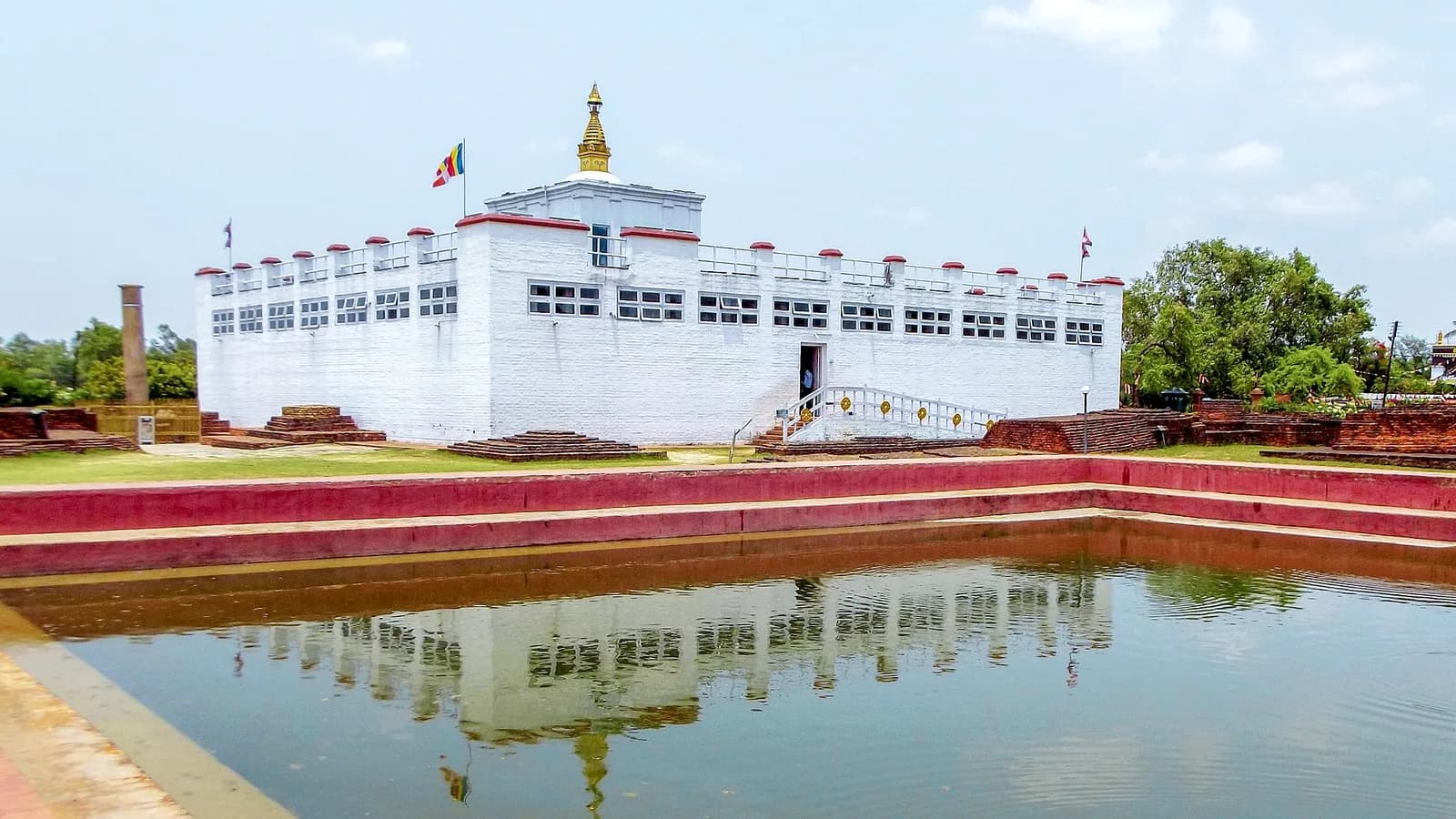
A Lumbini meditation retreat puts you about as close to the source of Buddhist practice as it is possible to get. This quiet corner of Nepal's Terai plains is the birthplace of Siddhartha Gautama, the historical Buddha, and today it holds a UNESCO World Heritage core, dozens of international monasteries, and a handful of serious meditation centres where travellers can sit for days or weeks at a time. Unlike the busier retreat hubs of the Kathmandu Valley and Pokhara, Lumbini offers something distinct: the chance to practise at the very place the tradition began.
This guide focuses on meditation at Lumbini specifically — the two main Vipassana centres, what the wider monastic zone offers, how to sit in the Sacred Garden itself, and the practical details of cost, timing and conduct. If you want a broader overview of options across the whole country first, our companion piece on the meditation retreat scene in Nepal sets the wider context.
Key takeaways
- Lumbini is the birthplace of the Buddha and a UNESCO World Heritage Site (inscribed 1997), making it a unique setting for practice.
- Two main Vipassana centres serve international meditators: Panditarama Lumbini (Mahasi tradition, flexible length) and Dhamma Janani (ten-day Goenka courses).
- Both Vipassana centres run on donation (dana) — there is no set fee for teaching, food or lodging.
- The wider monastic zone holds roughly 30-plus monasteries from Theravada, Mahayana and Vajrayana traditions, some offering guest rooms and informal sitting.
- The free, open Sacred Garden — Maya Devi Temple, Ashoka Pillar, sacred pond and Bodhi tree — is a meditation space in its own right.
- The cooler months (October to March) are most comfortable in the hot Terai lowlands.
Why meditate at Lumbini
Lumbini is one of the four principal pilgrimage sites of Buddhism, alongside Bodh Gaya, Sarnath and Kushinagar in India. According to tradition, Queen Maya Devi gave birth to the future Buddha here in a garden of sal trees. The site fell into obscurity for centuries until the discovery of the Ashoka Pillar in 1896, whose inscription records that the Mauryan emperor Ashoka visited in the 3rd century BCE and confirmed this as the Buddha's birthplace.
For a meditator, the appeal is partly atmospheric and partly practical. The whole protected area was laid out under a master plan by the Japanese architect Kenzo Tange, dividing it into three zones: the Sacred Garden at the spiritual heart, the Monastic Zone ringed by international temples, and the New Lumbini Village and cultural area. The result is a large, deliberately calm landscape of gardens, ponds and walkways — a setting designed for slow, reflective time rather than sightseeing crowds.
If you are weighing Lumbini against other stops, our guide to whether Lumbini is worth visiting covers the experience beyond meditation, and the Lumbini birthplace of Buddha piece goes deeper on the history and the Sacred Garden monuments.
The two main Vipassana centres
Two centres stand out for travellers who want a structured, residential meditation experience at Lumbini. Both teach Vipassana — insight meditation — but in different lineages and formats.
Panditarama Lumbini International Vipassana Meditation Centre
Panditarama Lumbini sits in a forested setting near the sacred pond and teaches intensive Vipassana in the tradition of the Venerable Mahasi Sayadaw of Myanmar. The practice alternates sitting meditation and slow, formal walking meditation throughout the day, with almost daily one-to-one interviews and regular Dhamma talks given in English.
What makes Panditarama unusually flexible is its format. Rather than fixed group courses with set start dates, it runs an ongoing individual retreat year-round. You can schedule your own stay — a minimum of seven days, up to several months — and begin at more or less any time of year. Meditators observe Noble Silence and keep the eight precepts. The centre operates entirely on the principle of generosity, with no set daily fee; you contact them by email in advance to arrange your arrival and the length of your stay.
Dhamma Janani Vipassana Meditation Centre
Dhamma Janani is Lumbini's centre in the S.N. Goenka tradition, part of the worldwide network in the lineage of Sayagyi U Ba Khin. Here the format is the classic ten-day residential course, in which newcomers learn the technique from the ground up and practise enough to feel its effects. The published structure is consistent worldwide: arrival and registration in the early afternoon, ten full days of meditation, and departure on the morning of the eleventh day.
Like all Goenka centres, Dhamma Janani charges no fee — not for teaching, food or accommodation. Every expense is met by donations from people who have completed a course and want others to have the same opportunity. The centre's facilities have grown to include a Dhamma hall seating close to 200, separate accommodation for male and female students with attached bathrooms, and individual meditation cells. Its schedule centres on one ten-day course each month, plus a small number of longer Satipatthana courses across the year.
Comparing the two
| Feature | Panditarama Lumbini | Dhamma Janani | | --- | --- | --- | | Tradition | Mahasi Sayadaw (Myanmar) | S.N. Goenka / U Ba Khin | | Format | Individual retreat, flexible | Fixed ten-day course | | Length | 7 days to several months | 10 days | | Start dates | Any time, year-round | Monthly course schedule | | Teaching language | English interviews and talks | Recorded discourses in English | | Cost | Donation (dana) | Donation (dana) | | Booking | Email application in advance | Apply via the Dhamma network |
Neither approach is "better" — they simply suit different people. A first-timer who wants a clear, complete framework often prefers the structure of a ten-day Goenka course. Someone who wants to set their own pace, or stay longer, may lean toward Panditarama's open-ended format. If you are still deciding between insight meditation styles in general, our overview of Vipassana in Nepal explains the differences in more detail.
The monastic zone and other options
Beyond the two dedicated Vipassana centres, Lumbini's monastic zone is itself a resource for quiet practice. The protected area contains a large and growing collection of Buddhist monasteries built by different countries and traditions — commonly reported at around 30-plus operational or under construction. The zone is split by school: the East Monastic Zone is reserved for Theravada Buddhism (the schools of South and Southeast Asia), while the West Monastic Zone hosts Mahayana and Vajrayana traditions (East Asian and Himalayan countries).
Walking between temples such as the Royal Thai Monastery, the Myanmar Golden Temple, the Chinese Monastery and the various Tibetan and Korean monasteries is a meditative experience in itself. Some monasteries offer guest rooms and informal access to their meditation halls, and a few non-sectarian centres in the area run shorter programmes blending meditation, yoga and Dharma study. Availability changes, so it is best to ask on arrival or contact a specific monastery ahead of time rather than assume a bed is free.
For getting there and planning the journey, see our guide to travelling from Kathmandu to Lumbini, which covers the overland and flight options.
Meditating in the Sacred Garden
You do not need to enrol in a formal course to meditate at Lumbini. The Sacred Garden — the spiritual core of the site — is open to visitors and is, for many pilgrims, the most moving place to simply sit.
What you will find there
- The Maya Devi Temple, a white structure built over the traditionally recognised birthplace, sheltering a marker stone said to indicate the exact spot of the Buddha's birth.
- The Ashoka Pillar, erected in the 3rd century BCE, the oldest physical evidence confirming Lumbini as the birthplace.
- The Puskarini (sacred pond), where Maya Devi is believed to have bathed before giving birth and where the newborn was first washed.
- The Bodhi tree, draped in prayer flags, with a quiet area around it where visitors meditate.
Sitting under the Bodhi tree or beside the pond in the early morning, before the day's visitors arrive, is one of the simplest and most rewarding things you can do here. There is no fee for meditating in the garden itself, though foreign visitors are generally asked to pay a modest park entry charge — confirm the current rate at the gate (as of June 2026), as it is subject to change.
If you visit on a full-moon day or during Buddha Jayanti, the festival marking the Buddha's birth, expect the garden to be far busier and more devotional; our Buddha Jayanti guide explains what happens and when it falls.
Practical planning
When to go
Lumbini sits in the Terai, Nepal's hot, low-lying southern plains, so the weather matters more here than in the hills. The most comfortable window runs from roughly October to March, when days are warm but manageable and mornings are pleasant for sitting. April and May are very hot, and the June-to-September monsoon is humid with heavy rain. If you do come in the warmer months, an early-morning practice schedule — which most centres follow anyway — makes a real difference.
What it costs
The headline point is that the Vipassana courses themselves are free, run entirely on donation. Your real budget items are travel to Lumbini, any nights you spend in town before or after a course, the small park entry fee for the Sacred Garden, and a donation at the end of your retreat if you can give one. Plain, modest clothing is expected; bring your own essentials, as intensive centres keep distractions to a minimum.
| What | Typical cost basis | | --- | --- | | Vipassana course (teaching, food, lodging) | Donation, no set fee | | Sacred Garden entry (foreign visitors) | Small park fee — confirm at gate (as of June 2026) | | Getting to Lumbini | Bus, private vehicle or flight to Bhairahawa | | Pre/post-course accommodation in town | Budget guesthouse rates |
Conduct and etiquette
Whether you join a course or simply sit in the garden, the same principles apply: keep your voice low, dress modestly, switch off your phone, and walk respectfully around the monuments and meditators. During an intensive retreat you will observe Noble Silence, hand in your phone, eat simple vegetarian meals and keep the eight precepts for the duration. Plan to stay for the whole course once you begin, as leaving early disrupts both your own practice and the group's. For wider cultural pointers, our temple etiquette guide for tourists is a useful primer.
Is a Lumbini retreat right for you?
Lumbini suits the traveller who wants substance over spectacle. It is not a place for a quick photo stop and a swift exit — the magic is in slowing down, and the meditation centres ask for a genuine commitment of days, not hours. If you are drawn to the idea of practising insight meditation at the exact place the tradition was born, on a donation basis, in a calm protected landscape, few destinations anywhere can match it.
If, on the other hand, you want shorter sessions, mountain scenery or a yoga-integrated wellness experience, you may prefer the retreats around Pokhara and the Kathmandu Valley. Many travellers do both — a stretch of mountain practice in the hills, then a deeper sit at Lumbini — and treat the journey south to the plains as part of the pilgrimage.
Sources
- Lumbini — UNESCO World Heritage and history (Wikipedia)
- Panditarama Lumbini International Vipassana Meditation Center (official)
- Lumbini Vipassana Centre Dhamma Janani (official, Dhamma.org)
- The Technique & Code of Discipline — Dhamma Janani
- Yoga and meditation centers in Lumbini — Inside Himalayas
- Sacred Monasteries of Lumbini — Nepal Tourism Board
- Lumbini International Monasteries — Lumbini Development Trust
Frequently asked questions
- Is there a meditation centre at Lumbini where foreigners can stay?
- Yes. Two well-known Vipassana centres in the Lumbini area welcome international meditators: Panditarama Lumbini, which teaches in the Mahasi Sayadaw tradition with flexible individual retreats from seven days upward, and Dhamma Janani, which runs ten-day Goenka-style courses. Several national monasteries also offer guest rooms and informal sitting.
- How long is a meditation retreat at Lumbini?
- It depends on the centre. Dhamma Janani follows the standard ten-day Vipassana course format. Panditarama Lumbini lets you set your own length, from a minimum of seven days up to several months, and you can usually begin on any day of the year rather than waiting for a fixed start date.
- How much does a Vipassana course at Lumbini cost?
- Both main Vipassana centres run on the principle of generosity, or dana, so there is no set fee for the teaching, room or food. Costs are met by donations from past meditators. You give what you can afford at the end, and there is no obligation to pay a fixed amount.
- Can you meditate inside the Sacred Garden for free?
- Yes. The Sacred Garden around the Maya Devi Temple, the Ashoka Pillar, the Puskarini pond and the Bodhi tree is open to visitors, and many people sit quietly under the tree or beside the pond. A small park entry fee usually applies for foreign visitors, so confirm the current rate at the gate (as of June 2026).
- Do I need to be Buddhist to do a meditation retreat at Lumbini?
- No. The Vipassana centres present the practice as a practical training of the mind that is open to people of any faith or none. You are simply expected to follow the schedule, observe silence and keep the basic precepts while you are there, rather than convert to anything.
- When is the best time to visit Lumbini for meditation?
- The cooler, drier months from roughly October to March are the most comfortable, because Lumbini sits in the hot, low-lying Terai plains. April and May can be very hot, and the summer monsoon is humid, so an early start to your sitting day helps in the warmer months.
- What rules apply during a retreat at Lumbini?
- Expect Noble Silence, no phones or outside distractions, simple vegetarian food and the eight precepts during intensive retreats. Days start early and alternate sitting and walking meditation. Modest, plain clothing is appreciated, and you should plan to stay for the full course once you begin.
- How do I get to Lumbini for a retreat?
- Most travellers reach Lumbini overland from Kathmandu or Pokhara, or fly to nearby Bhairahawa (Gautam Buddha International Airport) and continue by road. Contact your chosen centre in advance to arrange your arrival date and stay, as several operate by application rather than walk-in.
Related posts
Meditation Retreat Nepal: Monasteries, Types & Tips
How to choose a meditation retreat in Nepal — Buddhist monasteries, Vipassana and yoga-based options, what to expect, costs and the best time to go.
Read postVipassana Nepal: The 10-Day Course & How It Works
A practical guide to Vipassana in Nepal — Dhamma Shringa near Kathmandu, the centres nationwide, the silent 10-day course, the rules and how to apply.
Read postBuddha Jayanti at Lumbini — Buddha Purnima Festival Guide
Buddha Jayanti at Lumbini marks Buddha's birth on the May full moon. What the festival looks like, when it falls, and how to attend respectfully.
Read post