Sushila Karki: A Factual Profile of Nepal's Jurist-Leader
Who is Sushila Karki? A neutral, fact-checked profile of Nepal's first female Chief Justice who became interim prime minister in September 2025.
To follow Nepal's recent headlines, it helps to know the jurist whose name sits at the centre of them.
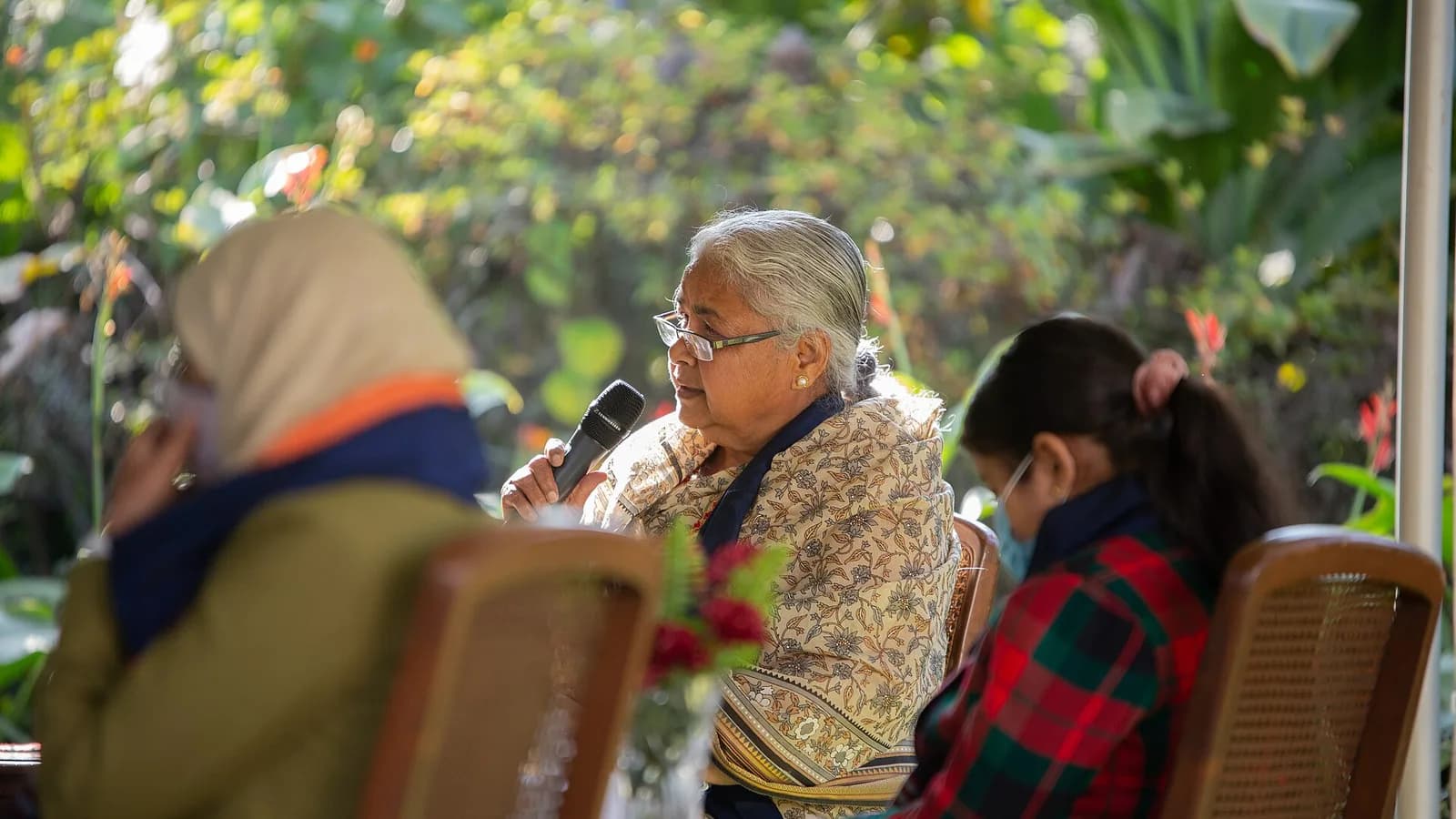
If you read up on Nepal before a trip, or simply follow its news, one name appears again and again in coverage of the country's recent political turn: Sushila Karki. A career lawyer and judge, she became the first woman to serve as Chief Justice of Nepal and, years later, the first woman to lead the country as its interim prime minister. For visitors and curious readers, knowing the documented facts of her career offers useful context for understanding headlines and everyday conversation.
This guide is a neutral, fact-checked introduction. It sticks to well-documented biographical details drawn from reputable sources, avoids rumour and partisan framing, and focuses on her career and public roles rather than opinion. If you are reading about the country's leadership, our companion profiles of Balen Shah and KP Sharma Oli, together with our explainer on the Nepal protests of September 2025, pair naturally with this piece.
Key takeaways
- Sushila Karki was born on 7 June 1952 in Biratnagar and trained as a lawyer, becoming a senior advocate in 2004.
- She was appointed a Supreme Court justice in 2009 and became Nepal's first woman Chief Justice on 11 July 2016.
- In 2017 she faced a short-lived impeachment motion that was withdrawn; she retired on 6 June 2017 at the mandatory retirement age of 65.
- After the September 2025 protests, she was sworn in as interim prime minister on 12 September 2025, the first woman to hold the post.
- She led a caretaker government for roughly six months, until 27 March 2026, when Balendra Shah took office after the March 2026 election.
- She is also an author, having published the autobiography Nyaya (2018) and the novel Kara (2019).
Who is Sushila Karki?
Sushila Karki is a Nepali jurist whose public reputation was built over decades in the law rather than through party politics. She is best known for two historic firsts: heading Nepal's judiciary as its first female Chief Justice, and later serving as the first woman to lead the country as prime minister, in a caretaker capacity.
She was born on 7 June 1952 in Biratnagar, a major city in Nepal's eastern Terai lowlands, and was the eldest of seven children. That background, an eldest daughter from a large family in the south-eastern plains who rose to the top of the national judiciary, features prominently in how Nepali media describe her.
Education and early career
Karki's path into the law began with a broad education. She earned a Bachelor of Arts in 1972 from Mahendra Morang College under Tribhuvan University, and in 1975 completed a Master of Arts in political science at Banaras Hindu University in Varanasi, India. She later obtained a law degree from Tribhuvan University.
She began practising law in Biratnagar and also spent time in teaching, working as an assistant teacher at Mahendra Multiple Campus in Dharan in the late 1980s. Her standing in the legal community grew steadily: she served in bar leadership roles, including as president of the Biratnagar Appellate Court Bar, and in 2004 the Nepal Bar Association recognised her as a senior advocate, one of the profession's notable distinctions.
According to several biographies, she also took part in the 1990 People's Movement (Jana Andolan) against absolute monarchy and was briefly detained in Biratnagar during that period, an experience she later drew on in her writing.
Rise to Chief Justice
Karki's move from advocacy to the bench came in 2009, when she was appointed an ad hoc (temporary) justice of the Supreme Court of Nepal. She became a permanent justice the following year, in 2010.
Her appointment to the country's highest judicial office followed in 2016. After a period as acting chief justice, she was confirmed as Chief Justice of Nepal on 11 July 2016, becoming the first woman to hold the position in the country's history. At the time of her appointment, reporting frequently described her as strict and firmly anti-corruption, a reputation that would later shape how she was perceived in public life.
| Detail | Information | | --- | --- | | Born | 7 June 1952, Biratnagar, Nepal | | Profession | Jurist (lawyer and judge); author | | Senior advocate | 2004 | | Supreme Court justice | 2009 (ad hoc); 2010 (permanent) | | Chief Justice of Nepal | 11 July 2016 – 6 June 2017 | | Interim prime minister | 12 September 2025 – 27 March 2026 |
The 2017 impeachment motion
No account of Karki's judicial career is complete without the 2017 episode that briefly tested it. In April 2017, an impeachment motion against her was registered in parliament by lawmakers from the ruling parties of the time, which suspended her from office while the motion stood.
The move drew significant debate within Nepal's legal and political community. A Supreme Court order stayed the motion, and the proceedings were subsequently withdrawn, allowing her to return to the bench. She then retired on 6 June 2017 on reaching the mandatory retirement age of 65. For the purposes of a neutral profile, the essential, documented point is simply that the motion was registered, contested, and ultimately withdrawn.
Years after the judiciary
Retirement did not remove Karki from public life so much as change her platform. She turned to writing and published two notable books. The first, Nyaya ("Justice"), released in 2018, is an autobiography reflecting on her career in the law. The second, Kara ("Prison"), published in 2019, is a novel informed in part by her experiences and observations, including the 1990 movement.
Through these years she remained a recognised public figure associated with the rule of law and anti-corruption themes, which is part of the context for what came next.
Interim prime minister, 2025–2026
Karki returned to national prominence in September 2025 under extraordinary circumstances. Nepal had been swept by youth-led, anti-corruption demonstrations, widely known as the Gen Z protests, which contributed to the resignation of Prime Minister K.P. Sharma Oli on 9 September 2025. Our full explainer on the Nepal protests of September 2025 covers that sequence of events in detail.
In the search for a neutral figure to lead a caretaker government, protest representatives put Karki's name forward, citing her reputation for integrity and independence from the established parties. Reporting noted that her selection was informed by an unusual online consultation among protest participants. On her recommendation, President Ram Chandra Poudel dissolved the federal parliament, and she was sworn in as interim prime minister on 12 September 2025 under Article 61 of the Constitution of Nepal. At 73, she became the first woman to hold the office in Nepal's history.
Her mandate was explicitly transitional. She indicated that the caretaker government's central task was to steer the country to fresh elections, and she stated an intention to serve only a limited period. Nepal held a general election on 5 March 2026, after which her term concluded on 27 March 2026 with the swearing-in of Balendra Shah as prime minister.
Why this matters to visitors
For most travellers, the identity of a recent head of government has little day-to-day effect on a trip. Flights, treks, and temple visits proceed as normal, and Nepal's tourism infrastructure was operating routinely by 2026. The practical value of knowing Karki's name is in following the news and joining a friendly conversation, since she remains one of the country's most discussed recent figures. For the live question of conditions on the ground, see our Nepal travel advisory overview and our guide on whether Nepal is safe to travel now.
Talking about politics as a guest
Nepalis, particularly in Kathmandu, often follow politics closely, and many enjoy discussing it with curious visitors. As with any prominent leader, opinions about Karki and the events of 2025 vary. The kindest approach for a guest is the simplest: ask open questions, listen more than you assert, and avoid taking sides or repeating unverified claims. People appreciate a traveller who is genuinely interested in their country without lecturing about it, and a few words of Nepali go a long way in signalling that respect.
The bottom line for readers
Sushila Karki's career is unusual by any measure: a lawyer from Biratnagar who rose to become Nepal's first woman Chief Justice and, years later, its first woman prime minister during a period of transition. For a visitor or curious reader, the value is context. Recognising her name and the documented arc of her roles helps you read the headlines accurately, follow local conversation, and understand a chapter of Nepal's recent history without getting tangled in speculation. Pair this profile with our guides to Kathmandu and Nepali culture, and you will be well set for an informed visit.
Sources
- Sushila Karki — Wikipedia
- Sushila Karki | Biography & Facts — Britannica
- Who is Sushila Karki, Nepal's new 73-year-old interim prime minister? — Al Jazeera
- Former Chief Justice Sushila Karki sworn in as Nepal interim prime minister — JURIST
- Nepal appoints a former chief justice as interim prime minister and first woman leader — NPR
- Former chief justice sworn in as Nepal's interim prime minister following deadly protests — CNN
- She made history as first woman chief justice of Nepal. Now as PM — The Kathmandu Post
Frequently asked questions
- Who is Sushila Karki?
- Sushila Karki is a Nepali jurist who became the first woman Chief Justice of Nepal in 2016 and later served as the country's interim prime minister from September 2025 to March 2026, the first woman to hold that office.
- When and where was Sushila Karki born?
- She was born on 7 June 1952 in Biratnagar, a city in Nepal's eastern Terai lowlands, and was the eldest of seven children in her family.
- What was Sushila Karki known for as Chief Justice?
- She was widely described in reporting as strict and anti-corruption. She was appointed a Supreme Court justice in 2009 and became Chief Justice of Nepal on 11 July 2016, retiring on 6 June 2017 at the mandatory age of 65.
- How did Sushila Karki become interim prime minister?
- After the September 2025 Gen Z protests led to the prime minister's resignation, protest representatives put her name forward for her reputation for integrity, and President Ram Chandra Poudel swore her in on 12 September 2025.
- How long did Sushila Karki serve as prime minister?
- She led a caretaker government for roughly six months. Her term ran from 12 September 2025 until 27 March 2026, when Balendra Shah was sworn in following the March 2026 general election.
- Has Sushila Karki written any books?
- Yes. After retiring from the judiciary she published an autobiography titled Nyaya (Justice) in 2018 and a novel titled Kara (Prison) in 2019.
Related posts
Balen Shah: A Traveler's Guide to Nepal's Mayor-PM
Who is Balen Shah? A neutral, fact-checked profile of the rapper-turned-engineer who led Kathmandu and became Nepal's prime minister, for curious visitors.
Read postKP Sharma Oli: A Traveler's Guide to the Nepali Leader
Who is KP Sharma Oli? A neutral, fact-checked profile of the Nepali politician and four-time prime minister, with context for visitors to Nepal.
Read postKathmandu: A First-Timer's Guide to Nepal's Capital
A practical Kathmandu guide for first-time visitors: how the city is laid out, getting in and around, when to go, safety and a first-48-hours plan.
Read post