Kakarbhitta: Nepal's Eastern Border Gateway Guide
Kakarbhitta is the easternmost Nepal-India border crossing. Get hours, visa-on-arrival facts, onward transport to Ilam and Kathmandu, and travel tips.
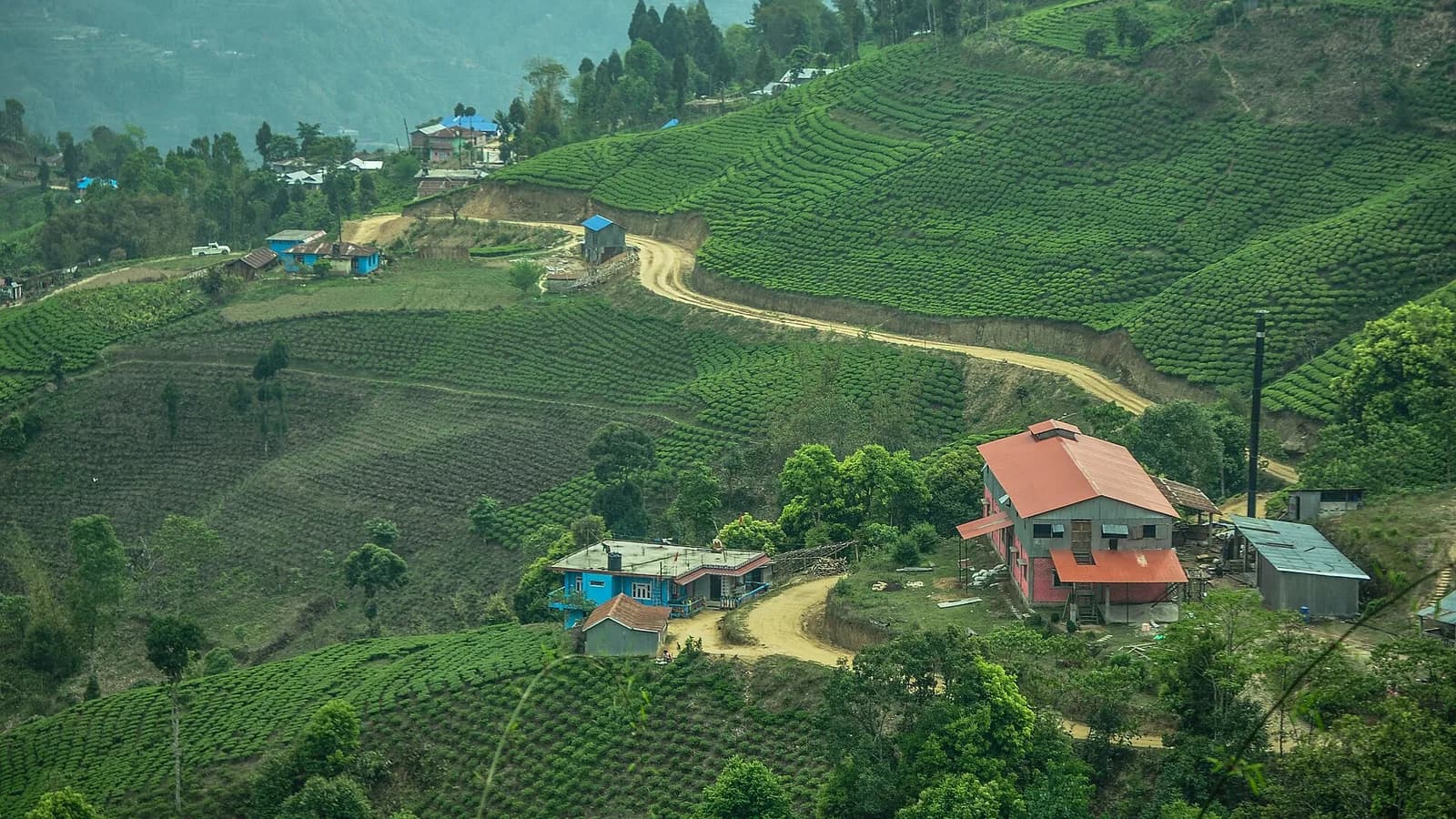
Where the Mechi River draws the line between India and Nepal, and the tea hills begin.
If you are entering Nepal from the east, Kakarbhitta (also spelt Kakarvitta) is most likely where your journey begins. This small but busy town in Jhapa District sits right against the Mechi River, which marks the international boundary with India. Across the bridge lies Panitanki in West Bengal, and beyond that the transport hub of Siliguri. For overland travellers combining Nepal with Darjeeling, Sikkim, or Bhutan, Kakarbhitta is the easternmost land gateway into the country and a practical first stop for exploring eastern Nepal.
This guide covers what Kakarbhitta actually is, how the border crossing works, the visa-on-arrival situation, onward transport toward Ilam and Kathmandu, and what is worth seeing once you are through. Where money is involved, figures are stamped with the month and year, and anything I could not verify is described rather than invented.
Key takeaways
- Kakarbhitta is an official Nepal immigration entry/exit point in Mechinagar Municipality, Jhapa District, opposite Panitanki, India.
- The crossing is open to third-country tourists, and the Nepali office issues tourist visas on arrival.
- Border gates typically run roughly 6:00 AM to 10:00 PM; cross in daylight to keep things simple.
- Bring clean US-dollar cash for the visa fee; cards are usually not accepted at land borders.
- Siliguri (India) is about 45 minutes away; Bhadrapur airport (Nepal) is around 21 km away with domestic flights.
- The nearby tea district of Ilam is the headline reason many travellers linger in the region.
Where is Kakarbhitta?
Kakarbhitta lies in the far south-east corner of Nepal, in Mechinagar Municipality within Jhapa District of Koshi Province. The town is wedged against the west bank of the Mechi River; the river itself forms the border, and a long road bridge carries traffic across to Panitanki on the Indian side.
The setting is lowland Terai, not mountains, so do not arrive expecting Himalayan views at the border itself. What Kakarbhitta offers is connection: it is the eastern hinge between the Indian rail-and-road network around Siliguri and the rest of Nepal. The town has the basic services a transit point needs, including hotels, money changers, eateries, and bus counters clustered near the main junction.
The Mechi bridge
The crossing is anchored by a bridge over the Mechi River. A modern multi-lane bridge tied into the Asian Highway network opened in this corridor in early 2023, improving the road link between the two countries. On the bridge you will see a steady mix of pedestrians, cycle rickshaws, and vehicles moving between Panitanki and Kakarbhitta, with the wide rocky riverbed visible below.
Crossing the border: how it works
The Panitanki-Kakarbhitta crossing is open to foreign travellers, not just Indian and Nepali citizens. The Nepali immigration office here is used to handling international tourists and issues visas on arrival for most nationalities.
The sequence is straightforward but easy to get wrong if you rush it:
- Exit India at the Panitanki immigration post (get your Indian exit stamp if you are a foreigner; this step is important and sometimes overlooked).
- Cross the bridge over the Mechi River on foot, by rickshaw, or by vehicle.
- Enter Nepal at the Kakarbhitta immigration office, where you complete the arrival formalities and obtain your visa on arrival if you do not already hold one.
Opening hours
Both sides of the crossing typically operate from around 6:00 AM to 10:00 PM. Plan to arrive well within daylight hours. The last hour before closing is not the moment to be filling in forms or hunting for the right counter, and a daytime crossing also makes onward transport much easier to arrange.
A note on stamps
Make sure you actually receive both the exit stamp from the country you are leaving and the entry stamp for the country you are entering. The posts can be informal, and a missing stamp can cause real problems later. Keep your passport accessible and check each stamp before walking on.
Nepal visa on arrival at Kakarbhitta
Kakarbhitta is one of Nepal's land borders that issues tourist visas on arrival, so most visitors do not need to arrange a visa in advance. (Citizens of a few countries are exceptions and should check requirements before travelling; Indian nationals do not need a visa for Nepal.)
To keep the process smooth, have these ready:
- A passport valid for the duration of your stay.
- A passport-sized photo (carry a spare or two).
- The visa fee in cash, in clean, undamaged US dollars. Several other major currencies are also accepted, but US dollars are the safest bet. Cards are usually not accepted at land borders, so do not rely on them.
Visa durations and fees
Nepal issues tourist visas in fixed 15, 30, or 90-day blocks. The published fees are:
| Visa length | Fee (USD) | |---|---| | 15 days | 30 | | 30 days | 50 | | 90 days | 125 |
Fees as of June 2026. Always reconfirm the current amount on the official Department of Immigration site before you travel, since fees can change.
A few rules worth knowing:
- Tourist-visa holders may stay a maximum of 150 days in a single calendar year.
- A visa can be extended later, with extensions handled for a minimum of 15 days plus a per-day charge for additional time (confirm current rates at an immigration office).
- The Kakarbhitta office itself can extend tourist, marriage, and Non-Resident Nepali (NRN) visas. The immigration office is located in Mechinagar Municipality-6, Kakarbhitta, Jhapa.
If you want the full picture before you go, see our guides to the Nepal visa on arrival, the Nepal tourist visa fee, and visa rules for Indian citizens.
Onward transport from Kakarbhitta
Kakarbhitta is a transit town first and a destination second, so the practical question is usually how to leave it efficiently. Below is a snapshot of the main options. Treat fares and durations as approximate planning figures (as of June 2026) and verify locally, as schedules and prices shift.
| Route | Mode | Rough time | Notes | |---|---|---|---| | Kakarbhitta to Siliguri (India) | Shared/taxi | ~45 min | Siliguri has rail and air links to Kolkata, Delhi and beyond | | Kakarbhitta to Bhadrapur airport | Local transport | ~21 km | Domestic flights toward Kathmandu | | Bhadrapur to Ilam | Bus/jeep | ~3-4 hr | Via Birtamod and Kanyam tea estate | | Kakarbhitta to Kathmandu | Long-distance bus | ~13-16 hr | Overnight services are common |
Getting to Kathmandu
There are essentially two strategies. The budget option is a long-distance bus straight from Kakarbhitta to Kathmandu, which is a long haul of roughly 13 to 16 hours, often run overnight. The faster option is to make the short trip to Bhadrapur airport and take a domestic flight to Kathmandu, turning a full day on the road into under an hour in the air. Our overview of domestic flights in Nepal explains how the network and booking work.
Heading into the hills toward Ilam
The more rewarding direction is north, into the tea hills. Buses and jeeps run from the Birtamod junction toward Ilam, climbing through green ridgelines in a few hours. This is where the eastern Nepal scenery finally delivers.
What to see near Kakarbhitta
Few people travel all the way to Kakarbhitta just to see the town. The appeal is what surrounds it in eastern Nepal.
Ilam and the tea gardens
The standout attraction is Ilam, a hill district carpeted in tea bushes. The sloping plantations, mist, and forested ridges make it one of the most photogenic corners of the country, and the local culture and quiet pace are part of the draw. On the way up, the Kanyam tea estate area is a popular stop for views and a lunch break, sitting roughly partway between Bhadrapur and Ilam town. If you have any interest in Nepali tea, this is the source region for it; our piece on Nepali tea gives the wider context.
Pilgrimage and onward eastern routes
Kakarbhitta also functions as a springboard for the far-eastern circuit, including the Pathivara pilgrimage site high in Taplejung, reached via the eastern road network. Because the border sits so close to the tri-junction region, it is a natural part of itineraries that link Nepal with Darjeeling, Sikkim, or Bhutan.
Lowland nature
If your route runs west through the Terai, eastern and central Nepal hold protected lowland habitats. For wildlife, the better-known reserves lie further west, such as Bardia National Park, but the eastern plains share the same warm, humid Terai character you first meet at Kakarbhitta.
Practical tips for Kakarbhitta
- Carry clean US dollars. This single habit smooths the visa payment and avoids exchange headaches at the border. Note that Nepal can be cash-oriented away from big cities; see is Nepal cash only.
- Cross in daylight. Aim to be at immigration with hours to spare before the 10:00 PM closing.
- Check every stamp. Confirm both exit and entry stamps before moving on.
- Decide your Kathmandu strategy in advance. Choose the long bus or the Bhadrapur flight before you arrive, so you are not negotiating tired at a bus counter.
- Build in time for Ilam. If your schedule allows even one extra night, the tea hills justify it far more than the border town does.
Used well, Kakarbhitta is less a place to stay and more a clean, simple doorway into a side of Nepal that most visitors never reach. Cross it in daylight, keep your documents in order, and point yourself toward the tea hills.
Sources
- Kakarbhitta Immigration Office - Arrival/Departure Information
- Kakarbhitta Immigration Office - Tourist Visa
- Nepal Department of Immigration - Tourist Visa
- Border Crossing Hub - Kakarbhitta & Panitanki Border Crossing
- Logistics Cluster - Major Border Crossing of Kakarbhitta (Mechi)
- Wikivoyage - Kakarbhitta
- Vajiram & Ravi - Mechi Bridge
- A Social Nomad - Kakarvitta to Kathmandu
- The Longest Way Home - Ilam Travel Guide
Frequently asked questions
- Is Kakarbhitta open to foreign tourists?
- Yes. Kakarbhitta is an official immigration entry and exit point in Jhapa District, and the Panitanki-Kakarbhitta crossing is open to third-country travellers, with tourist visas on arrival issued at the Nepali immigration office.
- What are the border opening hours at Kakarbhitta?
- Both sides of the Panitanki-Kakarbhitta crossing typically operate from around 6:00 AM to 10:00 PM; arrive in daylight and avoid the last hour so immigration formalities are not rushed.
- Can I get a Nepal visa on arrival at Kakarbhitta?
- Yes, the Kakarbhitta land border issues tourist visas on arrival; you will need a passport valid for your stay, a passport photo, and the fee in clean US dollars or another accepted foreign currency, as cards are usually not accepted.
- How much is the Nepal tourist visa in 2026?
- Published fees are USD 30 for 15 days, USD 50 for 30 days, and USD 125 for 90 days (as of June 2026); confirm the current amount on the official immigration website before you travel.
- How far is Kakarbhitta from Siliguri and Bhadrapur airport?
- The Panitanki side of the border is roughly a 45-minute drive from Siliguri in India, while Bhadrapur airport on the Nepali side is about 21 km away and links to domestic flights.
- How do I get from Kakarbhitta to Kathmandu?
- Long-distance buses run from Kakarbhitta to Kathmandu, a journey of roughly 13 to 16 hours; many travellers instead take a short hop to Bhadrapur and fly to Kathmandu to save time.
- What is there to see near Kakarbhitta?
- The big draw is Ilam, a few hours uphill, with its famous tea gardens at Kanyam and Ilam Bazaar; the area also serves as a launch point for eastern Nepal, including the Pathivara pilgrimage and trips toward Darjeeling, Sikkim and Bhutan.
Related posts
Do I Need a Visa for Nepal? 2026 Answer by Nationality
Do I need a visa for Nepal? Who needs one, who doesn't, who must apply at an embassy, plus 2026 fees and documents — sorted by your passport.
Read postNepal 15 Day Visa: Cost, Rules, and When to Pick It
The Nepal 15 day visa costs USD 30, is multiple-entry, and suits short trips. Who it fits, who should size up, and how to extend it if plans change.
Read postNepal 30 Day Visa: Cost, Rules, and Who It Suits
A focused guide to the Nepal 30 day visa — the USD 50 fee, multiple-entry rules, when to pick it over 15 or 90 days, and how to extend.
Read post