Hostels in Pokhara: Lakeside Backpacker Guide (2026)
Hostels in Pokhara for backpackers — dorm prices, the best Lakeside areas, what to expect inside, booking tips and how to choose well.
A lakeside bunk, a rooftop framed by Machhapuchhre, and a hammock for the hour after the trek — that is backpacker Pokhara.
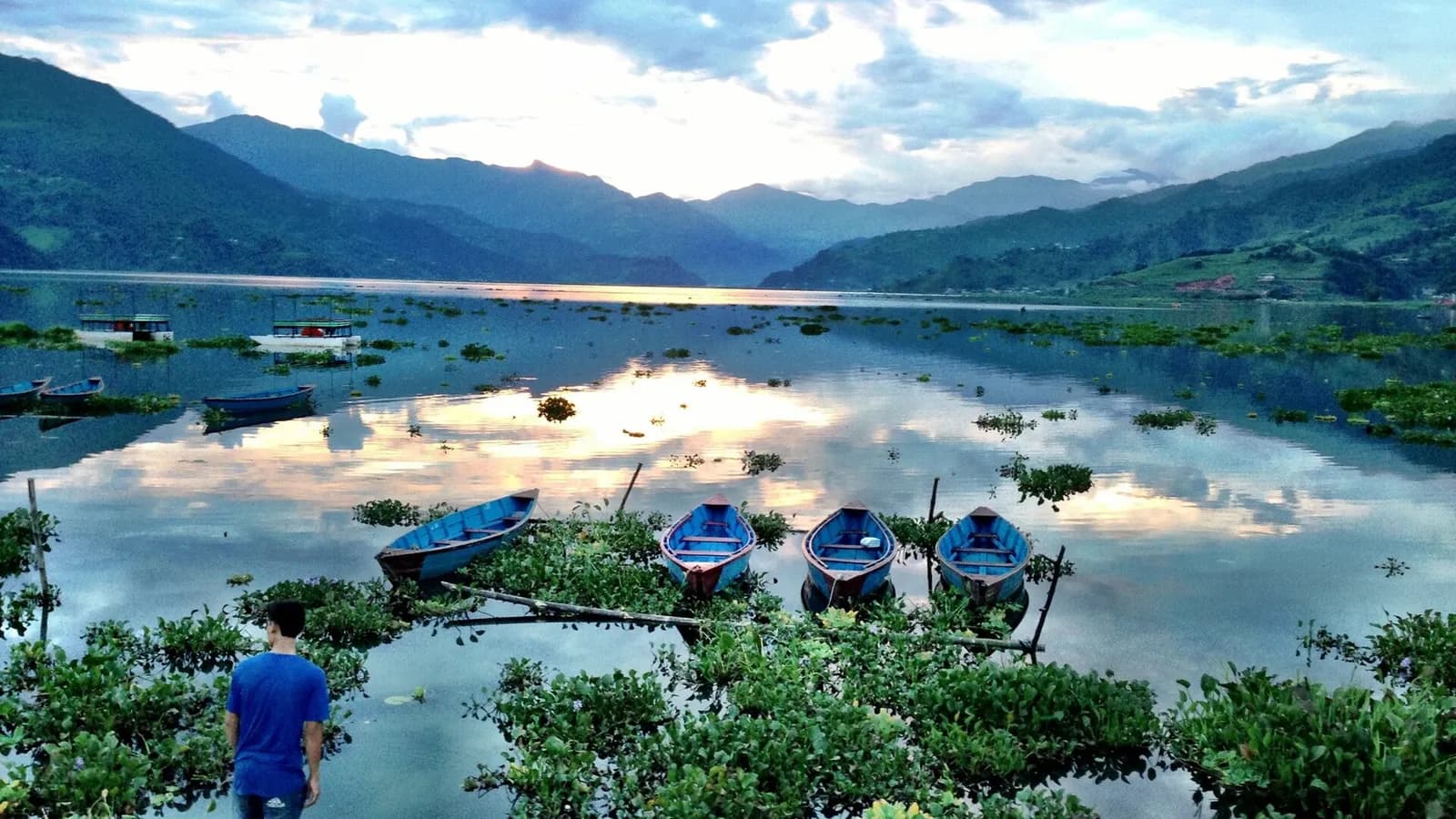
Pokhara is where most Nepal trips slow down — the lakeside town below the Annapurnas where trekkers refuel, paragliders launch off the ridge and backpackers linger far longer than they planned. For budget travellers that usually means finding a good bunk in a sociable hostel, and hostels in Pokhara range from rock-bottom dorms a street back from the lake to polished places with rooftop terraces facing Machhapuchhre. This guide covers what a bed actually costs, which part of Lakeside suits which traveller, what to expect inside, and how to pick a hostel you will be glad you chose.
Prices and the hostel line-up shift from season to season, so treat the figures here as a guide and confirm when you book. Every number is stamped with currency and date, and the sources are linked at the end.
Key takeaways
- A dorm bed often starts from around USD 4 per night (as of 2026), with many beds in the USD 4–8 range and private rooms a few dollars more.
- Lakeside is the backpacker base — compact, flat and walkable, right along Phewa Lake.
- North Lakeside is quieter with plenty of budget rooms; the central and southern strip is livelier.
- Book the first night or two in advance during the October–November and March–April trekking peaks.
- Most hostels offer wifi, hot showers and lockers, but quality varies — bring your own padlock.
- Hostels double as a base to arrange treks and paragliding, though it pays to compare quotes first.
What a hostel bed costs in 2026
Pokhara is genuinely cheap by global standards, which is a big part of why so many travellers extend their stay.
| Accommodation type | Typical price (as of 2026) | What you get | | --- | --- | --- | | Basic dorm bed | From around USD 4 | Larger shared room, simple bunks, shared bathroom | | Better dorm bed | Around USD 5–8 | Smaller dorm, privacy curtain, reading light, locker | | Private room in a hostel | From roughly USD 10+ | Own room, often a private or shared bathroom, sometimes a rooftop view |
The cheapest beds are usually in big dorms with simple bunks, while paying a little more buys a smaller room and the small comforts that matter after a long trek — a curtain, a lamp, a plug within reach. Many hostels also rent private doubles, which can be a good shout if two of you are travelling together and want privacy without leaving the social side behind. In North Lakeside in particular there is a deep pool of very cheap simple rooms, so longer-stay travellers can often negotiate hard.
To set hostel costs against the rest of a Nepal trip, our Nepal travel budget guide breaks down what a typical day costs once you add food and transport, and the ATM withdrawal guide helps you arrive with the right cash, since smaller hostels often prefer it. If you are weighing Pokhara against the capital, our hostels in Kathmandu guide covers the same ground for the other end of the classic route.
The best areas of Lakeside for backpackers
In Pokhara, the question is less which town and more which stretch of Lakeside. The whole strip runs along the eastern shore of Phewa Lake and is compact enough to walk end to end in well under an hour, so wherever you land you are never far from the water.
Central and southern Lakeside — the lively heart
The central strip is the busy, walkable core: cafes, restaurants, bookshops, trekking agencies, gear shops and live-music bars line the road a block back from the lake, while the lakefront itself is where you rent a rowing boat or simply watch the light change on the mountains. This is the most convenient base for first-timers who want everything on their doorstep, and the southern end carries that same energy with some hostels positioned for superb Himalayan views. It is also where the evenings are liveliest, so light sleepers should pick a room set back from the road. Our guide to Pokhara Lakeside covers the area in full, and things to do in Pokhara rounds up how to fill your days.
North Lakeside — quieter and cheaper
The northern end of Lakeside is calmer and has the best variety of budget accommodation, from very simple single rooms with a shared kitchen to larger rooms with a kitchen attached. It trades a little of the central buzz for lower prices and quieter nights, which suits anyone recovering from a trek, travelling on a tight budget, or working remotely. You are still only a short walk or cheap taxi from the main strip, so you lose very little in convenience.
Staying by the lake
Phewa Lake — Phewa Tal in Nepali — is the reason most people come, famous for the way it reflects Machhapuchhre and the Annapurna range on a still morning. A hostel near the lakefront puts boating, sunrise photos and a quieter atmosphere on your doorstep, while a room closer to the main road keeps you nearer the cafes and nightlife. Both work; it simply depends on whether you prioritise peace or buzz. For one of Pokhara's best free half-days, the World Peace Pagoda sits on the ridge across the lake, reachable by boat and a short hike.
What to expect inside a Pokhara hostel
Standards vary widely, from no-frills crashpads to polished modern hostels, so read recent reviews rather than relying on photos alone. That said, a few things are broadly true across the backpacker end of the market.
- Wifi is near-universal and usually free, fine for messaging and maps but often slow for video calls. If reliable internet matters, a local SIM is a smart backup — our best SIM card guide covers the options.
- Hot water is normally available but can depend on solar or a gas heater, so it sometimes runs cool at peak shower times. Early or off-peak showers fare best.
- Lockers are standard in good dorms, but not every one comes with a lock. Carry a small padlock so you are never caught out.
- Rooftops and gardens are where the social side happens — and in Pokhara many of them face the mountains. The best hostels lay on shared dinners, happy hours, hammocks or live music, which makes meeting people effortless.
- Power is far more reliable than it once was, but bring a universal adapter and consider a power bank for trek days.
Atmosphere: social versus chilled
Pokhara hostels broadly split into two moods. Lively, party-leaning places have busy rooftop bars, happy hours and a constant churn of new faces — great if you want to find trekking partners and a night out. Calmer, traveller-focused hostels lean into gardens, quiet lounges and lake views, which suits anyone recovering from a long trek or settling in for a longer stay. Neither is better; the reviews usually make a hostel's vibe obvious, so pick the one that matches your mood. Pokhara as a whole is noticeably mellower than Kathmandu, which is part of its enduring appeal.
Booking smart and staying safe
A little planning goes a long way. In the trekking peaks of roughly October–November and March–April, the best-rated social hostels fill early, so book at least the first night or two ahead — it also smooths arrival after the journey from Kathmandu. Outside those windows you can often walk in and negotiate, especially for stays of several nights. For more on timing your whole trip, see the best time to visit Nepal.
On safety, Pokhara's hostels are well used to backpackers and are generally a relaxed, friendly environment. Sensible habits still apply: lock your valuables, choose places with a staffed reception and recent positive reviews, and keep an eye on your bag in busy common areas. Solo female travellers often opt for hostels with a female-only dorm, several of which exist in Lakeside; our solo female travel safety guide goes deeper. Be a little wary of anything sold hard at reception too, from treks to tours — our guide to common tourist scams in Nepal will help you tell a fair offer from a pushy one.
Getting there and getting around
Most backpackers reach Pokhara from Kathmandu by tourist bus or a short domestic flight, then take a quick taxi into Lakeside. Our guides to the Kathmandu to Pokhara tourist bus and the Kathmandu to Pokhara flight cover the trade-offs of each. Once you are in Lakeside, the strip is compact and flat enough that most people simply walk; a few hostels offer a pick-up if you send them your arrival time, which is worth asking about after a long journey.
Using your hostel as a base for adventures
One of the quiet advantages of a Pokhara hostel is that it doubles as a launchpad. Many Lakeside hostels run a trekking desk or partner with an agency nearby, and the surrounding lanes are full of gear shops for last-minute rentals — so it is genuinely easy to arrive, settle in, and have a trek organised within a day or two.
Pokhara is the classic gateway to the Annapurna region, so if you are heading for the hills our cost guide to the Annapurna Base Camp trek will tell you whether a price is fair, and the Ghorepani Poon Hill trek is a popular shorter option straight from here. Beyond trekking, the town is famous for adrenaline: paragliding off Sarangkot usually includes free pick-up from Lakeside, and a Sarangkot sunrise trip is an easy early-morning add-on. Picking up a few Nepali phrases every trekker should know will smooth the trail ahead.
A few practical tips
- Carry a padlock for lockers, plus a small day bag you can secure.
- Bring earplugs and an eye mask — dorm life and lively Lakeside evenings both reward them.
- Pack a power bank and adapter; charging points by your bunk are not guaranteed.
- Keep some small notes for the cheapest hostels, which may not take cards.
- Read recent reviews, not just the listing photos, to gauge a hostel's real condition and vibe.
- Ask about the view if it matters — a rooftop facing the Annapurnas is one of Pokhara's small joys, but not every hostel has one.
Sources
- Best Hostels in Pokhara — Hostelworld
- Hostels in Pokhara from Just $4 — Hostelz
- Best Backpacker Hostels in Pokhara — Hostelz
- Lakeside Pokhara Guide — The Longest Way Home
- Best Hotels in Pokhara (Lakeside) for Every Budget — Full Time Explorer
- Pokhara Backpackers Hostel — Hostelworld
- Pokhara — Southeast Asia Backpacker
Frequently asked questions
- How much does a hostel dorm bed cost in Pokhara?
- As a rough guide for 2026, a dorm bed in a Pokhara backpacker hostel often starts from around 4 US dollars per night, with many beds sitting in the region of 4 to 8 US dollars depending on the season, the room size and the comforts on offer. The cheapest beds are basic bunks in larger dorms, while paying a little more buys a smaller room, a privacy curtain and a personal locker. Private rooms in the same hostels usually start a few dollars above the dorm rate.
- Which part of Pokhara is best for backpackers?
- Lakeside, the strip running along Phewa Lake, is the default backpacker base. It is compact and fairly flat, packed with hostels, cafes, bars, trekking agencies and gear shops, and it is the main jumping-off point for Annapurna treks. North Lakeside tends to be quieter and has a good spread of budget rooms, while the central and southern stretches put you closer to the busier cafes, bars and the lakefront itself.
- Are hostels in Pokhara safe for solo travellers?
- Generally yes. Pokhara is a long-established travellers' town with a relaxed, sociable hostel scene, and dorms are a natural way to meet trekking partners. Choose a place with lockers, a staffed reception and recent positive reviews, keep your valuables locked, and apply the usual common sense. Solo female travellers often pick hostels that offer a female-only dorm, several of which exist in Lakeside.
- Should I book a Pokhara hostel in advance or just walk in?
- In the busy trekking seasons of roughly October to November and March to April it is worth booking the first night or two ahead, since the best-rated social hostels fill up. Outside those peaks you can often walk in and negotiate a better rate, especially for longer stays. Booking the first night also makes arrival smoother after the long drive or flight from Kathmandu.
- Do Pokhara hostels have wifi, hot water and lockers?
- Most backpacker hostels advertise free wifi, hot showers and lockers, but quality varies from place to place. Hot water can depend on solar or a gas heater and may run cool at peak shower times, and wifi is usually fine for messaging but slower for video calls. Bring your own padlock as a backup, since not every locker comes with one.
- Can I book a trek or paragliding from my hostel?
- Often, yes. Many Lakeside hostels run a trekking desk or work with an agency nearby, and paragliding operators frequently include free pick-up from Lakeside to the Sarangkot take-off point. The area is also full of gear shops for last-minute rentals. Comparing a couple of quotes before you commit is wise, and the same caution applies to any tour pushed hard at reception.
- Is Lakeside Pokhara noisy at night?
- The central strip has live-music bars and cafes that stay lively into the evening, though Pokhara is far mellower than Kathmandu and most venues wind down at a reasonable hour. If you sleep lightly, ask for a room set back from the main road, choose a hostel in quieter North Lakeside, and pack earplugs. The lakefront side is generally calmer than the main strip.
- How do I get from Kathmandu to a Pokhara hostel?
- Most backpackers reach Pokhara by tourist bus or a short domestic flight from Kathmandu, then take a short taxi to Lakeside, which is compact enough to walk around once you arrive. Some hostels offer a pick-up if you let them know your arrival time. Booking the first night in advance makes that hand-off after a long journey much easier.
Related posts
Where to Stay in Pokhara: A Lakeside Hotels Guide
Where to stay in Pokhara: how Lakeside works, the quiet north vs busy central strip, hotel prices for every budget, and how to pick the right spot.
Read postWhere to Stay in Pokhara: Neighbourhood by Traveller
Where to stay in Pokhara matched to your trip - Lakeside, Damside, Sarangkot and the quiet hill stays - plus when to book for the best rates.
Read postBest Hotels in Nepal: A Guide by Region and Budget
How to find the best hotels in Nepal: star ratings, heritage stays, jungle lodges, and what a room costs in Kathmandu, Pokhara, and on the trail.
Read post