Kathmandu to Pokhara Flight: Cost, Time & Airlines 2026
The Kathmandu to Pokhara flight in 2026 — real flight time, fares for foreigners vs locals, which airlines fly it, baggage rules, and bus vs flight.
Twenty-five minutes in the air against eight hours on the highway — on no other Nepali route does so little money buy back so much of your day.
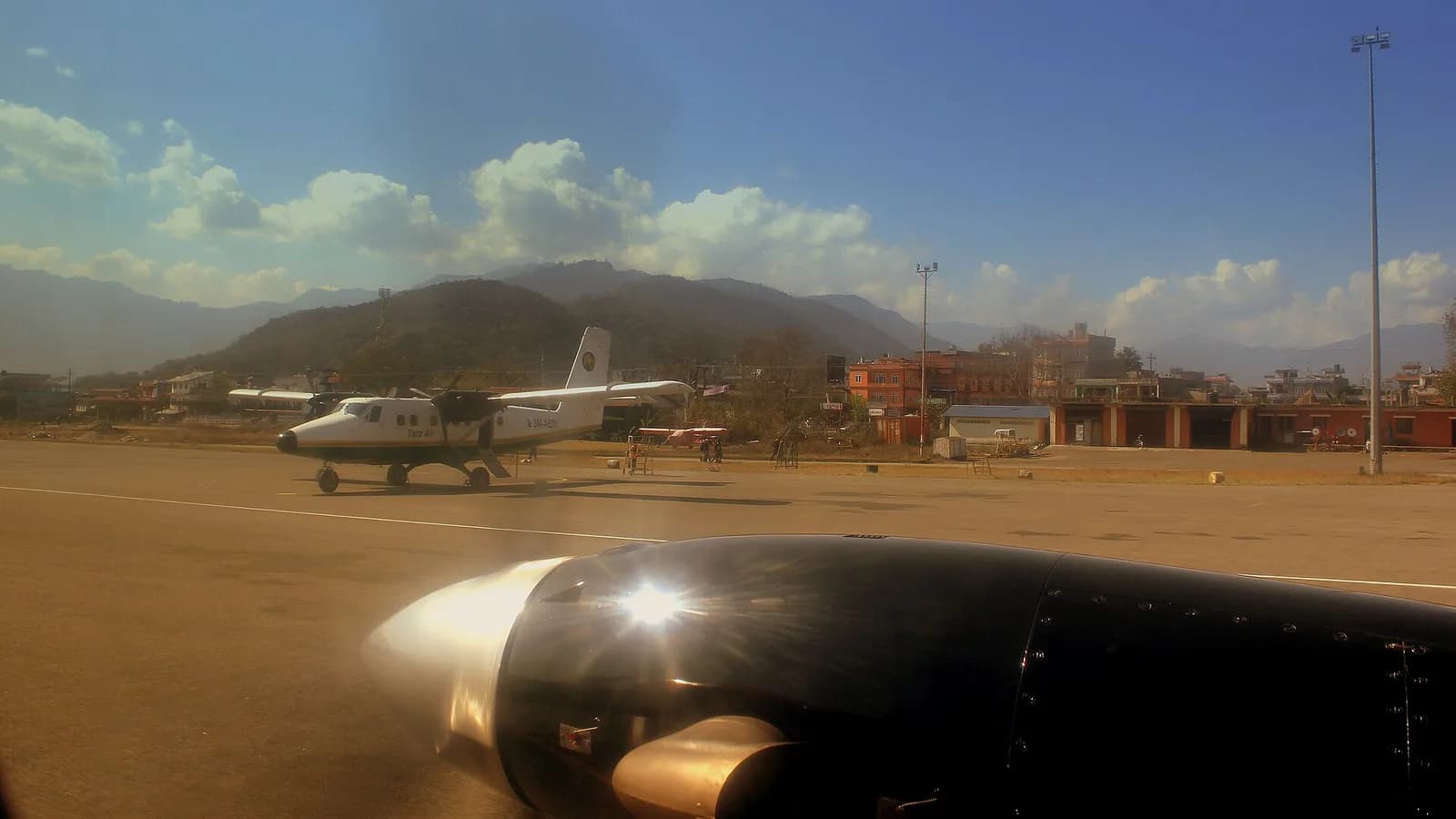
The road from Kathmandu to Pokhara is one of the great overland journeys in Nepal — and also one of the slowest, swallowing the better part of a day on a winding mountain highway. That is exactly why the Kathmandu to Pokhara flight is so popular: a 25-minute hop replaces an eight-to-ten-hour bus, drops you minutes from Lakeside, and frees up a precious half-day for the lake, the mountains, or the start of a trek. This guide lays out what the flight actually costs in 2026, how long it really takes door to door, which airlines fly it, and when flying beats taking the bus.
A quick word on prices: Nepal uses nationality-based fares, so what you pay depends on your passport, the season, and how far ahead you book. The figures below come from airlines and recent reporting (linked at the end), and are stamped with the date they applied. Always confirm the live fare before you commit.
Key takeaways
- The flight takes about 25 to 30 minutes in the air; budget a half-day once you add airport time at each end.
- Foreign tourists typically pay roughly USD 100 to 145 one way, versus around NPR 5,000 to 6,500 for Nepali citizens (as of mid-2025).
- Buddha Air, Yeti Airlines and Shree Airlines fly the route, with departures roughly every half hour on ATR turboprops.
- Flights now use Pokhara International Airport, a few kilometres from Lakeside, and leave from Kathmandu's domestic terminal.
- Flights are weather-dependent — book the earliest slot and leave a buffer before any onward international connection.
- For budget travellers, the tourist bus remains far cheaper, and many people fly one way and bus the other.
How long the flight really takes
In the air, the Kathmandu to Pokhara flight is short — most operators quote 25 to 30 minutes. It is one of the busiest domestic sectors in the country precisely because the geography makes road travel so slow; on the map the cities are only about 200 km apart, but the highway threads through hills and river gorges.
The honest door-to-door picture is longer than 25 minutes, though still a fraction of the bus. You need to reach the domestic terminal at Tribhuvan International Airport in Kathmandu, check in, and clear a security screening, which together usually means arriving an hour or so before departure. At the other end, Pokhara International Airport sits only a few kilometres from Lakeside, so the transfer into town is quick. All told, plan for a relaxed half-day around the flight rather than treating it as a pure 25-minute trip.
Flight frequency and schedule
Departures are frequent. Buddha Air advertises more than 17 daily flights on the route, and Yeti Airlines runs around 10, so services leave roughly every half hour from early morning — commonly from about 6:30 AM — into the evening. That density is a real advantage: if an early flight is delayed by weather, there is usually another not far behind.
What the flight costs in 2026
Here is where nationality-based pricing matters. Nepal sets one fare band for Nepali citizens, often a separate one for Indian and other SAARC nationals, and a higher US-dollar fare for other foreign tourists. The airline checks your passport at the counter, and if you somehow booked the wrong category you will be asked to settle the difference in cash before boarding.
| Passenger type | Typical one-way fare | Notes | |---|---|---| | Foreign tourist | ~USD 100–145 | Varies by airline, season, demand | | SAARC national | ~USD 70–85 | Often a middle band | | Nepali citizen | ~NPR 5,000–6,500 | Domestic rupee fare |
All figures are indicative and were reported around mid-2025; treat them as a guide, not a quote. Real-time fares swing with how early you book and the trekking-season peaks. As a recent live example, one aggregator listed a Yeti Airlines fare starting near US$79 for a mid-June 2026 departure — proof that early, off-peak bookings can dip below the typical band.
Because prices move so much, the single most useful habit is to check the live fare on the airline website or a Nepali aggregator before booking, rather than relying on any headline figure — including this one. For a wider look at how domestic pricing works across the country, our guide to domestic flights in Nepal breaks down the two-tier fare system in detail.
The airlines you will actually fly
Three carriers dominate this sector, and all use ATR turboprop aircraft rather than jets.
Buddha Air is the largest domestic airline in Nepal and runs the highest frequency on the Pokhara route, which makes it the default for many travellers simply because there is almost always a flight soon. It flies a sizeable ATR 72 and ATR 42 fleet.
Yeti Airlines is the other heavyweight, with around ten daily Pokhara flights on modern ATR 72s, and it markets itself heavily on environmental and carbon-offset credentials.
Shree Airlines also serves the route and is sometimes competitive on price, occasionally with jet equipment on busier sectors.
For most visitors the practical decision comes down to schedule and the live fare on the day rather than brand loyalty — the in-flight experience on a 25-minute hop is broadly similar across all three.
Arriving at Pokhara International Airport
A meaningful upgrade in recent years is the airport itself. Flights now land at Pokhara International Airport, which opened in 2023 and offers smarter facilities than the old strip. It sits a few kilometres east of Lakeside — the cluster of hotels, restaurants, and the lake promenade where most travellers base themselves — so a short taxi ride gets you to your hotel quickly.
One point worth knowing: as of 2026 the new airport was handling domestic flights and occasional charters, but it did not yet have regular scheduled international services, so nearly all tourists still arrive in Nepal through Kathmandu and connect onward by domestic flight. Once you land, our guide to things to do in Pokhara covers how to fill the time the flight just saved you.
Baggage, weather, and the things that catch people out
A short flight still comes with a few rules and risks worth planning around.
Baggage allowance
On a trunk route like Pokhara you generally get around 20 kg of checked baggage plus a small hand-carry of roughly 5 kg, though the exact allowance varies by airline and fare class. Excess weight is charged per kilogram at the counter. If you are carrying a heavy trekking duffel, weigh it before you go — it is cheaper to redistribute than to pay overweight fees on the spot.
Weather and cancellations
Most Nepali domestic flights operate under visual flight rules, meaning the crew needs to see the terrain. Fog over Kathmandu or cloud at Pokhara can delay or cancel flights, and the risk is highest during the monsoon (roughly June to September). Two simple defences help: book the earliest flight of the day, when conditions are usually clearest, and leave a buffer day before any fixed onward international flight so a cancellation does not cascade into a missed connection.
A note on safety perception
It is worth being straight about this. Nepal's domestic aviation has a mixed safety record, and at the time of writing no Nepali carrier met the standards required to fly commercially to or from the UK, which is why they appear on the European air-safety list. The Kathmandu–Pokhara ATR sector is among the busiest and most routine in the country, but travellers who want to weigh the trade-off should read up and decide for themselves; our Nepal travel advisory overview points to where official guidance lives.
Flight versus bus: which should you pick?
This is the real decision, and it comes down to time against money.
| Factor | Flight | Tourist bus | |---|---|---| | Time | ~25–30 min in air; ~half-day door to door | ~8–10 hours, sometimes more | | Foreign fare | ~USD 100–145 | A small fraction of the flight | | Scenery | Aerial glimpse of the hills | River gorges, terraced hillsides | | Weather risk | Delays/cancellations possible | Landslide delays in monsoon | | Best for | Tight schedules, trek starts | Budget travel, the journey itself |
Fly if your days in Nepal are precious, if you are heading straight onto a trek, or if you simply dislike long, winding road journeys. Take the bus if budget is the priority or if you want the overland experience — the Trishuli gorge and the folding hills are genuinely part of the trip. A popular compromise is to fly one way and bus the other, getting both the time saving and the scenery.
If you do choose the road, our Kathmandu to Pokhara tourist bus guide covers fares, departure points, and safety, while the broader Kathmandu to Pokhara transport comparison weighs every option side by side, from local buses to private cars.
How to book the flight
You have several straightforward routes to a ticket:
- Airline websites — Buddha Air, Yeti Airlines, and Shree Airlines all sell directly online, and this is often where you will see the cleanest foreign-tourist fare.
- A Nepali travel agency or your hotel — convenient, and useful if you want help matching a flight to a trek transfer.
- International aggregators — handy for comparing schedules, though always cross-check the final fare against the airline.
Book a few days ahead in the October–November and March–April trekking peaks, when seats fill faster. Make sure you are ticketed on the correct foreign-tourist fare so the passport check at the counter is painless. Getting to the airport itself is easy from the tourist districts; our getting around Kathmandu guide covers taxis and ride apps to the domestic terminal.
The verdict
For the money, few things in Nepal buy back as much of your trip as the Kathmandu to Pokhara flight. Twenty-five minutes in the air, a frequent schedule, and an airport minutes from the lake make it the obvious choice when time is tight or a trek is waiting. Just respect the weather — book early in the day, keep a buffer before any onward flight — and you will trade a long highway day for an afternoon already by Phewa Lake.
Sources
- Buddha Air — Kathmandu to Pokhara flights
- Yeti Airlines — Kathmandu to Pokhara flight
- Skyscanner — Kathmandu (KTM) to Pokhara (PKR) flights
- Graceful Adventure — Kathmandu Pokhara flight cost, time and booking
- Mountain Flight Nepal — Kathmandu to Pokhara flight 2025: price, duration and tips
- GOV.UK — Nepal travel advice, safety and security
Frequently asked questions
- How long is the flight from Kathmandu to Pokhara?
- The Kathmandu to Pokhara flight takes about 25 to 30 minutes in the air. The straight-line distance is short, but you should still allow extra time to reach Tribhuvan International Airport's domestic terminal, check in, and clear security, so plan for a half-day around the flight rather than just the 25 minutes.
- How much does a Kathmandu to Pokhara flight cost for foreigners?
- Foreign tourists generally pay in the region of USD 100 to 145 one way depending on airline and season, while SAARC nationals pay less and Nepali citizens pay a domestic rupee fare around NPR 5,000 to 6,500 (as of mid-2025). Fares move with demand and how early you book, so confirm the live price before booking.
- Which airlines fly from Kathmandu to Pokhara?
- The main carriers are Buddha Air, Yeti Airlines and Shree Airlines. Buddha Air advertises more than 17 daily flights on the route and Yeti runs around 10, all on ATR turboprop aircraft, so departures run roughly every half hour from early morning into the evening.
- Where does the Pokhara flight land?
- Flights now land at Pokhara International Airport, which opened in 2023 and sits a few kilometres east of Lakeside, where most travellers stay. A short taxi ride connects the airport to the lake. Departures leave from the domestic terminal at Tribhuvan International Airport in Kathmandu.
- What is the baggage allowance on the flight?
- On this trunk route you typically get around 20 kg of checked baggage plus a small hand-carry of about 5 kg, though allowances vary by airline and fare. Excess weight is charged per kilogram at the counter, so weigh a heavy trekking duffel before you travel to avoid a surprise fee.
- Is it better to fly or take the bus to Pokhara?
- Fly if your days are short or you dislike long winding roads, since 25 minutes beats eight to ten hours by bus. Take the bus if budget matters or you want the river-gorge scenery, as a tourist bus costs only a fraction of the fare. Many travellers fly one way and bus the other.
- Why do Kathmandu to Pokhara flights get delayed or cancelled?
- Most domestic flights in Nepal rely on the pilot seeing the ground and the hills, so fog over Kathmandu or cloud at Pokhara can ground them, especially in the monsoon. Booking the earliest slot of the day reduces the risk, and you should leave a buffer day before any onward international flight.
- Can I book the Kathmandu to Pokhara flight online in advance?
- Yes. You can book directly on the Buddha Air, Yeti Airlines or Shree Airlines websites, through a Nepali travel agency, or via international aggregators. Booking a few days ahead in the October to November and March to April peaks is wise, and confirm your foreign-tourist fare so the passport check at the counter is smooth.
Related posts
Flights to Kathmandu: Airlines, Hubs & Tips 2026
A practical guide to flights to Kathmandu in 2026 — which hubs connect you, the airlines, when fares dip, and what to expect at the airport.
Read postHow Long Is the Kathmandu to Pokhara Drive?
How long is the Kathmandu to Pokhara drive? Realistic times by tourist bus and private car, the Prithvi Highway route, stops, and monsoon delays.
Read postKathmandu to Pokhara Bus: 2026 Road & Booking Update
A 2026 update on the Kathmandu to Pokhara bus — how the highway widening changed the trip, current fares, and how to choose between bus, flight and car.
Read post