Eco Lodge Nepal: A 2026 Guide to Green Stays
How to choose an eco lodge in Nepal in 2026 — solar power, community jobs, jungle and mountain options, plus what the green labels really mean.
A good lodge leaves the valley a little better than it found it.
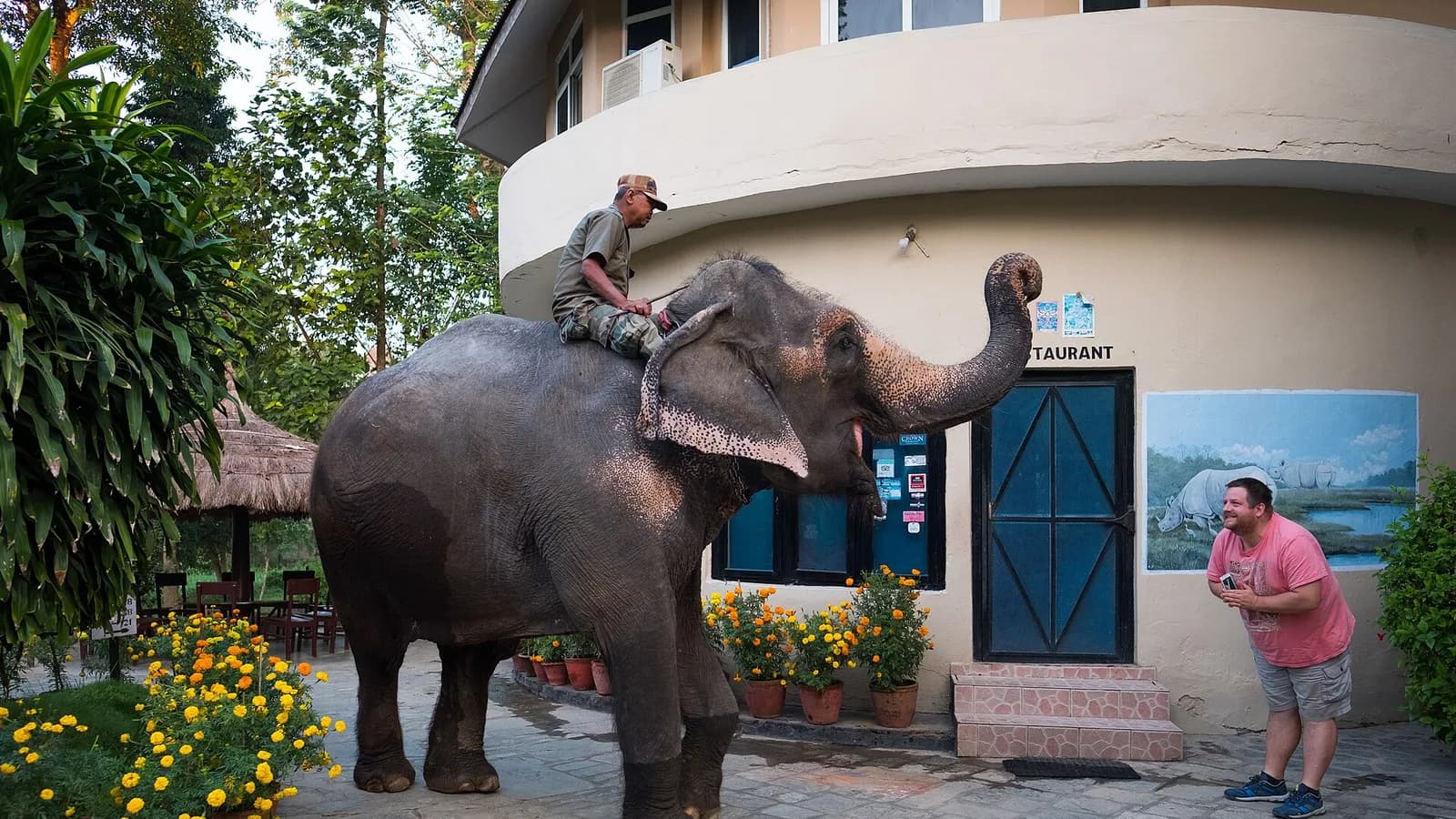
Nepal has spent the last decade quietly rebranding its best wild places. The country that gave the world Everest and the one-horned rhino now markets something subtler alongside them: the eco lodge in Nepal — a place to sleep that runs on the sun, hires the village next door and tries not to leave a mess behind. The label gets stretched, of course. Plenty of hotels paint a leaf on the sign and call it a day. This guide is about telling the real ones apart, where to find them, and what an eco lodge can and cannot promise.
If you are already thinking about your wider footprint, this pairs naturally with our guides to sustainable tourism in Nepal and eco trekking.
Key takeaways
- A genuine eco lodge runs on renewable power, manages its own waste and water, builds with local materials and keeps money and jobs in the community.
- The strongest clusters are around Chitwan and Bardia national parks for wildlife and the Pokhara and Annapurna foothills for mountain views.
- Many lodges, including pioneers like Tiger Tops, run on solar power and source food from their own gardens or nearby farms.
- Elephant-back safaris are being phased out by some operators on welfare grounds, replaced by walking encounters and jeep or canoe safaris.
- Nepal has no single official eco label, so read what a property actually does rather than trusting a green badge.
- An eco stay does not have to be expensive — community homestays follow the same principles at budget prices.
What "eco lodge" actually means here
There is no locked legal definition, but in Nepal a property earning the name usually ticks most of these boxes:
- Renewable energy. Solar is the workhorse — for lighting, fans and hot water — because many lodges sit beyond the reliable grid.
- Waste and water management. Composting toilets, wastewater recycling and rainwater collection appear again and again at the better places.
- Local materials and labour. Buildings made of stone, reclaimed wood, rammed earth or traditional Tharu mud-and-thatch, put up by local craftspeople.
- Local food. Kitchens fed by an on-site organic garden or nearby farms, rather than produce trucked in from the city.
- Community benefit. Local hiring, training, and support for conservation or schools, so a bigger share of your bill stays in the valley.
A useful rule: the honest lodges talk about systems — kilowatts, compost, who they employ — while the greenwashed ones talk only about vibes.
Eco lodge versus teahouse versus homestay
These three overlap, and on a trek you may use all of them. The differences are mostly scale and price.
| Type | Typical setting | Comfort and price | Eco angle | | --- | --- | --- | --- | | Eco lodge / resort | Jungle edges, foothills | Mid-range to luxury | Designed around sustainability, often solar and organic-garden led | | Teahouse | Trekking routes | Simple, budget | Increasingly solar; low-impact by nature of small scale | | Community homestay | Villages | Basic, very affordable | Income goes straight to host families |
If a polished lodge is out of budget, a community homestay delivers much of the same low-impact, money-stays-local benefit for far less.
Jungle eco lodges: Chitwan and Bardia
The lowland national parks are where Nepal's eco-lodge story is strongest, partly because wildlife tourism gives owners a direct financial reason to protect habitat.
Chitwan
Chitwan National Park, a UNESCO World Heritage Site, is the busiest wildlife destination and home to a long-running cluster of eco-minded lodges. Tiger Tops Tharu Lodge, on the park boundary, is one of the country's responsible-tourism pioneers: solar power heats water for showers and runs reading lamps and fans, accommodation is built by local craftspeople, and the kitchen draws on its own organic garden and nearby farmers, according to the operator. Other Chitwan properties such as Barahi Jungle Lodge and small Sauraha lodges advertise similar mixes of solar electricity, composting toilets and wastewater recycling.
One welfare note worth knowing: Tiger Tops says it stopped traditional elephant-back safaris in 2015 over the stress it caused the animals, and now offers walking time alongside its herd instead. Practice across Chitwan varies, so if elephant welfare matters to you, ask each lodge directly what it offers.
Bardia
Far quieter and further west, Bardia National Park trades crowds for a wilder feel and a better statistical shot at a tiger sighting. Bardia Eco Lodge sits on the park edge in cottages built from locally available materials by local tradesmen. The region has also been a testing ground for lower-impact construction — reporting describes a Bardia eco-lodge using rammed earth, recycled stone and reclaimed wood while blending traditional Tharu architecture with modern technology.
Mountain and foothill eco lodges
You do not have to descend to the jungle to stay green. The hills around Pokhara and the Annapurna foothills hold some of Nepal's best-known sustainable lodges.
Tiger Mountain Pokhara Lodge, set in forest overlooking the Annapurna range, is frequently cited as a sustainable-tourism pioneer that runs on solar power, uses locally sourced materials and supports the surrounding community. Closer to the lake, the Annapurna Eco-Village above Pokhara markets an eco-ethos built on organic gardens, livestock, rainwater collection, bio-gas and solar electricity, with sunrise and sunset views over the range.
If you prefer to keep walking, the principle scales onto the trail itself.
Solar lodges on the trekking routes
On the popular routes — the Annapurna Circuit and the trails into the Everest region — many teahouses now run lighting and hot water from solar panels. The catch is altitude: power and hot water can be limited high up, so charging a phone or taking a hot shower often carries a small fee, and that is a feature of scarcity rather than a scam. Choosing locally owned teahouses keeps your spending in the village either way. For the bigger picture on low-impact walking, see our eco trekking guide.
The green-label problem: how to read the claims
Here is the honest part. Nepal does not yet have a single, universal government eco-certification that you can rely on as shorthand. Industry groups and projects are working on it — there is talk of networks certifying lodges that use solar power and composting toilets, and at least one Kathmandu hotel has publicised a third-party carbon-footprint assessment done with the Hotel Association Nepal — but coverage is patchy and labels are inconsistent.
That puts the work on you, which is not a bad thing. A short checklist beats any badge:
- Power. How does the lodge generate electricity and heat water?
- Waste and water. What happens to sewage, greywater and rubbish?
- People. Are staff local? Is food sourced nearby?
- Conservation. Does it fund habitat protection, schooling or anti-poaching work?
- Wildlife policy. For jungle lodges, what is the stance on elephants and animal interactions?
Properties doing the real work answer these quickly and specifically. Vague answers are an answer too.
Why it is worth the effort
The wider direction of travel is encouraging. Government and industry initiatives are pushing green tourism — including a national push to create thousands of green tourism jobs over the coming years — and demand for low-impact stays keeps rising. Your booking is a small vote in that shift, especially when it lands with a lodge that genuinely reinvests locally.
Picking the right eco lodge for your trip
A quick way to match a lodge to your plans:
| If you want | Look at | Region | | --- | --- | --- | | Wildlife and rhinos | Jungle eco lodges | Chitwan | | Tigers and solitude | Remote eco lodges | Bardia | | Mountain views in comfort | Foothill eco lodges | Pokhara / Annapurna | | Trekking on a budget | Solar teahouses | Annapurna / Everest routes | | Deepest community link | Homestays | Villages nationwide |
Whatever you choose, the underlying logic is the same as the rest of responsible travel in Nepal: spend where the money stays local, drink water you have refilled and treated, and pick operators who can explain how they run. An eco lodge is not a magic fix for tourism's footprint, but a well-run one is one of the easier good decisions you can make on a Nepal trip.
Sources
- Top Eco-Friendly Lodges in Nepal — Explore All About Nepal
- Sustainable Hotels in Nepal — Nepal Sanctuary Treks
- Tiger Tops — Tharu Lodge
- Tiger Tops — Elephant Welfare
- Bardia Eco Lodge
- Annapurna Eco-Village (Ecolodge Nepal)
- Best Eco-Lodges for a Wildlife Retreat in Nepal — HIDMC
- Nepal Sustainable Travel — Ecocertifications Hospitality
- Greening Nepal's tourism — Nepali Times
Frequently asked questions
- What makes a hotel an eco lodge in Nepal?
- An eco lodge typically runs on renewable energy such as solar, manages its own waste and water, uses local building materials and labour, sources food locally and channels money and jobs into the surrounding community rather than just claiming to be green.
- Are eco lodges in Nepal expensive?
- They span a wide range — remote jungle and luxury mountain lodges can cost a lot per night, but many community homestays and small village lodges follow the same low-impact principles at budget prices, so an eco stay does not have to be costly.
- Where are the best eco lodges in Nepal?
- The strongest clusters are around Chitwan and Bardia national parks for wildlife, the Pokhara and Annapurna foothills for mountain views, and along the main trekking routes where solar-powered teahouses and community lodges are common.
- Do eco lodges in Nepal still offer elephant rides?
- Practice is shifting — some operators have stopped elephant-back safaris over animal-welfare concerns and instead offer walking encounters or jeep and canoe safaris, so check a lodge's specific elephant policy before booking if this matters to you.
- Is there an official eco certification for lodges in Nepal?
- Nepal does not yet have one universal government eco label, but industry bodies and projects promote standards like solar power, waste reduction and carbon assessments, so it is worth reading what a property actually does rather than trusting a vague green badge.
- Can I find a solar-powered lodge on a trek?
- Yes — many teahouses on popular routes such as the Annapurna and Everest trails now use solar panels for lighting and hot water, though supply can be limited at high altitude, so charging and hot showers may carry a small fee.
- How do eco lodges help local communities in Nepal?
- They tend to hire and train local staff, buy produce from nearby farms, build with local craftspeople and support conservation or schooling, so a larger share of what you pay stays in the village instead of leaving the area.
- What should I ask before booking an eco lodge in Nepal?
- Ask how it generates power, how it handles waste and water, whether staff and food are local, what conservation or community work it supports and what its wildlife policy is, since honest places answer these clearly.
Related posts
Eco Trekking Nepal: Sustainable Himalaya Travel (2026)
A practical guide to eco trekking in Nepal — cutting plastic, fair porter treatment, community lodges and leave-no-trace habits for the trails.
Read postSustainable Tourism in Nepal: A 2026 Traveller's Guide
How sustainable tourism in Nepal works in 2026 — permit fees, plastic bans, community homestays and simple choices that protect the Himalaya.
Read postAnnapurna Helicopter Tour: Cost & 2026 Guide
Annapurna helicopter tour from Pokhara to Annapurna Base Camp — cost, flight time, the landing, weight limits, best season and how it compares to trekking.
Read post