Annapurna Circuit Trek: A Practical 2026 Guide
Plan the Annapurna Circuit: Thorong La pass, permits, the best season, altitude safety, and how to walk the road-free NATT trails.
Five climate zones, one high pass, and a valley that ends up looking like Tibet — the Annapurna Circuit is a walk through the whole Himalaya in miniature.
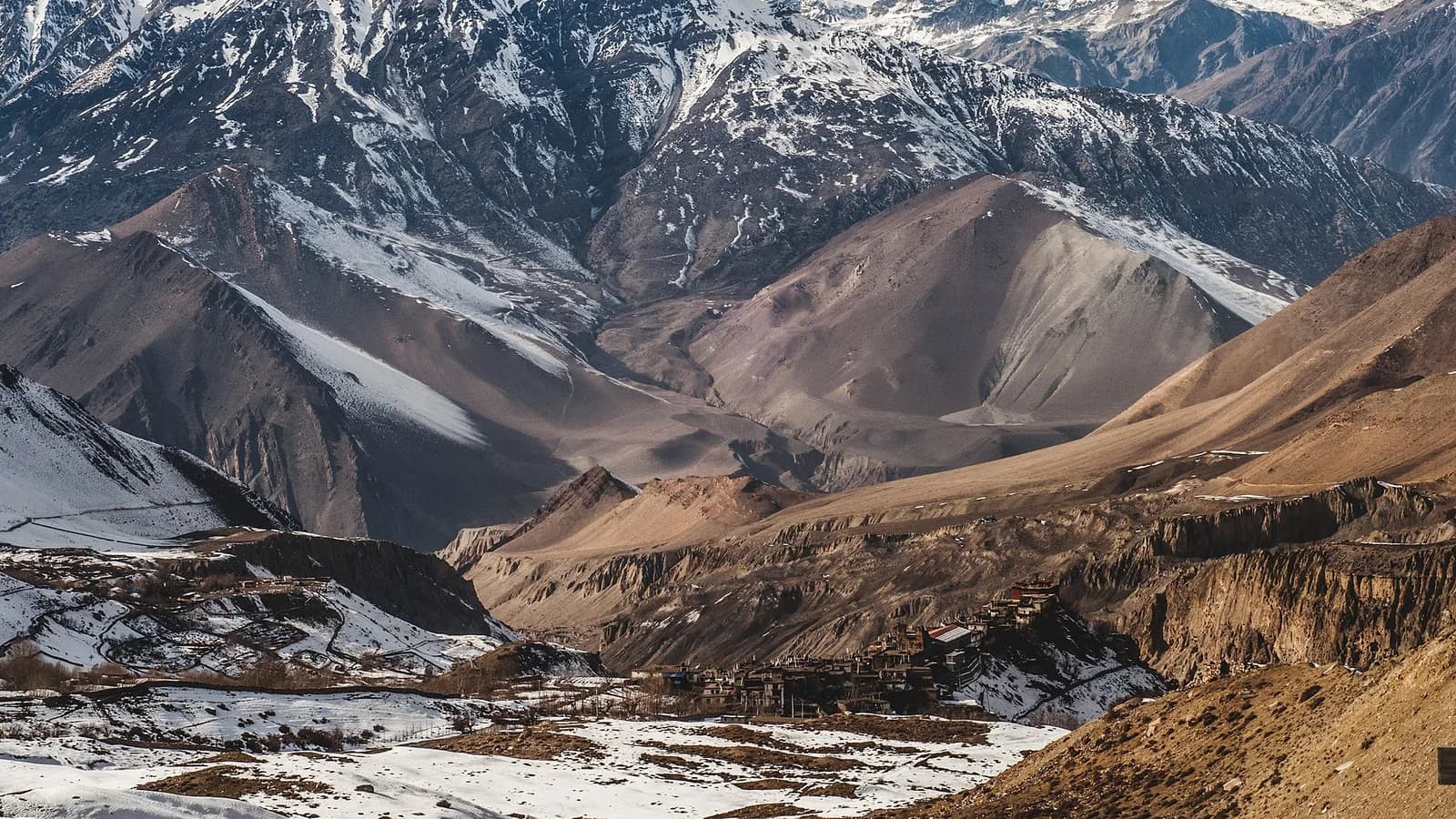
The Annapurna Circuit is the trek that taught the world to walk in Nepal. It loops around the Annapurna massif from green, terraced lowlands up through pine forest and high desert, over the snow of the Thorong La pass at 5,416 m, and down into the dramatic Kali Gandaki gorge. In one route you pass through roughly five climate zones — which is why so many people still call it the most varied long-distance trek on earth.
It has changed a lot. Roads now reach deep into both valleys, and that scared off some trekkers. But a network of road-free footpaths has restored much of the original experience, and the high country around Manang, Thorong La, and Muktinath is as wild as it ever was. This guide covers what you actually need to plan it in 2026: the route, the pass, permits, the best season, and staying safe at altitude.
Key takeaways
- The Annapurna Circuit runs roughly 160–230 km depending on where you start and finish, and most people walk it in about 12–18 days.
- The high point is the Thorong La pass at 5,416 m (17,769 ft) — usually crossed pre-dawn from Thorong Phedi or High Camp.
- For 2026, the ACAP permit is the key requirement (commonly listed at NPR 3,000 for foreigners), and a licensed guide is required for foreign trekkers.
- Autumn and spring are the prime seasons; winter can close the pass and the monsoon brings landslides.
- Roads affect up to ~75% of the old route, but the NATT waymarked trails let you stay off the road for most of the walk.
- Altitude sickness is the biggest risk: build in acclimatization days in Manang and don't rush the pass.
The route in plain terms
The classic circuit begins near Besisahar or Bhulbhule in the Marsyangdi valley and finishes on the Kali Gandaki side, traditionally ending in the gorge below Jomsom. You climb the eastern side, cross Thorong La, and descend the western side past Muktinath — so it is a point-to-point loop around the mountains, not an out-and-back.
The trail passes through a string of villages that double as your overnight stops. A typical progression up the Marsyangdi looks like this:
| Stage | Elevation | Notes | |---|---|---| | Dharapani | 1,860 m (6,102 ft) | Common jeep drop-off / walking start | | Chame | 2,670 m (8,760 ft) | District headquarters of Manang | | Upper Pisang | 3,300 m (10,826 ft) | Gateway to the scenic high route | | Manang | 3,540 m (11,614 ft) | Main acclimatization base | | Yak Kharka | 4,050 m (13,287 ft) | Last villages before the pass | | Thorong Phedi | 4,540 m (14,895 ft) | Launch point for Thorong La | | Thorong La pass | 5,416 m (17,769 ft) | The crossing |
Elevations above are drawn from current trekking-operator itineraries; expect small variations between sources and signs on the ground.
Where it starts and stops today
Because the road has pushed up the valley, most trekkers no longer walk the hot, dusty lowest section. A common pattern is to take a bus from Kathmandu or Pokhara to Besisahar, then a jeep to Jagat or Dharapani, and start walking there. On the far side, many people end at Muktinath or Jomsom and take a jeep or short flight out rather than walking the last road-heavy stretch. You can tailor the length to the time you have.
For how this compares to the shorter sanctuary trek, see Annapurna Circuit vs Annapurna Base Camp. If you want something wilder and more remote, the Manaslu Circuit vs Annapurna difficulty comparison is a good next read.
Crossing the Thorong La pass
Thorong La is the centerpiece and the hardest day. The standard approach is two nights of climbing — usually Yak Kharka, then Thorong Phedi (4,540 m) or High Camp — before the crossing itself.
Crossing day starts early. Operators typically have trekkers on the trail around 4 a.m. so they reach the top before the wind picks up, which often happens by mid-morning. The climb to the pass commonly takes around four to six hours, followed by a long knee-punishing descent to Muktinath on the other side. It is a big day at very high altitude, so pacing and warm layers matter more than speed.
Why timing the pass matters
The pass is exposed and weather can turn fast. Thorong La was the site of Nepal's worst trekking disaster, when a sudden October 2014 storm killed dozens of people on and around the pass. Even in normal years, fatalities occur from altitude sickness, falls, and cardiac events. None of that means the crossing is reckless — with sensible acclimatization, the right itinerary, and the willingness to turn back in bad weather, it is a manageable challenge. But it is the part of the trek that rewards caution over ambition.
Permits and rules for 2026
Permit specifics change, so treat the figures below as a starting point and confirm them with a registered agency or the Nepal Tourism Board before you go.
What you need
- ACAP (Annapurna Conservation Area Permit) — this is the permit that checkpoints across the Annapurna region actually verify. Several 2026 guides list it at NPR 3,000 for foreign nationals and NPR 1,000 for SAARC nationals (as of June 2026).
- TIMS card — some operators still arrange this, though multiple recent guides report TIMS is not enforced on the Annapurna trails and only ACAP is checked. If you book through an agency, they will sort out whichever paperwork applies.
Permits are arranged in Kathmandu or Pokhara before you set off — there is no permit office on the trail. You will generally need your passport, a visa, and trekking and insurance details to apply.
The guide rule
Nepal introduced regulations in 2023 requiring foreign trekkers in the country's national parks and conservation areas — including the Annapurna region — to trek with a licensed guide or porter-guide. As of 2026, independent solo trekking without a guide is still reported as not permitted here. A guide who knows the road-free trails is genuinely useful, because waymarking at some junctions is still inconsistent.
For budgeting the human side of a guided trek, see our guide to tipping trekking guides and porters in Nepal.
Roads, jeeps, and the road-free NATT trails
The honest headline: road construction has affected up to about 75% of the original circuit. The good news is that you do not have to walk on those roads.
A network called the Natural Annapurna Trekking Trails (NATT) was developed specifically to route walkers off the road and back onto footpaths. NATT routes are waymarked with blue-and-white signs, as opposed to the red-and-white markers of the main road-following route. They reconnect old villages, ridge lines, and quiet side valleys.
Side trails worth knowing
- Upper Pisang high route: instead of staying low on the road to Manang, climb to Upper Pisang and traverse the ridge through Ghyaru and Ngawal. The Annapurna II and Gangapurna views up here are the ones road-walkers miss entirely.
- Lower-valley footpaths: below Dharapani, NATT side trails (for example the suspension-bridge route near Karte, or the climb to Odar village) keep you off the jeep track.
Because trail marking can be patchy at key turns, this is one more reason a guide familiar with NATT pays for itself.
Acclimatization and altitude safety
Altitude sickness is the single biggest health risk on this trek, and Thorong La at 5,416 m sits well above the height where Acute Mountain Sickness (AMS) becomes a serious concern. Guides citing trekking studies note that roughly 25–50% of people crossing Thorong La experience at least mild AMS. Importantly, AMS does not care about your age or fitness — a marathon runner and a retired teacher face the same odds. Acclimatization is the main variable you can actually control.
A practical acclimatization plan
- Take rest days in Manang (3,540 m). This is the standard place to pause for a day or two before going higher.
- Climb high, sleep low. On a Manang rest day, day-hike up toward Gangapurna Lake or the Ice Lake (around 4,600 m) and return to sleep low. That cycle helps your body adapt.
- Go slow above Manang. Short days to Yak Kharka and Thorong Phedi are deliberate, not lazy.
- Know the warning signs — headache, nausea, dizziness, trouble sleeping — and be willing to descend if they get worse.
We cover prevention, symptoms, and when to turn around in detail in the altitude sickness guide for Nepal trekking. Two popular high side trips, Tilicho Lake and the sacred temple at Muktinath, add real altitude of their own, so factor extra acclimatization in if you plan to include them.
Best time to go
Season makes or breaks this trek, mostly because of the pass.
| Season | Months | What to expect | |---|---|---| | Autumn | Sep–Nov | Most popular: stable weather, clear skies, low landslide risk | | Spring | Mar–May | Excellent: rhododendrons in bloom, mild temps, some late pre-monsoon showers | | Monsoon | Jun–Aug | Heavy rain, landslides, muddy trails on the lower sections | | Winter | Dec–Feb | Very cold; snow can make Thorong La difficult or impossible |
If you have flexibility, October and a window from late March to April tend to give the best balance of clear views and a crossable pass. Whenever you go, build buffer days so a snowy pass doesn't force a rushed, risky crossing.
What to pack the brain for
Beyond gear lists, two things make the Annapurna Circuit smoother. First, patience — the lower days are villages and valleys, and the real high mountains open up later, so don't judge the trek by day one. Second, a few words of Nepali go a long way in teahouses where English thins out at altitude; our roundup of Nepali phrases every trekker should know is built for exactly this trail.
Sources
- Annapurna Circuit — Wikipedia
- Annapurna Trek Permits 2026 | ACAP & TIMS Updates — Shikhar Adventure
- Annapurna Trekking Permits 2026: ACAP, TIMS & RAP Guide — Nepal Hiking Team
- Annapurna Circuit Trek — Detailed Itinerary 2025/2026 — Magical Nepal
- NATT Annapurna Circuit Trek: Road-Free Guide — Nepal Hiking Team
- Road-free Annapurna Circuit itinerary — Horizon Guides
- Altitude Sickness on AC and MC Treks: 2026 Guide — Shikhar Adventure
- Is Annapurna Circuit Trek Safe? A Complete Guide for 2025 — The Himalayan Trips
- Nepal Solo Trekking: Mandatory Guide Rule & 2026 Permits — Best Heritage Tour
Frequently asked questions
- How many days does the Annapurna Circuit take?
- Most trekkers complete it in roughly 12 to 18 days on the trail, and Wikipedia notes some take 15 to 20 days including acclimatization and side trips.
- How high is the Thorong La pass?
- Thorong La sits at 5,416 m (17,769 ft), which is one of the highest trekking passes a non-mountaineer is likely to cross.
- What permits do I need for the Annapurna Circuit in 2026?
- You need the Annapurna Conservation Area Permit (ACAP); some operators also arrange a TIMS card, though several 2026 guides report ACAP is the permit actually checked on Annapurna trails.
- How much does the ACAP permit cost?
- Multiple 2026 trekking sources list ACAP at NPR 3,000 for foreign nationals and NPR 1,000 for SAARC nationals (as of June 2026); confirm the current rate before you travel.
- Can I trek the Annapurna Circuit solo without a guide?
- Nepal introduced rules in 2023 requiring foreign trekkers in national parks and conservation areas to use a licensed guide; independent solo trekking without a guide is still reported as not permitted in 2026.
- When is the best time to do the Annapurna Circuit?
- Autumn (September to November) and spring (March to May) are the most reliable seasons; winter snow can close the pass and the monsoon brings landslide risk.
- Is the whole circuit on a road now?
- Roads have reached far up both valleys and affect up to about 75 percent of the original route, but the waymarked NATT footpaths let you avoid most of the road on foot.
- How dangerous is altitude sickness on this trek?
- It is the single biggest health risk; studies cited by guides suggest 25 to 50 percent of trekkers crossing Thorong La get mild AMS, so build in acclimatization days.
Related posts
Annapurna Circuit Trek: Route, Permits & Thorong La Guide
A practical Annapurna Circuit trek guide — the full route, Thorong La pass, 2026 ACAP permit and guide rules, costs, road impact and best season.
Read postAnnapurna Trek Package: How to Choose One in 2026
A practical guide to picking an Annapurna trek package in 2026 — durations, what is included and excluded, permits, the guide rule, and how to compare quotes.
Read postABC Trek: A Plain-English Guide to Annapurna Base Camp
The ABC trek (Annapurna Base Camp) explained — the route, how many days it takes, difficulty, the best seasons, and what daily trail life is really like.
Read post