How to Say 'I'm Full' in Nepali — Pugyo (And Why It's Critical)
Without this single phrase, every Nepali host or teahouse cook will keep refilling your plate. With it, you finish gracefully. Pugyo, plus variations.
Pugyo is the word that stops the third helping. Without it, you eat the third helping.
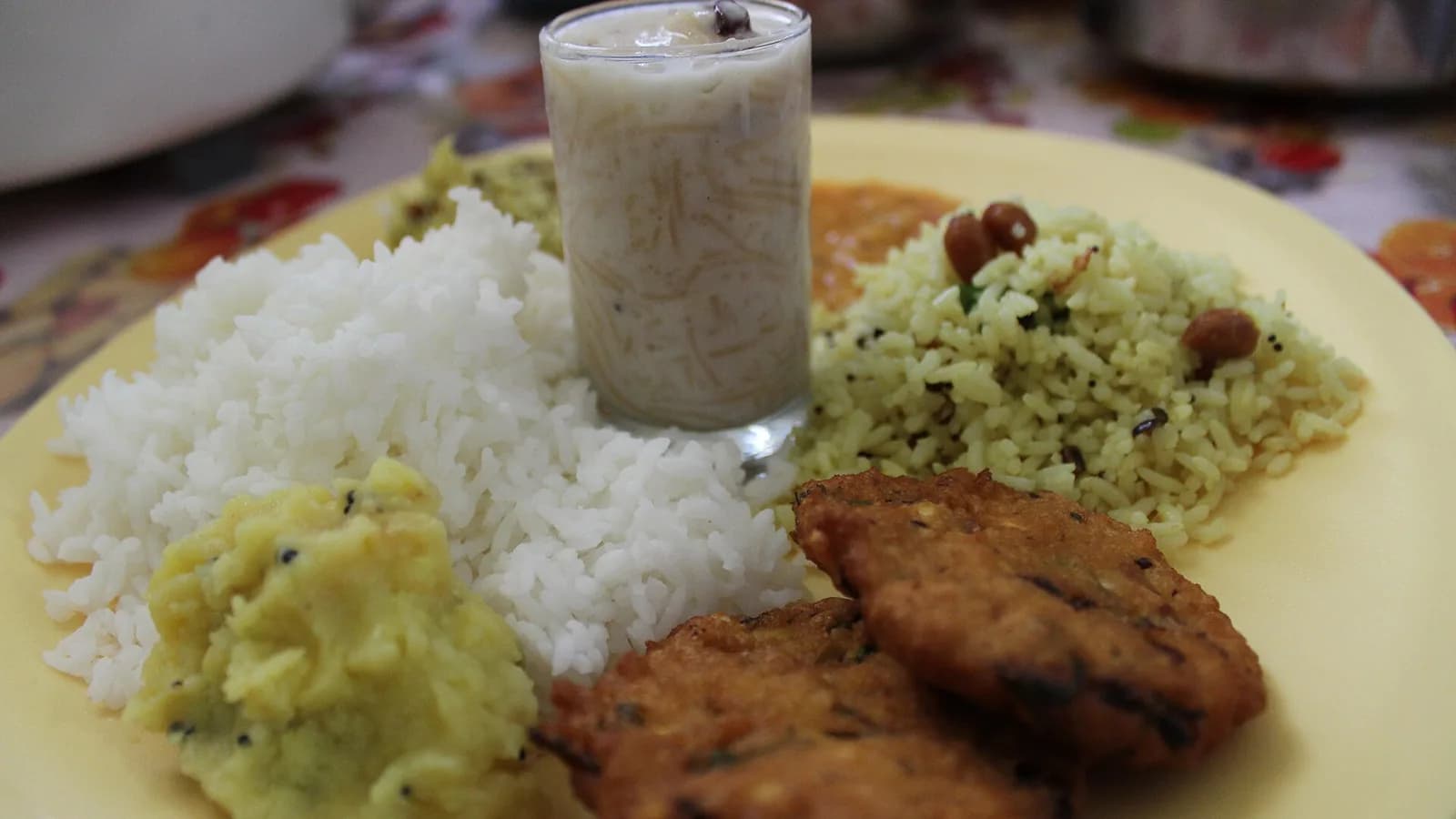
Nepali hospitality has a quirk that foreign travelers don't expect: hosts and teahouse cooks will keep refilling your plate until you explicitly tell them to stop. They don't read body language well in this context. They don't trust "no thanks." They trust the specific Nepali word.
That word is pugyo — पुग्यो — "I'm full / it's enough."
It's two syllables. It will save you from eating twice as much dal bhat as you intended, every meal, the entire trip.
The pronunciation
Pugyo breaks down as:
- Pug — like "POOG" with a short 'u'
- Yo — like "yoh"
Approximate: POOG-yoh (the 'g' is hard like in "good")
Devanagari: पुग्यो. See the Devanagari roadmap if you want to read it on menus and signs.
Why this phrase matters
The cultural context: dal bhat — the standard Nepali meal — comes with unlimited refills. The cook refilling your rice, dal, or vegetables is not optional service; it's the expected hospitality. They will keep refilling until you signal no more.
The signals that DON'T work:
- Saying "no thanks" in English
- Putting your hand over the plate (sometimes interpreted as wanting more)
- Saying "chaina" (meaning "no" or "there isn't")
- Looking full visually
The signal that works: pugyo, said with a small head shake or palm-down gesture.
When to use it
Three moments:
-
When the cook approaches with the refill ladle. Hold your palm gently over the plate and say pugyo. They'll smile and move to the next person.
-
When asked verbally whether you want more. The cook will sometimes say "Aru paauchhau?" (do you want more?). The reply: Pugyo, dhanyabad — "I'm full, thank you."
-
At the end of a meal in a Nepali home. The host will keep pressing food on you for several rounds. Pugyo is the polite firm close.
The variations
Soft refusal (you're full but want to be very gentle): Pugyo, dhanyabad — "I'm full, thank you." Most common use.
Strong but polite (after multiple refusal attempts): Pugyo pugyo, dherai dhanyabad — "Enough enough, many thanks." The repetition of pugyo makes the refusal firm; the dherai dhanyabad keeps it warm.
With praise (if the meal was good): Pugyo, mitho thiyo — "I'm full, it was delicious." This combines pugyo with the past tense of delicious and is the warmest possible close to a meal.
Specifically about dal bhat: Dal bhat pugyo — "Dal bhat is enough." Useful if the host might offer a different dish next.
What NOT to say
Don't say "chaina" unless you're sure. Chaina means "no" or "there isn't any" — it can be confusing in this context. Pugyo is specifically the food-refusal word.
Don't say "bhayo" — it means "it's done" or "finished" and can be misread as either "I'm done" or "the food is done." Ambiguous.
Don't gesture wildly — covering the plate aggressively or waving hands can come across as rude. The small palm-down gesture or head shake is the local pattern.
In trekking lodges specifically
On the Everest Base Camp and Annapurna Circuit trails, every lodge serves dal bhat with refills included in the price. The cook's job is to keep your plate full until you signal pugyo.
If you don't know the phrase, you'll eat:
- Three or four helpings instead of one
- Until you're uncomfortably stuffed
- And often skip dinner because lunch was too much
If you know the phrase, you eat the right amount and leave the dining room with energy to socialize. The teahouse scenario script covers the full sequence.
In Nepali homes
The hospitality intensity at home meals can be even higher than at lodges. A typical sequence:
- Host serves you a plate
- You eat a portion, say mitho chha (delicious)
- Host refills before you've finished
- You eat some more, say pugyo
- Host insists, refills anyway
- You eat what you can, say pugyo pugyo, dherai dhanyabad
- Host smiles, finally stops
Even after the third pugyo, you may need to actively pull your plate back from the refill ladle. This is normal Nepali hospitality — it's not rude on their part and it's not rude for you to firmly decline.
The trick: don't say pugyo until you actually mean it. Saying it too early means the host will think you're being polite-but-hungry and will push past it. Saying it firmly the first time means it lands.
A note on cultural nuance
There's a slight expectation in some traditional households that the first refusal is polite-but-not-real. The cook offers; you politely refuse; they re-offer; you accept the second offer.
In modern urban Nepal and in tourist-facing lodges, this is less common. Pugyo said clearly works on the first try.
If you ever find yourself in a deeply traditional rural family meal and you're getting forced second helpings even after pugyo, the cultural pattern is to accept a tiny additional portion as a sign of respect, then firmly decline the next round. It's a delicate dance.
A few related phrases
- Aru chaaiyo — "I want more." The opposite of pugyo.
- Eut khana paauchhau? — "Can I have more food?"
- Yo pugyo, tara chiya chaaiyo — "This is enough, but I want tea." (Useful when stopping refills but wanting more tea.)
- Mitho chha — "It's delicious." Pair with pugyo for full coverage.
- Dhanyabad — "Thank you." Closing word for any meal.
The complete Nepali phrasebook for ordering food covers more.
The cumulative effect on a trek
A 12-day trek means 24+ dal bhat meals. Without pugyo, you over-eat at every single one. With pugyo, you eat the right amount, save space for tea and snacks, and leave each meal feeling well rather than stuffed.
It's the single most practical Nepali phrase a trekker can learn. Mitho chha opens warmth; pugyo closes the meal.
Use both at every meal.
Pre-trip checklist
- Practice saying pugyo aloud — POOG-yoh, hard 'g'
- Practice the palm-down "stop" gesture
- The eight trail phrases for the broader trek
- The teahouse scenario script for the full sequence
- The Nepali phrasebook for restaurants for context
Pugyo is the word every cook in Nepal will respect, and every traveler should know.
Related posts
How to Say Delicious in Nepali — Mitho Chha (and Why It Matters)
The single phrase that earns extra dal bhat refills, warmer service, and the quiet respect of every Nepali cook. Plus the variations and context.
Read postHow to Say Hello in Nepali: Namaste and Beyond
How to say hello in Nepali — what namaste means, how to pronounce it, the folded-hands gesture, and when to use namaskar instead. A traveler's guide.
Read postHow to Say Thank You in Nepali (Dhanyabaad Guide)
How to say thank you in Nepali — dhanyabaad pronunciation, formal vs casual use, the namaste gesture, and what locals actually expect from travelers.
Read post