Chitwan Jungle Resort: How to Choose Where to Stay
A Chitwan jungle resort guide for tourists — Sauraha vs Meghauli, resort types, what packages include, and how to book the right base for your safari.
There are no resorts inside the park — so the real question is which edge of the jungle you wake up on.
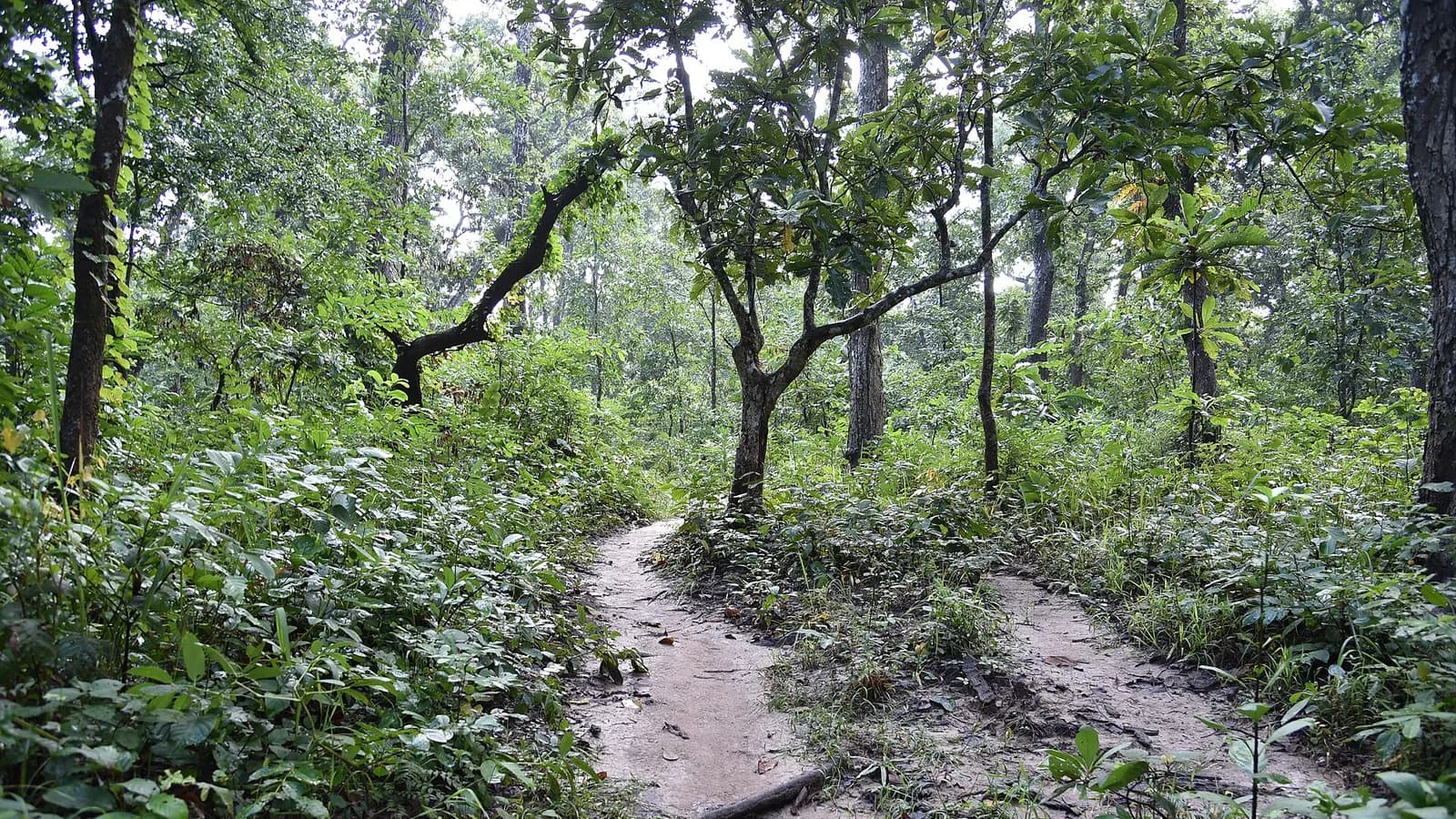
A Chitwan jungle resort is where most Nepal trips swap thin mountain air for the warm, green hum of the Terai lowlands. Down here, on the edge of the country's first national park, you can wake to birdsong, drift down the Rapti river in a dugout canoe, and have a realistic shot at watching a wild one-horned rhino graze before breakfast. But "resort" covers a huge range in Chitwan — from simple thatched lodges in busy Sauraha to riverside luxury camps near Meghauli — and the single biggest myth is that any of them sit inside the park. This guide is a practical companion to our Chitwan National Park safari guide: it focuses on the part you actually book — where to stay, what your package covers, and how to choose the right base.
Key takeaways
- No resort is inside the park. Every Chitwan jungle resort, lodge, and homestay sits in the buffer zone or a bordering town — Sauraha and Meghauli are the two main bases.
- Sauraha is the easy, well-priced hub; Meghauli is quieter, more remote, and leans upmarket.
- Packages usually bundle accommodation, meals, and guided activities (jeep safari, canoe, jungle walk, Tharu show) — but the park entry permit is a separate government fee you must confirm.
- October to March is the comfortable, popular window; book ahead, especially around Nepali holidays.
- Skip elephant rides. Welfare concerns have pushed responsible resorts toward jeep, walking, and canoe safaris instead.
- Tharu and community homestays are a lower-cost, more local alternative to a polished resort.
The one rule that shapes everything: no one sleeps in the park
Before comparing resorts, understand the rule that governs all of them. Chitwan National Park has a strictly protected core zone, where the wildlife lives, and a surrounding buffer zone of community forests, farmland, and villages. Tourist accommodation is not permitted inside the core zone, and visitors are not allowed to remain in the park between sunset and sunrise.
So when a brochure promises a resort "inside Chitwan National Park," read it as on the edge of or beside the park. The lodges sit in the buffer zone or in towns just across the boundary, and you cross into the core zone with a guide and a daily permit for safaris, then return to your resort to sleep. This is not a marketing technicality — it is conservation law, and it is part of why Chitwan's rhinos have recovered. For the full story of the buffer zone and what your ticket funds, see our Chitwan National Park safari guide.
Sauraha vs Meghauli: which edge of the jungle?
Your first real decision is which side of the park to base on. The two established hubs offer very different experiences.
Sauraha — the main hub
Sauraha, on the park's eastern edge, is the default for most visitors and for good reason. It is a small town built entirely around safari tourism, with dozens of resorts and lodges across every budget, plenty of restaurants, tour operators on every corner, the elephant breeding centre nearby, and an easy riverside strip for sunset views. It is the most convenient base to reach, the easiest to find last-minute rooms in, and the best for travellers who want choice and value.
The trade-off is atmosphere: Sauraha can feel busy and developed in peak season, and the cheaper end of the market is functional rather than romantic.
Meghauli — quieter and more remote
Meghauli, on the southwestern side, is the alternative for travellers who prioritise seclusion. It sees far fewer visitors, sits beside open grassland and the river, and is home to a small cluster of higher-end lodges and luxury safari camps. The same core activities — jeep safaris, canoeing, jungle walks, village visits — are available here too.
The catch is access and price: Meghauli is harder to reach and the standout properties skew expensive, so it suits a more deliberate, higher-budget trip rather than a quick, flexible stopover.
Bharatpur — a city, not a base
Nearby Bharatpur is the regional city and the location of the airport, but it is not a jungle base in any meaningful sense. Most travellers only pass through it on the way to Sauraha or Meghauli.
| Base | Vibe | Best for | Reaching it | | --- | --- | --- | --- | | Sauraha | Busy tourist hub, every budget | Choice, value, convenience, last-minute rooms | Easiest; tourist bus direct, or fly to Bharatpur then short drive | | Meghauli | Quiet, remote, upmarket | Seclusion, luxury lodges, fewer crowds | Harder; more remote, longer transfer | | Bharatpur | Regional city | Transit and the airport only | Has the airport; not a jungle base |
For how to actually get down there, our Kathmandu to Chitwan transport guide and the Kathmandu to Sauraha route breakdown cover buses, flights, and timings.
The types of Chitwan jungle resort
"Resort" in Chitwan spans a wide spectrum. Matching the type to your budget and expectations saves disappointment.
Budget lodges and guesthouses
Clustered mostly in Sauraha, these are simple, functional places — fan-cooled or basic air-conditioned rooms, modest gardens, and a restaurant. They are the backbone of independent travel here, often family-run, and easy to book on arrival. Expect clean comfort rather than design flair.
Mid-range resorts
The largest category. Many Sauraha resorts now offer air-conditioned deluxe and cottage rooms, attached bathrooms with hot water, landscaped gardens, and on-site restaurants, and a growing number have swimming pools — a real bonus in the pre-monsoon heat. Some build raised "jungle tower" or machan-style rooms for a closer-to-the-wild feel (still outside the park boundary). These properties typically sell all-inclusive packages.
Luxury and boutique lodges
At the top end — concentrated around Meghauli and the more exclusive fringes — sit boutique lodges and luxury safari camps. Think thatched riverside villas, plunge pools, full-board fine dining, private decks, and curated naturalist-led experiences. These properties trade on seclusion, design, and service, and price accordingly.
Tharu and community homestays
A distinct and rewarding alternative: staying with or beside the Tharu, the indigenous community of the Terai. Community homestays around Chitwan offer simple private rooms — often thatched bungalows with running water, mosquito nets, fans, and Western-style toilets — plus home-cooked meals and a genuine window into village life. They are cheaper than resorts and channel money directly to local families. For the wider model, see community homestays in Nepal.
What a resort package usually includes
Most Chitwan resorts sell all-inclusive packages rather than room-only rates, typically built around one to three nights. A standard package generally bundles:
- Accommodation for the nights booked
- All meals (often breakfast, lunch, and dinner)
- A set of guided activities — commonly a jeep safari, a canoe trip on the Rapti, a guided jungle walk, a Tharu cultural dance programme, and a visit to the elephant breeding centre
- Naturalist guides for in-park activities
The crucial thing to verify is what is not included. The national park entry permit is a separate government fee and may or may not be folded into the quoted price, and taxes can be added on top. Some packages also treat certain extras — a longer safari, private transfers, or premium activities — as add-ons.
The questions to ask before you book
- Is the national park entry permit included, or paid separately at the gate?
- Are all meals and which activities covered, and how long is each safari?
- Are taxes included in the headline price?
- What is the cancellation policy, and is a deposit required?
- Does the activity list include elephant rides — and can you swap them for ethical alternatives?
For how the daily park fee, transport, and guides add up across a whole trip, the Chitwan National Park safari guide breaks down the official fee structure and the buffer-zone model behind it.
A note on ethics: the elephant-ride question
For decades, elephant-back safaris were a Chitwan signature, and some resorts still list them. Many travellers now choose to skip them. Animal-welfare organisations have documented serious concerns about how captive elephants are trained and kept, and a large number of travel companies have publicly committed to stop selling elephant rides and shows in favour of elephant-friendly alternatives.
The responsible approach when choosing a resort: favour properties that lead with jeep, walking, and canoe safaris, be cautious about staged elephant rides, bathing, and "games," and if you want to be near these animals, visit the elephant breeding centre — an observational facility rather than a riding operation. A resort's activity list is a quick signal of where it stands.
When to go — and how it affects booking
Season shapes both your experience and how far ahead you should book.
| Season | Conditions | Booking notes | | --- | --- | --- | | October–March | Dry, comfortable; easier wildlife viewing | Peak demand — book ahead, especially around Nepali holidays | | April–May | Hot, dusty; better tiger odds as water shrinks | Quieter than winter; a pool earns its keep | | June–September | Monsoon, lush and green, fewer crowds | Lowest demand; often the best resort value |
The comfortable, popular window is October to March, with dry weather and wildlife concentrating at shrinking water sources. That is also when rooms fill fastest, so reserve early — and be aware that domestic demand surges around major Nepali festivals. The monsoon (June to September) is the quietest and often the cheapest time to stay, with green, dramatic scenery, though tall grass and rain make wildlife harder to spot. The hot pre-monsoon months are a middle ground that slightly improves tiger odds. For the bigger seasonal picture, see the best time to visit Nepal.
What you'll realistically do from your resort
A resort stay is really a base for activities, and a typical two-night package gives you a full middle day to use it. Common inclusions:
- Jeep safari — the widest-ranging option and your best odds for rhinos, with a chance of a tiger.
- Canoe trip on the Rapti — a calm dugout drift for gharials, water birds, and riverbank wildlife, lovely at dawn.
- Guided jungle walk — quieter and more immersive, led by a trained naturalist.
- Tharu cultural programme — most resorts host an evening of traditional Tharu dance.
- Elephant breeding centre — an ethical way to see the animals up close.
Rhinos are close to a near-certainty in the right season; tigers remain a lottery even as numbers climb. For the honest odds and conservation context, see our Bengal tiger in Chitwan and one-horned rhino in Nepal guides. If you want a wilder, more remote alternative for serious wildlife travel, Bardia National Park is the western counterpart.
A short checklist for choosing your resort
- Pick your side first: Sauraha for convenience and value, Meghauli for seclusion and luxury.
- Match the resort type to your budget — budget lodge, mid-range resort, luxury camp, or Tharu homestay.
- Confirm the park permit is included or budgeted separately, per day.
- Read the activity list and favour ethical, vehicle- and foot-based safaris.
- Book ahead for October–March and around Nepali holidays; chase value in the monsoon.
- Plan two nights for a relaxed, full-day safari experience.
Chitwan rewards travellers who book with their eyes open. The resort is not the destination — the jungle is — but choosing the right base, on the right edge of the park, with the right activities included, is what turns a rushed overnight into one of the best stops in Nepal. For everything beyond where to sleep, lean on the full Chitwan National Park safari guide.
Sources
- Chitwan National Park (official) — Regulation and fees
- Nepal Tourism Board — Park entry fees
- Kasara Resort — Chitwan National Park fees and permits
- The Longest Way Home — Accommodation, resorts and guesthouses in Chitwan/Sauraha
- Barahi Jungle Lodge — Chitwan National Park (Meghauli)
- Tiger Tops — Tharu Lodge, Chitwan
- Community Homestay Network — Barauli Community Homestay, Tharu village in Chitwan
- World Animal Protection — Chitwan Elephant Festival and ethical concerns
Frequently asked questions
- Can you stay inside Chitwan National Park itself?
- No. There is no tourist accommodation inside the protected core zone, and visitors cannot remain in the park between sunset and sunrise. Every Chitwan jungle resort, lodge, and homestay sits in the buffer zone or in nearby towns such as Sauraha and Meghauli, right beside the park boundary rather than within it.
- Is Sauraha or Meghauli the better base for a jungle resort?
- Sauraha is the busier, easier, better-value hub on the eastern edge with the widest choice of resorts, restaurants, and operators. Meghauli on the southwestern side is quieter and more remote, home to a handful of upmarket lodges and harder to reach. Choose Sauraha for convenience and budget flexibility, Meghauli for seclusion.
- What is usually included in a Chitwan resort package?
- Most resort packages bundle accommodation, all meals, and a set of guided activities such as a jeep safari, a canoe trip on the Rapti, a jungle walk, a Tharu cultural show, and a visit to the elephant breeding centre. Always confirm in writing whether the national park entry permit and any taxes are included or charged separately at the gate.
- Do Chitwan jungle resorts include the park entry fee?
- Sometimes, but not always. The daily park permit is a separate government fee, so a quoted package price may or may not cover it. Ask the resort directly whether the entry permit is part of the rate before you book, and budget for it per day if it is not, since you cannot sleep inside the core zone.
- When is the best time to book a Chitwan resort stay?
- October to March is the comfortable, popular window with dry weather and easier wildlife viewing, so book ahead for that period and for major Nepali holidays when domestic demand spikes. April and May are hotter but improve tiger odds, while the June to September monsoon is quieter, greener, and often cheaper.
- Should I avoid resorts that offer elephant rides?
- Many travellers now do. Animal-welfare groups have raised serious concerns about elephant-back safaris, and a large number of travel companies have stopped selling them in favour of jeep, walking, and canoe trips. If welfare matters to you, choose a resort that leads with vehicle and foot safaris and treat staged elephant rides and shows with caution.
- Are Tharu homestays a good alternative to a resort?
- Yes, if you want a more local and lower-cost stay. Community and Tharu homestays around Chitwan offer simple private rooms, home-cooked food, and a closer look at Terai village life, often with the same core activities arranged through the host. They trade resort polish and pools for authenticity and community benefit.
- How many nights should I plan at a Chitwan resort?
- Most visitors stay one to three nights, and two nights is a comfortable sweet spot. That gives you a full middle day for a jeep safari plus a canoe trip or jungle walk, time for a Tharu cultural programme, and a relaxed arrival and departure without feeling rushed on the long drive from Kathmandu or Pokhara.
- Do Chitwan resorts have swimming pools and air conditioning?
- Many mid-range and upmarket resorts in Sauraha and Meghauli now offer air-conditioned rooms, and a growing number have swimming pools, which are welcome in the pre-monsoon heat. Budget lodges and homestays are simpler, often with fans and basic rooms, so check the listed amenities if a pool or air conditioning matters to you.
Related posts
Chitwan National Park Safari: Fees, Ethics & Why It Matters
A Chitwan National Park safari is Nepal's great conservation story — official 2026 park fees, the buffer-zone model, and how to visit responsibly.
Read postElephant Safari Nepal: The Ethical Truth in 2026
Thinking about an elephant safari in Nepal? Here is what changed, why riding is fading, and the better wildlife options in Chitwan and Bardia.
Read postJungle Lodge Nepal: Guide to Terai Wildlife Stays
How to choose a jungle lodge in Nepal near Chitwan or Bardia, with park fees, what to expect, and tips for safaris and wildlife.
Read post