Beginner Treks Nepal: 6 Easy Himalayan Trails
The best beginner treks in Nepal — short, low-altitude trails like Poon Hill, Mardi Himal and Langtang, with permits, costs and seasons explained.
You do not need to be a mountaineer to wake up to a wall of 8,000-metre peaks — Nepal's beginner trails get you there on your own two feet.
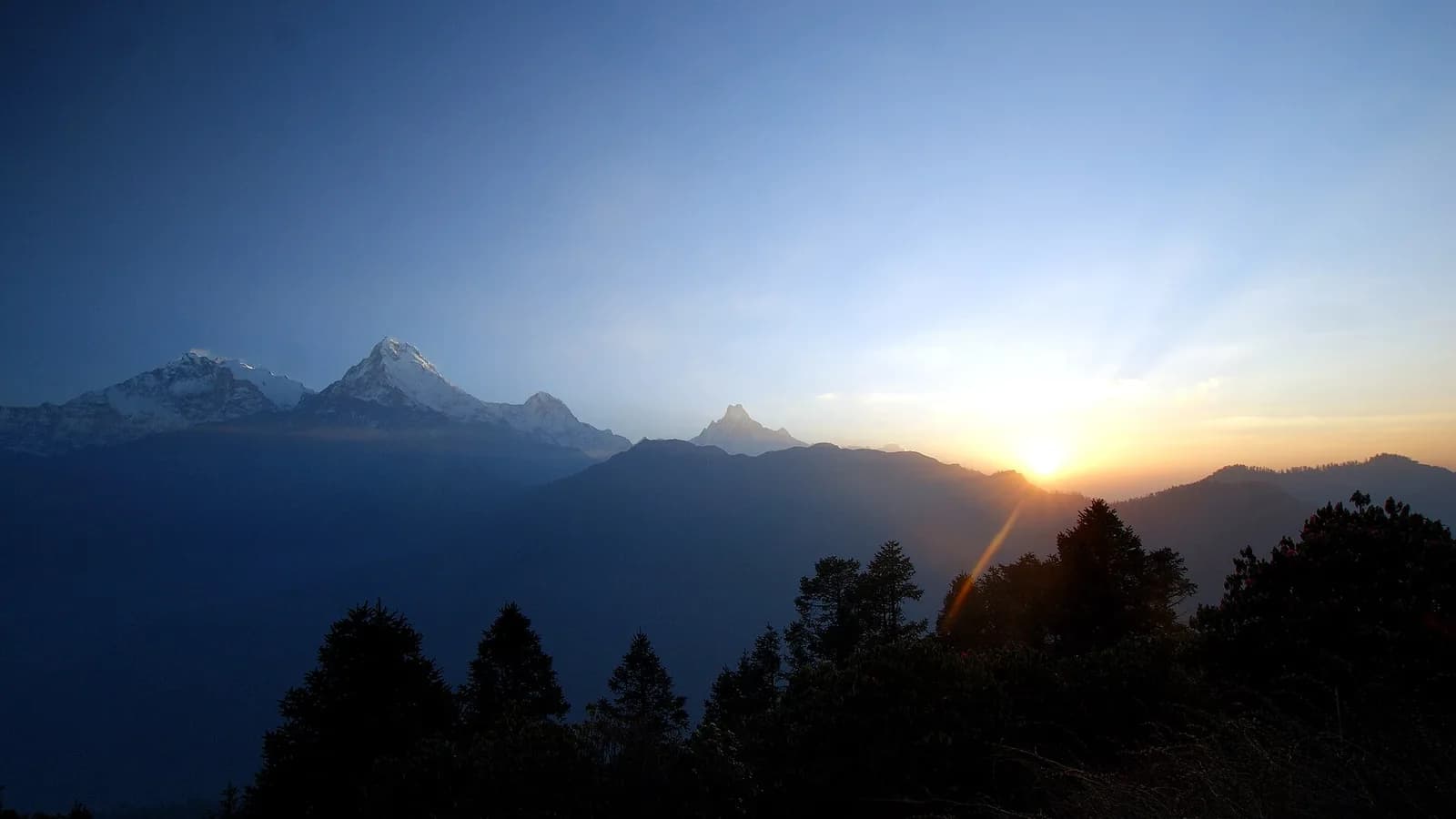
If the Himalaya have always looked like something for serious mountaineers, Nepal's beginner treks are the friendly counter-argument. Across the Annapurna foothills and the valleys north of Kathmandu, a handful of short, low-altitude trails let reasonably fit first-timers walk through terraced villages and rhododendron forest to viewpoints crowded with 7,000- and 8,000-metre peaks — all while sleeping in warm teahouses rather than tents. No ropes, no glaciers, no extreme altitude. This guide rounds up six of the best easy trails, explains the permits and the licensed-guide rule, and helps you match a route to your time, fitness and budget.
For the bigger picture of trekking here, start with our overview of trekking in Nepal and the question many first-timers ask: is trekking in Nepal worth it?
Key takeaways
- The classic first trek is Ghorepani Poon Hill — about three to five days from Pokhara, topping out near 3,210 m with a famous sunrise over Annapurna and Dhaulagiri.
- Most beginner trails stay below about 4,000 m, so the altitude risk is modest, though Langtang climbs higher than the Poon Hill route.
- Since April 2023, foreign trekkers in national parks and conservation areas must walk with a licensed guide or porter-guide, not solo.
- Annapurna trails need the ACAP permit (NPR 3,000 for foreigners, as of June 2026); Langtang needs a national park permit; most regions also list a TIMS card.
- Autumn and spring bring the clearest skies; spring adds rhododendron blooms on the Annapurna foothill trails.
- Expect to walk four to six hours a day over hilly ground — good preparation matters more than mountaineering skill.
What makes a trek "beginner-friendly"
Three things separate an easy Nepal trek from a hard one. The first is altitude: trails that stay under roughly 4,000 metres carry a far lower risk of altitude sickness than the high passes and base camps, where thin air becomes the main challenge. The second is terrain: beginner routes follow well-trodden paths and stone staircases with no climbing, scrambling or glacier travel. The third is infrastructure — these trails are lined with teahouses serving hot meals and offering a bed each night, so you carry only a daypack and never camp.
What "easy" does not mean is "effortless." Even gentle Himalayan trails involve long days of walking, often up and down thousands of steps. A few weeks of regular walking, stair climbing or day hikes before you fly in will pay off. If you want a fuller fitness and packing rundown, see our Nepal trekking packing list and the guide to altitude sickness on Nepal treks.
The six best beginner treks in Nepal
The trails below are the ones most consistently recommended for first-timers by Nepali trekking operators and the Nepal Tourism Board's protected-area listings. Durations include travel days to and from the trailhead and vary by itinerary.
| Trek | Typical days | Highest point (approx.) | Region | Best for | |---|---|---|---|---| | Ghorepani Poon Hill | 3–5 | 3,210 m (Poon Hill) | Annapurna | The classic first trek | | Ghandruk loop | 2–4 | ~2,000 m (Ghandruk) | Annapurna | Short, cultural, gentle | | Mardi Himal | 4–6 | ~4,500 m (Base Camp) | Annapurna | A step up, fewer crowds | | Khopra Ridge | 6–8 | ~3,660 m (Khopra) | Annapurna | Quieter Poon Hill alternative | | Langtang Valley | 7–10 | 3,870 m (Kyanjin Gompa) | Langtang | Mountains close to Kathmandu | | Helambu | 6–10 | ~3,650 m | Langtang | No flight, low altitude |
Ghorepani Poon Hill
The Ghorepani Poon Hill trek is the standard introduction to Himalayan walking. From Pokhara, a short drive reaches the trailhead, and over three to five days the trail climbs through Gurung and Magar villages and rhododendron forest to the viewpoint at Poon Hill (about 3,210 m). The reward is a dawn panorama across the Annapurna massif, Dhaulagiri (8,167 m) and the fishtail spire of Machhapuchhre. It is rated easy to moderate, with the long stone staircase up to Ulleri its toughest stretch. Read the full plan in our Ghorepani Poon Hill trek guide.
Ghandruk loop
For the shortest taste of the Annapurna foothills, the Ghandruk loop packs a stone-paved Gurung village, mountain views and a couple of nights on the trail into as little as two to four days. It sits low — Ghandruk village is around 2,000 metres — so altitude is barely a factor, making it a fine choice for families or anyone very short on time. The village itself is a cultural highlight; see our background on Ghandruk village and the Gurung people who live there.
Mardi Himal
A small step up in effort, the Mardi Himal trek climbs a forested ridge to a high viewpoint beneath Machhapuchhre, with far fewer trekkers than the Poon Hill trail. Short itineraries run four to six days including travel, and the upper sections reach around 4,500 metres at Mardi Himal Base Camp, so a little more care with pacing pays off. The trail is gentle enough for fit beginners while feeling more adventurous. Our Mardi Himal trek guide has the details.
Khopra Ridge
The Khopra Ridge (Khopra Danda) trek is a quieter alternative to Poon Hill in the same southern Annapurna country, trading crowds for solitude and big, open ridge-top views. It typically runs six to eight days and tops out near 3,660 metres at the Khopra community lodge, with an optional side trip to the sacred Khayer Lake for stronger walkers. See our Khopra Ridge trek guide.
Langtang Valley
North of Kathmandu, the Langtang Valley trek is the easiest way to reach genuinely high mountain scenery without a domestic flight. Over roughly seven to ten days, the trail follows a glacier-carved valley to Kyanjin Gompa (3,870 m), with optional acclimatisation day hikes toward Kyanjin Ri or Tserko Ri that approach 5,000 metres. It is rated moderate — higher than the Poon Hill route, so fitness and gradual ascent matter more. The valley was hit hard by the 2015 earthquake and has since been rebuilt; our Langtang trek guide covers the route today.
Helambu
Closest of all to Kathmandu, the Helambu trek starts at Sundarijal, a short drive from the city, and loops through Sherpa and Hyolmo villages at modest elevations around 3,650 metres or below. It needs no flight and sees few crowds, which makes it a relaxed, budget-friendly option for a first multi-day walk. Daily stages run a comfortable four to six hours.
Permits and the guide rule
Two pieces of paperwork shape almost every beginner trek, and one rule shapes how you walk it.
The licensed-guide requirement
Since 1 April 2023, foreign trekkers entering Nepal's national parks and conservation areas — including the Annapurna and Langtang regions covered here — must be accompanied by a licensed guide or porter-guide registered through the system overseen by the Nepal Tourism Board and the Trekking Agencies' Association of Nepal. Solo independent trekking on these protected routes is no longer permitted for foreigners; Nepali citizens are exempt. The stated aim is trekker safety and local employment. In practice, a guide also handles your permits, books teahouses and reads the trail. For more, see do I need a guide to trek in Nepal? and our note on solo trekking in Nepal.
Entry permits and TIMS
The fees below are set in Nepali rupees and are stamped as of June 2026; always reconfirm current rates with your agency, as protected-area charges change.
| Document | Where it applies | Foreigner fee (as of June 2026) | Issued by | |---|---|---|---| | ACAP permit | Annapurna region (Poon Hill, Ghandruk, Mardi, Khopra) | NPR 3,000 | National Trust for Nature Conservation | | Langtang National Park permit | Langtang Valley, Helambu | Set by the park authority | Dept. of National Parks | | TIMS card | Most trekking regions | NPR 2,000 (NPR 1,000 SAARC) | Nepal Tourism Board / agency |
The ACAP permit is issued by the National Trust for Nature Conservation and can be bought in Kathmandu, Pokhara or online; children under ten are exempt. The TIMS card (Trekkers' Information Management System) is arranged online through a registered agency together with your guide, and the Nepal Tourism Board lists it as mandatory on its protected routes. Note that the Everest region has replaced TIMS with a separate local municipality fee — relevant if you later graduate to that area.
Best season for an easy trek
Beginner trails follow the same Himalayan rhythm as the rest of Nepal's trekking. Autumn (roughly late September to November) is the most popular window, with stable weather and the year's clearest mountain views after the monsoon clears the air. Spring (roughly March to May) is the other prime season, a little hazier but warmer, and it brings the rhododendron blooms the Annapurna foothills are famous for.
The summer monsoon (June to August) leaves trails wet, leech-prone and often cloud-covered, though the Langtang side stays greener than it looks. Winter (December to February) is clear and quiet but cold, and snow can close in on higher villages like Ghorepani or Kyanjin Gompa. For a month-by-month breakdown, see our best season to trek in Nepal calendar.
Practical tips for your first trek
A few habits make a beginner trek smoother:
- Train before you arrive. Build up to several consecutive days of four-to-six-hour walks, with stairs in the mix.
- Carry cash. Teahouses and permit offices on the trail rarely take cards, so bring enough Nepali rupees for the whole route plus a buffer.
- Pace for altitude. Even on low trails, climb slowly, hydrate well, and report headaches or nausea to your guide early.
- Pack layers and break in your boots. Mountain mornings are cold and afternoons can be warm; new boots cause blisters.
- Learn a few words of Nepali. A simple namaste and dhanyabad go a long way in the villages — our Nepali phrases every trekker should know is a quick primer.
Treat the first easy trek as a stepping stone. Many trekkers who start on Poon Hill return for Annapurna Base Camp or build toward Everest Base Camp once they know how their body handles multi-day walking at altitude.
Sources
- Nepal Tourism Board — TIMS Card
- U.S. Embassy in Nepal — ALERT: New Requirements For Use of Trekking Guides/Porters (effective April 1, 2023)
- Nepal Hiking Team — Annapurna Trekking Permits 2026: ACAP, TIMS & RAP Guide
- Sali Trekking — Top 5 Beginner Treks in Nepal 2025
- Nepal Hiking Adventure — Best Easy Trek in Nepal: 7 Routes for Beginners
- Mosaic Adventure — Langtang Valley Trek Guide
- Skyline Treks — Helambu Trekking Nepal for Beginners 2025
Frequently asked questions
- Which trek is best for a complete beginner in Nepal?
- The Ghorepani Poon Hill trek is the usual first choice. It tops out around 3,210 metres, runs three to five days from Pokhara, sleeps in comfortable teahouses, and delivers a famous sunrise over Annapurna and Dhaulagiri with no technical climbing involved.
- Do beginner treks in Nepal require a guide?
- Yes. Since April 2023 foreign trekkers in Nepal's national parks and conservation areas, including the Annapurna and Langtang regions, must walk with a licensed guide or porter-guide rather than alone. Nepali citizens are exempt, and your guide also arranges permits and lodging.
- How fit do I need to be for an easy trek in Nepal?
- You should be able to walk four to six hours a day on hilly ground, often up and down stone steps, for several days in a row. No climbing skills are needed. A few weeks of regular walking, stair climbing or hiking before you arrive makes the trip far more enjoyable.
- What permits do I need for beginner treks in Nepal?
- For Annapurna trails like Poon Hill and Mardi Himal you need the ACAP entry permit, which costs NPR 3,000 for foreigners as of June 2026. Langtang needs a national park permit. Most regions also list a TIMS card, which your agency arranges online with your guide booking.
- How much does a beginner trek in Nepal cost?
- Costs vary widely with group size, season and comfort level, so treat any single figure with caution. Your main expenses are permits, your licensed guide or porter, teahouse food and lodging, and transport to the trailhead. Carry enough Nepali rupees in cash, as card payment is rare on the trail.
- When is the best time for beginner trekking in Nepal?
- Autumn, roughly late September to November, and spring, roughly March to May, give the clearest skies and most stable weather. Spring adds rhododendron blooms on the Annapurna foothill trails. The summer monsoon is wet and cloudy, while winter is cold with possible snow at higher villages.
- Is altitude sickness a risk on easy treks in Nepal?
- It is much lower than on high routes, because most beginner trails stay below about 4,000 metres. Mild symptoms are still possible, so climb gradually, drink plenty of water, and tell your guide at once if you feel unwell. Langtang reaches higher elevations than the Poon Hill trek does.
- Can I do a short trek in Nepal without taking a domestic flight?
- Yes. The Helambu trek starts at Sundarijal, a short drive from Kathmandu, and the Poon Hill and Mardi Himal trails start near Pokhara, reachable by tourist bus. Avoiding flights saves money and removes the weather delays that affect mountain airstrips like Lukla.
Related posts
Easy Treks in Nepal: 6 Beginner Routes for 2026
The best easy treks in Nepal for beginners — Poon Hill, Everest View, Langtang and more, with altitudes, days, permits and the 2023 guide rule.
Read postShort Treks Nepal: Best Routes Under a Week
A guide to the best short treks Nepal offers — Poon Hill, Mardi Himal, Langtang and Everest View — with days, difficulty, permits and best season.
Read postABC Trek: A Plain-English Guide to Annapurna Base Camp
The ABC trek (Annapurna Base Camp) explained — the route, how many days it takes, difficulty, the best seasons, and what daily trail life is really like.
Read post