Ultralight Flight Pokhara: Cost, Season & Tips
An ultralight flight Pokhara guide — durations and prices, the best season, what you fly over, weight limits, and how to book a safe morning slot.
Two seats, an open frame and a propeller behind you — then Phewa Lake shrinks and the Annapurnas fill the windscreen.
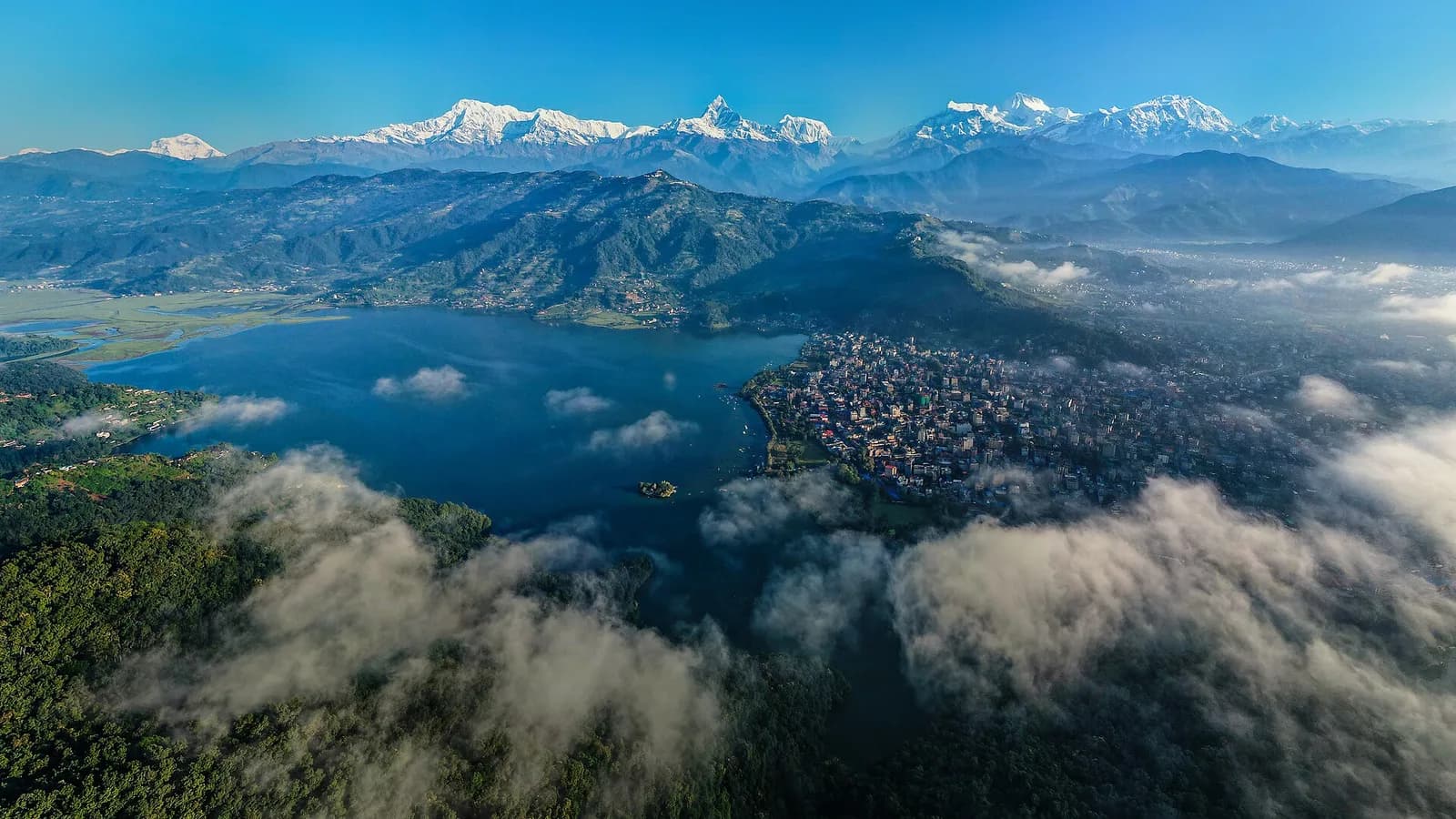
Of all the ways to get airborne over the Annapurnas, an ultralight flight Pokhara is the one that feels most like a tiny private plane. You climb into a two-seat aircraft, the propeller spins up behind you, and a few hundred metres of runway later the whole Pokhara valley tilts away — Phewa Lake on one side, a wall of snow peaks on the other. Unlike paragliding, an ultralight has an engine, so it can climb high, push toward the mountains and stay up for as long as your package allows.
This guide covers what an ultralight flight actually costs, when the air is clearest, what you fly over, the weight rules, and how to book a safe morning slot. Prices and conditions change with season and operator, so treat the figures here as a starting point and confirm when you book. Every price is stamped with currency and date, and the sources are linked at the end.
Key takeaways
- Durations range from a quick 15-minute hop to a full 60–90-minute mountain trek, so there is an option for most budgets and nerves.
- With the pioneer operator, prices run roughly US $95 / $170 / $270 (as of mid-2026) for 15, 30 and 60 minutes; onboard photos and video are about US $15 extra.
- The season runs about September to June, with autumn and spring giving the clearest Himalayan views; the monsoon grounds flights.
- Flights leave from Pokhara airport and pass Sarangkot, Phewa Lake and the World Peace Pagoda with the Annapurna range and Machapuchare in front of you.
- No experience is needed — you ride as a passenger with a licensed pilot, but the early-morning slot is the one to grab for weather.
What an ultralight flight is
An ultralight — sometimes called a microlight — is a small, lightweight powered aircraft built to carry no more than two people: the pilot and you. There is a real engine and propeller, a seat with a harness, and in Pokhara you can usually choose between an open-frame version (more wind, more thrill) and a closed cabin (calmer and warmer). Because it needs only a few hundred metres of runway to take off and land, it shares Pokhara's airfield and climbs steeply once airborne.
The big difference from paragliding is power. A paraglider runs off a hillside and depends on rising thermals; an ultralight simply flies under engine power, so it is far less at the mercy of the air on any given morning and can reach higher altitudes and tuck closer to the peaks. If you have read our guide to paragliding in Pokhara, think of the ultralight as the powered cousin: less floaty, more aircraft, and a steadier platform for photos.
Durations, routes and what you see
Most operators sell the experience by flight time, and each tier reaches a little further toward the mountains.
| Flight time | Typical name | What it covers | | --- | --- | --- | | 15 minutes | "Fly for Fun" | A quick loop over Pokhara, Phewa Lake and the valley floor | | 30 minutes | "Glory of Mt. Fishtail" | Sarangkot, Phewa Lake, the World Peace Pagoda and the Annapurna range | | 60 minutes | "Mountain Range Sky Trek" | A longer run along the Himalayan skyline, higher and closer to the peaks | | 90 minutes | "Into the Heart of the Mountains" | The deepest mountain trek toward the high Annapurna massif |
The headline sight on every route is Machapuchare, the sacred Fishtail peak, with the wider Annapurna range stretching across the northern horizon. On the way you pass Sarangkot, the ridge famous for its sunrise viewpoint, and look straight down on Phewa (Fewa) Lake and the World Peace Pagoda above it. For context on those landmarks at ground level, see our pieces on Sarangkot sunrise, Phewa Lake and the World Peace Pagoda.
How to choose a duration
If you mainly want the airborne thrill and a few aerial shots of the lake and city, the 15-minute flight delivers. To actually face the mountains and frame Fishtail properly, step up to the 30-minute option, which is the popular sweet spot. The 60- and 90-minute treks are for keen photographers and mountain lovers who want sustained time along the snow line — and who do not mind the higher fare.
How much it costs
Pricing varies by operator, season and how you book, but the long-running pioneer of the activity, Avia Club Nepal, publishes a clear ladder that most travellers use as the benchmark.
| Flight time | Indicative price (USD) | | --- | --- | | 15 minutes | ~US $95 | | 30 minutes | ~US $170 | | 60 minutes | ~US $270 |
Those figures are as of mid-2026 and exclude extras. Onboard photos and video typically add about US $15, and booking or reserving online often earns roughly a 10 percent discount. Because rates drift and agencies repackage flights with transfers, always confirm the current price and exactly what is included before you pay.
If the ultralight fare stretches your budget, Pokhara has cheaper highs: compare it with paragliding in Pokhara, the gentler hot air balloon over Pokhara, or the adrenaline of the Pokhara zip-line.
The best season and time of day
Ultralight flights operate roughly September through June and pause during the June to early September monsoon, when low cloud and rain make flying unreliable.
| Season | Months | Conditions | | --- | --- | --- | | Autumn (best) | Late Sep – Nov | Clear, stable air after the monsoon; sharpest mountain views | | Winter | Dec – Feb | Cold but often crisp and clear; dress warmly | | Spring (best) | Mar – May | Warm, generally clear mornings; reliable flying | | Monsoon (closed) | Jun – early Sep | Cloud and rain; flights largely suspended |
Within the season, time of day matters as much as the month. Flights run from about dawn until 11 am, with some afternoon slots from roughly 3 pm to dusk. The early-morning window is calmest and clearest, before the day's heat builds haze and cloud over the peaks. Book a sunrise or just-after-sunrise slot and you give yourself the best odds of smooth air and an unbroken Himalayan horizon. For a month-by-month overview of conditions, see our guide to the best time to visit Nepal.
Safety, weight and what to expect
You fly as a passenger with a licensed pilot who handles take-off, the flight and the landing. There is nothing to learn and nothing to do but sit, keep your belongings secured and take in the view. Before boarding, the pilot briefs you on the seatbelt and basic safety.
Weight and age
Avia Club Nepal states a passenger cannot exceed 110 kg (about 240 lb); some operators quote a slightly lower ceiling near 100 kg and a minimum around 18 kg so the seat sits safely. These are safety limits for a small aircraft, not red tape — if you are close to any of them, call ahead and confirm before you travel to Pokhara. Children are sometimes allowed with a guardian, but rules differ by operator, so ask.
Weather cancellations
Because conditions drive everything, a responsible operator will delay or cancel for wind or cloud. That is a good sign, not a hassle. Ask about the rebooking or refund policy when you book, and keep a spare morning in your Pokhara plans in case your first slot is grounded.
What to wear and bring
It is noticeably colder aloft, especially at sunrise and in winter, and the open-frame aircraft adds wind chill. Pack for that.
- Warm layers and a windproof jacket — easy to peel off, harder to wish you had brought.
- Closed, sturdy shoes; skip sandals.
- Sunglasses and sunscreen for the glare off snow and lake.
- A camera or phone on a strap or tether — loose items can blow out of an open frame. Check first whether your operator lets you bring your own device, since some prefer to sell the onboard footage.
- Go light on loose accessories: hats, scarves and anything that can flap free are best left in the car.
How to book and get there
The activity is run by a small number of operators with a limited fleet, so flights sell out in peak autumn and spring. Book at least a day or two ahead, and earlier in high season. You can reserve directly with an operator, often online for a small discount, or through a Pokhara travel agent who may bundle hotel transfers.
Flights depart from Pokhara airport, a short drive from the Lakeside tourist strip where most visitors stay — see our Pokhara Lakeside guide for the area and our Pokhara International Airport overview for orientation. Arrive on time for your slot, since morning departures are scheduled tightly around the best light. If you are still mapping out the city, our roundup of things to do in Pokhara places the flight alongside the lake, the caves and the viewpoints.
A few quick learner phrases never hurt at the counter — our Nepali phrases every trekker should know covers the basics for greetings and numbers when you confirm your booking.
Is it worth it?
For most visitors, yes — provided the morning is clear. An ultralight gives you the rare combination of an aircraft's reach and an open-air thrill, with Fishtail and the Annapurnas close enough to feel personal rather than postcard-distant. It costs more than paragliding and far more than simply hiking up to Sarangkot for sunrise, so weigh it against your budget and how badly you want the powered, higher, longer experience. If the fare and the weather line up, few short flights anywhere in the world frame the Himalaya quite like this one.
Sources
- Avia Club Nepal — official site (flight types, weight limit, runway)
- Tripadvisor — Avia Club Nepal reviews and product listings (durations, indicative prices, media add-on, online discount)
- The Longest Way Home — Guide to Ultralight & Micro Flights in Pokhara (season, hours, routes, what to wear)
- Altitude Himalaya — Ultralight Flight in Pokhara (booking lead time, route highlights)
- Pokhara Ultralight Pvt. Ltd — FAQ (weight limits, flight conditions)
Frequently asked questions
- How much does an ultralight flight in Pokhara cost?
- As of mid-2026, Avia Club Nepal lists a 15-minute Fly For Fun flight at about US 95 dollars, a 30-minute Fishtail flight at about US 170 dollars and a 60-minute mountain sky trek at about US 270 dollars. Onboard photos and video are usually an extra 15 US dollars, and booking online often earns roughly a 10 percent discount. Always confirm the current rate when you book.
- What is the best season for an ultralight flight in Pokhara?
- The flying season runs from about September through June, skipping the summer monsoon. Autumn (late September to November) and spring (March to May) give the clearest air and the best mountain views. Skies cloud over and flights pause during the June to early September monsoon.
- What time of day do ultralight flights run?
- Most flights operate from dawn until around 11 am, with some afternoon slots from about 3 pm until dusk. Early morning is the calmest and clearest window, so a sunrise or just-after-sunrise slot gives you the best chance of stable air and unobstructed Himalayan views.
- Where do the flights take off from and what do you see?
- Ultralights depart from Pokhara airport and climb over the valley. A typical 30-minute route passes Sarangkot ridge, Phewa Lake and the World Peace Pagoda, with the Annapurna range and Machapuchare (Fishtail) filling the northern horizon. Longer flights climb higher and closer to the peaks.
- Is there a weight limit for ultralight flights in Pokhara?
- Yes. Avia Club Nepal states that a passenger cannot exceed 110 kg (about 240 lb). Some operators quote a lower ceiling near 100 kg and a minimum around 18 kg for the seat to be safe. If you are close to any limit, call ahead and confirm before you travel to Pokhara.
- Do I need any experience or training to fly in an ultralight?
- No. You ride as a passenger in a two-seat aircraft flown by a licensed pilot who handles take-off, flying and landing. You simply sit, keep belongings strapped down and enjoy the view. The pilot briefs you on seatbelts and basic safety before you board.
- How is an ultralight flight different from paragliding in Pokhara?
- An ultralight is a small powered aircraft with an engine and propeller that takes off from a runway, so it can climb high and cover more ground regardless of thermals. Paragliding launches by running off Sarangkot under a fabric wing and relies on rising air. Ultralights feel more like a tiny plane; paragliders feel more like silent soaring.
- How far in advance should I book an ultralight flight?
- There are only a limited number of ultralight aircraft in Pokhara, so book at least a day or two ahead, and earlier in peak autumn and spring. Reserving an early morning slot also protects you against afternoon cloud, and many operators let you rebook if weather grounds the flight.
Related posts
Bungee Jumping Nepal: Sites, Cost & Guide (2026)
Bungee jumping Nepal — Kushma, the Last Resort and Pokhara compared, with heights, prices, weight and age limits, safety and how to choose your jump.
Read postParagliding Pokhara Cost: 2026 Price Breakdown
Paragliding Pokhara cost explained — standard vs cross-country prices, photo add-ons, foreigner rates, what is included, and how to avoid overpaying.
Read postParagliding Pokhara: Cost, Season & Safety 2026
Paragliding Pokhara — tandem prices, the best season, what the flight is like, weight and age limits, and how to pick a safe operator at Sarangkot.
Read post