Gokyo Lakes Trek: Turquoise Lakes Above Everest's Crowds
A complete Gokyo Lakes trek guide for 2026 — itinerary, permits, costs, difficulty and how the turquoise lakes and Gokyo Ri compare with Everest Base Camp.
Same mountains as Everest Base Camp, a fraction of the footprints, and six holy lakes the colour of glass.
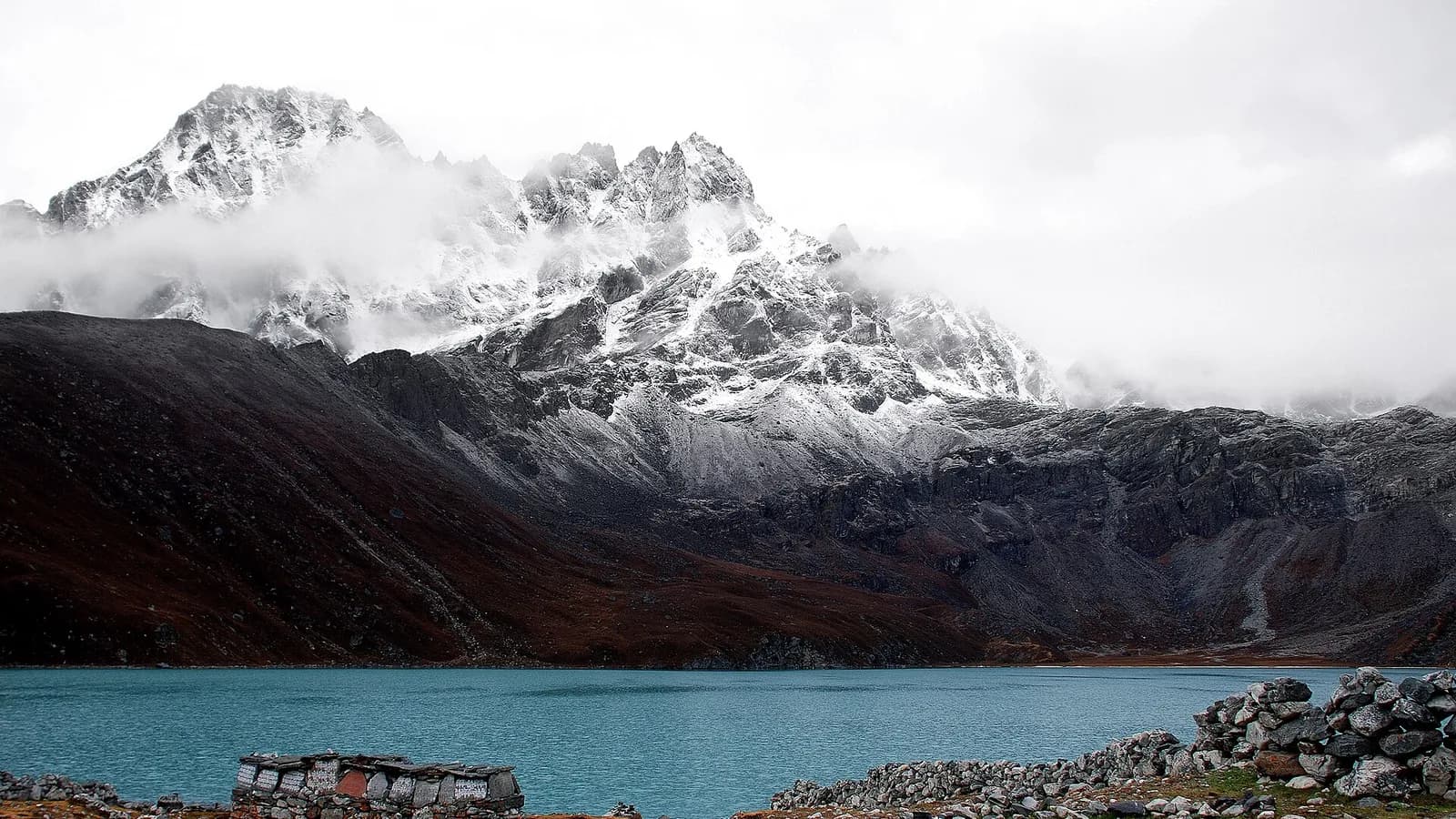
The Gokyo Lakes trek is the Everest region's best-kept open secret: the same giant peaks that crown the famous base-camp trail, but reflected in a string of glassy, turquoise glacial lakes, on paths carrying a fraction of the foot traffic. Instead of queuing for a photo at a signpost, you climb a single rocky hill called Gokyo Ri at dawn and watch the sun ignite four of the planet's six-highest mountains at once. This guide walks through the route, the permits, the realistic costs and the difficulty, all stamped to mid-2026 so you can plan with confidence.
If you are weighing this against the classic route, our Everest Base Camp itinerary is the natural companion read — and many trekkers end up combining the two over a high pass.
Key takeaways
- The Gokyo Valley holds a system of around nineteen lakes, with six main lakes forming the classic visited chain — considered sacred by both Hindus and Buddhists.
- The high point is Gokyo Ri at about 5,357 metres, famous for a sunrise view of Everest, Lhotse, Makalu and Cho Oyu together.
- Expect 12 to 14 days from Lukla; adding the Renjo La or Cho La pass extends it to roughly 15 to 17 days.
- You need two permits — Sagarmatha National Park and the Khumbu Pasang Lhamu Rural Municipality permit — at standard Khumbu fees of NPR 3,000 and NPR 2,000 (as of June 2026). There is no climbing permit for Gokyo Ri.
- The trail is noticeably quieter than the main base-camp route, with a more meditative feel.
- A licensed guide is required in the Everest region and is genuinely valuable for pacing your acclimatisation.
Why trek to Gokyo instead of Everest Base Camp
Both treks reach a similar altitude and share the same first days through Namche Bazaar, but they feel very different higher up. The standard base-camp trail is the most popular trek in Nepal, and in peak season it shows. The Gokyo Valley branches away from that current into a hanging valley of yak pasture, moraine and ice, where some afternoons you will have a lakeshore almost to yourself.
The signature reward is the panorama from Gokyo Ri. From the base-camp side, Everest is partly hidden behind closer peaks; from Gokyo Ri you get a clean, wide sweep that takes in four eight-thousanders in a single turn of the head. Below you, the Ngozumpa glacier — one of the longest in the Himalaya — grinds down the valley, and the lakes glow an improbable turquoise against grey rock and white snow.
The trade-off is honesty about altitude. This is a serious high-mountain trek, and the lakes sit between roughly 4,700 and 5,000 metres. Read our altitude sickness guide before you go and treat the acclimatisation days as non-negotiable.
The route, stage by stage
The classic Gokyo itinerary shares its opening with the Everest trail, then peels off after Namche. Here is the shape of a typical 12 to 14 day plan.
| Day(s) | Stage | Approx. altitude | Notes | |---|---|---|---| | 1 | Fly Lukla, walk to Phakding | ~2,840m start | Gentle first afternoon | | 2 | Phakding to Namche Bazaar | ~3,440m | Big climb, suspension bridges | | 3 | Acclimatisation day at Namche | — | Climb high, sleep low | | 4 | Branch to Dole | ~4,038m | Leave the EBC crowds | | 5 | Dole to Machhermo | ~3,870m | Rescue post; acclimatise | | 6 | Machhermo to Gokyo | ~4,790m | Past the first two lakes | | 7 | Gokyo Ri sunrise + lakes | ~5,357m summit | The big day | | 8+ | Descend, or cross a pass | varies | Renjo La or Cho La options |
Acclimatisation is the whole game
The single biggest factor in finishing healthy is how you handle altitude, and the Gokyo route bakes in two natural rest points: a full day at Namche and a stop around Machhermo or Dole before pushing to the lakes. A common rule of thumb is an extra acclimatisation night for every roughly 1,000 metres of sleeping-height gain. Do not be tempted by the very fast itineraries that promise Gokyo in a handful of days from Lukla — they exist, but they raise your risk sharply.
The two pass variations
From Gokyo you have three ways onward. The simplest is to retrace your steps to Lukla. The more adventurous cross a high pass:
- Renjo La (~5,360m): drops you to the Sherpa village of Thame and back toward Namche, a beautiful and quieter loop.
- Cho La (~5,420m): links the Gokyo Valley to the main Everest Base Camp route, letting you combine both highlights in one big trip.
Both passes are steep, rocky, frequently snow-covered and only for fit, well-acclimatised trekkers with a capable guide. They turn a 12 to 14 day trek into a 15 to 17 day expedition. If a high pass appeals, our overview of whether you need a guide in the Everest region is worth reading, because pass-crossing is exactly where guiding earns its keep.
Permits and the guide rule
Permit-wise, Gokyo is identical to the rest of the Khumbu. You need two documents, and there is no separate climbing permit for the Gokyo Ri viewpoint despite its 5,357-metre height.
| Permit | Fee (as of June 2026) | Where it goes | |---|---|---| | Sagarmatha National Park entry | NPR 3,000 | Conservation and trail upkeep | | Khumbu Pasang Lhamu Rural Municipality | NPR 2,000 | Local infrastructure and services |
That is the standard Khumbu total of NPR 5,000 for foreigners. Note that the old TIMS card is not required for the Everest region — our Everest Base Camp permits explainer covers why so many out-of-date pages still tell you otherwise. Since 1 April 2023, a licensed guide has been required for trekking inside Nepal's national park and conservation areas, the Everest region included, so factor a guide into both your budget and your plan.
What the Gokyo Lakes trek costs
Costs vary widely with how you book, but the structure is predictable. The Lukla flight is the biggest single variable and the part most exposed to weather delays.
| Tier | Typical total | What it covers | |---|---|---| | Budget, independent-style | ~$900–1,100 | Permits, guide, basic teahouses, careful spending | | Standard guided package | ~$1,200–1,800 | Logistics, guide, set lodging, often the Lukla flight |
These are realistic mid-2026 ranges, not fixed prices (as of June 2026). On the trail, the same rules apply as elsewhere in the Khumbu: rooms are cheap if you eat where you sleep, dal bhat is the best-value meal because refills are free, and the price of food, hot showers, charging and wifi climbs steadily with altitude. Carry enough rupees from Kathmandu, because mountain ATMs are unreliable and largely cash is king once you are high.
Do not economise on travel insurance. At these altitudes a helicopter evacuation can be the difference between a scare and a catastrophe — our guide to trekking insurance with helicopter evacuation explains what to look for in a policy.
When to go
The Gokyo Lakes trek has the same two prime windows as the rest of the Everest region: spring (roughly March to May) and autumn (roughly September to November). Both bring stable, dry weather and high visibility — essential when the entire point is a clear sunrise from Gokyo Ri.
- Spring adds blooming rhododendron on the lower trail and gradually warming days.
- Autumn is famous for crisp, settled skies after the monsoon, and is many trekkers' first choice for sharp mountain views.
Both seasons also mean fewer Lukla flight cancellations, which matters because that short mountain flight is weather-dependent. For a fuller seasonal picture across the country, see our guide to the best time to visit Nepal.
Practical tips for a smoother trek
- Pace the climb. Take the acclimatisation days seriously and tell your guide immediately if you feel altitude symptoms.
- Pack for cold nights. Upper sections can drop well below freezing after dark even in the good seasons.
- Bring water treatment. A filter or tablets save money and reduce plastic versus buying bottled water high up.
- Carry cash from the city. Draw your trail rupees in Kathmandu rather than relying on mountain ATMs.
- Learn a few words. A handful of Nepali phrases every trekker should know goes a long way in the teahouses.
Is it right for you?
Choose Gokyo if you want the grand Everest panorama without the busiest crowds, you are drawn to alpine lakes as much as to a base-camp signpost, and you have the fitness and patience for proper acclimatisation. Choose the standard route, or combine the two over the Cho La, if standing at Everest Base Camp itself is the goal. Either way, the Gokyo Valley delivers one of the most striking days of high-mountain scenery anywhere in Nepal — six holy lakes, a glacier the length of a city, and a sunrise you will not forget.
Sources
Frequently asked questions
- What is the Gokyo Lakes trek?
- It is a high-altitude trek in Nepal's Everest region to a chain of vivid turquoise glacial lakes in the Gokyo Valley. The classic highlight is sunrise from Gokyo Ri, a viewpoint that shows four of the world's 8,000-metre peaks, including Everest, in one panorama. It is quieter than the main Everest Base Camp trail.
- How high is the Gokyo Lakes trek?
- The lakes sit roughly between 4,700 and 5,000 metres, and the trek's high point is the Gokyo Ri viewpoint at about 5,357 metres. If you add the Renjo La pass it reaches around 5,360 metres, and the Cho La pass linking to Everest Base Camp is similar.
- How many days does the Gokyo Lakes trek take?
- Most itineraries run 12 to 14 days from Lukla and back, including built-in acclimatisation days. Adding the Renjo La pass or linking to Everest Base Camp over the Cho La pushes it to roughly 15 to 17 days.
- What permits do I need for the Gokyo Lakes trek?
- Two: the Sagarmatha National Park entry permit and the Khumbu Pasang Lhamu Rural Municipality permit. There is no separate climbing permit for the Gokyo Ri viewpoint. Standard Khumbu fees are NPR 3,000 and NPR 2,000 respectively (as of June 2026).
- Is the Gokyo Lakes trek harder than Everest Base Camp?
- The lakes themselves are a similar grade to the standard Everest Base Camp trek, but slightly longer and quieter. It becomes noticeably harder if you cross a high pass such as the Cho La or Renjo La, where the ground is steep, rocky and often snow-covered.
- How much does the Gokyo Lakes trek cost?
- Budget independent-style trekkers often spend somewhere around 900 to 1,100 US dollars, while a guided 12 to 14 day package commonly runs from about 1,200 to 1,800 US dollars per person depending on inclusions (as of June 2026). The Lukla flight is the biggest single variable.
- How many lakes are at Gokyo and are they sacred?
- The valley holds a system of around nineteen lakes, of which six main lakes form the most-visited chain. They are considered sacred by both Hindus and Buddhists, with the third lake, Gokyo Cho or Dudh Pokhari, regarded as especially holy. It is the village lakeside and the usual base for climbing Gokyo Ri.
- Do I need a guide for the Gokyo Lakes trek?
- Since April 2023 Nepal requires a licensed guide on trekking routes inside national park and conservation areas, which includes the Everest region. Plan to trek with a licensed guide arranged through a registered agency. A guide is also genuinely useful for acclimatisation pacing at this altitude.
Related posts
Everest View Trek: See Everest in Under a Week
A 2026 Everest View trek guide — a short, lower Khumbu trek to Namche, Hotel Everest View and Tengboche, with itinerary, permits, costs and difficulty.
Read postEverest Three Passes Trek: The Khumbu's Toughest Loop
A 2026 Everest Three High Passes trek guide — Kongma La, Cho La and Renjo La, with itinerary, direction, permits, costs, difficulty and gear.
Read postEverest Base Camp Trek Itinerary: Day-by-Day (2026)
A day-by-day Everest Base Camp trek itinerary — the classic 12-day route with elevations, acclimatization days, permits, costs, and the best seasons to go.
Read post