Everest Three Passes Trek: The Khumbu's Toughest Loop
A 2026 Everest Three High Passes trek guide — Kongma La, Cho La and Renjo La, with itinerary, direction, permits, costs, difficulty and gear.
Three passes above 5,300 metres, four eight-thousanders, and the hardest, wildest loop in the Everest region.
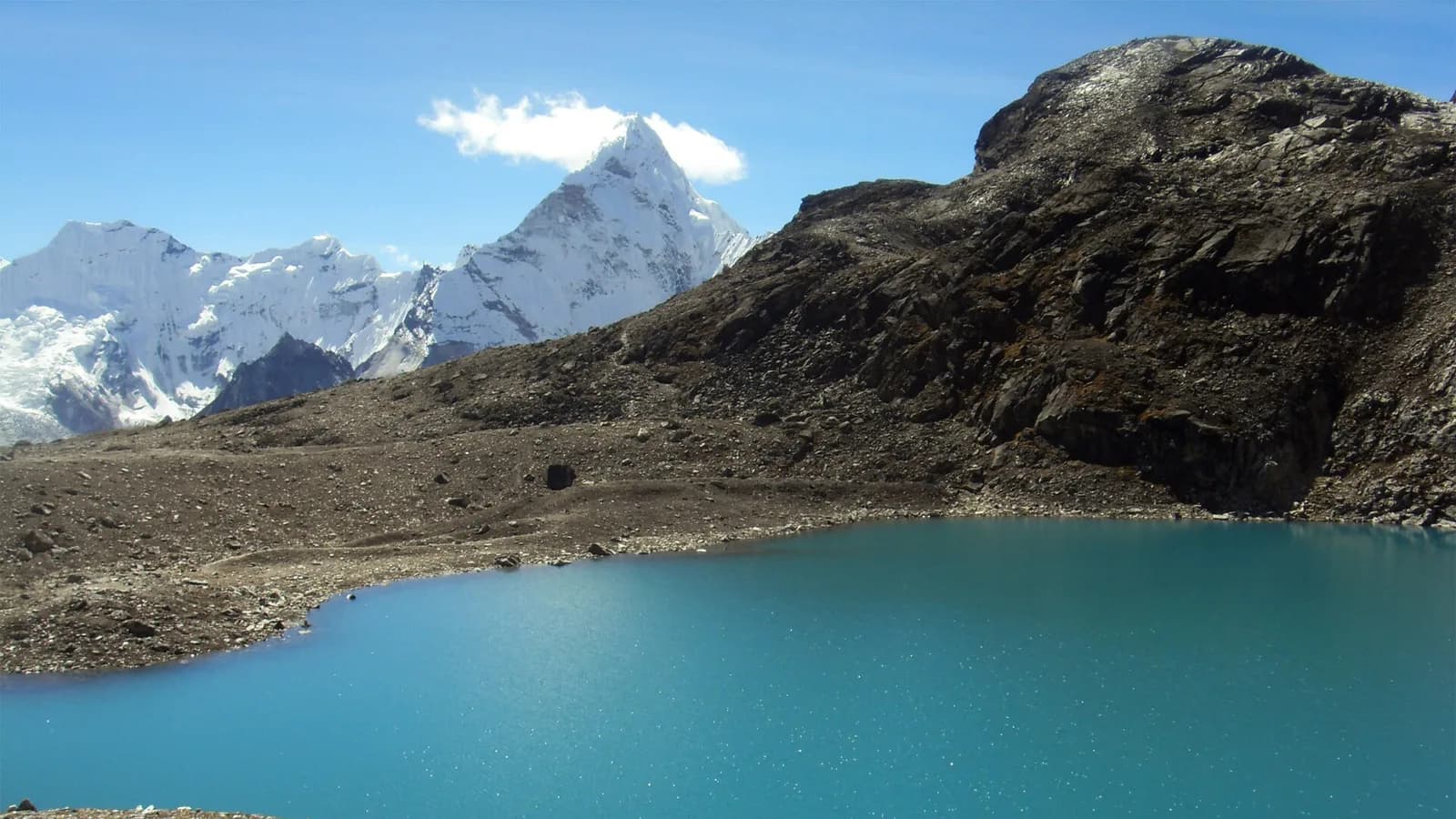
The Everest Three Passes trek is the most complete and most demanding way to experience the Khumbu. Instead of walking in and out to Everest Base Camp on the same trail, you stitch together a high loop that crosses the region's three great trekking passes — Kongma La, Cho La and Renjo La, each above 5,300 metres — and links the Gokyo lakes, Base Camp and the Chukhung valley into a single circuit. Along the way you climb the famous viewpoints of Gokyo Ri and Kala Patthar, and you spend more days above 5,000 metres than on almost any other teahouse trek in Nepal. This guide covers the route, the recommended direction, the permits, the gear, the realistic difficulty and the best seasons, stamped to mid-2026.
If you are weighing this against the gentler options, our Everest Base Camp itinerary and Gokyo Lakes trek guide are the natural companion reads — the Three Passes loop is essentially both of those, plus three high cols, rolled into one big trip.
Key takeaways
- The trek crosses three passes above 5,300 metres: Kongma La (~5,535 m), Cho La (~5,420 m) and Renjo La (~5,340 m).
- It links Gokyo, Everest Base Camp and the Chukhung valley, with viewpoints at Gokyo Ri (~5,357 m) and Kala Patthar (~5,545 m).
- Most itineraries take 18 to 20 days door to door; compressing to around 15 days is possible but risky.
- The usual recommendation is to go anticlockwise (Kongma La first) for better acclimatisation; clockwise suits very fit, experienced trekkers.
- Cho La is the most technical pass, crossing a glacier where microspikes or crampons are commonly needed.
- Permits are the same two as the standard Everest trek — Sagarmatha National Park (NPR 3,000) and Khumbu municipality (~NPR 2,000) (as of June 2026).
What the three passes are like
Each pass has its own character, and understanding the differences helps you plan and pack.
| Pass | Approx. altitude | Character | |---|---|---| | Kongma La | ~5,535 m | Highest; heaviest altitude load; long, rocky, remote | | Cho La | ~5,420 m | Most technical; glacier crossing, often icy | | Renjo La | ~5,340 m | Least difficult; superb Everest view from the top |
Kongma La is the highest point you cross and the one that asks the most of your lungs, sitting higher than any point on the standard Everest Base Camp route. The day is long and the terrain rocky and lonely, with a string of small tarns near the top. Cho La is the technical crux: the crossing includes a glacier section that is frequently icy, and most parties use microspikes or crampons here, with conditions changing through the season. Renjo La is generally regarded as the most straightforward of the three, and it repays the effort with one of the finest framed views of Everest on the entire trek as you reach the crest above Gokyo.
Which direction: anticlockwise or clockwise
One of the first real decisions is which way round to go, and it genuinely matters for safety.
The most commonly recommended option is anticlockwise, crossing Kongma La first, then Cho La, then Renjo La. The logic is acclimatisation: you spend your early days gaining height gradually on the main Everest trail through Namche, Tengboche and Dingboche, with acclimatisation hikes such as Chukhung Ri, so that by the time you tackle the highest pass your body has begun to adjust. The clockwise direction, starting with Renjo La out of Thame and saving Kongma La for late in the trip, is also popular and is often described as the more demanding sequence, better suited to very fit, experienced high-altitude trekkers. Neither is wrong; a good guide or registered agency will choose the safer order for your group and the conditions. On whether to use a guide at all in the Everest region, see our guide-or-no-guide breakdown — on a route this committing, the answer leans firmly toward yes.
The route, stage by stage
Here is the shape of a typical anticlockwise plan. Exact villages and rest days vary between operators, and weather can force changes at any pass.
| Phase | Stage | Approx. high point | Notes | |---|---|---|---| | 1 | Lukla to Namche, acclimatise | ~3,440 m | Shared with the EBC trail | | 2 | Namche to Dingboche, acclimatise | ~4,410 m | Chukhung Ri hike | | 3 | Cross Kongma La to Lobuche | ~5,535 m | First and highest pass | | 4 | EBC and Kala Patthar | ~5,545 m | The Base Camp highlight | | 5 | Cross Cho La to Gokyo | ~5,420 m | Icy glacier section | | 6 | Gokyo Ri sunrise | ~5,357 m | Four eight-thousanders | | 7 | Cross Renjo La, descend to Lukla | ~5,340 m | Out via Thame |
Total distance is commonly cited somewhere in the region of 130 to 170 kilometres, depending on the exact lodges and side trips. The headline is not the distance, though — it is the cumulative time at altitude and the three big pass days.
Acclimatisation is the whole game
More than on any standard trek, finishing the Three Passes loop healthy comes down to acclimatisation. The route builds in rest at Namche and Dingboche, often with a punishing acclimatisation climb toward Chukhung Ri, and you should treat every rest day as essential rather than optional. The old rule of an extra acclimatisation night for each roughly 1,000 metres of sleeping-height gain is a sensible guide. Before you go, read our altitude sickness guide for Nepal treks, learn the warning signs of AMS, HACE and HAPE, and accept that descending is always the right call if symptoms worsen.
Permits and rules
Permit-wise, the Three Passes loop is identical to the rest of the Khumbu, because it stays within the same protected area. There is no special pass permit and no climbing permit for the trekking viewpoints.
| Permit | Fee (as of June 2026) | Where it goes | |---|---|---| | Sagarmatha National Park entry | NPR 3,000 | Conservation and trail upkeep | | Khumbu Pasang Lhamu Rural Municipality | ~NPR 2,000 | Local infrastructure and services |
Note that the old TIMS card is not required for the Everest region — our Everest Base Camp permits explainer covers why so many out-of-date pages still claim otherwise. Since 2023, Nepal has required a licensed guide on its trekking routes, hired through a registered agency, and on a route with three glaciated passes this is a rule worth following in spirit as well as letter.
Gear: what this trek demands beyond the basics
The Three Passes loop needs everything the standard Everest trek does, plus a few items the passes make essential.
- Microspikes or crampons. Cho La crosses a glacier and is frequently icy; carry traction aids and know how to fit them.
- Trekking poles. Invaluable on the steep, loose descents off all three passes.
- A genuinely warm sleeping bag. Nights high on the loop are bitterly cold, well below freezing in the good seasons.
- Robust layers and a windproof shell. The pass crests are exposed and windy.
- Sun protection. Glare off snow and ice at altitude is intense; bring strong sunglasses and high-factor sunscreen.
For a full, weight-conscious rundown, our Nepal trekking packing list is a good starting point — just add the traction aids and an extra margin of warmth for the passes.
What it costs
Because the Three Passes trek is longer and more logistically involved than the standard route, it generally costs more than a basic Everest Base Camp trip — more days on the trail, more guiding, and the same weather-exposed Lukla flight at each end. Rather than quote a single figure, plan around the two fixed permit costs above and your chosen style of trip, then add the Lukla flights, which are the biggest single variable and the part most exposed to delay.
On the trail, the familiar Khumbu economics apply: rooms are cheap if you eat where you sleep, dal bhat is the best value because refills are usually free, and the price of food, charging, hot showers and wifi climbs steadily with altitude. For what those lodges are actually like, see our teahouse food and accommodation guide, and carry enough rupees from Kathmandu because mountain ATMs are unreliable and cash is king once you are high.
Whatever the trek costs, do not economise on travel insurance. On a route that spends days above 5,000 metres and crosses glaciated passes, a helicopter evacuation can be lifesaving — our guide to trekking insurance with helicopter evacuation explains what a suitable policy must cover.
When to go
The Three Passes trek has the same two prime windows as the rest of the Everest region: spring (roughly March to May) and autumn (roughly September to November). Both bring the stable, dry weather and high visibility that make the passes safer and the viewpoints worthwhile.
- Spring is warmer, with rhododendron blooming on the lower trail and the Everest climbing season in the air.
- Autumn is famous for crisp, settled skies after the monsoon and is many trekkers' first choice for sharp mountain views.
Both seasons also reduce the chance of deep snow choking the passes, and of the Lukla flight cancellations that can derail a tight schedule. Avoid the June to August monsoon, when cloud, rain and snow on the passes peak, and approach deep winter only with serious experience and equipment. For a fuller seasonal picture, see our guide to the best time to visit Nepal.
Is it right for you?
Choose the Three Passes trek if you already have high-altitude trekking under your belt, you are genuinely fit, and you want the most complete tour of the Khumbu there is — Gokyo, Base Camp, three passes and a string of unforgettable viewpoints in one loop. It is not a first big trek, and the combination of sustained altitude, long days and a glaciated pass means it rewards preparation and punishes shortcuts. But for trekkers ready to meet it, the Everest Three High Passes circuit is the finest and toughest teahouse adventure in Nepal — a route that shows you the giants of the Khumbu from every side. A handful of Nepali phrases every trekker should know will make the long evenings in the teahouses warmer, too.
Sources
Frequently asked questions
- What is the Everest Three Passes trek?
- It is a demanding loop through Nepal's Everest region that crosses the three highest trekking passes in the Khumbu — Kongma La, Cho La and Renjo La, all above 5,300 metres. It links the Gokyo valley, Everest Base Camp and the Chukhung valley in one circuit, taking in viewpoints such as Gokyo Ri and Kala Patthar along the way.
- How high are the three passes?
- Kongma La is about 5,535 metres, Cho La about 5,420 metres and Renjo La about 5,340 metres. Kongma La is the highest and carries the heaviest altitude load, while Cho La is usually considered the most technical because it crosses a glacier and can be icy.
- How many days does the Three Passes trek take?
- Most itineraries run roughly 18 to 20 days door to door, including Lukla flights and several acclimatisation days. Faster, fitter parties sometimes compress it to around 15 days, but that leaves little margin for weather or altitude and is not recommended for most trekkers.
- Which direction should you do the Three Passes trek?
- The most common recommendation is anticlockwise, crossing Kongma La first, then Cho La, then Renjo La, so your body is better acclimatised before the higher passes. The clockwise direction, starting with Renjo La, is also popular and suits very fit, experienced trekkers. A good guide or agency will pick the safer sequence for your group.
- Is the Three Passes trek dangerous and do I need crampons?
- It is a serious high-altitude trek with real exposure on the passes. Cho La in particular crosses a glacier and is often icy, so microspikes or crampons are commonly needed, and conditions vary with season. Hire a guide, carry traction aids, and be prepared to wait out bad weather rather than crossing a pass in a storm.
- How hard is the Everest Three Passes trek?
- It is one of the hardest teahouse treks in Nepal, rated challenging to strenuous. You spend many days above 5,000 metres, cross three high passes on steep, rocky and sometimes icy ground, and walk long hours. Prior high-altitude trekking experience and strong fitness are strongly recommended before attempting it.
- What permits do I need for the Three Passes trek?
- The same two as the standard Everest trek: the Sagarmatha National Park entry permit at NPR 3,000 and the Khumbu Pasang Lhamu Rural Municipality permit at around NPR 2,000 for foreigners (as of June 2026). There is no separate climbing permit for the passes or for viewpoints such as Gokyo Ri and Kala Patthar.
- What is the best time for the Three Passes trek?
- Spring (roughly March to May) and autumn (roughly September to November) are the prime windows, with the most stable weather and clearest views. Autumn brings crisp post-monsoon skies, while spring is warmer with rhododendron lower down. The high passes are safest and least snow-choked in these seasons.
Related posts
Everest View Trek: See Everest in Under a Week
A 2026 Everest View trek guide — a short, lower Khumbu trek to Namche, Hotel Everest View and Tengboche, with itinerary, permits, costs and difficulty.
Read postGokyo Lakes Trek: Turquoise Lakes Above Everest's Crowds
A complete Gokyo Lakes trek guide for 2026 — itinerary, permits, costs, difficulty and how the turquoise lakes and Gokyo Ri compare with Everest Base Camp.
Read postEverest Base Camp Trek Itinerary: Day-by-Day (2026)
A day-by-day Everest Base Camp trek itinerary — the classic 12-day route with elevations, acclimatization days, permits, costs, and the best seasons to go.
Read post