Remote Work Nepal: The Practical Operating Guide
Remote work Nepal — real internet speeds, power reliability, the UTC+5:45 time-zone maths for calls, and the legal grey area, with a setup checklist.
The mountains are the easy part of working from Nepal; the real wins are fibre in the cities, a grid that finally stays on, and a quiet 2.45pm call window with Europe.
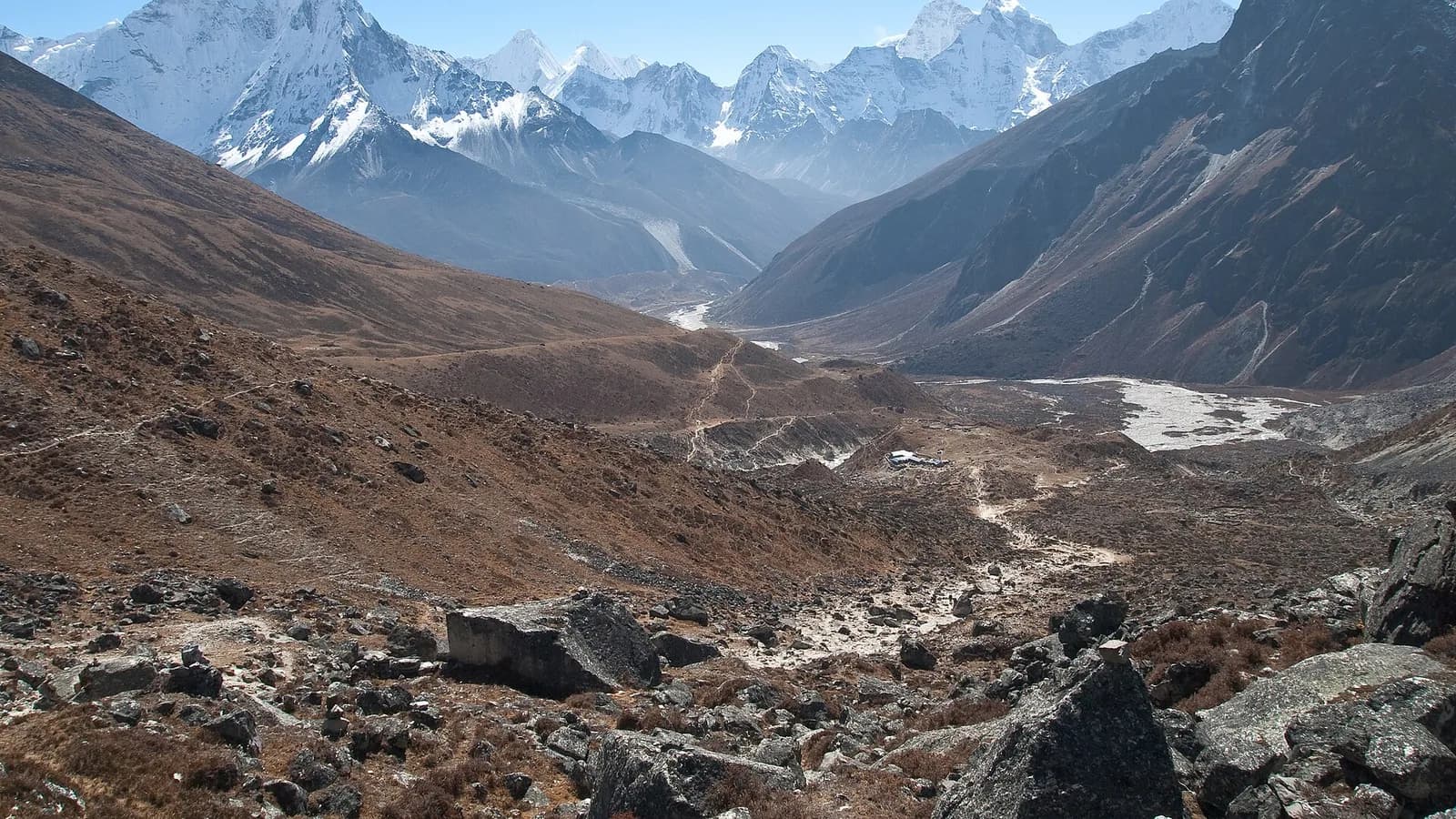
Remote work Nepal has quietly crossed a threshold. The cliche is the Himalayan backdrop, but the things that actually decide whether a country works as a base — internet that holds up on a video call, a power grid that stays on, and a sane window for meetings — have all improved sharply in Nepal's cities over the last few years. This guide is the practical operating manual: the connection numbers, the power situation, the time-zone maths, and the honest legal picture, plus a setup checklist.
For the bigger-picture decisions — where to base yourself, what coworking costs, monthly budgets and the full visa walkthrough — see our companion guide on Nepal for digital nomads, which this article complements rather than repeats. Here we focus on the day-to-day mechanics of getting work done. Figures and especially visa rules change, so treat everything below as a starting point and verify before you commit, with sources linked at the end.
Key takeaways
- City internet is genuinely workable now: Nepal's fixed broadband averaged about 84 Mbps in early 2026 (Ookla) — the fastest in South Asia — thanks to near-total fibre rollout, with low latency suited to calls.
- The grid finally stays on: Nepal was declared load-shedding-free around 2022 and now exports surplus power, so the old "scheduled blackout" worry is largely gone, with brief monsoon outages the main exception.
- Time zone is the catch and the charm: NPT is UTC+5:45, no daylight saving — your afternoon overlaps cleanly with European and Asian mornings, and poorly with the Americas.
- The legal status is a grey area: most work on the tourist visa (capped at 150 days per calendar year); the dedicated nomad visa was still not open for applications as of 2026.
- Redundancy is non-negotiable: keep a local SIM/eSIM plus a power bank; Ookla even dropped Nepal from its mobile index, so test your own connection.
Internet: the numbers, not the vibes
Connectivity is the question every remote worker asks first, and Nepal's answer has improved enough to quote real figures rather than vague reassurance.
City fixed broadband
In the April–June 2025 Ookla Speedtest Global Index, Nepal recorded a median fixed-broadband download of roughly 77.9 Mbps and an upload near 61.6 Mbps, with latency around 5 ms — low enough for smooth video calls. By the January 2026 index, Nepal's average had climbed to about 84 Mbps, placing it first in South Asia for fixed broadband and around 89th globally. The driver is structural: Nepal has pushed near-total fibre-to-the-home (FTTH) in its served areas, so the last mile is increasingly glass rather than copper.
What that means in practice: in Kathmandu and Pokhara, a fibre-connected apartment, cafe or coworking space is realistically fine for email, documents, code and the standard wall of video meetings. It is not flawless big-city-abroad consistency — speeds and reliability still vary venue to venue — but it is a long way from the dial-up reputation Nepal once had.
The mobile caveat
Mobile is murkier. Notably, Ookla excluded Nepal from its mobile-broadband index, citing concerns over data reliability — which is a useful reminder not to plan around headline mobile figures. Coverage is good in cities and along main roads but thins fast on treks and in remote valleys. So treat a local SIM or eSIM as redundancy, not your primary line, and always test the connection where you will actually be working. Our guides to Wi-Fi in Nepal, getting an eSIM for Nepal and the best SIM card for Nepal 2026 cover the providers and what to expect.
| Metric (fixed broadband) | Reported figure | Source period | | --- | --- | --- | | Median download | ~77.9 Mbps | Ookla, Apr–Jun 2025 | | Median upload | ~61.6 Mbps | Ookla, Apr–Jun 2025 | | Average download | ~84 Mbps | Ookla, Jan 2026 index | | South Asia rank | 1st | Ookla, Jan 2026 index | | Latency | ~5 ms | Ookla, 2025 |
Power: the quiet transformation
A decade ago, scheduled blackouts ("load shedding") of many hours a day made serious remote work in Nepal genuinely hard. That era is over. Nepal was declared load-shedding-free nationally around 2022, and the country now generates surplus electricity that it exports to India, with the grid reaching roughly 99 percent of households. Energy consumption has tripled in under a decade as supply stabilised.
For a remote worker, the upshot is simple: you can plan a workday without budgeting around a blackout calendar. The realistic residual risk is the occasional brief local outage, most likely during heavy monsoon storms or local faults. The fix is the same one good guesthouses and coworking spaces already use — battery backup and inverters — plus your own power bank and a charged laptop as a buffer. Choose accommodation or a desk that advertises backup power and the issue effectively disappears. Pack the right power adapter for Nepal and you are set on the hardware side.
Time zones: working the UTC+5:45 puzzle
Nepal's time zone is its most charming logistical quirk. Nepal Time (NPT) is UTC+5:45 — one of only a handful of zones in the world with a 45-minute offset — and Nepal does not observe daylight saving, so the offset is constant year-round. The 45-minute oddity dates to Nepal setting its clock to the mean solar time of a Himalayan peak rather than rounding to a neighbour's zone.
For meetings, the practical reality is that your Nepal afternoon is the productive overlap window with much of the world to your west. Late-morning UTC maps to mid-afternoon in Nepal, so a block from roughly mid-afternoon to early evening NPT lines up well for calls with Europe, the UK and parts of Asia/the Middle East. The Americas are the hard direction: US business hours fall in the dead of Nepal's night, so if your team or clients are American, you are looking at either very early-morning or late-night calls.
A rough overlap cheat-sheet
| Their region | Comfortable call window (your NPT time) | Notes | | --- | --- | --- | | Europe / UK | Afternoon to early evening | Strongest, easy overlap | | Middle East | Afternoon | Good overlap | | India / South Asia | Most of the working day | Only 15 minutes apart from IST | | East Asia / Australia | Your morning | Workable early | | US East Coast | Late night NPT | Difficult | | US West Coast | Late night to small hours NPT | Hardest |
The strategic takeaway: Nepal is a comfortable base if your work skews Europe-, Asia- or async-friendly, and a tougher one if you live on synchronous US calls. Many remote workers lean into asynchronous workflows here precisely because of this — front-loading deep work in the calm morning and saving the afternoon for the one or two overlap calls that matter.
The legal and tax reality
This is the part to get right, because the headline and the reality differ — and it is worth reading carefully alongside the fuller visa walkthrough in our digital nomads guide.
What you actually use today
As of 2026, Nepal has no live, applicable digital nomad visa. Remote workers use the standard tourist visa, available on arrival or online in 15-, 30- and 90-day options and extendable at immigration offices up to a maximum of 150 days per calendar year, with the cap resetting on 1 January. Working remotely for a foreign employer or clients while on this visa is widely described as a legal grey area — tolerated in practice but not an explicit right. The settled etiquette: stay within your day limit, do not take local Nepali employment, and keep your income foreign-sourced. Our visa on arrival 2026 and extending a Nepal tourist visa guides walk through the current mechanics.
What is being planned
Nepal has publicly worked toward a dedicated digital nomad visa to formalise remote work, and 2025–2026 reporting described it as being in its final stages — but, importantly, still not open for applications as of 2026. The proposed parameters that have circulated include proof of foreign-sourced income of around US$1,500 a month (or savings near US$20,000), health insurance, a clean criminal record, a multi-year validity, and discussion of a reduced income-tax rate for those who become tax-resident by staying past roughly half the year. Two cautions: these are proposed details from reporting, not confirmed live policy, and the application route was not yet usable. If the nomad visa is central to your plans, confirm the official position before relying on any figure.
Choosing your base for getting work done
Where you sit changes your daily experience more than any spec sheet. The two realistic bases are Pokhara and Kathmandu, and the trade-off is consistent.
- Pokhara is the calmer, cheaper, more scenic choice — a lakeside town under the Annapurnas where it is easy to focus, with fibre common in the Lakeside strip. It is the better pick for a restful, deep-work stint. Our Pokhara workation guide drills into its cafes, coworking and quirks.
- Kathmandu is louder and busier but has the widest choice of coworking, services, international flights and redundancy — the better pick if you want maximum options and the easiest logistics.
Many remote workers split the two: Kathmandu for errands, gear and connections, Pokhara for actually getting work done. Both are linked by an easy tourist bus or short flight, and the wider question of whether Nepal suits a long stay is covered in is Nepal worth visiting.
The payoff: mountains on your downtime
The reason to accept Nepal's rough edges over a cheaper flat elsewhere is what sits outside the workday. From either base, serious Himalayan scenery is a weekend away — a gentle classic like the walk to Ghandruk, a sunrise at a viewpoint, or a longer teahouse trek between contracts. Timing helps: autumn (late Sep–Nov) and spring (Mar–May) bring the clearest skies and most pleasant weather, while the summer monsoon is wet, hazy and the likeliest time for a brief power blip. See best time to visit Nepal to plan your stay around the good months.
Remote-work setup checklist
- Connection: book accommodation or a coworking desk with confirmed fibre, and carry a local SIM/eSIM as backup — never rely on a single link (best SIM card, eSIM Nepal).
- Power: choose venues with battery backup, carry a power bank, and pack the correct power adapter; expect only brief, occasional outages.
- Time zone: plan calls for your NPT afternoon; lean async if your team is in the Americas.
- Visa: plan around the 150-day annual tourist-visa cap; do not count on the nomad visa until it is officially live.
- Money: Nepal is largely cash-based — see Nepal currency and budget for daily life accordingly.
Remote work Nepal is, in the end, a clear-eyed trade. You accept an emerging setup, a tourist-visa day limit and a time zone that favours the East over the Americas. In return you get fibre that holds up a call, a grid that stays on, very low costs, and the best mountains on earth a short trip from your desk. Get your connection and power redundancy right, respect the visa rules, and Nepal is one of the most scenic and affordable places you will ever open a laptop. For the full where-to-stay, cost and visa detail, head to our Nepal for digital nomads guide.
Sources
- Nepal Sees Improvement in Fixed Broadband Internet Speed — TechPana
- Nepal Secures Top Spot in South Asian Internet Speeds 2026 (Ookla) — KTM2day
- Nepal out of Ookla mobile broadband speed index — Nepali Telecom
- Nepal's electricity use triples — The Annapurna Express
- Electricity consumption increases by threefold — The Rising Nepal
- UTC+05:45 — Wikipedia
- Nepal Time (NPT) time zone — timeanddate.com
- Nepal Unveils Five-Year Digital Nomad Visa Plan for 2026 — Travel And Tour World
- Nepal Digital Nomad Visa Guide 2026 — Stamped Nomad
- Nepal Department of Immigration — Tourist Visa
Frequently asked questions
- Is the internet in Nepal fast enough for remote work?
- In the main cities, increasingly yes. Nepal's median fixed-broadband download speed was about 78 Mbps in mid-2025 Ookla data, and by the January 2026 Speedtest Global Index its average had risen to roughly 84 Mbps, the fastest in South Asia, driven by near-total fibre-to-the-home rollout. Latency is low too. Rural and trekking areas are far weaker, so keep a mobile-data backup.
- Does Nepal still have power cuts that disrupt working?
- Far less than it used to. Nepal was declared load-shedding-free nationally around 2022 and now produces surplus electricity that it exports, with the grid reaching roughly 99 percent of households. Brief local outages can still happen, especially in heavy monsoon, so a power bank and a coworking space or hotel with battery backup remove the risk.
- What time zone is Nepal and does it work for international calls?
- Nepal uses Nepal Time (NPT), UTC+5:45, one of only a few zones with a 45-minute offset, and it does not observe daylight saving. A common comfortable overlap with UTC or European mornings falls in your Nepal afternoon, roughly mid-afternoon to early evening, which suits calls with Europe and parts of Asia far better than with the Americas.
- Can I legally work remotely in Nepal on a tourist visa?
- Working remotely for a foreign employer while on a tourist visa is widely described as a legal grey area in Nepal, tolerated in practice but not an explicit right. Most remote workers use the standard tourist visa, capped at 150 days per calendar year, while a dedicated digital nomad visa remained in development and not yet open for applications as of 2026.
- What is the status of Nepal's digital nomad visa?
- As of 2026 it was reported to be in its final stages but not yet open for applications, so most remote workers still use the tourist visa. Proposed figures from reporting include foreign-sourced income of about 1,500 US dollars a month or savings near 20,000 dollars, health insurance, a clean record, and a possible reduced tax rate for long stayers. Treat these as provisional until officially live.
- Where do remote workers base themselves in Nepal?
- Pokhara and Kathmandu are the two main bases. Pokhara is calmer, cheaper and set beside a lake under the Annapurnas, while Kathmandu has the widest choice of coworking, services and flights. Many split their time. Our companion guide on Nepal for digital nomads covers the where-to-stay and cost picture in detail.
- Do I need a SIM card if my hotel has Wi-Fi?
- Yes, treat a local SIM or eSIM as essential redundancy rather than a luxury. Hotel and cafe Wi-Fi quality varies, and a mobile-data plan is your fallback for an important call or deadline. Note that Ookla dropped Nepal from its mobile-speed index over data-reliability concerns, so test your own connection rather than relying on headline mobile figures.
- Is Nepal a good remote-work base overall?
- For the right person, yes. It pairs very low living costs and improving city infrastructure with world-class mountains a short trip away, in exchange for accepting an emerging rather than polished setup and a tourist-visa day limit. It rewards flexibility over anyone who needs flawless corporate-grade reliability every single day.
Related posts
Nepal Digital Nomad Visa: Status, Rules and Plans
The Nepal digital nomad visa, explained — the proposed 5-year scheme, income and insurance rules, tax, and what remote workers actually use today.
Read postNepal for Digital Nomads: Wi-Fi, Costs and Visa Status
Nepal for digital nomads — Wi-Fi and coworking in Kathmandu and Pokhara, real cost of living, the tourist-visa workaround and the planned nomad visa.
Read postWorkation Pokhara: Remote Work Guide for Nepal
Workation Pokhara — Wi-Fi, coworking, cost of living and visa tips for remote work beside Phewa Lake, with the Annapurnas on your lunch break.
Read post