Nepal's Capital: Kathmandu Quick Facts & Visitor Guide
Nepal's capital is Kathmandu, the country's largest city in a Himalayan valley. Quick facts on population, elevation, history and what to see, explained.
Nepal's capital is a city of temple roofs and mountain air, packed into a single Himalayan valley.
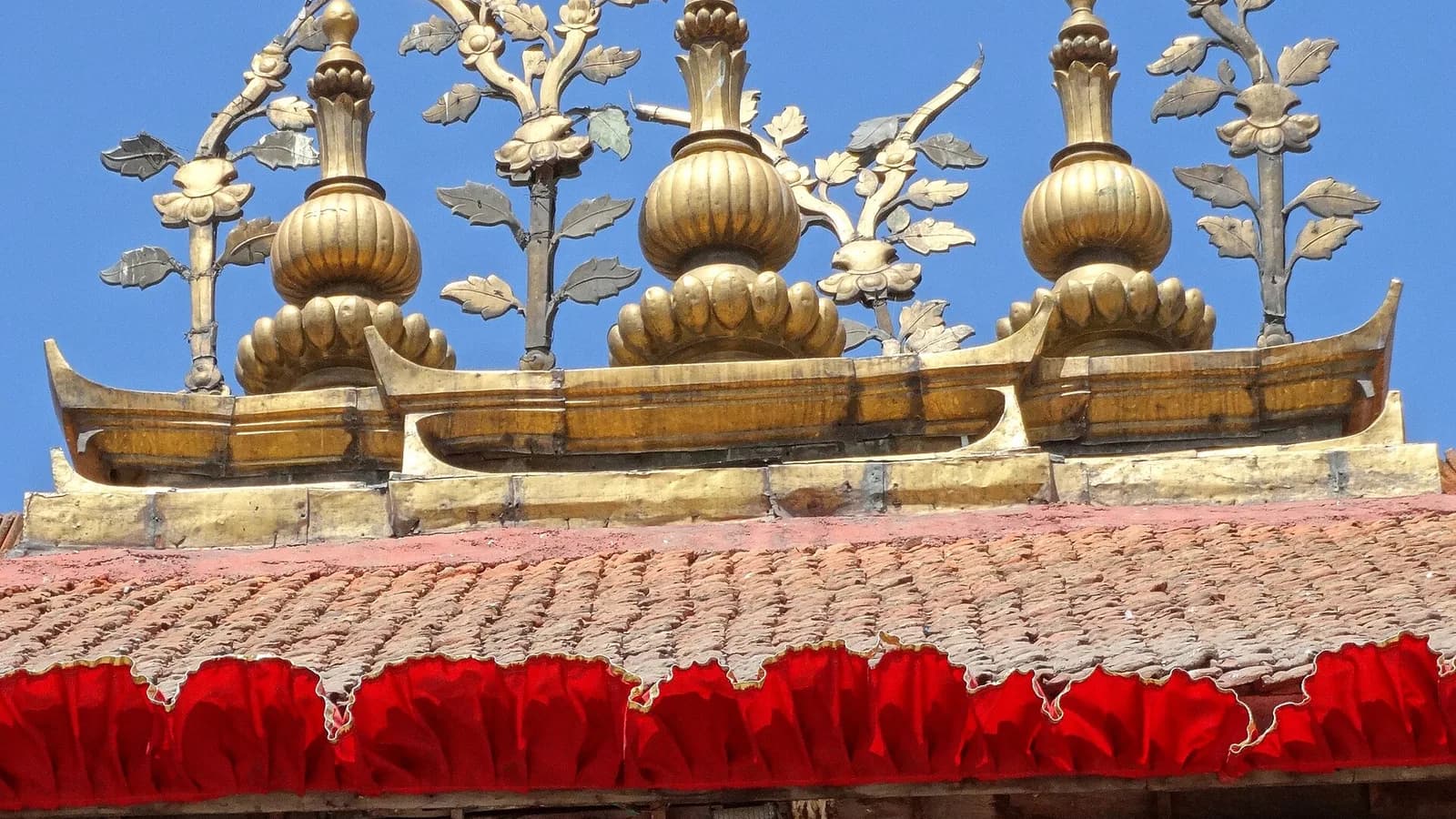
Nepal's capital is Kathmandu, the country's largest city and its political, cultural and economic heart. It sits in a green bowl of land called the Kathmandu Valley, high in the central hills, where centuries of temples, palaces and stupas crowd together beneath a ring of Himalayan foothills. For almost every visitor, Kathmandu is the gateway to Nepal — the place you land, find your feet, and set off from toward the mountains. This short guide covers the quick facts worth knowing and points you toward the best of the city.
Key takeaways
- Nepal's capital is Kathmandu, also the largest city in the country.
- It sits in the Kathmandu Valley at roughly 1,400 m (4,600 ft) elevation.
- The 2021 census put the metropolitan city's population at around 845,000, with millions more across the valley.
- Kathmandu became the capital of unified Nepal under Prithvi Narayan Shah in the late 1760s.
- The name comes from Kasthamandap, a wooden pavilion in the old royal square.
- The valley holds multiple UNESCO World Heritage sites and two sister cities, Patan and Bhaktapur.
Kathmandu at a glance
A few core facts capture the city quickly:
| Fact | Detail | |---|---| | Status | Capital and largest city of Nepal | | Location | Kathmandu Valley, central Nepal | | Elevation | About 1,400 m (4,600 ft) | | Population (2021) | ~845,000 in the metropolitan city | | Rivers | Bagmati and Bishnumati | | Became capital | Late 1760s, under Prithvi Narayan Shah |
Kathmandu lies near the meeting of the Bagmati and Bishnumati rivers, the Bagmati being the sacred river that flows past the great temple of Pashupatinath. The valley's gentle elevation gives the capital a mild, temperate climate — warmer than you might expect for a Himalayan country — though mornings can be crisp and the surrounding hills rise far higher. If you are timing a visit, our guide to the best time to visit Nepal breaks the seasons down.
A very old city
Kathmandu is one of the older continuously settled places in the region, with roots stretching back well over a thousand years. Its name comes from Kasthamandap, a striking wooden pavilion that once stood in Kathmandu Durbar Square — kastha meaning wood and mandap a pavilion in Sanskrit. The city grew rich for centuries as a hub on the trade routes between India and Tibet, and that wealth poured into the temples and palaces that still define it.
The Kathmandu Valley was long divided among three rival royal cities — Kathmandu, Patan and Bhaktapur — each an independent kingdom with its own palace square. That changed when Prithvi Narayan Shah, the Gorkha king who unified modern Nepal, conquered the valley in the late 1760s and made Kathmandu the capital of his new state. It has remained Nepal's capital ever since, through the monarchy and into the republic.
What makes the capital special
For a single city, Kathmandu packs in an astonishing concentration of heritage. The Kathmandu Valley contains a cluster of UNESCO World Heritage monuments — among them the palace complex of Durbar Square, the hilltop stupa of Swayambhunath, the vast dome of Boudhanath, and the sacred temple of Pashupatinath. Few capitals in the world put this much history within such a short ride of one another. For the full list across the country, see our roundup of UNESCO sites in Nepal.
The three royal cities
The valley's old division into three kingdoms left a remarkable legacy: three separate Durbar Squares, each with its own palaces and temples.
- Kathmandu — the capital itself, centred on Kathmandu Durbar Square.
- Patan (Lalitpur) — just to the southeast, famed for its artisans; see our Patan guide.
- Bhaktapur — to the east, the best-preserved of the three and an easy day trip from Kathmandu.
Visiting all three lets you see how Newar civilisation expressed itself three different ways within one small valley.
Getting your bearings
Most visitors base themselves in or near Thamel, the city's tourist hub — a dense warren of guesthouses, gear shops, cafes and travel agencies. Our Thamel guide explains the neighbourhood, and our overview of where to stay in Kathmandu covers the alternatives if you want somewhere quieter.
Getting around is part of the adventure. Traffic is busy and the streets are a maze, but taxis, ride-hailing apps and your own two feet handle most of the centre. Our practical guide to getting around Kathmandu lays out the options. If your time is short, a set of Kathmandu day tours can string the main valley sights together efficiently.
Living in the valley today
Modern Kathmandu is far more than a museum of old squares. It is a fast-growing, densely populated city of several hundred thousand in the core and millions across the valley, with the energy and the rough edges that come with rapid growth. Traffic, dust and tangled streets are part of daily life here, and the contrast between ancient courtyards and busy modern avenues is one of the things that makes the city feel so alive. The valley's sheltered position keeps the climate mild year-round, which is part of why so much of Nepal's population, commerce and culture has concentrated here for centuries.
The capital is also the country's culinary crossroads. Because people from every corner of Nepal — and every one of its many languages and communities — converge on Kathmandu, you can eat your way across the whole country in a single neighbourhood, from Newar specialities to Tibetan-style dumplings. Our guides to Kathmandu's best restaurants and the city's street food are good places to begin.
The gateway to Nepal
Beyond its own attractions, Kathmandu is the launchpad for the rest of the country. The international airport here is where most travellers arrive, and it is the starting point for nearly every major adventure — flights and buses to Pokhara, trailheads for the Everest and Annapurna regions, and road links south to the jungle. Whatever your plan for Nepal, you will likely pass through the capital at least twice: once on the way in, and once on the way out.
That makes a day or two in Kathmandu time well spent rather than time lost. Wander the temple squares, eat your fill of momos and dal bhat, pick up trekking supplies in Thamel, and let the altitude and atmosphere of Nepal's remarkable capital settle in before the mountains call.
Sources
Frequently asked questions
- What is the capital of Nepal?
- The capital of Nepal is Kathmandu, which is also the country's largest city. It sits in the Kathmandu Valley in the central hills and serves as Nepal's political, cultural and economic heart.
- How big is Kathmandu?
- Kathmandu Metropolitan City had a population of around 845,000 in the 2021 census, making it Nepal's largest city. Counting the surrounding valley and its sister cities, the wider urban area holds several million people.
- How high is Kathmandu?
- Kathmandu sits at roughly 1,400 metres, about 4,600 feet, above sea level. That modest elevation gives the city a mild climate, but it is still ringed by far higher Himalayan foothills and peaks.
- Why is Kathmandu the capital of Nepal?
- Kathmandu became the capital of unified Nepal after Prithvi Narayan Shah conquered the valley in the late 1760s and made it the seat of his new kingdom. It had long been a wealthy trade and cultural centre, and it has remained the capital ever since.
- What does the name Kathmandu mean?
- The name comes from Kasthamandap, a large wooden pavilion that stood in the old royal square. In Sanskrit, kastha means wood and mandap means a covered pavilion, so the name roughly means wood pavilion.
- What is Kathmandu famous for?
- Kathmandu is famous for its dense cluster of temples, stupas and palace squares, including several UNESCO World Heritage sites such as Durbar Square, Swayambhunath, Boudhanath and Pashupatinath. It is also the main gateway for trekking and mountain travel in Nepal.
- What are the sister cities in the Kathmandu Valley?
- The Kathmandu Valley contains three historic royal cities: Kathmandu itself, plus Patan (Lalitpur) and Bhaktapur. Each has its own Durbar Square and was once an independent kingdom with its own palaces and temples.
Related posts
Nepal Time Zone: Why Nepal Is UTC+5:45 (the 45-Min Quirk)
Nepal's time zone is UTC+5:45 — one of only a few in the world with a 45-minute offset. Here is why Nepal runs 15 minutes ahead of India, explained.
Read postWhy Is Nepal +5:45? The Story Behind the 45-Minute Clock
Why is Nepal +5:45 and not a round hour? The story behind Nepal's 45-minute time offset, the Gaurishankar meridian, and the 1986 switch from India.
Read postAsan Bazaar Kathmandu: Old Town Market Guide
A visitor guide to Asan bazaar, Kathmandu's oldest market — its six-road square, Annapurna Temple, what to buy, when to go, and how to get there.
Read post