Mount Everest Climbing Permit Cost (2026 Guide)
The Mount Everest climbing permit cost in 2026 — the US$15,000 spring royalty, every season's rate, the garbage deposit, liaison fee, and what's not included.
The permit is the price of admission. It buys you the right to try — and nothing that keeps you alive once you're on the hill.
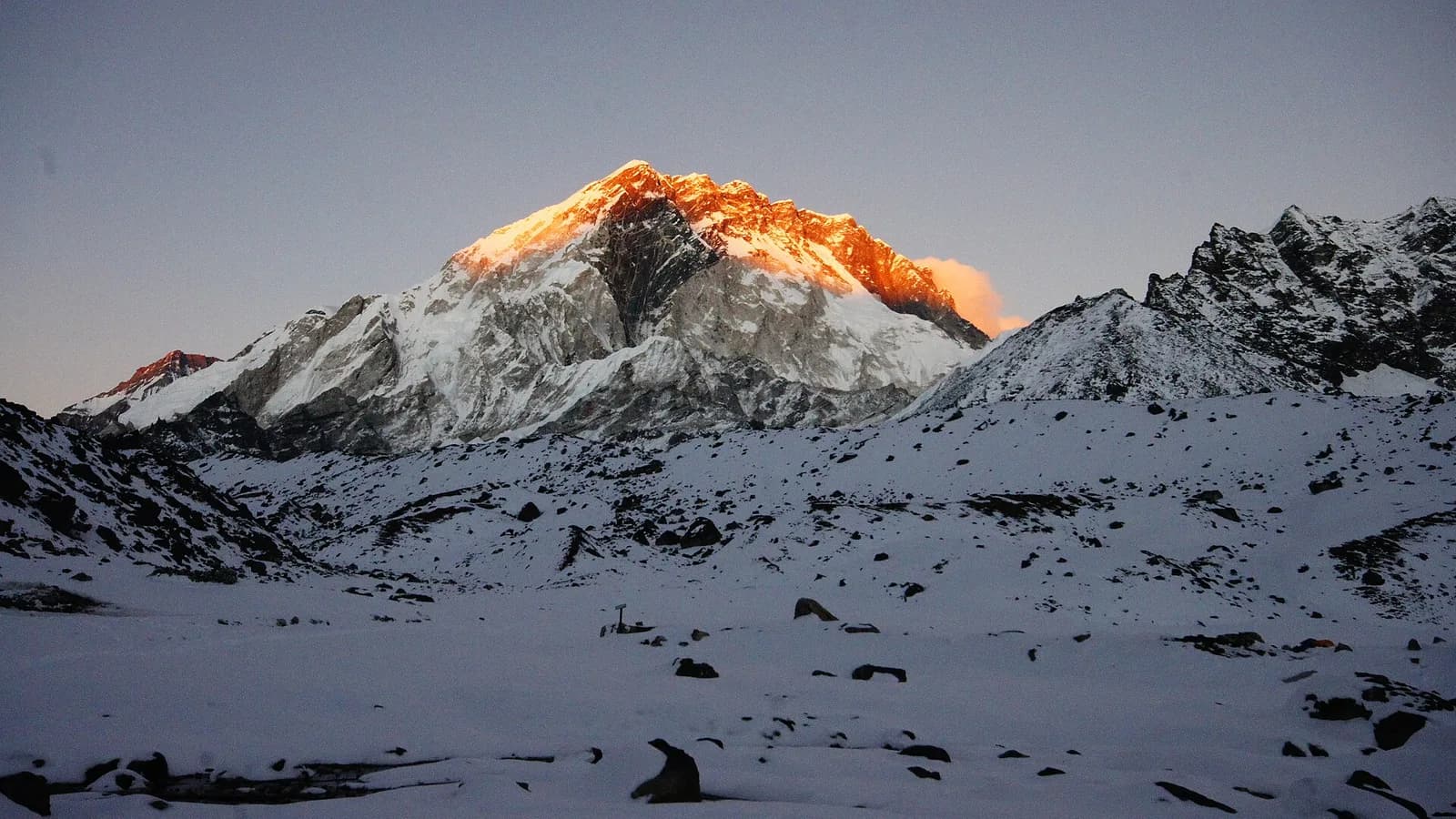
The Mount Everest climbing permit cost is the single most-quoted number in Himalayan mountaineering, and in 2026 it is also the most misunderstood. People hear "fifteen thousand dollars" and assume that buys an Everest expedition. It does not. The permit is the Nepal government's royalty for letting you set foot on the mountain — the price of admission, not the climb. Everything that actually gets you up and down safely is separate, and adds up to far more.
This guide focuses tightly on the permit and the other fees the government collects: what the royalty is for each season, what changed in 2025, the refundable garbage deposit, the liaison-officer fee, the national-park entry charges, and the rules now attached to the permit. For the full price of a guided summit attempt — Sherpas, oxygen, logistics and the long tail of extras — see our companion guides on how much it costs to climb Mount Everest and the Everest expedition cost buyer's guide. Here, we stay on the paperwork and the line items that flow to Kathmandu.
Key takeaways
- The foreigner climbing permit (royalty) for the standard spring season on Nepal's south side is USD 15,000 per climber, in force since 1 September 2025 (as of June 2026).
- Autumn is USD 7,500 and winter or monsoon is USD 3,750; the royalty depends on the season you climb, not the route alone.
- The royalty is not the only government fee — expect a refundable garbage deposit (~USD 4,000/team), a liaison-officer fee, and park and municipality entry charges on top.
- The permit is now valid for 55 days (down from 75) and comes with a licensed-guide requirement of roughly one guide per two climbers above 8,000 m.
- The permit buys the right to try and nothing else — guides, oxygen and insurance are the bigger spend, covered in our full expedition-cost guide.
The headline number: US$15,000 for spring
On 8 January 2025, Nepal's cabinet approved a substantial rise in the Everest royalty, and the new rates came into force on 1 September 2025. For the popular spring season (March–May) on the normal south-side route, the foreigner royalty went from USD 11,000 to USD 15,000 per climber — an increase of roughly 36 percent and the first revision in about a decade.
The royalty is collected by the Department of Tourism under the Ministry of Culture, Tourism and Civil Aviation. The government has said the extra revenue is aimed partly at waste management on the mountain and at supporting the high-altitude workers who make commercial climbing possible. Whatever the rationale, for a climber the takeaway is simple: the floor under any 2026 spring quote moved up by USD 4,000 per person overnight.
Why the season matters more than you think
The royalty is not a flat figure. It steps down sharply outside the spring window, because Nepal prices the permit to reflect demand and conditions rather than the mountain's height.
| Season | Months | Old foreigner royalty | New royalty (from 1 Sep 2025) | |---|---|---|---| | Spring | Mar–May | USD 11,000 | USD 15,000 | | Autumn | Sep–Nov | USD 5,500 | USD 7,500 | | Winter | Dec–Feb | USD 2,750 | USD 3,750 | | Monsoon | Jun–Aug | USD 2,750 | USD 3,750 |
It is tempting to look at the autumn or winter rate and assume that climbing then is half-price. It is not. Spring is when the support infrastructure — fixed ropes, weather forecasting, rescue capacity, the bulk of experienced Sherpa teams — is in place. A cheaper off-season permit rarely translates into a cheaper or safer expedition once thinner support is priced in, a point we expand on in the expedition-cost buyer's guide.
Nepali climbers
The increase was not aimed only at foreigners. For Nepali citizens climbing the normal route in spring, the royalty doubled from NPR 75,000 to NPR 150,000. That remains far below the foreigner rate, but the direction of travel — higher fees across the board — is consistent.
The fees beyond the royalty
The royalty is the largest single line, but it is not the whole government bill. Several other charges are effectively mandatory, and a couple of them are refundable if you play by the rules. Exact amounts vary by team size and operator, so treat the figures below as representative rather than fixed.
| Government fee | Typical amount | Refundable? | What it covers | |---|---|---|---| | Climbing royalty (spring) | USD 15,000 per climber | No | The right to climb | | Garbage deposit | ~USD 4,000 per team | Yes, if waste is brought down | Cleanup compliance | | Liaison-officer fee | A few thousand USD per team | No | Government official at base camp | | Sagarmatha National Park entry | NPR 3,000 per person | No | Park access (shared with trekkers) | | Local municipality permit | A local rural-municipality fee | No | Khumbu infrastructure |
The garbage deposit
The garbage deposit — commonly cited at around USD 4,000 per team — is the government's leverage to keep the mountain clean. Bring your waste back down and meet the cleanup rules, and it is returned. Leave rubbish behind and you forfeit it, with the possibility of further penalties for the operator. It is a refundable line, so it should not be counted as a sunk cost in a careful budget — but you do have to front it.
The liaison officer
Expeditions are assigned a government liaison officer whose fee is paid by the team. The role is meant to put an official at base camp as the link between the expedition and the authorities in Kathmandu. The fee varies between operators and team sizes; it is a real, non-refundable cost that sits on top of the royalty.
Park and municipality entry
Because the route to base camp runs through Sagarmatha National Park and the Khumbu region, climbers also pay the same entry fees that trekkers do — a park entry fee (NPR 3,000 per person for foreigners) and a local rural-municipality permit. These are modest next to the royalty, but they are part of the government total. We break down the trekker-facing version of these in our Everest Base Camp permits guide, and the wider national-park picture in Sagarmatha National Park.
What the permit does and does not buy
This is where most first-timers misread the number. The permit is a licence, not a service. It buys the legal right to be on the mountain and nothing operational.
What the royalty covers:
- The government's permission to climb Everest by your chosen route and season.
- A defined validity window (now 55 days).
What it does not cover — all separate, and collectively far larger:
- Guides and Sherpa support, now mandatory at roughly one guide per two climbers above 8,000 m.
- Bottled oxygen, masks and regulators.
- Fixed ropes and route preparation across the Khumbu Icefall and higher.
- Base-camp logistics — tents, food, communications, staff — over six to nine weeks.
- Insurance covering high-altitude climbing and helicopter rescue.
- International flights, the Nepal visa, gear, tips and summit bonuses.
Put bluntly: the permit is the cheapest part of standing on top of Everest. The support that keeps you breathing above base camp routinely costs several times the royalty, which is exactly why our full cost breakdown exists as a separate guide. If your real goal is to reach the foot of the mountain rather than its summit, the picture is dramatically cheaper — the Everest Base Camp trek cost runs a tiny fraction of any figure on this page and needs only two simple local permits.
The rules now attached to the permit
The 2025 changes were not only about price. Several rules now ride along with the permit, and they affect both planning and budget.
Shorter validity: 55 days
The permit's validity was cut from 75 days to 55. That tightens the window you have to acclimatise, rotate through the high camps and wait out the weather for a summit push. Overstay the window and you pay a per-day extension fee, so the shorter validity is a planning constraint as much as a cost one.
A licensed-guide requirement
Nepal formalised a guide requirement of broadly one licensed guide for every two climbers on peaks above 8,000 m. In practice this removes the cheapest unsupported configurations from the table and is part of why the 2025 reforms pushed expedition prices up rather than down. It also means a genuinely solo, self-issued permit is not the route to Everest — you apply through a registered local operator who handles the paperwork.
Medical and experience requirements
Reporting around the 2025 reforms describes a medical certificate issued shortly before the expedition, attesting fitness for extreme cold, low oxygen and sustained exertion, plus a detailed climbing plan submitted to the Department of Tourism. A widely discussed proposal would also require climbers to have summited a 7,000-metre peak in Nepal first — but as of mid-2026 that sits in a draft tourism bill described as still under discussion, not confirmed law. Treat the 7,000-metre rule as probable-but-unconfirmed, and verify the current requirements with your operator and the Department of Tourism before committing, because the details are still moving.
How the permit fits the whole bill
To keep the permit in proportion, it helps to see it beside the rest of an expedition. The royalty is a fixed government floor; the variable money is everywhere else.
| Layer | Rough share of a typical south-side budget | Who you pay | |---|---|---| | Climbing royalty | USD 15,000 (spring) | Department of Tourism | | Other government fees | A few thousand USD (some refundable) | Government / park / municipality | | Guiding, Sherpa, oxygen, logistics | The bulk of the total | Your operator | | Personal extras (flights, gear, insurance, tips) | Several thousand USD | Various |
Independent tracking puts a fully supported 2026 south-side expedition in the USD 40,000–80,000 range for most climbers, with the royalty a meaningful but minority slice of that. The numbers, tiers and operator medians live in our expedition-cost guides; the point here is only that the permit, large as it is, is one layer of several.
Practical notes for budgeting the permit
A few things worth building into your planning before you ever talk price with a guide:
- Apply through a licensed operator. Individuals do not self-issue Everest permits in practice; the operator files with the Department of Tourism and assembles the medical, insurance and plan documents.
- Treat the garbage deposit as cash you front, not spend. It is refundable, but you still need it available — and you only get it back by bringing your waste down.
- Stamp every figure with its date. Fees and rules changed in 2025 and parts of the law are still moving; a quote built on the old USD 11,000 royalty is out of date.
- Don't shop on the permit. The royalty is the same for everyone in a given season — what varies between quotes is the support around it, which is where safety lives. Our buyer's-guide explains how to read those inclusions.
- Budget the non-government costs honestly. Insurance that actually covers climbing above 6,000 m and helicopter rescue is non-negotiable; standard travel policies exclude it, as our trekking insurance and helicopter-evacuation guide sets out.
It also helps to arrive understanding the altitudes involved. The reason expeditions run six to nine weeks rather than two is the slow, non-negotiable adaptation described in our altitude sickness guide — the permit's 55-day window exists precisely because the body cannot be hurried up there.
The bottom line
The Mount Everest climbing permit cost in 2026 is USD 15,000 for the standard spring season — a number that rose from USD 11,000 on 1 September 2025 and that every spring quote now passes on. But the royalty is a licence, not an expedition: add the refundable garbage deposit, the liaison-officer fee, and park and municipality charges, and you have the government's full bill, which is still only a layer of the real cost. The permit buys the right to try Everest. Everything that gives you a chance of succeeding — and surviving — is separate, larger, and the subject of our full expedition-cost guides. Plan the permit precisely, but never mistake it for the price of the climb.
Sources
- Kathmandu Post — New Everest permit fee of $15,000 takes effect (2 Sep 2025): https://kathmandupost.com/money/2025/09/02/new-everest-permit-fee-of-15-000-takes-effect
- Outside — Nepal Is Raising the Permit Fee to Climb Mount Everest: https://www.outsideonline.com/outdoor-adventure/everest/mount-everest-permit-fees/
- Alan Arnette — Everest just became more expensive and unattractive to some (3 Sep 2025): https://www.alanarnette.com/blog/2025/09/03/everest-just-became-more-expensive-and-unattractive-to-some/
- Alan Arnette — How Much Does It Cost To Climb Everest? 2026 Edition: https://www.alanarnette.com/blog/2026/02/03/how-much-does-it-cost-to-climb-everest-2026-edition/
- Seven Summit Treks — Permit fees of mountains under the Government of Nepal, effective 1 September 2025: https://sevensummittreks.com/info/permit-garbage-fees/permit-fees-of-mountains-under-the-government-of-nepal-effective-from-1-september-2025
- Explorersweb — We Analyze What the Proposed New Everest Law Actually Means: https://explorersweb.com/we-analyze-what-the-proposed-new-everest-law-actually-means/
- Nepal Tourism Board — Sagarmatha National Park: https://ntb.gov.np/sagarmatha-national-park
Frequently asked questions
- How much is the Mount Everest climbing permit in 2026?
- On the Nepal south side the foreigner royalty for the standard spring season is USD 15,000 per climber, in force since 1 September 2025. Autumn is USD 7,500 and winter or monsoon is USD 3,750. These are the government royalty rates only, not the full expedition price (as of June 2026).
- When did the Everest permit fee rise to USD 15,000?
- Nepal's cabinet approved the increase on 8 January 2025 and the new rates took effect on 1 September 2025. The spring royalty rose from USD 11,000 to USD 15,000, the first revision in roughly a decade.
- Is the climbing permit the only fee I pay the government?
- No. On top of the royalty you typically pay a refundable garbage deposit of around USD 4,000 per team, a liaison-officer fee, and national-park and local-municipality entry fees. The royalty is the largest single line but not the whole government bill.
- Is the Everest garbage deposit refundable?
- Yes, in principle. The deposit of roughly USD 4,000 per team is returned if your expedition brings its waste back down and meets the cleanup rules. Leave rubbish on the mountain and you forfeit it, and operators can face further penalties.
- How long is the Everest climbing permit valid?
- From the 2025 rule changes the permit is valid for 55 days, down from the previous 75. Staying beyond the window means paying a per-day extension fee, so the shorter validity tightens the time you have to acclimatise and wait for weather.
- Does the climbing permit include a guide or oxygen?
- No. The permit is only the right to climb. Guides, Sherpa support, bottled oxygen, fixed ropes, insurance and base-camp logistics are all separate and together cost far more than the permit itself.
- Do I need to have climbed a 7,000-metre peak first?
- As of mid-2026 a prior 7,000-metre summit is a proposed requirement in a draft tourism bill, not confirmed law, and reports describe it as still under discussion. Treat it as likely-coming rather than settled, and confirm the current rules with your operator and the Department of Tourism before you plan.
- Can an individual buy an Everest permit directly?
- In practice no. Nepal issues expedition permits through registered local agencies, and the 2025 rules require licensed guide support, so independent solo permits are not the route. You apply via a licensed operator who handles the paperwork with the Department of Tourism.
Related posts
Ama Dablam Climb: 2026 Expedition Guide (6,812m)
An Ama Dablam climb and expedition guide for 2026 — height, the Southwest Ridge route, camps, fixed ropes, difficulty, permits, cost and the best seasons.
Read postCho Oyu Expedition: 8,188m Guide for 2026
A Cho Oyu expedition guide for 2026 — height, the Tibet normal route, why it's the easiest 8000m peak, CTMA rules, permits, seasons and how hard it really is.
Read postEverest Expedition Cost 2026: A Buyer's Guide to the Quote
Everest expedition cost in 2026 — how to read an operator quote, what drives the price, season and route differences, deposits, and what's excluded.
Read post