Gurkha Knife: The Story Behind Nepal's Kukri
The Gurkha knife (khukuri) explained — its origins, the cho notch, the Kami smiths who forge it, and why it became the emblem of the Gurkhas.
More than a blade — the Gurkha knife carries a kingdom's history, a faith's symbols, and a soldier's honour.
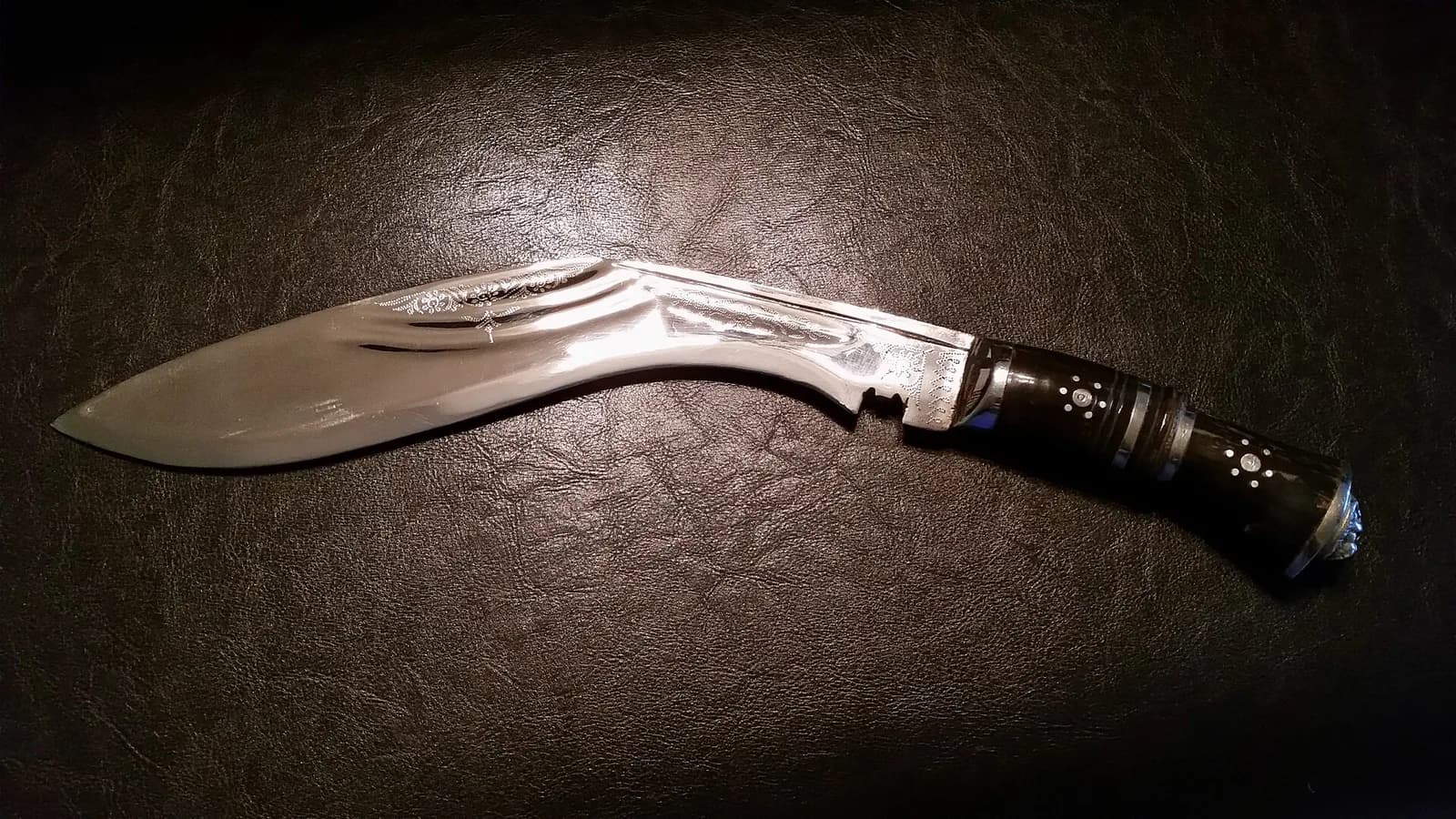
The Gurkha knife is one of the most recognisable blades in the world, yet most travellers know it by reputation rather than by name. Its real name is the khukuri (often spelled kukri), and it is far more than the fearsome weapon of legend. It is the national knife of Nepal, an everyday tool in the hills, a sacred object in Hindu ritual, and a craft passed down through generations of village smiths. This is a cultural companion to our practical khukuri buying guide — here we look at where the blade came from, what its shapes and symbols mean, and how it became the emblem of the Gurkhas.
If you want to know how to spot a genuine forged blade and fly one home legally, that buying guide covers it in full. This post is about the story.
Key takeaways
- The Gurkha knife is properly called the khukuri — the national knife of Nepal and the emblem of Gurkha regiments worldwide.
- It originated in the Gorkha kingdom, with use recorded over many centuries; a popular theory links its shape to the Greek kopis.
- The cho notch and the blade's curve carry both engineering logic and Hindu symbolism.
- Traditional blades are hand-forged by Bishwakarma Kami smiths in eastern towns like Dharan and Bhojpur.
- For Nepalis it is mostly a working tool and a symbol of honour — the fighting reputation is only one part of its life.
From hill tool to global symbol
The khukuri is the national weapon of Nepal, but for the people who actually use it, it has always been first and foremost a tool. In fields and homes across the hills it splits firewood, clears brush, slaughters animals, cuts meat and vegetables, skins game, and handles dozens of other daily jobs. That everyday usefulness is exactly why it travelled so naturally from the farm to the battlefield.
The knife's name in English — the Gurkha knife — comes from the soldiers who carried it. The word Gorkha is the original Nepali name of the kingdom, town and district from which Nepal was unified in the 18th century; Gurkha is the anglicised spelling used mainly for the soldiers. (We untangle that spelling and the kingdom behind it in our Gorkha soldiers and Gurkha guides.) The blade originated in that kingdom and spread with its armies, which is how a humble hill knife became a worldwide military emblem.
Where the khukuri came from
The true origins of the khukuri are not fully documented, and you should be wary of any source that states them with too much confidence. What is reasonably established is that the blade has been in recorded use for many centuries and originated in the Gorkha kingdom in what is now Nepal.
The most repeated origin story links the khukuri's distinctive forward curve to the ancient Greek kopis, a recurved blade that some accounts say reached the Indian subcontinent with the armies of Alexander the Great over two thousand years ago. It is a compelling idea and you will hear it from many sellers and writers — but treat it as a popular theory rather than proven history. The recurved chopping blade is a practical shape that has appeared independently in many cultures, and the direct lineage is not settled.
What is far better documented is the moment the khukuri entered Western awareness: the Anglo-Nepalese War of 1814 to 1816 (also called the Gurkha War), when the expanding Gorkha kingdom came into conflict with the British East India Company. British forces were impressed by the Nepali soldiers and the blades they carried, and formal Gurkha recruitment followed soon after.
The shape and its meanings
A khukuri is instantly recognisable from its inward-curving blade, which concentrates weight and momentum toward the belly for powerful chopping. But several of its features carry meaning as well as function.
The cho (the notch)
The small notch where the cutting edge meets the handle is the cho, sometimes called the kaudi. It does real mechanical work — acting as a stress-relief point that helps stop cracks travelling up into the blade, and helping fluids drip clear of the handle rather than running onto the grip. It is also symbolic: its shape is widely read as the trident of Shiva or a cow's hoof, both sacred in Hindu tradition. That single small cut captures the khukuri's double life as tool and cultural object.
The blade's two natures
There is an old and often-repeated belief that a khukuri, once drawn as a weapon, must "draw blood before it is sheathed." It is a striking piece of lore that has helped build the blade's mystique abroad — but it belongs firmly to the realm of tradition and storytelling, attached to the knife's role as a fighting weapon, not to its overwhelming everyday use as a farm tool. Travellers will hear it often; it is best understood as folklore rather than a rule anyone observes literally.
The smiths who forge it
Behind every genuine khukuri is a craftsperson, and in Nepal that craft has a specific home. The art of khukuri-making is traditionally upheld by smiths of the Bishwakarma Kami caste, known as Kamis. The skill is rarely taught formally; it passes down through family apprenticeship, learned through daily exposure to the forge, the steel and the demands of real-world use.
The forging towns of the east
Most of Nepal's kukris come from the eastern hills, and two towns stand out in the trade.
| Place | Role in khukuri craft | |---|---| | Dharan | Rose to fame as a production powerhouse; long the source of many army, police and export blades | | Bhojpur | A hill village that gave its name to the broad-bellied, heavier Bhojpure pattern | | Chainpur | One of the eastern centres known for skilled traditional bladesmiths |
Bladesmiths from surrounding villages gravitated to Dharan in particular, turning it into a centre of skilled craftsmanship, while Bhojpur lent its name to one of the most iconic regional styles. A traditional blade is hammered out by hand, often from recycled spring steel, then heat-treated and finished — a process that blends precision with a degree of spiritual devotion to the work. If you want to see Nepali metal and craft traditions up close, the workshops around the Kathmandu Valley are a good start; our Patan (Lalitpur) guide points you toward its craft quarters.
A blade woven into culture
The khukuri's place in Nepali life goes well beyond the workshop and the battlefield. It is a genuine cultural and religious object.
Festivals and ritual
During Dashain, Nepal's most important festival, families honour their blades, and khukuris feature in the ceremonial side of the celebration. At the autumnal Bishwakarma Puja, Nepalis pay homage to the tools of metalwork — khukuris among them — to honour craftsmanship and industry. The knife also appears in many traditional, Hindu-centred rites, including aspects of wedding ceremonies, and it shows up frequently in Nepali heraldry. To understand the festival context, see our Dashain festival guide.
A symbol of character
Ask a Nepali what the khukuri means and the answer is rarely about violence. The blade is widely understood to stand for strong character, honour, courage, justice, human dignity and freedom. It is a point of pride and identity — the reason it appears on emblems, in homes and in the iconography of the nation, not merely in the hands of soldiers.
The Gurkha connection
The khukuri's global fame is inseparable from the Gurkha soldiers. From the early 19th century onward it became — and remains — the standard-issue Gurkha service knife, carried continuously from the era of the Anglo-Nepalese War to the present day. It is the recognised emblem of Gurkha military regiments and units around the world, including the Brigade of Gurkhas in the British Army, various Gorkha regiments of the Indian Army, and the Gurkha Contingent of the Singapore Police Force.
The soldiers themselves were drawn from many of Nepal's hill communities, among them the Magar and Gurung peoples — you can read about them in our Magar and Gurung guides. That mix of a humble, intensely practical tool with a martial tradition of legendary discipline is precisely what gives the Gurkha knife its enduring grip on the imagination.
Bringing one home
A khukuri is one of the most meaningful things you can carry home from Nepal — a real, useful object with centuries of story behind it. But because it is a bladed weapon, getting it home involves rules: it travels in checked baggage only, never carry-on, and your home country has its own import and knife-carry laws that you must check before you buy. There is also a wide gulf between a genuine hand-forged blade and a cheap cast souvenir.
All of that — how to spot a real forged khukuri, the parts to inspect, what a fair price looks like, and exactly how to fly one home legally — is covered step by step in our main khukuri buying guide. It sits alongside our wider what to buy in Nepal round-up if you are weighing up other souvenirs too. Read the buying guide before you hand over any cash, and you will come home with the real thing and a story to match.
Sources
- Kukri — Wikipedia
- The Kukri — Your Guide To The Iconic Gurkha Weapon — Forces News
- Khukuri / Kukri Info: History, origin, value and myths — The Khukuri House
- The Khukuri — History, Types, and Cultural Legacy — Everest Forge
- Where Nepal's Best Kukris Are Born — Everest Forge
- History, Origin and Belief of Gurkha Kukri Knives — Kukri House
Frequently asked questions
- What is the Gurkha knife actually called?
- Its real name is the khukuri, also spelled kukri. English speakers call it the Gurkha knife because it is the signature blade and emblem of the Gurkha soldiers, but in Nepal it is simply the khukuri, the national knife and an everyday hill tool.
- Where did the khukuri come from?
- It originated in the Gorkha kingdom in what is now Nepal, with recorded use stretching back centuries. One common belief links its recurved shape to the ancient Greek kopis, though its true origins are not fully documented and the connection is a popular theory rather than proven fact.
- Why is the Gurkha knife famous in the military?
- British forces encountered it during the Anglo-Nepalese War of 1814 to 1816 and were struck by the courage of the Nepali soldiers who carried it. Gurkha recruitment followed, and the khukuri has been the standard-issue Gurkha service knife continuously ever since.
- What does the notch in the blade mean?
- That notch near the handle is the cho or kaudi. It works as a stress-relief point and helps fluids drip clear of the grip, and its shape is read as the trident of Shiva or a cow's hoof, both sacred in Hindu tradition.
- Who makes traditional khukuris?
- They are hand-forged by smiths of the Bishwakarma Kami caste, who have carried the craft through family apprenticeship for generations. The eastern towns of Dharan, Bhojpur and Chainpur are the historic forging centres.
- Is the khukuri used in festivals?
- Yes. During Dashain, families honour their blades, and at Bishwakarma Puja the tools of metalwork including khukuris are given ritual respect. The knife appears in many Hindu-centred rites and in Nepali heraldry.
- What does the khukuri symbolise for Nepalis?
- Beyond its use as a tool and weapon, it stands for intangible qualities such as strong character, honour, courage and dignity. It is woven into Nepali identity far more deeply than its fearsome reputation abroad suggests.
- Is the Gurkha knife only a weapon?
- No. In the hills it is mostly a multipurpose tool, used for chopping firewood, clearing brush, preparing food and countless daily tasks. Its role as a fighting blade is only one part of a much wider working life.
Related posts
Freak Street Kathmandu: Hippie-Trail Guide (Jhochhen Tole)
A traveller's guide to Freak Street Kathmandu (Jhochhen Tole) - its 1960s-70s hippie-trail history, what to see today, and how to find it.
Read postThe Nepal Hippie Trail: Freak Street Then and Now
How the Nepal hippie trail ended at Kathmandu's Freak Street (Jhochhen) — the history, why it faded, and what to see on the street today.
Read postThe 2001 Nepal Royal Massacre: A Factual Account
A respectful, well-documented account of the 2001 Nepal royal massacre at Narayanhiti Palace — what happened, the official inquiry, and the aftermath.
Read post