Gangetic Dolphin in Nepal: Where to See the Susu
A traveller's guide to the Gangetic dolphin in Nepal: where it lives, why it is endangered, and how to spot the Karnali susu responsibly.
A blind, side-swimming river dolphin that hunts by sound in the muddy Karnali.
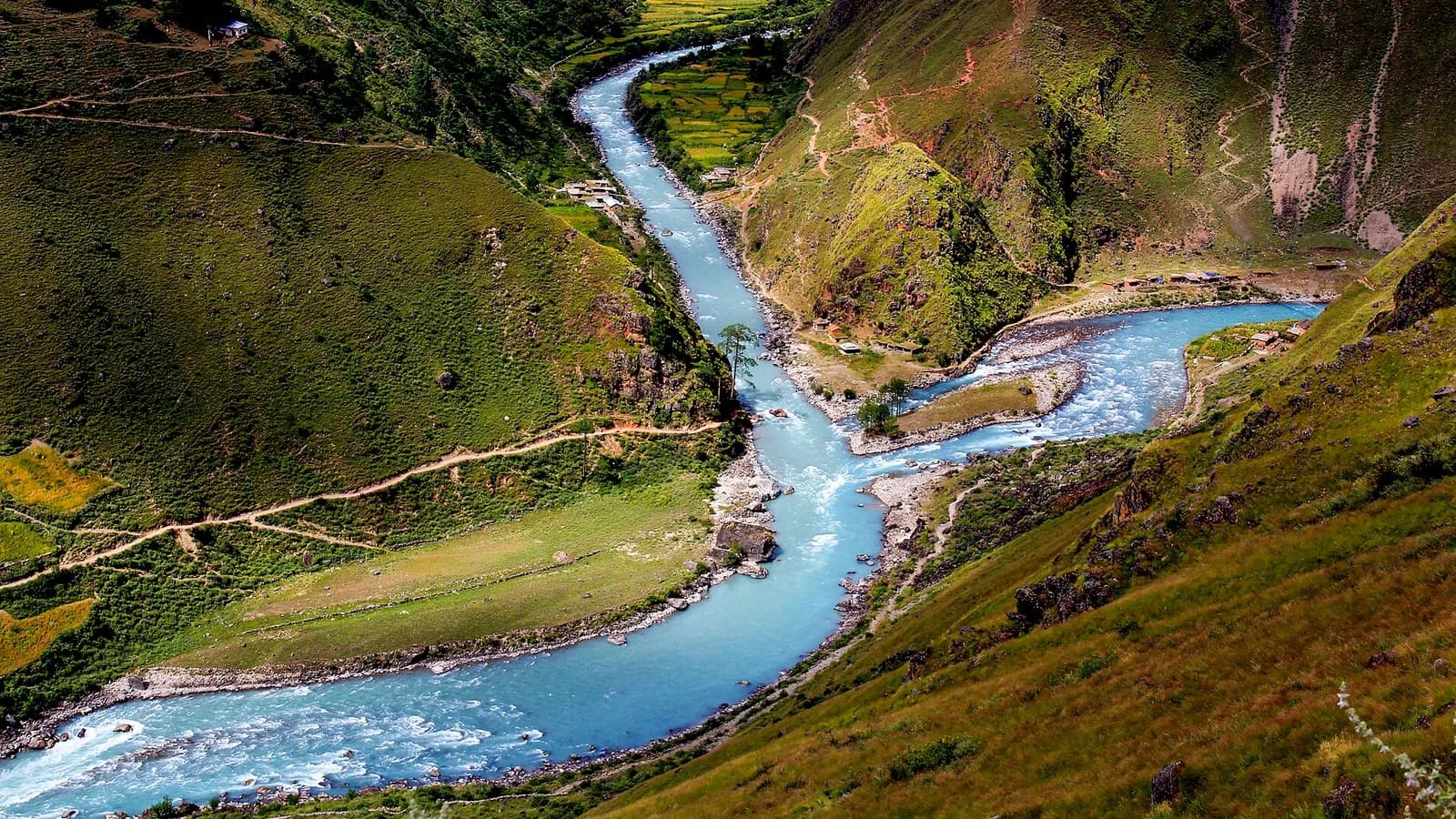
The Gangetic dolphin is one of South Asia's strangest and rarest mammals, and a tiny population survives in Nepal's lowland rivers. Often called the susu in Nepali, this blind, side-swimming freshwater dolphin hunts by sound in the muddy braids of the Karnali and a few other rivers. For wildlife travellers, glimpsing the Gangetic dolphin in Nepal is a rare bonus that sits alongside tigers, rhinos and gharials, but it takes patience, the right season, and realistic expectations.
Key takeaways
- The Gangetic dolphin (Platanista gangetica) is a freshwater river dolphin found in Nepal mainly in the Karnali, Narayani and Koshi river systems.
- It is functionally blind and navigates by echolocation, often swimming on its side to scan the riverbed for fish.
- It is listed as Endangered on the IUCN Red List and is treated as critically endangered within Nepal.
- The most accessible viewing area for tourists is the Geruwa channel of the Karnali beside Bardia National Park.
- Winter (roughly November to February) gives the best sighting odds because low water concentrates the dolphins.
- Numbers are alarmingly low: a December 2025 report counted just three dolphins in the Karnali system.
Meet the susu: a dolphin built for muddy water
The Gangetic dolphin is a true freshwater dolphin, completely separate from the bottlenose dolphins of the ocean. It belongs to the South Asian river dolphin group and lives only in the river systems of the Ganges-Brahmaputra basin, which reach into Nepal's southern plains.
Everything about its body reflects a life spent in turbid, sediment-heavy water:
- It is effectively blind. Its eyes lack a lens and can probably do little more than sense light and direction, so vision is useless in water you cannot see through.
- It "sees" with sound. The dolphin produces a stream of ultrasonic clicks and reads the echoes to build a sound-picture of fish, obstacles and the riverbed. This echolocation is its main sense.
- It swims on its side. A well-known habit is to swim turned on one flank with a flipper trailing the bottom, a posture thought to help it detect prey stirred up from the mud.
- It has a long, toothy beak. The slender snout and flexible neck let it probe the river bottom for catfish, carp and other prey.
Adults are large for a river dolphin. According to WWF, Ganges river dolphins can reach around 2.7 metres in length and weigh up to roughly 90 kilograms, with females typically larger than males. The Nepali name susu (also written sons) is widely said to imitate the breathy sound the animal makes as it surfaces to breathe.
Why it matters for the whole river
Because it sits near the top of the food chain and needs clean, connected, fish-rich water, the Gangetic dolphin is treated as an indicator species: its presence is a sign of a relatively healthy river. When dolphins vanish from a stretch of river, it usually means the wider ecosystem of fish and water quality is in trouble too.
Where the Gangetic dolphin lives in Nepal
In Nepal the dolphin is restricted to a handful of lowland river systems. Surveys and reviews record it from the Karnali, Geruwa, Mohana, Koshi (Sapta Koshi) and Narayani rivers, with the Karnali and Koshi historically holding the most animals. Notably, with the exception of Bardia National Park, most of the dolphin's range in Nepal lies outside the formal protected-area system, which makes conservation harder.
| River system | Region | Notes for visitors | | --- | --- | --- | | Karnali / Geruwa | Far-west, beside Bardia | Best-known and most accessible viewing area | | Sapta Koshi | South-east Nepal | Historically important habitat; harder to access | | Narayani | Central, near Chitwan | Low numbers; sightings are rare | | Mohana / Bhada | Far-west borderlands | Seasonal, fragmented presence |
The far-western rivers sit close to the Nepal-India border, and the dolphin moves across this boundary, which is one reason conservation here depends on cooperation between both countries.
Spotting the dolphin: Bardia and the Karnali
For most travellers, the realistic place to try for a sighting is the Geruwa river, a branch of the Karnali that runs along the edge of Bardia National Park in far-western Nepal. Local lodges and the park area offer river trips where dolphins are one of the hoped-for sightings, alongside gharial crocodiles and water birds.
Getting there
Bardia is remote compared with Chitwan. The usual route is to fly to Nepalgunj and then drive roughly two hours to the Bardia area, where riverside resorts are based. From there, a boat or raft trip on the Geruwa is the standard way to look for dolphins. Because Bardia is far less crowded than Chitwan, it suits travellers who want quieter national parks and a wilder feel.
Best season and tips
- Timing: The winter low-water window, roughly November to February, is generally considered best. As the river drops, dolphins gather in deeper pools and are easier to spot when they surface.
- What you will actually see: Expect a brief roll of a grey back and the curve of a dorsal hump, not leaping ocean-style acrobatics. A surfacing dolphin shows for only a second or two.
- Patience: Sightings are never guaranteed. Calm early mornings and quiet stretches of river give you the best chance.
- Pair it with other wildlife: A Bardia trip is really about the whole ecosystem. Combine dolphin-watching with the park's famous big-cat and rhino habitat and its excellent birdwatching.
Conservation status and threats
The Gangetic dolphin has been listed as Endangered on the IUCN Red List since 1996, and within Nepal it is assessed as critically endangered. Globally, the Ganges and Indus river dolphins are now considered the world's most threatened freshwater cetaceans following the effective loss of China's Yangtze river dolphin.
The threats in Nepal's rivers are well documented in scientific reviews and government sources:
Dams and water diversion
Barrages and dams break rivers into fragments, blocking the dolphin's movements and cutting populations off from one another. They also change the flow downstream, which can leave some channels too shallow to support dolphins. In the Karnali, a shift of the main flow away from the Geruwa branch toward the western Kauriala channel has reduced the deeper habitat dolphins rely on.
Falling dry-season water levels
During the dry months the rivers shrink, foraging pools disappear, and dolphins are squeezed into fewer and smaller patches of suitable water. Reduced water in the eastern Karnali distributary has been linked directly to local declines.
Fishing-net entanglement and pollution
Because the dolphin is blind and shares the water with artisanal fishing communities, it can become entangled in nets. Overfishing also reduces its prey, while pollution degrades water quality across its range.
How few are left
The population picture in Nepal is fragile. A government survey in 2016 recorded five dolphins in the Karnali, and a December 2025 report stated that the number around Bardia had fallen to just three, with a single dolphin recorded in one survey of the Patabhar area of the Geruwa. Estimates for the wider Karnali system in some studies have been higher, but all sources agree the trend is downward and the surviving population is small and vulnerable. Globally, the total Ganges river dolphin population is often estimated at fewer than a few thousand animals.
Responsible dolphin watching
Seeing a wild Gangetic dolphin is a privilege, and with so few left, how you watch matters. A few simple principles keep the experience low-impact:
- Use local, park-linked operators. Choose lodges and guides associated with Bardia National Park who follow park rules and keep a respectful distance.
- Keep noise and speed down. Boats should move slowly and avoid chasing or crowding any dolphin that surfaces.
- Do not expect a show. Treat any sighting as a lucky moment in a wild river, not a guaranteed attraction.
- Support the river, not just the dolphin. Reducing plastic waste and respecting fishing communities both help the ecosystem the dolphin depends on.
- Combine with other wildlife. Building your trip around Bardia's broader national-park experience takes pressure off any single species and makes the journey worthwhile even without a sighting.
If your main goal is reliable big-game wildlife rather than a rare dolphin, the easier-to-reach safaris around Chitwan may suit you better, while Bardia rewards those willing to travel further for a wilder, quieter west.
Sources
- Ganges River Dolphin, WWF
- Swimming blindly down the Ganges, WWF
- Platanista gangetica, Department of National Parks and Wildlife Conservation, Nepal
- Ganges river dolphin, Wikipedia
- Dolphin population in Karnali river drops to three, The Kathmandu Post
- Freshwater dolphin comeback in Nepal, Nepali Times
- Guardians of the Karnali: Preserving the Ganges River Dolphins in Nepal, Youth Alliance for Environment
- Characterization of the artisanal fishing communities in Nepal and implications for Ganges River Dolphin conservation, PMC
Frequently asked questions
- What is the Gangetic dolphin called in Nepali?
- It is commonly called susu or sons, a name said to echo the soft breathing sound the dolphin makes when it surfaces.
- Where can tourists see the Gangetic dolphin in Nepal?
- The most reliable area is the Geruwa branch of the Karnali river beside Bardia National Park in far-western Nepal; sightings are never guaranteed.
- Is the Gangetic dolphin blind?
- Yes, it has tiny non-functional eyes and navigates the silty water almost entirely by echolocation, using sound to find fish and avoid obstacles.
- When is the best time for dolphin watching in the Karnali?
- The low-water winter months of roughly November to February concentrate dolphins into deeper pools and give the clearest viewing chances.
- How many Gangetic dolphins are left in Nepal?
- Numbers are very low and surveys vary by river; a December 2025 report found only three dolphins in the Karnali system around Bardia.
- Why is the Gangetic dolphin endangered?
- Dams that fragment rivers, falling dry-season water levels, fishing-net entanglement, and pollution have all reduced its range and numbers.
- Is the Gangetic dolphin the same as a sea dolphin?
- No, it is a freshwater river dolphin in a separate family and never enters the sea; it lives only in rivers of the Ganges-Brahmaputra basin.
Related posts
Bardia National Park: Nepal's Wild Tiger Park (2026)
Bardia National Park guide — Bengal tigers, rhinos, entry fees, safaris and how Nepal's quietest Terai park compares to Chitwan in 2026.
Read postBlue Sheep of Nepal: The Bharal and Where to See It
A trekker's guide to the blue sheep (bharal) of Nepal: habitat, snow leopard link, behaviour, and the best regions to spot this Himalayan caprine.
Read postElephant Breeding Centre Chitwan: Visitor Guide
What the elephant breeding centre in Chitwan really is, how to visit Khorsor near Sauraha, opening hours, fees, and the welfare debate explained.
Read post