Dry Trekking Nepal: Best Seasons and Rain-Shadow Trails
Dry trekking Nepal explained: the dry seasons for firm trails plus rain-shadow regions like Mustang and Dolpo that stay dry even in monsoon.
Dry trails are a choice, not luck — pick the right month or walk where the monsoon cannot reach.
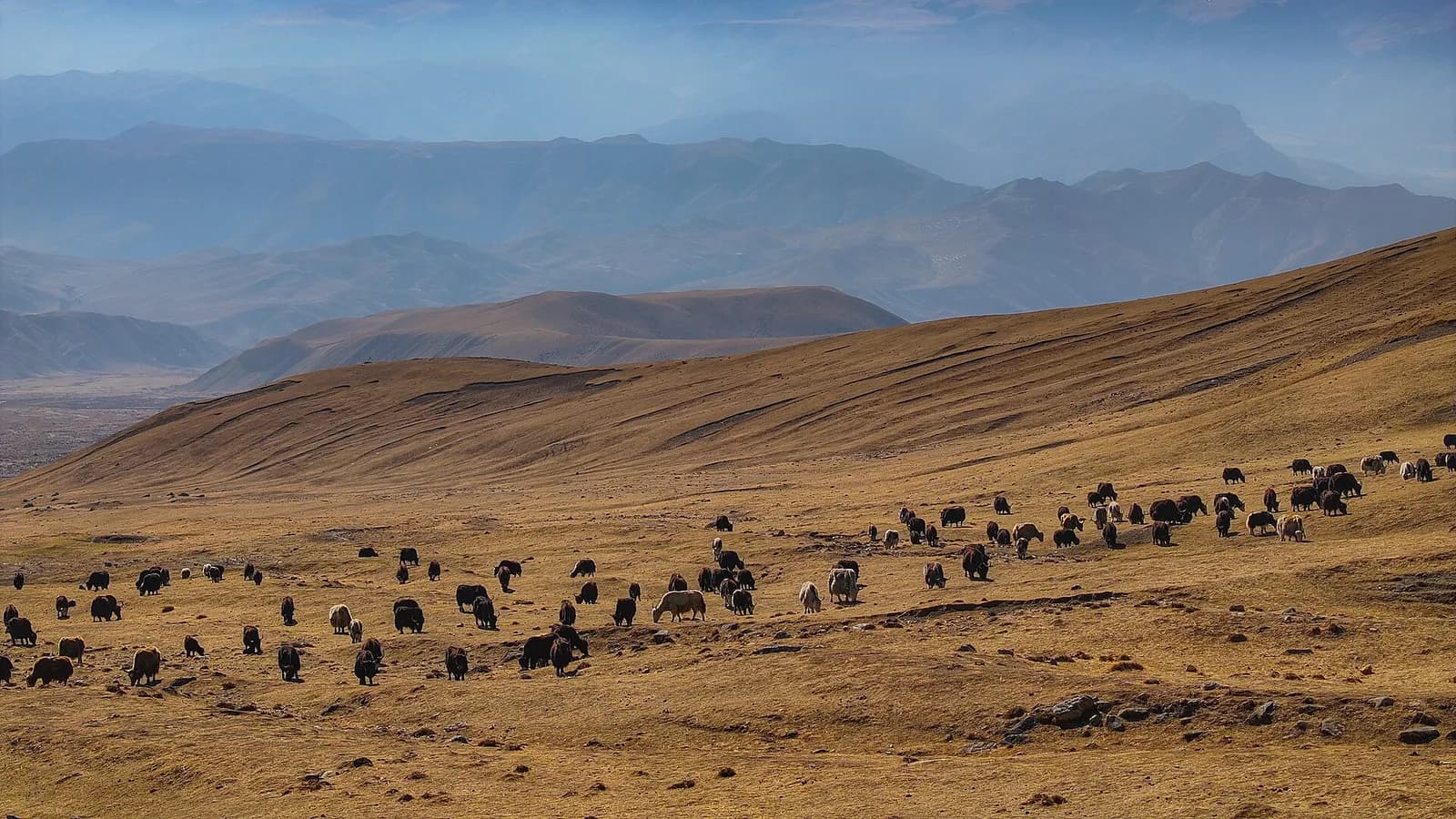
"Dry trekking Nepal" is a search that usually means one of two things: walking when the trails are firm and the skies are clear rather than slick with mud, or heading to the corners of the Himalaya that stay dry even when the rest of the country is drowning under the monsoon. The good news is that both are easy to plan once you understand Nepal's weather. This guide covers the dry trekking seasons — autumn, spring, and winter — and the remarkable rain-shadow regions like Mustang and Dolpo where you can keep your boots dry in July. It also flags the small trade-offs of dry-trail trekking, from dust to cold nights, so you can pick the right month and route.
Key takeaways
- "Dry" trekking in Nepal means firm, mud-free trails — achievable either by season (autumn, spring, winter) or by going to rain-shadow regions year-round.
- Autumn (late September–November) is the driest, clearest window; October trails are dust-free for a spell before turning truly dry, with rare snow on passes in the first three weeks.
- Spring (March–May) is dry and warm but dustier, with afternoon clouds and pre-monsoon haze blurring distant peaks by late May.
- Rain-shadow regions — Upper Mustang, Upper Dolpo, Nar Phu, Manang — sit behind the high peaks and stay dry through the June–August monsoon; Upper Mustang gets only about 250mm of rain a year.
- Restricted-area treks need a Restricted Area Permit via a registered agency; Upper Mustang costs USD 50 per person per day in 2026 (as of June 2026).
- Dry conditions bring their own issues: dust, strong sun, and cold winter nights, so pack a buff, sun protection, and extra water.
What "dry trekking" really means
Trails in Nepal get wet for one reason above all others: the summer monsoon, which sweeps moisture up from the Bay of Bengal between roughly June and August. During those months the southern hills see heavy daily rain, trails turn muddy and leechy, clouds smother the peaks, and river crossings swell. Outside the monsoon, most popular routes are naturally dry — but the dryness, the dust, and the temperature shift month by month.
So "dry trekking" splits neatly into two strategies. The first is timing: trek in the dry seasons, when rain is uncommon and trails are firm. The second is geography: trek in the rain shadow, the lee side of the big mountains, where the monsoon clouds simply cannot reach. Understanding both lets you find dry trails in almost any month of the year.
For the wider picture of when to walk, the best season to trek in Nepal guide breaks down each window, and the Nepal trekking first-timer's guide covers permits, costs, and route choice.
The dry seasons: autumn, spring, and winter
Nepal has two main trekking seasons either side of the monsoon, plus a cold, dry winter that works well for lower routes.
| Season | Months | Trail dryness | Notes | |---|---|---|---| | Autumn | Late Sep–Nov | Driest and clearest | Peak season, best visibility, busy trails | | Spring | Mar–May | Dry but dustier | Rhododendrons bloom; afternoon clouds, late-May haze | | Winter | Dec–Feb | Dry, very low rain chance | Cold; snow on higher passes; quiet trails | | Monsoon | Jun–Aug | Wet (except rain shadow) | Mud and leeches in the south; dry in Mustang/Dolpo |
Autumn — the driest, clearest window
The monsoon typically retreats by the last week of September, leaving the air washed of dust and the mountain views finally clear. Autumn delivers stable weather, dry trails, and the finest visibility of the year. October is the prime month: by mid-October the trails are dry enough that even lower sections are dust-free for a few days before turning truly dry, rainfall across the trekking regions averages only about 35–60mm (almost all of it in the first week), and snow on high passes like Thorong La and Larkya La is rare in the first three weeks. The catch is crowds — mid-October is the busiest stretch of the year, with hundreds of trekkers on the popular trails in a single week.
Spring — dry and warm, but dustier
Spring is the second dry season, prized for stable weather and the rhododendron forests that bloom from late March through April. March and April are the sweet spot, balancing flowers, firm trails, and crisp morning visibility. As May approaches, lower altitudes warm up, trails get dusty, and clouds tend to build in the late afternoon; by late May, pre-monsoon haze can blur distant peaks. The practical fix is simple: start walking early, before the afternoon cloud and dust build.
Winter — dry and quiet at lower altitude
Deep winter (December–February) is genuinely dry, with very slim chances of rain and clear, snow-capped views, but it is cold and snow closes the highest passes. It suits lower routes such as Ghorepani Poon Hill, where Poon Hill at around 3,200m is high enough for great ridge views but low enough to avoid heavy snow. Expect daytime temperatures in the Ghorepani area of roughly 5–12°C and nights dropping to around -5 to -8°C, so a sub-zero sleeping bag and a down jacket are essential.
Rain-shadow trekking: dry trails in the monsoon
The most interesting kind of dry trekking happens in summer, in the so-called rain shadow. The Annapurna, Dhaulagiri, and Manaslu ranges form a wall that the monsoon cannot cross. Behind that wall — in Upper Mustang, Upper Dolpo, Nar Phu, and parts of upper Manang — the moisture-laden clouds drop their rain on the southern slopes and arrive dry on the far side. The result is a high-altitude desert that stays walkable from June to August while the rest of Nepal is soaked.
Just how dry is it?
The numbers are striking. Upper Mustang averages only around 250mm of rain a year, making it one of the driest areas in Nepal. The monsoon contrast is sharper still: while Pokhara, only about 60km to the south, receives roughly 300mm of rain in July, Upper Mustang gets approximately 30mm in the same month. That is why these eroded, ochre-coloured valleys feel more like Tibet than the green middle hills — and why their trails stay firm when others turn to mud.
Where to go
- Upper Mustang. The walled kingdom of Lo, tucked behind the Annapurna and Dhaulagiri ranges, with the old capital at Lo Manthang. See the Upper Mustang trek guide and the deeper look at Lo Manthang.
- Upper Dolpo. A remote, sparsely populated trans-Himalayan region of high passes and turquoise Phoksundo Lake; the Dolpo trek guide covers logistics.
- Nar Phu Valley. A hidden corridor behind the Annapurna massif that receives far less rain than its surroundings, keeping trails safe and views clear through summer.
- Manang. The upper Annapurna Circuit village sits in a drier, rain-shadow pocket at around 3,500m, useful on the Annapurna Circuit in shoulder months.
If you would rather understand the wet side first, the monsoon season in Nepal guide explains what the rains actually do to the trails.
Permits for rain-shadow treks
Most rain-shadow regions are restricted areas, which means more paperwork than a standard trek. You cannot trek them fully independently: a Restricted Area Permit (RAP) must be arranged through a registered Nepali trekking agency, and you trek with a licensed guide.
| Region | Permit type | Cost (as of June 2026) | |---|---|---| | Upper Mustang | Restricted Area Permit | USD 50 per person per day | | Upper Mustang (Annapurna overlap) | ACAP conservation permit | USD 30 (NPR equivalent for some) | | Nar Phu | Restricted Area Permit + ACAP | RAP plus ACAP entry | | Upper Dolpo | Restricted Area Permit | Restricted-area rate, multiple permits |
In late 2025 the government replaced Upper Mustang's old flat USD 500 fee with a flexible USD 50 per person per day, so you now pay only for the days you actually spend inside the restricted zone — a 10-day visit still works out to about USD 500. A further change took effect on 22 March 2026: solo travellers may now trek Upper Mustang with a licensed guide, as the previous two-person minimum for foreigners was removed. Always confirm current fees and rules with your agency before you book, as restricted-area policies change. The Upper Mustang permit cost guide goes into more detail.
Packing for dry trails
Dry trekking is comfortable, but the conditions that keep trails firm — strong sun, low humidity, dust, and thin air — call for specific gear. The two failure points are sun and dehydration.
Sun and dust
High, dry air means fierce ultraviolet exposure and, especially in late spring and the desert regions, plenty of dust kicked up on the trail. Carry strong sunscreen, good sunglasses, a brimmed hat, and a buff or light scarf you can pull over your nose and mouth on dusty stretches. Lip balm with SPF saves a lot of misery.
Water and warmth
Dry air is dehydrating, so drink more than you think you need and always treat your water with a filter, purification tablets, or by boiling rather than buying single-use plastic. For winter and high rain-shadow nights, pack a sub-zero sleeping bag, a down jacket, thermal layers, gloves, and a beanie. The general trek packing list and the field-tested packing guide from a trekker's perspective cover the full kit.
Choosing your dry-trekking strategy
Put simply: if you want the driest, clearest, most reliable trails and do not mind company, trek a popular route in autumn. If you want flowers and warmth, choose spring and start early to beat the dust and afternoon haze. If you want solitude and snow-dusted lower ridges, go in winter on a low route. And if your only free time is the summer monsoon, do not write off Nepal — head into the rain shadow of Mustang, Dolpo, or Nar Phu, where the trails stay dry, the crowds thin out, and the desert landscapes are unlike anywhere else in the Himalaya.
Whichever you pick, the principles are the same: ascend slowly because altitude, not mud, is the real danger; treat your water; protect yourself from the sun; and confirm the latest permit rules before you go.
Sources
- Best Trekking Seasons in Nepal — Green Valley Nepal Treks
- Best Time to Trek in Nepal — Nepal Hiking Team
- Trekking Nepal October 2026: Routes and Conditions — The Everest Holiday
- Spring vs Autumn Trekking in Nepal — Nepal Gateway Trekking
- Nepal in May: Weather Conditions and Tips — Magical Summits
- Poon Hill Trek in Winter — Haven Holidays Nepal
- Trekking in Nepal During Monsoon: Guide to Dry Trails — Nepal Gateway Trekking
- Monsoon Trekking Nepal: Safe Trails Guide — The Everest Holiday
- Best Time for Upper Mustang Trek — Nepal Trekking Routes
- Upper Mustang Permit 2026: New USD 50/Day Fee — Himalaya-King
- Upper Mustang Restricted Area Permit 2026 — Nepal Vision Treks
Frequently asked questions
- What does dry trekking in Nepal mean?
- It means walking on firm, mud-free trails — either during Nepal's dry seasons (autumn and spring) or in rain-shadow regions like Mustang and Dolpo that stay dry even during the summer monsoon.
- Which months are driest for trekking in Nepal?
- Autumn, roughly late September to November, is the driest and clearest window, followed by spring from March to May; deep winter is also dry but cold at altitude.
- Can you trek on dry trails in Nepal during the monsoon?
- Yes, in the Himalayan rain shadow. Upper Mustang, Upper Dolpo, and Nar Phu sit behind the high peaks and stay largely dry from June to August while southern trails are wet.
- How much rain does Upper Mustang get compared to the rest of Nepal?
- Very little. Upper Mustang averages only around 250mm of rain a year and roughly 30mm in July, while Pokhara nearby gets around 300mm in July alone.
- Do rain-shadow treks need special permits?
- Yes. Upper Mustang, Upper Dolpo, and Nar Phu are restricted areas that need a Restricted Area Permit arranged through a registered Nepali agency, plus the relevant conservation-area permit.
- How much is the Upper Mustang permit in 2026?
- As of 2026 the Upper Mustang Restricted Area Permit is USD 50 per person per day, replacing the old flat USD 500 fee, so a 10-day visit costs about USD 500 (as of June 2026).
- Are dry trails dusty?
- They can be. Late spring and the high desert regions get dusty and very sunny, so carry a buff or scarf, sunglasses, sunscreen, and extra water to stay comfortable and hydrated.
- Is winter a good time for dry trekking in Nepal?
- Yes for lower routes like Ghorepani Poon Hill, where trails stay dry and clear with rare rain; just expect cold nights and possible snow above roughly 3,000 metres.
Related posts
How to Book the Everest Base Camp Trek (2026)
A practical guide to book the Everest Base Camp trek: when to reserve, choosing a registered agency, deposits, permits, and what a package includes.
Read postIs Everest Base Camp Worth It? An Honest Look
Is Everest Base Camp worth it? An honest, sourced look at the cost, difficulty, scenery and crowds to help you decide before you commit to the trek.
Read postMonsoon Season in Nepal: A Traveller's Honest Guide
When the monsoon season hits Nepal, what the rain really means for trekking and travel, and the rain-shadow regions that stay dry from June to September.
Read post