Annapurna vs Manaslu: Which Trek Should You Choose?
An Annapurna vs Manaslu decision guide for trekkers — compare permits, crowds, difficulty, infrastructure and cost to pick the right Himalayan route.
Annapurna is the trek everyone has heard of. Manaslu is the one they wish they had.
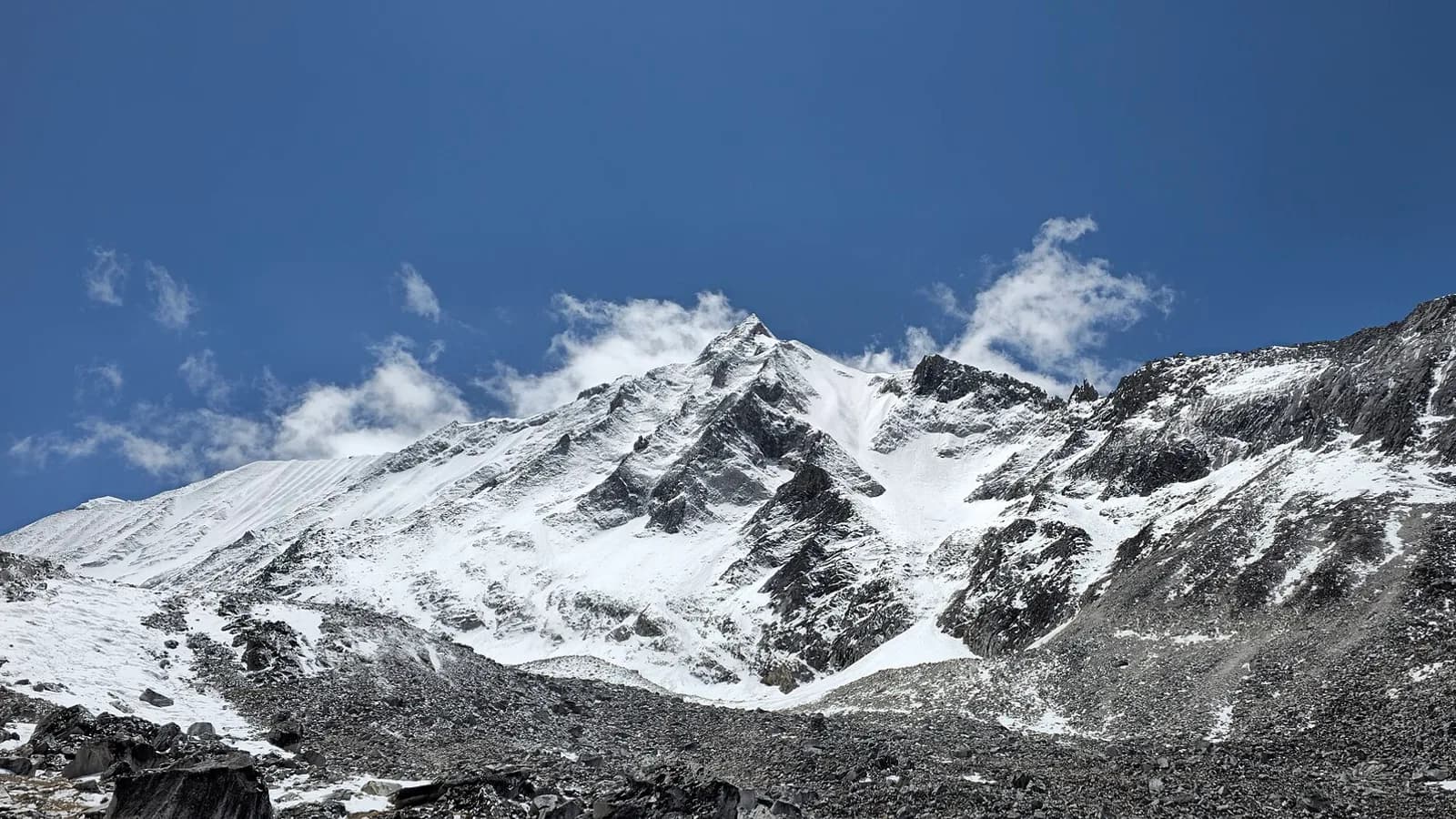
Choosing between Annapurna and Manaslu is one of the better problems a Nepal-bound trekker can have. Both routes loop through deep river valleys into high Tibetan-Buddhist country, both cross a pass above 5,000 metres, and both end with you a little changed. But the Annapurna vs Manaslu decision is not really about which mountain is prettier — it is about permits, crowds, infrastructure, cost, and the kind of trek you actually want. This guide breaks down the differences so you can match the route to your trip.
If you want a deeper look at the specific difficulty differences, pair this with our companion piece on Manaslu vs Annapurna difficulty. Here, the focus is the whole decision.
Key takeaways
- Annapurna is the established, better-served region with more lodges, lower permit costs, and easier logistics — the safer first choice.
- Manaslu is the quieter, more remote restricted-area circuit that rewards trekkers wanting fewer crowds and a stronger wilderness feel.
- Both cross a high pass: Thorong La (5,416 m) on the Annapurna Circuit, Larke La (about 5,106 m) on Manaslu.
- Manaslu needs a Restricted Area Permit arranged through a registered agency; Annapurna does not.
- Since April 2023, foreign trekkers must use a licensed guide through a registered agency in Nepal's conservation and restricted areas, which covers both regions.
- Pick Annapurna for variety and ease, Manaslu for solitude and immersion — both shine in autumn and spring.
First, "Annapurna" and "Manaslu" mean different things
A quick clarification, because the names cover more than one trek.
"Annapurna" is a whole trekking region built around the Annapurna massif, whose highest summit, Annapurna I, is the world's tenth-highest mountain at 8,091 m (per Wikipedia). Under that umbrella sit several routes: the long Annapurna Circuit around the range, the shorter Annapurna Base Camp trek into the Sanctuary, the Tilicho Lake side trip, and gentler options like Poon Hill and Mardi Himal. We compare the two headline Annapurna walks in Annapurna Circuit vs Base Camp.
"Manaslu" almost always means one route: the Manaslu Circuit, a loop around Manaslu, the world's eighth-highest mountain at 8,163 m (per Wikipedia). The two massifs are neighbours — Manaslu sits roughly 64 km east of Annapurna.
For a head-to-head decision, the fairest comparison is the Annapurna Circuit versus the Manaslu Circuit, since both are multi-week loops with a single big pass. That is the comparison this article leans on.
Difficulty and the high pass
Both circuits are serious treks that demand fitness and respect for altitude, but they are not equally demanding.
The Annapurna Circuit climbs gradually over many days before its crux: crossing Thorong La at 5,416 m, often described as a 10-to-12-hour day to and over the pass. The gradual build-up and the well-trodden path give your body time to adjust, which is part of why it is such a popular first high-altitude trek.
The Manaslu Circuit tops out at Larke La (Larkya La), commonly cited around 5,106 m — lower than Thorong La on paper. Yet most operators and trekkers rate the Larke La day as the harder of the two: it is longer, steeper, more remote, and served by fewer teahouses, so there is less margin for a bad day. Manaslu's overall remoteness amplifies every challenge.
Whichever you choose, altitude is the real risk on both. Read our altitude sickness guide for Nepal trekking before you go, and build in acclimatisation days.
Quick difficulty comparison
| Factor | Annapurna Circuit | Manaslu Circuit | |---|---|---| | Highest point | Thorong La, 5,416 m | Larke La, about 5,106 m | | Pass-day reputation | Long but well-supported | Longer, steeper, more remote | | Acclimatisation profile | Gradual, forgiving | Steeper build-up, fewer facilities | | Remoteness | Moderate | High | | Good first high-pass trek? | Yes | Better with prior altitude experience |
Permits: the biggest practical difference
This is where the two treks genuinely diverge, and it shapes both cost and planning.
The Annapurna region requires the Annapurna Conservation Area Permit (ACAP), priced at NPR 3,000 (about USD 25) for foreign trekkers (NPR 1,000 for SAARC nationals), as of mid-2026. A TIMS card (around NPR 2,000) has historically been required too, though enforcement in the Annapurna region has been shifting, with reports of checkpoints focusing on ACAP. Because rules change, confirm the current TIMS requirement with the Nepal Tourism Board or your agency before you set out.
Manaslu is a restricted area, which is a different category. You need:
- A Restricted Area Permit (RAP) — USD 100 per person for the first 7 days plus USD 15/day thereafter in September–November, and USD 75 plus USD 10/day in December–August (as of mid-2026).
- The Manaslu Conservation Area Permit (MCAP) — USD 30.
- The Annapurna Conservation Area Permit (ACAP) — USD 30 — because the standard route exits through Annapurna territory.
- A local rural-municipality fee in some itineraries.
Crucially, the restricted-area permit cannot be issued to individuals — it must be arranged through a registered trekking agency. That single rule means Manaslu always involves an agency and a guide; you cannot simply walk in independently.
| Permit item | Annapurna Circuit | Manaslu Circuit | |---|---|---| | Conservation permit | ACAP ~NPR 3,000 (~USD 25) | MCAP USD 30 + ACAP USD 30 | | Restricted Area Permit | Not required | USD 100/7 days + USD 15/day (Sep–Nov) | | TIMS card | Historically ~NPR 2,000 (verify) | Covered by restricted-permit process | | Issued to individuals? | Yes (via agency rule, below) | No — agency only |
All figures above are as of mid-2026 and set by Nepali authorities; permit prices are periodically revised, so treat them as a planning baseline and reconfirm before you pay.
Do you need a guide?
For both treks now, effectively yes.
Since 1 April 2023, Nepal has required every foreign trekker in its national parks, conservation areas, and restricted areas to trek with a licensed guide or porter-guide arranged through a government-registered agency. This covers the Annapurna region and Manaslu alike. (The Everest/Khumbu area runs on a separate local-permit system and is the well-known exception.)
For Manaslu the guide rule is doubly locked in because it is a restricted area. For Annapurna, the practical effect is the same: plan and budget for a guide. If you are weighing operators, our notes on choosing a trekking agency in Nepal and on tipping guides and porters will help you set expectations and budget.
A note on Manaslu's group rule: historically the restricted-area permit required a minimum of two trekkers with a certified guide, and several operators reported a relaxation of the solo restriction in 2026. Because this detail has changed and reporting varies, do not assume you can go solo — confirm the current minimum-group rule directly with a registered agency when you book.
Crowds, infrastructure, and atmosphere
If the permits decide what is possible, this section often decides what you will enjoy.
Annapurna has been a flagship trekking region for decades. That maturity means many lodges per village, broad menus, more reliable charging and connectivity, and a sociable trail. It also means more people, more jeep roads reaching into the valleys, and a busier feel in peak season. For many trekkers the comfort and ease are worth it; for others the development dilutes the wilderness.
Manaslu is the opposite trade. Teahouses are fewer and simpler, menus are shorter, hot showers and Wi-Fi get sparse high up, and prices can run a touch higher because there is less competition. In exchange you get genuinely quiet trails, tightly knit Tibetan-Buddhist villages in the upper valleys, and a sense of remoteness that the Annapurna Circuit has slowly traded away. You tend to learn your fellow trekkers' names.
| Experience factor | Annapurna Circuit | Manaslu Circuit | |---|---|---| | Lodges per village | Many | Few | | Trail crowds | Higher | Low | | Menu variety | Wide | Limited | | Connectivity / charging | Generally good | Patchy, sparse up high | | Cultural texture | Mixed Hindu and Tibetan | Strongly Tibetan-Buddhist up high | | Road encroachment | More | Less |
Scenery and culture
Both deliver world-class Himalayan views; the character differs.
The Annapurna Circuit is famous for variety. You pass through subtropical valleys, terraced farmland, pine and rhododendron forest, and into the arid, Tibetan-influenced high country near Manang before the pass — a remarkable range of landscapes and climates in one trek.
The Manaslu Circuit is dominated by the mountain itself. The upper villages — places like Lho, Samagaun, and Samdo — are ethnically Tibetan, with working monasteries, prayer wheels, and chortens that give the route a deeply Buddhist feel. The early valley days are visually quieter, but from the high villages onward Manaslu fills the sky. If immersion in living high-mountain culture is your priority, Manaslu has the edge.
Cost: how the budgets compare
Daily on-trail spending — teahouse beds, dal bhat, tea — is broadly similar on both routes, with Manaslu slightly higher up high due to remoteness. The decisive gap is permits: Annapurna's conservation permit is modest, while Manaslu stacks a restricted permit on top of two conservation permits, adding a meaningful sum per person.
Add the mandatory guide (and any porter) to both, and Annapurna generally comes out cheaper overall — especially for a solo traveller, since Manaslu's agency-and-permit structure has less room for bare-bones budgeting. For ballpark daily and trip numbers across Nepal treks, see our Annapurna Base Camp trek cost breakdown as a reference point, and remember Manaslu's permit premium on top.
Best time to go
The seasons line up for both treks. Autumn — roughly October into November — is the prime window, offering the clearest skies, the most stable weather, and the best mountain views, which is why it is the busiest. Spring — roughly March into May — is the strong second choice, warmer at low elevations and bright with rhododendron bloom.
Avoid the summer monsoon (about June to September) on both: the low valleys turn wet and landslide-prone, and Manaslu's deep gorges are especially exposed. Deep winter brings snow and cold that can close the high passes. For the bigger seasonal picture, see our guide to the best time to visit Nepal.
So, which should you choose?
A simple way to decide:
- Choose Annapurna if it is your first big Himalayan trek, you want variety of scenery, you value lodge comfort and connectivity, you are budget-conscious, or you simply want the smoother logistics of a well-developed region.
- Choose Manaslu if you have some altitude experience, you crave quiet trails and a wilder feel, you want strong Tibetan-Buddhist immersion, and you do not mind paying the restricted-permit premium and committing to an agency.
If you have already walked the Annapurna Circuit and loved it, Manaslu is the natural next step — a similar shape with fewer people and a bigger wilderness payoff. If you are still building toward high passes, Annapurna (or a gentler route first) is the wiser start.
Before either, sort the practical layer: a guide through a registered agency, the right permits, an acclimatisation plan, and a sensible trekking packing list. Get those right and both treks deliver the kind of mountains people fly across the world to see.
Sources
- Manaslu - Wikipedia
- Thorong La - Wikipedia
- Annapurna Trekking Permits 2026: ACAP, TIMS & RAP Guide — Nepal Hiking Team
- Manaslu Circuit Trek Permits — Himalayan Hero
- Manaslu Circuit Trek Permits: Solo Trekking Rule (March 2026 Update) — Himalayan Social Trekking
- New Trekking Rules in Nepal: Effective from 1 April 2023 — Nepal Trekking in Himalaya
- Larke La Pass Manaslu Trek Guide — Nepal Mountain Adventure
- Crossing the Thorong La Pass — Responsible Travel
Frequently asked questions
- Is Manaslu harder than the Annapurna Circuit?
- Most trekkers find Manaslu's Larke La crossing tougher — it is more remote, the days are longer, and the build-up has fewer facilities, even though the pass itself is a little lower than Thorong La.
- Can I trek the Annapurna region without a guide?
- Since April 2023 Nepal requires foreign trekkers to use a licensed guide or porter-guide through a registered agency in national parks and conservation areas, which includes the Annapurna region, so plan for a guide.
- Do I need a special permit for Manaslu but not Annapurna?
- Yes — Manaslu is a restricted area that needs a Restricted Area Permit arranged through a registered agency, on top of conservation permits, while Annapurna needs the conservation area permit and any current TIMS card.
- Which trek is cheaper, Annapurna or Manaslu?
- Annapurna is usually the cheaper option because its permit fees are lower and competition between its many lodges keeps food and bed prices down; Manaslu's restricted permit adds a notable extra cost.
- Which trek is less crowded?
- Manaslu sees far fewer trekkers than the busy Annapurna Circuit, so if quiet trails and small teahouses matter to you, Manaslu is the stronger pick.
- What is the best season for both treks?
- Autumn (roughly October to November) and spring (roughly March to May) are the prime windows for both, with autumn giving the clearest mountain views and the most settled weather.
- Which should I do as my first Himalayan high-pass trek?
- The Annapurna Circuit is the friendlier first high-pass trek thanks to better infrastructure, gradual acclimatisation and easier logistics; Manaslu rewards trekkers who already have some altitude experience.
- How long does each trek take?
- The full Annapurna Circuit and the Manaslu Circuit both typically run around two weeks of walking, though exact days depend on your start point, side trips and how much road you skip by jeep.
Related posts
Manaslu Circuit vs Annapurna Circuit — Which Is Actually Harder?
Both treks cross a 5,000m+ pass. Both take 12-18 days. The differences are in altitude profile, infrastructure, permit cost, and the kind of trekker each one rewards.
Read postABC Trek: A Plain-English Guide to Annapurna Base Camp
The ABC trek (Annapurna Base Camp) explained — the route, how many days it takes, difficulty, the best seasons, and what daily trail life is really like.
Read postAnnapurna: A Traveler's Guide to Nepal's Famous Massif
What Annapurna means, the peaks in the massif, the treks around it, and the permits you need. A plain-English guide to Nepal's most famous mountain range.
Read post