The 2015 Nepal Earthquake: Impact, Recovery, Travel
A factual account of the April 2015 Nepal earthquake — the Gorkha quake's impact, the decade of recovery, and what it means for travellers today.
In 90 seconds on 25 April 2015, the Gorkha earthquake reshaped Nepal. A decade on, the country it left behind is rebuilt and welcoming.
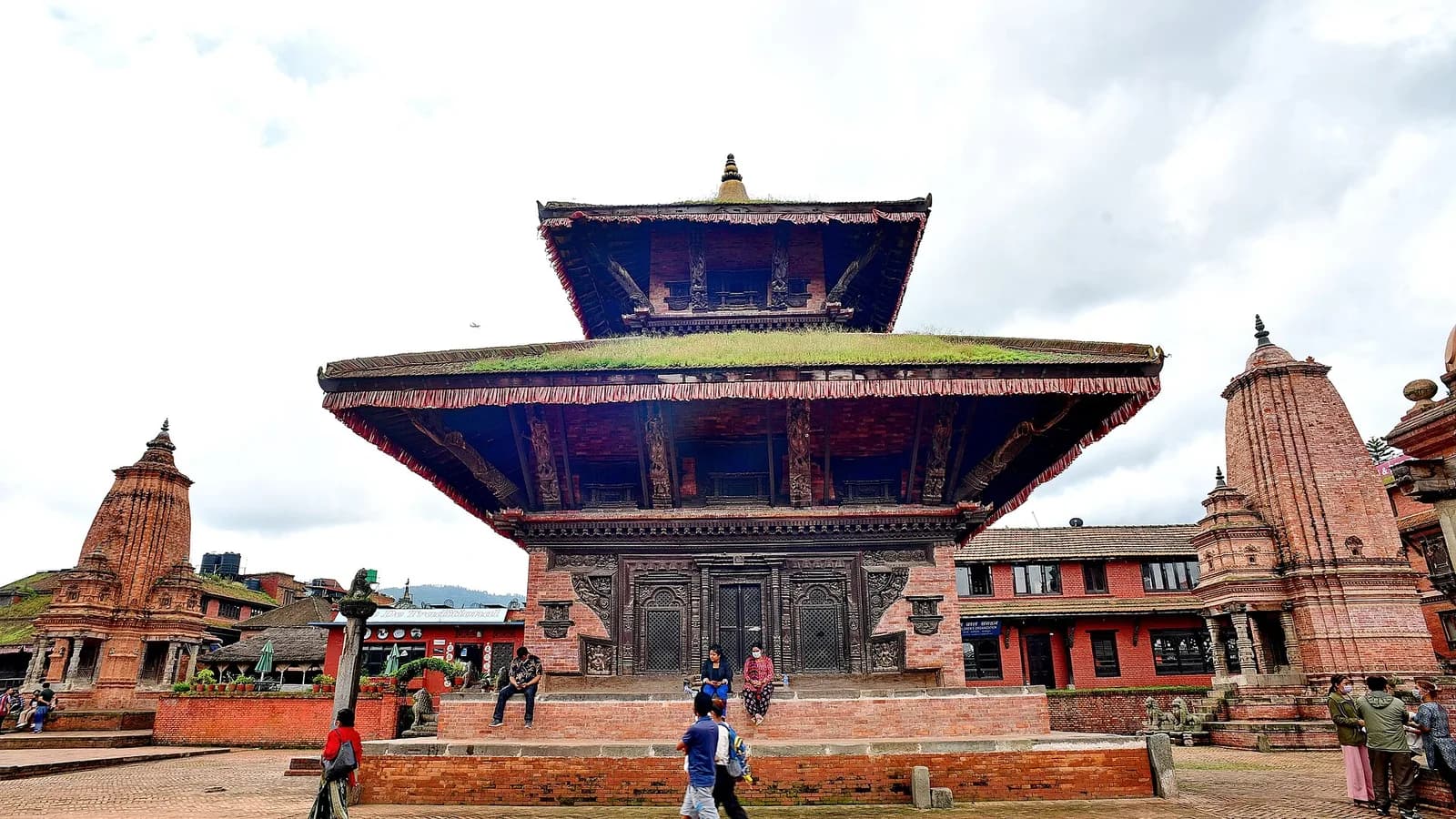
The 2015 Nepal earthquake was the most destructive natural disaster in the country's modern history. At midday on 25 April 2015, a magnitude 7.8 earthquake — known as the Gorkha earthquake — struck central Nepal, killing close to 9,000 people, flattening hundreds of thousands of homes, and damaging some of the most treasured heritage monuments in the Kathmandu Valley. This is a factual account of what happened, the decade of recovery that followed, and, crucially for anyone planning a visit, what the 2015 Nepal earthquake means for travellers today.
The honest headline is one of resilience. The disaster was severe and the recovery was at times slow, but a decade on, Nepal is a country that absorbed a major blow and rebuilt — its homes restored, its economy recovered, and its great squares and temples standing again.
Key takeaways
- The Gorkha earthquake struck on 25 April 2015 at magnitude 7.8 (USGS), with its epicentre near Barpak in Gorkha District, about 85 km northwest of Kathmandu.
- A major magnitude 7.3 aftershock followed on 12 May 2015, adding to the damage and the death toll.
- Around 8,900 people died and more than 21,000 were injured; roughly eight million were affected, with over 500,000 houses destroyed.
- The quake triggered a deadly avalanche on Mount Everest that killed around 22 people — the deadliest single day on the mountain on record — and an avalanche that buried the village of Langtang.
- Economic losses were estimated at about USD 9.4 billion (2015), close to half of Nepal's annual output at the time.
- A decade later, the majority of homes have been rebuilt, most heritage monuments restored, and tourism has fully recovered — Nepal is open and welcoming.
What happened on 25 April 2015
The earthquake struck at 11:56 a.m. local time on Saturday, 25 April 2015. The U.S. Geological Survey, after an initial reading, settled on a magnitude of 7.8. The epicentre was near the village of Barpak in Gorkha District, roughly 85 kilometres northwest of central Kathmandu, and the hypocentre was shallow — about 8 kilometres deep — which intensified the shaking at the surface.
The geology behind it is the same force that built the Himalaya: Nepal sits where the Indian tectonic plate grinds beneath the Eurasian plate, and the strain that accumulates along the faults beneath the foothills releases in sudden, violent slips. The 2015 rupture spread eastward from Gorkha, passing beneath the densely populated Kathmandu Valley. For the broader picture of why Nepal shakes and how often, see our companion guide to Nepal's earthquake risk.
The disaster did not end that day. On 12 May 2015, a powerful magnitude 7.3 aftershock struck to the east of Kathmandu, near the border with Tibet, killing further people, bringing down already-weakened buildings, and prolonging the emergency. Hundreds of smaller aftershocks rattled the country for weeks.
The human and physical toll
The scale of loss was immense. Around 8,900 people were killed and more than 21,000 injured across Nepal and neighbouring parts of India, China and Bangladesh. An estimated eight million people — close to a third of Nepal's population — were affected in some way. More than 500,000 houses were destroyed, with hundreds of thousands more damaged, leaving vast numbers of families homeless as the monsoon approached.
Some districts close to the epicentre, such as Gorkha, Sindhupalchok, Nuwakot and Dhading, were especially hard hit, with entire hillside villages reduced to rubble. The economic cost was estimated at around USD 9.4 billion as of 2015 — a sum close to half of Nepal's annual GDP at the time.
The disaster in the mountains
The earthquake reached far beyond the towns. The shaking triggered widespread landslides and avalanches across the high country. On Mount Everest, an avalanche swept through Base Camp, killing around 22 people — the deadliest single incident ever recorded on the mountain.
In the Langtang valley north of Kathmandu, a massive rock-and-ice avalanche buried the village of Langtang almost entirely; only a handful of the people there that day survived. That valley has since reopened, and trekking there now directly supports the families who rebuilt it — one of the most direct ways a visitor's presence contributes to recovery.
Heritage sites: damage and restoration
For travellers, the most visible scars were in the Kathmandu Valley's heritage. According to UNESCO, more than 30 monuments in the valley collapsed and around 120 more were partially damaged. Several temples in the three royal Durbar Squares came down, and the Dharahara tower — a 19th-century landmark built in 1832 — collapsed, killing at least 180 people sheltering near it.
The reconstruction since then has been one of Nepal's quiet success stories, supported by billions of dollars pledged by international donors. The picture for visitors today is overwhelmingly one of restoration:
| Site | Status for visitors | | --- | --- | | Bhaktapur Durbar Square | Largely restored; among the most complete recoveries | | Patan Durbar Square | Largely recovered, with ongoing minor repairs | | Kathmandu Durbar Square | Mostly repaired; landmark temples reopened | | Dharahara tower | Rebuilt; a new, taller, earthquake-resistant tower opened in stages, fully opening in 2024 |
By official counts, the large majority of damaged heritage structures have been reconstructed. Bhaktapur Durbar Square is frequently singled out as a standout restoration, while Kathmandu Durbar Square is mostly repaired with several signature temples reopened. The rebuilt Dharahara, designed to withstand a magnitude-8.0 quake and incorporating a memorial to the 2015 victims, reopened in stages and was fully opened in 2024. For the wider list of restored monuments, see our overview of Nepal's UNESCO World Heritage sites.
The decade of recovery
Recovery was slow in the first couple of years — a common pattern after mega-disasters, where the sheer scale of need, bureaucracy and land disputes delay aid reaching households. Early surveys found that only a small fraction of reconstruction grants had been disbursed in the immediate aftermath, and many families spent uncomfortable interim periods in temporary shelter.
Over the following years, however, the trajectory turned firmly upward. The national reconstruction effort, channelled through a dedicated authority, eventually rebuilt the great majority of destroyed homes to improved, more earthquake-resistant standards. Hard-hit villages near the epicentre, including Barpak itself, were substantially rebuilt over the decade. The broader economy recovered within a few years, and major infrastructure was repaired over roughly half a decade. The short version, a decade on: Nepal is not a country frozen in ruins — it is a country that rebuilt.
What it means for travellers in 2026
If you are reading this while deciding whether to book a trip, here is the grounded reality.
The damage is essentially behind you
A visitor arriving today will find the heritage sites open, atmospheric and very much alive. The Durbar Squares of Kathmandu, Patan and Bhaktapur are largely restored; you may occasionally glimpse scaffolding on a structure still under repair, but this is invisible in terms of enjoyment. Trekking infrastructure across the popular regions — from the Everest trails to Langtang — has long since reopened and operates normally.
Tourism has fully recovered
Tourism took an immediate hit in 2015, but it rebounded over the following years and, by the late 2010s, arrivals had recovered strongly. The industry has since weathered other shocks and continues to welcome visitors at healthy levels. Your trip today supports an economy for which tourism is a vital pillar, and in places like Langtang, that support flows directly to communities that rebuilt from the disaster.
Earthquake risk: the calm, honest framing
It is worth separating two different things. The 2015 event is history — Nepal has rebuilt, and another quake of that scale on the precise dates of your trip is extraordinarily unlikely. The underlying seismic risk, however, is permanent, because the geology that built the Himalaya never switches off. The right response is not anxiety but simple awareness:
- If shaking starts indoors, drop, cover your head and neck, and hold on under sturdy furniture; do not run outside mid-shake.
- If you are outdoors, move to open space away from buildings, walls and power lines.
- Choose newer, well-built accommodation where you can, and consider travel insurance that covers natural disasters and, for trekkers, helicopter evacuation.
For a fuller treatment of building codes, recent activity, and the science of the western Nepal "seismic gap," our dedicated Nepal earthquake guide walks through it all. The practical bottom line for a normal visit is that this is background risk, comparable to other natural hazards travellers routinely accept.
Why visiting matters
There is a meaningful dimension to travelling in post-2015 Nepal. The restoration of the temples was paid for partly by the country's own resources and the labour of its craftspeople; the lodges of Langtang were rebuilt by families who chose to return; the economy that absorbed the disaster runs in significant part on tourism. Arriving as a respectful visitor is, in a quiet way, part of the recovery story rather than separate from it.
This is not disaster tourism — the sites are healthy, beautiful and open. But understanding what Nepal came through in 2015 changes what you see when you stand in a rebuilt Durbar Square or walk into the Langtang valley. It adds weight and gratitude to an experience that was already extraordinary.
The bottom line
The 2015 Nepal earthquake was a genuine catastrophe: a magnitude 7.8 quake and its powerful aftershock killed close to 9,000 people, destroyed half a million homes, and toppled cherished monuments. But the decade since has been defined by recovery — homes rebuilt to safer standards, an economy restored, and heritage painstakingly reconstructed from Bhaktapur to the new Dharahara tower. For a traveller in 2026, Nepal is open, rebuilt and welcoming, with earthquake risk best understood as a permanent background feature met with simple preparedness. Knowing the history lets you travel with clear eyes — and a deeper appreciation for a country that rose again.
Sources
- April 2015 Nepal earthquake — Wikipedia
- Nepal earthquake of 2015 — Britannica
- M 7.8 — 67 km NNE of Bharatpur, Nepal — U.S. Geological Survey
- Introduction to the special issue on the 25 April 2015 Mw 7.8 Gorkha (Nepal) earthquake — U.S. Geological Survey
- Restoring Cultural Heritage after the 2015 Gorkha Earthquake — UNESCO
- Dharahara — Wikipedia
- Barpak rebuilt: A decade after Nepal's devastating 2015 earthquake — Makalu Khabar
- Nepal: Gorkha Earthquake 2015 — PreventionWeb
Frequently asked questions
- When was the 2015 Nepal earthquake?
- The main earthquake struck at midday on 25 April 2015. A powerful magnitude 7.3 aftershock followed on 12 May 2015. The main shock is known as the Gorkha earthquake after the district near its epicentre.
- How strong was the 2015 Nepal earthquake?
- The U.S. Geological Survey recorded the main shock at magnitude 7.8, with its epicentre near Barpak in Gorkha District, about 85 km northwest of Kathmandu, at a shallow depth of around 8 kilometres.
- How many people died in the 2015 Nepal earthquake?
- Close to 9,000 people were killed and more than 21,000 injured across Nepal and neighbouring areas. An estimated eight million people, roughly a third of Nepal's population, were affected in some way.
- Has Nepal recovered from the 2015 earthquake?
- Largely, yes. The great majority of destroyed homes have been rebuilt, the economy recovered within a few years, and most damaged heritage monuments have been reconstructed, including the landmark Dharahara tower.
- Is it safe to travel to Nepal after the earthquake?
- Yes. Nepal is rebuilt and welcoming, and a damaging earthquake on any given trip is extremely unlikely. Earthquake risk is a permanent feature of the geology, best met with simple awareness rather than worry.
- Can you still see earthquake damage in Kathmandu?
- Very little. The Durbar Squares of Kathmandu, Patan and Bhaktapur are largely restored and fully open. You may occasionally see scaffolding on a structure still under repair, but the sites are atmospheric and intact for visitors.
Related posts
The 2001 Nepal Royal Massacre: A Factual Account
A respectful, well-documented account of the 2001 Nepal royal massacre at Narayanhiti Palace — what happened, the official inquiry, and the aftermath.
Read postFreak Street Kathmandu: Hippie-Trail Guide (Jhochhen Tole)
A traveller's guide to Freak Street Kathmandu (Jhochhen Tole) - its 1960s-70s hippie-trail history, what to see today, and how to find it.
Read postGurkha Knife: The Story Behind Nepal's Kukri
The Gurkha knife (khukuri) explained — its origins, the cho notch, the Kami smiths who forge it, and why it became the emblem of the Gurkhas.
Read post