Langtang Valley Trek — A Decade After the Earthquake, the Valley Reopens
Langtang lost its central village to the 2015 earthquake. Ten years later, the valley is rebuilt, the trail is quiet, and trekking here directly supports recovery.
The valley was buried in 90 seconds. Rebuilding has taken a decade. Walking here is a small way to thank the families who stayed.
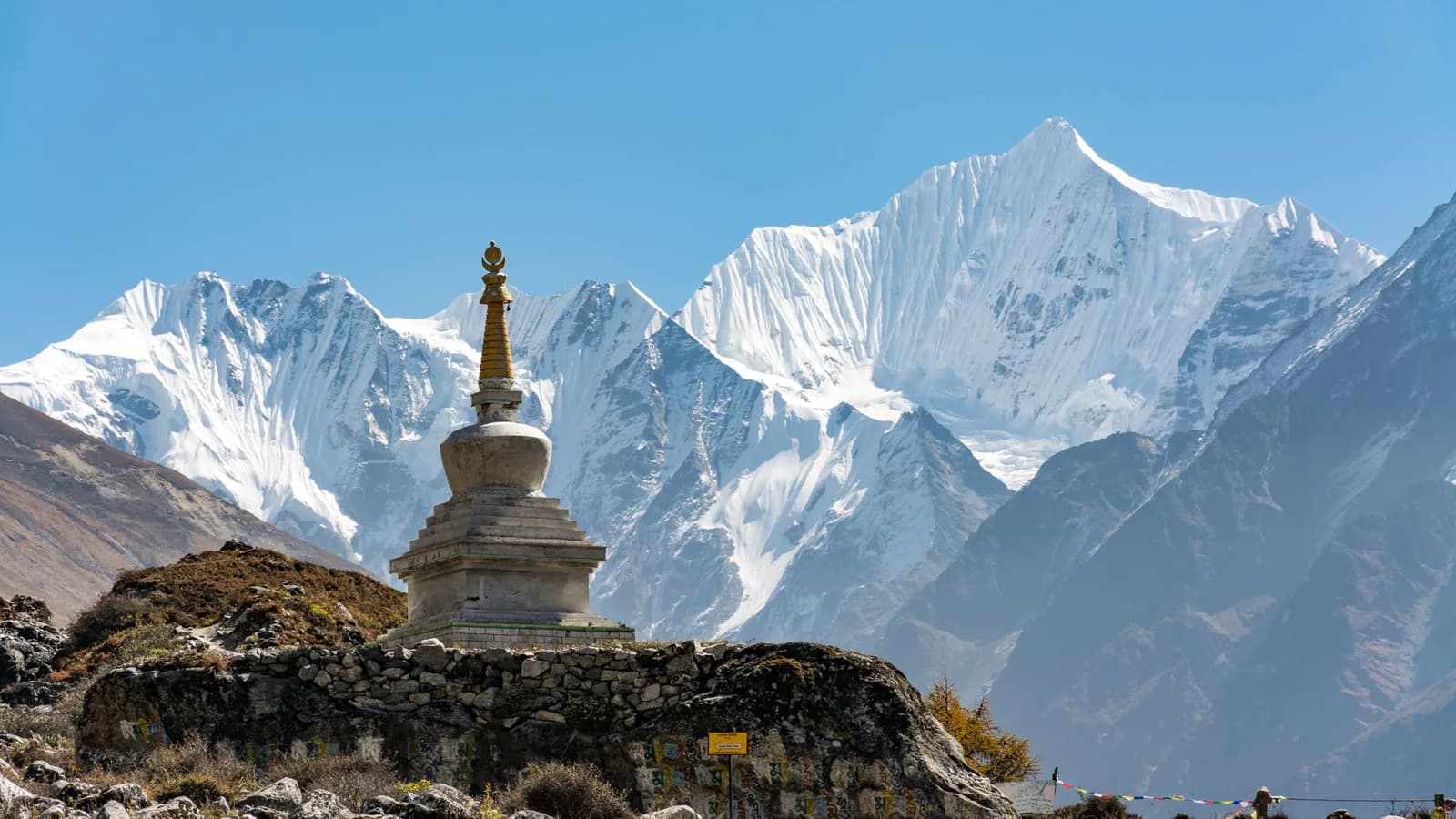
On April 25, 2015, the Gorkha earthquake triggered an avalanche that buried the village of Langtang. Of approximately 175 residents and visitors at the village that day, 12 survived. The surrounding valley lost trails, homes, monasteries, and the basic infrastructure of trekking that had been built up over four decades.
Ten years later, Langtang Valley is rebuilt. The trail is reopened. The lodges are running. The trekker numbers are still well below pre-2015 levels — which means the valley is quiet in a way it hasn't been for a generation. If you can give 7–10 days, this is one of the most meaningful and least crowded treks in Nepal.
Here's what it's like in 2026.
What was lost, what's recovered
The original Langtang village (3,430m), about a day's walk above the lower river valley, was destroyed by a rock-and-ice avalanche following the earthquake. Where the village stood is now a memorial site — a buddhist stupa and chortens with the names of those lost, surrounded by the scarred slope where the avalanche came down.
The new Langtang village, rebuilt about a kilometer down the valley, is functional but smaller. The families who returned built guesthouses, the monastery (Kyanjin Gompa, further up at 3,870m) was rebuilt, and the trail infrastructure that brings trekkers to the valley is fully restored.
What hasn't fully recovered: visitor numbers. Pre-2015, Langtang was the third-most-trekked region in Nepal (after Everest and Annapurna). In 2026, traffic is still roughly 60% of pre-earthquake levels. The lodges that survived are running below capacity in shoulder months.
The trek in 7 days
Day 1: Kathmandu → Syabrubesi (7–9 hours by bus or jeep) The road to Syabrubesi (1,460m) is the longest single-day overland leg of any Nepal trek. Bus is cheap and slow; jeep is faster and more comfortable. Most trekkers leave Kathmandu early and arrive in Syabrubesi by late afternoon.
Day 2: Syabrubesi → Lama Hotel (5–6 hours) A steady climb up the Langtang Khola through subtropical forest. Lama Hotel (2,470m) is a small cluster of lodges, not actually a hotel.
Day 3: Lama Hotel → Langtang Village (5–6 hours) Continued ascent through forest opening into alpine meadow. The new Langtang village sits at 3,430m. Stop at the memorial.
Day 4: Langtang Village → Kyanjin Gompa (3–4 hours) A shorter day to acclimatize. Kyanjin Gompa (3,870m) is the highest village on the trek, a small monastery and cluster of lodges.
Day 5: Kyanjin Gompa acclimatization / side trip Most trekkers add a day here to do one of two side trips:
- Tserko Ri (5,033m) — a steep day-hike up for a 360° view of the Langtang range and into Tibet
- Kyanjin Ri (4,773m) — a shorter version of the same idea, less demanding
Day 6: Kyanjin Gompa → Lama Hotel (5–6 hours retrace) Day 7: Lama Hotel → Syabrubesi → Kathmandu Return retrace, then bus/jeep back to Kathmandu.
7 days from Kathmandu return. Add 1–2 days for the Tserko Ri side trip and a possible weather buffer.
Altitude and difficulty
Max altitude (Tserko Ri side trip) is 5,033m. Without the side trip, you top out at Kyanjin Gompa (3,870m). The main valley is gentle compared to EBC or Annapurna — no high pass, gradual gain, well-trodden trail.
The Tserko Ri day-hike from Kyanjin is the only genuinely demanding day — 1,000m+ gain on steep ground in cold conditions. If altitude is a concern, skip it and enjoy Kyanjin without the side trip.
AMS risk is low for the main trek and moderate if you push to Tserko Ri without acclimatizing.
Permits
- Langtang National Park entry: NPR 3,000 (~$22)
- TIMS card: NPR 2,000 (~$15)
Both paid at the Nepal Tourism Board office in Kathmandu before departure. Bring passport and two photos.
Why this trek matters
Many of the families in the Langtang Valley returned after the earthquake to rebuild. Their livelihoods depend on trekking. The valley has full lodge infrastructure, government-licensed guides who grew up here, and trekkers who arrive at the memorial often leave changed.
Trekking Langtang in 2026 is one of the closest direct connections you can make between your tourist dollars and a community's recovery. The lodges are family-run. The dal bhat is cooked by people who watched their previous home come down the slope. The young guides leading you up to Tserko Ri are the children of survivors.
This isn't disaster tourism — the valley is open, healthy, and beautiful. But it is a kind of trekking with weight.
What you see
The valley walks you through Nepal's middle hills and into a high alpine basin surrounded by 6,000–7,000m peaks. Langtang Lirung (7,234m), Langtang II (7,227m), Yala Peak, and Naya Kanga form the northern wall. The river runs through pasture and yak herds. The monastery at Kyanjin Gompa, rebuilt in a traditional Tibetan style, is one of the prettiest small monasteries in Nepal.
If you summit Tserko Ri, you're looking into Tibet on a clear day — across a high border that's been closed to overland travel for years.
Best season
- Best: late September–November (clear post-monsoon weather, full lodge availability)
- Second: March–May (rhododendrons in lower valley, slightly warmer)
- Avoid: monsoon (June–August — slippery trails, landslide risk on the road from Kathmandu)
December–February is workable for the trek itself but the road to Syabrubesi sometimes closes after snow.
Yak cheese factory at Kyanjin
A small detail most travel guides skip: Kyanjin Gompa has a Swiss-funded yak cheese factory that's been running since the 1950s. You can visit, watch the cheese-making process, and buy cheese on the spot. It's a strange and lovely thing to find at 3,870m in the Himalayas.
What to expect from the lodges
Langtang lodges are smaller and more family-run than the EBC equivalent. The menus are shorter, the rooms simpler, the social atmosphere quieter. You'll likely share dinner conversations with the lodge family and one or two other trekker groups.
Prices are slightly lower than EBC (less altitude markup) — dal bhat NPR 500–700 at most lodges, rooms free with meals.
See the teahouse scenario script for the language sequence.
Pre-trek checklist
- Permits (NPR 5,000 total) from Nepal Tourism Board in Kathmandu
- Bus or jeep to Syabrubesi pre-booked (jeep $20–30 per person shared)
- The eight trail phrases
- A few hours to read about the earthquake before arriving — it changes what you see
- Cash for 7–10 days of trail spending (NPR 20–25k)
The Langtang Valley is one of the closest, quietest, and most meaningful treks in Nepal. The Langtang families lost almost everything in 2015. A decade on, they're rebuilt, and they welcome trekkers who come with respect.
Related posts
Beginner Treks Nepal: 6 Easy Himalayan Trails
The best beginner treks in Nepal — short, low-altitude trails like Poon Hill, Mardi Himal and Langtang, with permits, costs and seasons explained.
Read postBest Time to Visit Langtang: A Season-by-Season Guide
The best time to visit Langtang is autumn and spring. Here is how each season looks for weather, views, crowds and the landslide-prone road to Syabrubesi.
Read postDolpo Trek: Nepal's Wild Trans-Himalayan Frontier
A guide to the Dolpo trek in far-west Nepal: Upper vs Lower Dolpo, Phoksundo Lake, restricted-area permits, the 2026 rules, best season and access.
Read post