Temple Rules in Nepal: A Site-by-Site Guide
Temple rules in Nepal vary by site. What changes between a Hindu temple, a Buddhist stupa, a monastery and the cremation ghats — and why.
The rules are not arbitrary — each one is a small act of respect with a reason behind it.
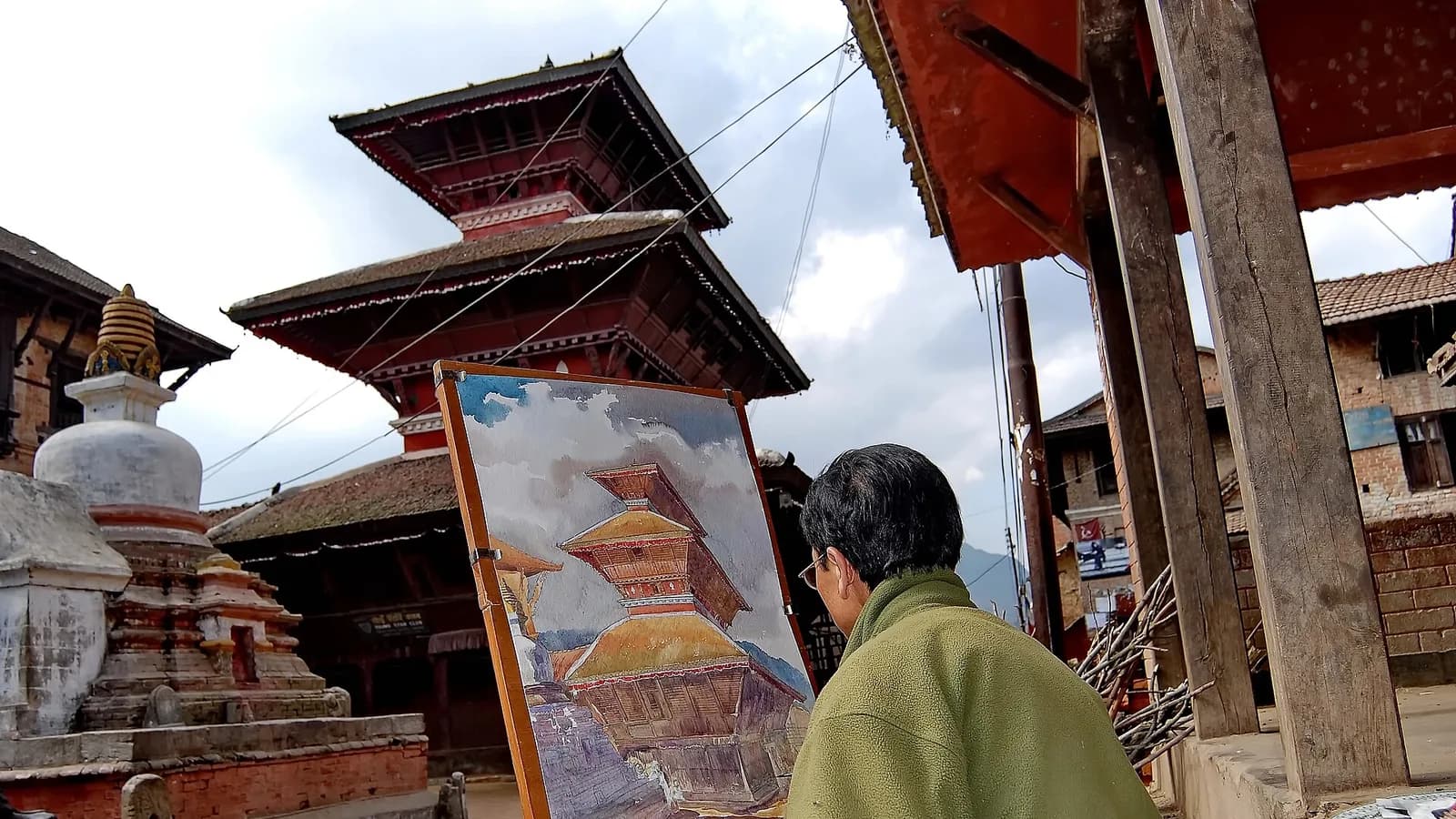
If you are planning to visit even one sacred site on your trip, it pays to understand the temple rules in Nepal before you arrive. The country is dotted with thousands of Hindu temples, Buddhist stupas, monasteries and shared shrines — almost all of them living places of worship rather than museums. The good news is that the underlying etiquette is consistent and easy to learn. The subtlety is that the rules tighten or relax depending on where you are standing.
This guide takes a site-by-site angle. Rather than re-listing every individual rule, it walks through the different kinds of sacred spaces you will encounter — a Hindu temple, a Buddhist stupa, a hilltop monastery, a syncretic "both faiths" site, and the cremation ghats — and explains what changes at each, plus the reasoning behind the customs. For a complete rule-by-rule checklist, pair this with our full Nepal temple etiquette guide, which this post is designed to complement.
Key takeaways
- The same five core rules apply almost everywhere: shoes off, modest dress, walk clockwise, ask before photos, use your right hand.
- Hindu temples are the most rule-heavy — leather restrictions, some "Hindus only" inner sanctums, and a few traditional menstruation customs.
- Buddhist stupas and monasteries are generally more open to foreigners, with no caste or menstruation entry limits.
- Syncretic sites are shared by both faiths — when unsure, default to the stricter custom.
- The cremation ghats at Pashupatinath are a sensitive space with their own quiet, observe-from-a-distance etiquette.
- Most rules exist for a concrete reason — purity, the symbolism of the feet, or the sacredness of the cow — not as arbitrary obstacles.
The five rules that travel everywhere
Before the site-by-site differences, here is the shared foundation. The Nepal Tourism Board's own cultural-etiquette guidance lists almost exactly these points, and they hold at the vast majority of sacred sites in the country.
| Rule | What it means | Why | |---|---|---| | Shoes off | Remove footwear at the threshold of any shrine | Keeps the sacred floor ritually clean | | Dress modestly | Cover shoulders and knees; no transparent fabric | Decency in a place of worship | | Walk clockwise | Circle stupas and shrines keeping them on your right | The ritual of kora / parikrama | | Ask before photos | Seek permission for interiors, priests and worshippers | Many inner areas forbid photography | | Right hand for offerings | Give and receive with the right hand or both hands | The left hand is associated with hygiene tasks |
Carry a light scarf for covering up, wear slip-on shoes, and keep a few small rupee notes for donations, and you are equipped for almost any site. The deeper "why" — and the handful of exceptions — is where the site type matters.
Hindu temples: the strictest set of rules
Hindu temples carry the most customs, partly because many have an enclosed inner sanctum (the garbhagriha) housing the main deity, and access to that core is more tightly controlled than the open courtyards around it.
Leather is the classic catch
In addition to shoes, leather belts, bags, wallets and watch straps are often barred from inner temple precincts. The reason is straightforward: the cow is sacred in Hinduism, so cow-leather items are treated as impure in a worship context. The outer courtyard is usually fine; the inner sanctum is where the line is drawn. If you are heading to a major shrine, leave leather goods at your hotel or carry a non-leather alternative.
"Hindus only" signs are real
Some Hindu inner sanctums are closed to non-Hindus altogether. These notices are firmly enforced — do not try to slip past them or argue your case. The most famous example is the main temple at Pashupatinath, dedicated to Shiva on the banks of the Bagmati River, where only Hindus may enter the main shrine; everyone else explores the surrounding complex and the riverside terraces. Our Pashupatinath guide for foreigners maps out exactly where you can and cannot walk.
A note on menstruation customs
A few traditional Hindu temples still observe a custom that menstruating women do not enter the inner sanctum. This is contested within Nepali society and is separate from chhaupadi, the harsher rural practice of menstrual isolation that Nepal has criminalised in law. In practice it rarely affects visitors: temple staff do not ask, and the choice of whether to observe the local custom is yours. It does not apply at Buddhist sites. We mention it only so the occasional sign or comment does not catch you off guard.
Buddhist stupas: walk, spin, stay quiet
At a stupa — the great domed monuments such as Boudhanath and Swayambhunath — the rules feel gentler and more participatory. There is no inner sanctum to enter; the ritual happens by moving around the structure.
Keep the stupa on your right
The central practice is kora: walking clockwise around the dome, always keeping it on your right. Do this even if you are simply sightseeing — walking the other way means crossing the flow of every pilgrim doing kora. If you need to pause, step to the outer edge rather than stopping in the middle of the path, and avoid walking between people and the stupa.
Prayer wheels turn clockwise
The rows of prayer wheels set into stupa walls and monastery galleries are meant to be spun by passersby. Spin them gently with your right hand in the direction they naturally turn — clockwise — as you walk by. Larger ritual objects, statues and texts are not for casual touching.
Boudhanath is at its most atmospheric in the early morning, when elderly Tibetans circle the dome spinning hand-held wheels and monks arrive from the surrounding monasteries. Our Boudhanath stupa visitor guide and Swayambhunath guide cover each site in detail.
Monasteries (gompas): a quieter indoors
A monastery, or gompa, is the one Buddhist space where you do go inside, so a few extra courtesies apply.
- Shoes off, and often hats off, before entering the prayer hall.
- Walk clockwise inside as well, keeping altars on your right.
- If a chanting session is underway, you are usually welcome to observe quietly from the back — sit, do not wander, and switch off your phone.
- Do not point your feet at the altar or at a lama; sit cross-legged or with feet tucked under you, because the feet are considered the least pure part of the body.
- Avoid physical contact with senior monks. As a courtesy, women traditionally place an item on a surface for a monk to pick up rather than handing it over directly.
Photography inside prayer halls is sometimes allowed and sometimes not — look for a sign, and if there is none, ask before you raise the camera.
Syncretic sites: when in doubt, go stricter
One of the most distinctive things about Nepal is how often a single site belongs to both Hindus and Buddhists. Swayambhunath, the hilltop "Monkey Temple," is a Buddhist stupa ringed with Hindu shrines; Muktinath, high on the Annapurna circuit, is simultaneously a major Vishnu shrine and a sacred Buddhist place. At these shared sites the etiquette of both traditions is in play at once.
The simple rule of thumb: default to the more conservative custom when you are unsure. Cover up, take your shoes off, walk clockwise, keep your voice low, and ask before photographing anything. You will never give offense by being a little more careful than necessary. For the cultural background to these blended sites, see our Buddhism in Nepal overview and the wider Nepal temples guide.
The cremation ghats: a category of their own
Pashupatinath's riverside ghats, where open-air Hindu cremations take place, are not a tourist attraction in the ordinary sense — they are a funeral. Visitors are permitted to observe, but the etiquette here is its own thing and matters more than anywhere else on this list.
- Watch from across the river, from the stone steps on the far bank.
- Do not photograph individual mourners or families in grief; a wide shot of the ghats is one thing, a close-up of a bereaved face is another.
- Keep your distance from the burning platforms and do not climb onto them.
- No eating, drinking or loud conversation near the cremation area.
- Move slowly and speak in low tones, matching the people around you.
If this feels solemn, that is the point. Our Pashupatinath guide explains the layout of the ghats and how to find a respectful vantage point.
Entry fees and donations
Most of the headline temples and stupas charge foreigners an entry fee, paid in Nepali rupees at the gate, while Nepalis (and at some sites, Indians) enter free or at reduced rates. The widely reported foreign entry fee at Pashupatinath is around NPR 1,000 (as of mid-2025), but these amounts are revised periodically, so treat any figure you read in advance as a guide and confirm the current price on the day.
Separately from entry fees, you may see a sealed donation box near the entrance — a small contribution there is a normal courtesy. Be more cautious with individuals who tie a string on your wrist or mark your forehead and then request a set "donation"; a modest token is fine, but you should not feel pressured into paying large amounts for an unsolicited blessing. The full picture is in our Nepal tourist scams guide.
A few words that smooth the way
A little Nepali goes a long way with priests and caretakers. These phrases are genuinely useful at the temple gate:
- Namaste — the standard greeting, palms together at the chest.
- Photo khichna hunchha? — "May I take a photo?"
- Dhanyabad — "Thank you."
- Maaf garnuhos — "Excuse me / sorry," if you slip up.
You will find more of these in our Nepali phrases every trekker should know and the full phrasebook. The friendly truth is that almost every caretaker would rather gently correct a respectful visitor than scold one — get the spirit right, and the details fall into place.
Sources
Frequently asked questions
- What are the main temple rules in Nepal every tourist should know?
- Remove your shoes, dress modestly with shoulders and knees covered, walk clockwise, ask before photographing and use your right hand for offerings.
- Why is leather not allowed in some Nepali temples?
- Cows are sacred in Hinduism, so cow-leather belts, bags and watch straps are considered impure inside some Hindu inner sanctums.
- Can non-Hindus enter Hindu temples in Nepal?
- Usually the outer courtyards yes, but some inner sanctums are closed to non-Hindus; at Pashupatinath only Hindus may enter the main temple.
- Which way do you walk around a Buddhist stupa in Nepal?
- Always clockwise, keeping the stupa on your right, which is the practice known as kora or parikrama in both Buddhism and Hinduism.
- Are temple rules different at Buddhist sites than at Hindu ones?
- The core rules overlap, but Buddhist monasteries are generally more open to foreigners and have no menstruation or caste-based entry limits.
- Do I need to cover my head to visit a temple in Nepal?
- Head covering is rarely required at most temples, though it is polite inside some monasteries and at a few traditional Hindu shrines.
- Is photography allowed inside temples in Nepal?
- Courtyards are usually fine but interiors, inner sanctums, deities and people in active prayer often are not — always look for signs and ask first.
- What should I do at the Pashupatinath cremation ghats?
- Watch quietly from across the river, do not photograph individual mourners, and keep your distance from the burning platforms.
Related posts
Nepal Temple Etiquette — What Tourists Should and Shouldn't Do
Shoes, dress code, photography, walking direction, leather, women's restrictions. The 12 rules that cover 95% of awkward temple moments.
Read postNepal Temples: A Tourist's Guide to the Best Ones
A tourist guide to Nepal temples: the must-visit Hindu and Buddhist sites, the architecture styles, entry rules and how to plan your visits.
Read postBuddha Statue Nepal: A Traveller's Guide to the Best
Where to see the most striking Buddha statue sites in Nepal, from the giant golden trio at Swayambhu to the stone Buddha of Mustang.
Read post