Peak Climbing Nepal Permit: 2026 Fees & Rules Guide
A peak climbing Nepal permit guide for 2026 — NMA trekking-peak royalties, the new fee structure, garbage deposit, guide rules and how to apply.
Before the ice axe comes the paperwork — and on Nepal's trekking peaks, the permit is non-negotiable.
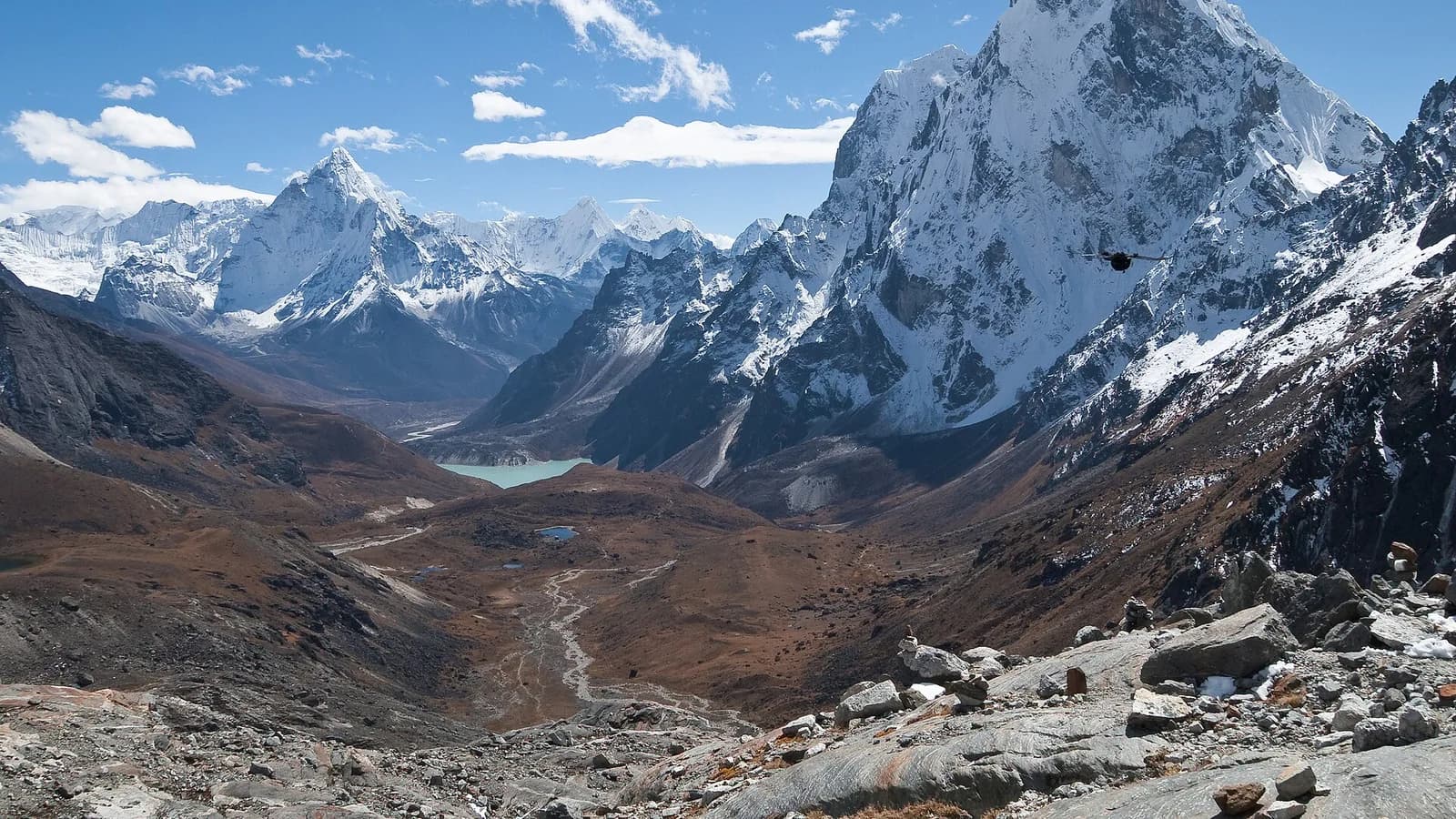
A peak climbing Nepal permit is the piece of paper that turns a Himalayan ambition into a legal expedition. Nepal does not let you simply walk up a mountain and start climbing — every summit above ordinary trekking altitude carries a royalty, a set of rules, and a paper trail. For the famous "trekking peaks" such as Island Peak, Mera Peak and Lobuche East, that permit comes from the Nepal Mountaineering Association (NMA), and the fee structure was overhauled with new rates that took effect on 1 September 2025. This guide explains who issues what, the current 2026 fees, the garbage deposit, the guide and insurance rules, and how to actually apply — all stamped to mid-2026.
If you are still choosing a mountain, our guides to Island Peak, Mera Peak and the more technical Ama Dablam expedition cover the climbs themselves, while our overview of Nepal trekking permits explains the entry permits you will need on the approach.
Key takeaways
- Trekking peaks are permitted by the NMA (27 peaks); the big expedition peaks are permitted by the Government of Nepal through the Department of Tourism.
- For foreigners, most NMA peaks now cost USD 350 in spring and USD 175 in autumn, winter and summer (rates effective 1 September 2025, as of June 2026).
- A refundable garbage deposit of USD 500 is required to issue any NMA peak permit.
- A licensed climbing guide is mandatory and solo climbing of these peaks is not allowed.
- Permits are arranged through a registered agency, not issued to walk-in individuals.
- The NMA royalty is not the only permit — national park and rural municipality entry fees usually apply too.
Who issues a peak climbing permit in Nepal?
Nepal splits its climbable mountains into two permit systems, and knowing which one applies to your peak is the first step.
The Nepal Mountaineering Association (NMA) is the national alpine body authorised to issue climbing permits for a defined set of 27 peaks, commonly called trekking peaks or NMA peaks. These are the mountains most foreign climbers aim for as a first Himalayan summit — they sit below roughly 7,000 metres and can be climbed from a base camp, sometimes with a high camp, using crampons, ropes and ice axes but without the full machinery of an 8,000-metre siege.
Everything bigger — Everest, the other 8,000-metre giants, and a long list of 6,000- and 7,000-metre expedition peaks — is controlled by the Department of Tourism under the Government of Nepal. Those royalties are far higher, the rules are stricter, and the logistics are an order of magnitude more complex.
This article focuses on the NMA trekking-peak permit, because that is what the overwhelming majority of "peak climbing in Nepal" trips actually require. The government expedition system is touched on only for contrast.
Group A and Group B
The 27 NMA peaks are split into Group A and Group B. Group B is the older, original set of trekking peaks; Group A was expanded later and includes some genuinely demanding climbs that need a solid mountaineering base. The grouping is more about history and administration than a simple difficulty ladder — under the current royalty structure, most peaks in both groups carry the same standard fee, with only a couple of exceptions priced higher.
How much does an NMA peak permit cost in 2026?
The headline change for 2025–2026 is a simplified, flatter royalty for trekking peaks. Where fees once varied peak by peak, most NMA peaks now share a single seasonal rate for foreign climbers.
| Season | Standard NMA peak (foreigner, per person) | Singu Chuli & Chulu East | | --- | --- | --- | | Spring (Mar–May) | USD 350 | USD 500 | | Autumn (Sep–Nov) | USD 175 | USD 250 | | Winter & Summer | USD 175 | USD 200 |
All figures are per person and reflect the rates effective 1 September 2025 (as of June 2026). They are the royalty only — they do not include the garbage deposit, national park fees, guide wages, insurance, gear or logistics.
A few practical notes:
- Spring is the priciest season because it is the prime climbing window; autumn, winter and summer are discounted.
- Island Peak, Mera Peak and Lobuche East — the three most popular trekking-peak objectives — all sit at the standard USD 350 / USD 175 rate.
- Singu Chuli and Chulu East are the notable exceptions, carrying the higher royalty shown above.
- Fees are set in Nepal and can be revised; always reconfirm the current figure with your operator before you commit.
What about the big expedition peaks?
For scale, the government also raised its expedition royalties on the same 1 September 2025 timeline. The Everest south-side spring royalty, for instance, rose to USD 15,000 per person (from USD 11,000), with lower rates in autumn and winter. Other 8,000-metre peaks and the 7,000-metre class sit well below Everest but still far above any trekking peak. If your sights are set that high, those permits run through the Department of Tourism and a registered expedition operator, not the NMA.
The garbage deposit and clean-up rules
On top of the royalty, the NMA collects a garbage deposit of USD 500 to issue a permit for any of its 27 peaks. It is refundable under NMA rules if your team brings its waste back down and meets the clean-up conditions — the deposit exists to make sure expeditions carry out what they carry in.
Treat the deposit as a leave-no-trace bond: keep your documentation, pack out rubbish and used gear, and follow the environmental requirements your operator briefs you on. Nepal has tightened its stance on high-altitude waste in recent years, and the rules now spell out that guides and workers may go up to the last camp to recover waste or a deceased climber, but not beyond it for those purposes.
Guide, team and insurance rules
A permit is only part of the picture. The rules around who climbs and how changed alongside the fees, and they are strict.
You must climb with a licensed guide
For 2026, every NMA peak expedition must include at least one licensed climbing guide, and solo climbing of these peaks is not permitted. On the 8,000-metre peaks the requirement is tighter still — roughly one mountain guide or climbing Sherpa for every two climbers. This mirrors Nepal's wider move, already in force for general trekking, requiring foreign trekkers to go with a licensed guide rather than alone.
Permits go through an agency
NMA trekking-peak permits are issued through a registered Nepali trekking or mountaineering agency, not handed to walk-in individuals. In practice that means you book through a licensed operator who submits the paperwork, holds the permit, and arranges the guide. The same agency route applies to government expedition permits.
Insurance is mandatory
Your operator must insure the guides, high-altitude workers and support staff under Nepal's mountaineering regulations, and the required coverage levels were raised in the 2025 amendments. Separately, you need personal travel insurance that explicitly covers high-altitude mountaineering and helicopter rescue — standard trekking policies often cap out below climbing altitudes, so check the stated maximum altitude on your policy. Our guide to trekking insurance and helicopter evacuation explains what to look for.
Liaison officers
For major government expeditions, a government-appointed liaison officer may be assigned to the team to verify permits, check insurance and oversee compliance. For ordinary NMA trekking-peak climbs this is generally not the same burden — the licensed guide and registered agency carry the compliance load — but your operator will confirm exactly what your chosen peak requires.
Free permits on remote peaks
To spread climbers beyond the crowded Everest and Annapurna regions, Nepal introduced a policy waiving royalties on a group of remote peaks in the Karnali and Sudurpashchim provinces of the far west for a limited period. The aim is to draw expeditions to under-visited valleys and support those local economies.
The royalty waiver does not remove the other rules: you still need a licensed guide, insurance, and any local entry permits, and you still climb through a registered agency. The list and the dates are time-limited, so if a free far-western peak appeals, confirm the current conditions before building a trip around it. For the wider regulatory backdrop, the Nepal trekking permits overview is a useful companion.
The other permits you still need
The NMA royalty is rarely the only permit in your file. Most trekking peaks sit inside a national park or conservation area, which means an entry fee plus the local rural municipality permit on top of the climbing royalty. Skipping these is not an option — checkpoints on the approach trails verify them.
| Peak | Climbing permit | Plus area / local permits | | --- | --- | --- | | Island Peak (Imja Tse) | NMA royalty | Sagarmatha National Park + Khumbu Pasang Lhamu Rural Municipality | | Mera Peak | NMA royalty | Sagarmatha / Makalu Barun area + local municipality | | Lobuche East | NMA royalty | Sagarmatha National Park + Khumbu Pasang Lhamu Rural Municipality |
Exact area-permit prices change over time and vary by region, so confirm them with your operator. The key point is to budget for all the layers, not just the headline royalty — our Island Peak guide walks through a full permit stack for one popular peak as an example.
How to apply, step by step
The process is straightforward once you are working with a good operator.
- Choose your peak and season. This fixes the royalty band — spring is dearer, autumn and winter cheaper. Pick a window where the mountain is in condition.
- Engage a registered agency. They are legally required to submit the NMA application; they also arrange your licensed guide, logistics and the supporting permits.
- Gather your documents. Expect to provide a passport copy, passport photos, your itinerary, and proof of insurance covering high-altitude climbing and rescue.
- Pay the royalty and garbage deposit. The standard royalty plus the USD 500 refundable garbage deposit are paid to obtain the permit; your agency handles the transaction.
- Allow processing time. With an established agency the permit is usually issued within a few working days — build a buffer for festivals and peak season.
- Carry your paperwork. Keep the climbing permit and your entry permits accessible; you will show them at checkpoints and base camp.
A quick budgeting checklist
- NMA royalty (season-dependent)
- USD 500 garbage deposit (refundable)
- National park + rural municipality entry permits
- Licensed climbing guide and support staff
- Personal mountaineering and rescue insurance
- Gear, transport and base-camp logistics
Sources
- Nepal Mountaineering Association — NMA Peaks
- Nepal Mountaineering Association — Rules and Guidelines
- Seven Summit Treks — Permit Fees of NMA Peaks
- Seven Summit Treks — Government peak permit fees effective 1 September 2025
- Explore Himalaya — 2025 Nepal Mountaineering Regulations Updates
- Yatri Trekking — Updated Royalty and Insurance Provisions in Nepal (2025)
- Follow Alice — Permits for Peak Climbing in Nepal: A Complete Guide
- Third Eye Adventure — Nepal's 2025 Climbing Rule Changes: Free Permits
Frequently asked questions
- What is a peak climbing permit in Nepal?
- It is the royalty you pay to legally climb a mountain in Nepal. For the 27 popular trekking peaks it is issued by the Nepal Mountaineering Association (NMA); for the big 8,000-metre and other expedition peaks it is issued by the Department of Tourism under the Government of Nepal. It is separate from any national park or rural municipality entry permit.
- How much does an NMA trekking peak permit cost in 2026?
- For foreign climbers, most NMA trekking peaks cost USD 350 per person in spring and USD 175 in autumn, winter and summer under the rates effective 1 September 2025 (as of June 2026). Two peaks, Singu Chuli and Chulu East, are higher at about USD 500 in spring and USD 250 in autumn. Always reconfirm the current figure with your operator.
- Do I need a guide to climb a trekking peak in Nepal?
- Yes. Under the rules in force for 2026, every NMA peak expedition needs at least one licensed climbing guide for the team, and solo climbing of these peaks is not permitted. On 8,000-metre peaks the ratio tightens to roughly one guide or climbing Sherpa for every two climbers.
- What is the garbage deposit for peak climbing in Nepal?
- The NMA collects a garbage deposit of USD 500 to issue a permit for any of its 27 peaks. It is refundable according to NMA rules if your team brings its waste back down and meets the clean-up conditions, so keep your receipts and follow the leave-no-trace requirements.
- Can I get the peak permit myself or do I need an agency?
- NMA trekking-peak permits are issued through a registered Nepali trekking or mountaineering agency, not directly to walk-in individuals, so in practice you apply through a licensed operator. Expedition permits for the larger government-controlled peaks must also go through a registered agency.
- Are there any free peak climbing permits in Nepal?
- Yes. To promote less-visited regions, Nepal has waived royalties on a set of remote peaks in the Karnali and Sudurpashchim provinces for a limited period. Other rules such as the guide requirement, insurance and local entry permits still apply, so confirm the current list and conditions before planning around them.
- Is the NMA permit the only permit I need?
- No. Most trekking peaks sit inside a national park or conservation area, so you also pay that entry fee plus the local rural municipality permit. For example, Island Peak and Mera Peak need the Sagarmatha National Park permit and the Khumbu Pasang Lhamu Rural Municipality permit in addition to the NMA royalty.
- What insurance do I need for peak climbing in Nepal?
- You need personal travel and rescue insurance that covers high-altitude mountaineering and helicopter evacuation, and your operator must insure the guides and high-altitude workers under Nepal's mountaineering rules. Check that your own policy states the maximum altitude it covers, as standard trekking cover often stops below climbing altitudes.
Related posts
Mount Everest Climbing Permit Cost (2026 Guide)
The Mount Everest climbing permit cost in 2026 — the US$15,000 spring royalty, every season's rate, the garbage deposit, liaison fee, and what's not included.
Read postAma Dablam Climb: 2026 Expedition Guide (6,812m)
An Ama Dablam climb and expedition guide for 2026 — height, the Southwest Ridge route, camps, fixed ropes, difficulty, permits, cost and the best seasons.
Read postAnnapurna Circuit Trek: Route, Permits & Thorong La Guide
A practical Annapurna Circuit trek guide — the full route, Thorong La pass, 2026 ACAP permit and guide rules, costs, road impact and best season.
Read post