Nepal 90 Day Visa: Cost, Rules, and How to Get It
A clear guide to the Nepal 90 day visa — the USD 125 fee, multiple-entry rules, the 150-day annual cap, and how to get it on arrival in 2026.
Ninety days is enough for two big treks, a festival, and time to actually slow down.
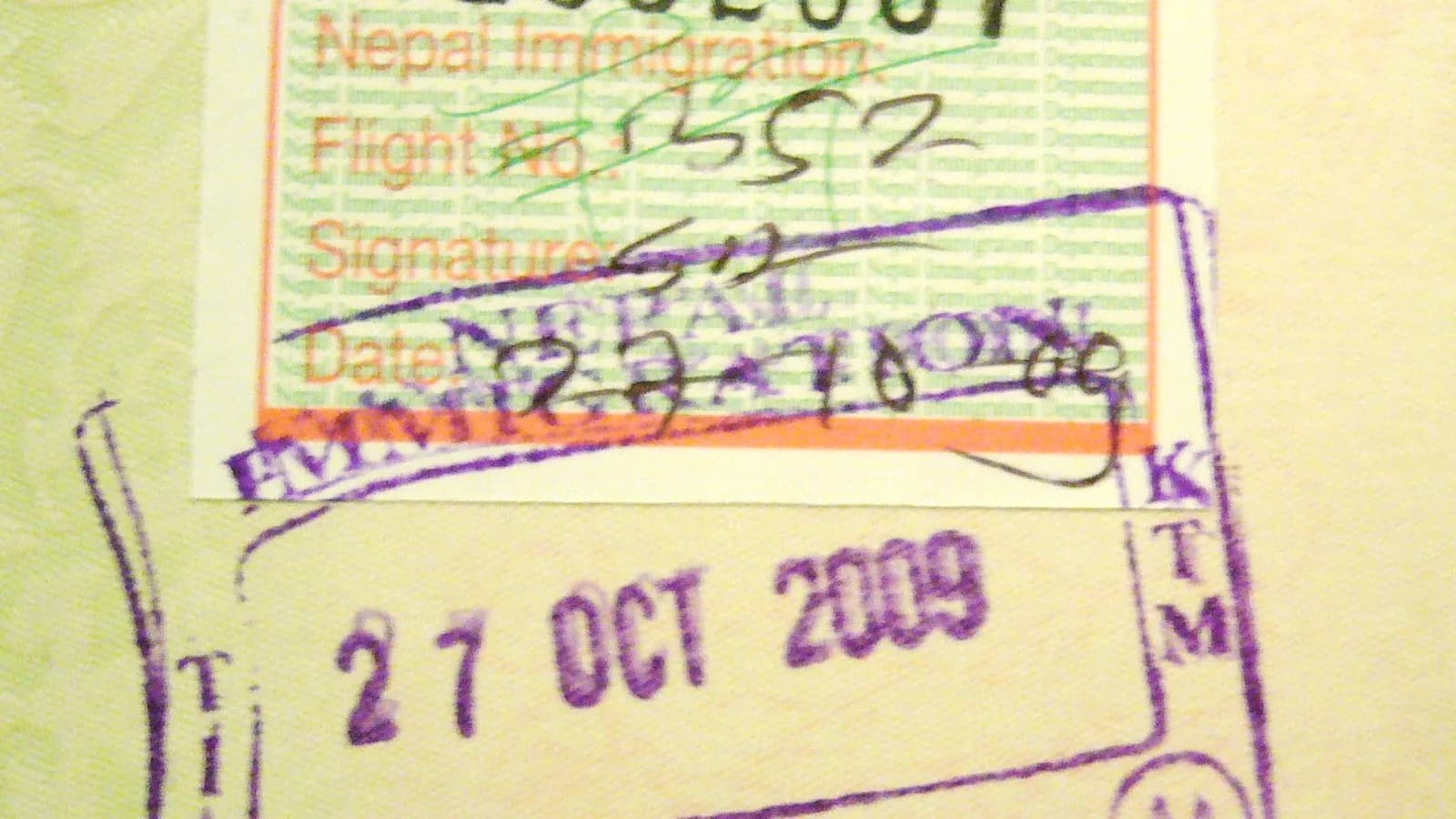
The Nepal 90 day visa is the longest tourist visa Nepal issues, and it is the right choice for anyone planning more than a quick Kathmandu-and-one-trek trip. At USD 125 it costs more than the 15- or 30-day options, but for travelers stacking two major treks, waiting out a festival, or simply moving slowly through the country, it removes the stress of racing a short clock or queuing for an extension mid-trip.
This guide covers exactly what the 90 day visa is, what it costs in 2026, how the multiple-entry and 150-day annual rules work, and the practical steps to get one. If you only need a few weeks, our broader Nepal visa on arrival guide covers the shorter tiers in the same detail.
Key takeaways
- The 90 day tourist visa costs USD 125 (as of June 2026), the same whether you get it on arrival or apply online beforehand.
- It is a multiple-entry visa, so you can dip into India or Bhutan and come back without buying a new visa.
- The hard ceiling for any tourist is 150 days per calendar year — the 90 day visa plus a 60-day extension reaches that limit.
- Days are counted as calendar days from your entry date, not from purchase, and they keep ticking even if you leave the country temporarily.
- Most nationalities get it on arrival at the airport or major Indian land borders; a short list of countries must apply at an embassy first.
- Your passport needs at least 6 months of validity and one blank page for the stamp.
What the 90 day visa actually is
Nepal offers tourist visas in three fixed durations, and the 90 day option is simply the longest of them. There is no 60-day or 120-day tier — you pick 15, 30, or 90 days, and you extend from there if you need more time.
| Duration | Fee (USD, as of June 2026) | Entry type | |---|---|---| | 15 days | USD 30 | Multiple entry | | 30 days | USD 50 | Multiple entry | | 90 days | USD 125 | Multiple entry |
The fee is payable in US dollars or another convertible foreign currency, and international credit cards are accepted at the airport counters. The Nepal Tourism Board lists all three tiers as multiple-entry, which is one of the most useful features of the 90 day visa — more on that below.
Why pick 90 days over 30
The 30-day visa suits the majority of first-time visitors, but the 90 day visa makes sense if any of these apply to your trip:
- You are doing two or more long treks (for example Everest Base Camp and the Annapurna Circuit) with rest and travel days between them.
- You want to be in Nepal for a multi-week festival window such as Dashain and Tihar, which span weeks in autumn.
- You are a slow traveler, remote worker, or volunteer who would otherwise have to interrupt the trip for a visa extension.
- You plan to cross into India or Bhutan and return, and you would rather not buy a second Nepal visa for the re-entry.
For pure cost, three back-to-back 30-day visas would be more expensive and far more hassle than one 90 day visa, so if you are confident you will stay more than two months, the 90 day tier is the efficient choice.
The 150-day annual ceiling
This is the single most important rule to understand, and it trips up long-stay travelers every year. No matter which visa you buy, a tourist may stay no more than 150 days in any given calendar year in Nepal. The US State Department states this plainly and warns that staying beyond 150 days "can lead to deportation."
The 90 day visa is therefore not a standalone 90 days plus an unlimited extension — it is 90 days out of a 150-day annual budget. In practice:
- 90 days on the initial visa + up to 60 days of extension = 150 days, the legal maximum in one calendar year.
- The counter resets on 1 January, but you cannot simply leave for a day and reset it mid-year.
- If you visited earlier in the same year, those days count against your 150. Arrive in March for 60 days, come back in September, and you have only 90 days left before hitting the cap.
To stay longer than 150 days in a single year, travelers typically leave Nepal for a clean break (often a trip to India) and return in the next calendar year, when the allowance refreshes. Our visa extension guide walks through the border-run and extension mechanics in detail.
How days are counted
The validity of your 90 day visa runs from the date of entry, not the date you applied or paid. Equally important, the 90 days are calendar days — they keep counting whether or not you are physically inside Nepal.
This matters because the visa is multiple-entry. If you spend a week in India partway through, that week still consumes seven of your ninety days. So while multiple entry lets you come and go freely, it does not pause the clock. Plan side trips with that in mind, and treat the entry date stamped in your passport as day one.
Who can get it on arrival
Most travelers can collect the 90 day visa on arrival, but a small number of nationalities must apply in advance at a Nepali diplomatic mission. The on-arrival exclusion list has historically included a handful of countries; because it can change, confirm your status on the Department of Immigration website before booking flights rather than relying on a blog list.
Visa on arrival is available at:
- Tribhuvan International Airport (Kathmandu)
- Gautam Buddha International Airport (Bhairahawa, near Lumbini)
- Pokhara International Airport
- Major land border crossings with India, including Sunauli/Belahiya, Birgunj/Raxaul, Kakarbhitta/Panitanki, and Nepalgunj/Rupaidiha
Note that arriving overland from Tibet (the Kerung/Rasuwagadhi crossing) does not offer visa on arrival — you need a Nepal visa issued in advance by a Chinese-based Nepali mission for that route.
Free (gratis) visa categories
Some groups do not pay the standard fee. According to the Nepal Tourism Board, gratis visas apply to categories including:
- Children below 10 years (except US citizens)
- SAARC nationals (except Afghanistan) for up to 30 days on a first visit in the visa year
- Non-Resident Nepali (NRN) cardholders
- Chinese nationals
If you do not fall into one of these categories, you pay the USD 125 fee for the 90 day tier like any other tourist.
What you need to bring
The document list for the 90 day visa is the same as for the shorter tiers, and it is short:
| Item | Detail | |---|---| | Passport | Valid for at least 6 months beyond arrival, with 1 blank page | | Photo | One passport-size photo, light background (airport kiosks often take it, but bring one) | | Fee | USD 125 in clean cash, or a credit card as backup | | Application form | Filled at the airport kiosk, or online in advance |
Nepal's immigration counters are strict about banknote condition — torn, marked, or very old US bills can be refused. Bring crisp notes. For changing money once you arrive, see our guide to airport and Thamel money exchange.
Step by step: getting the 90 day visa at the airport
The process at Tribhuvan International Airport has the same flow regardless of which duration you choose. You simply select "90 days" at the appropriate step.
- Fill the application — either online at the immigration portal up to 15 days before arrival (recommended) or at a self-service kiosk in the arrivals hall. The kiosk scans your passport, takes a photo, and prints a slip.
- Pay at the bank counter — hand over the slip, passport, and the USD 125. Choose the 90 day tier here. You receive a payment receipt.
- Immigration counter — present the passport, slip, and receipt. The officer affixes the visa sticker and stamps your entry. This is usually the longest queue.
- Collect baggage and clear customs — customs checks on tourist luggage are light.
Pre-filling the form online before you fly is the single biggest time-saver, especially if you land during the busy afternoon arrival cluster of Gulf and Bangkok flights. The mechanics, line-skipping tactics, and what changed in 2026 are covered fully in the visa on arrival guide.
Extending a 90 day visa
If 90 days is not enough and you still have room under the 150-day annual cap, you can extend at the Department of Immigration in Kathmandu (Kalikasthan) or at the Pokhara office.
- The extension costs about USD 45 for 15 days, then roughly USD 3 per additional day (as of June 2026).
- A 90 day visa can be extended by up to 60 more days to reach the 150-day ceiling.
- Extensions are now handled through an online application first, completed at the immigration office.
- If you extend after your visa has already expired, expect a late fine of around USD 5 per day on top of the extension cost.
Always extend with a few days of validity to spare, and never let the visa lapse — you must hold a valid visa to legally depart Nepal. The full extension walkthrough, including office hours and queue timing, is in our extending your Nepal tourist visa guide.
Overstaying: don't
The consequences of overstaying scale quickly, and they are not worth risking on a long trip. Daily fines apply to any overstay, and exceeding the 150-day annual limit can result in deportation and a ban on returning to Nepal. You also cannot leave the country with an expired visa — immigration at the airport will require you to settle the overstay before you fly.
The practical takeaway: if you bought a 90 day visa, mark your expiry date clearly, and decide early whether you will extend, leave, or wrap up before day 90. Sorting it out in advance is always cheaper and calmer than negotiating fines at the departure gate.
Planning a 90 day trip
Ninety days is a generous window, and it changes how you can plan. Rather than rushing one trek, you can build in acclimatization, rest, and the kind of unscripted time that makes a Nepal trip memorable. A few planning notes:
- Treks: With 90 days you can comfortably combine a major Everest-region trek with an Annapurna trek and still have time for the cities. See our overview of Nepal trekking permits, which are separate from your visa.
- Seasons: Spanning a full season or two is easy on a 90 day visa. Our guide to the best time to visit Nepal helps you line up the visa window with the clearest weather.
- Connectivity: For a long stay, a local SIM or eSIM is worth sorting on day one — compare options in our best SIM card for Nepal guide.
- Staying safe: A longer trip means more transactions and more chances to meet a scammer; skim our roundup of common tourist scams in Nepal before you go.
A few useful Nepali phrases
A little Nepali goes a long way at the immigration counter and beyond:
- Namaste — a respectful hello
- Visa lina chahanchu — "I would like to get a visa"
- Kati din? — "How many days?"
- Dhanyabaad — "Thank you"
You can pick up more before you travel in the site's Nepali lessons and phrasebook.
Sources
Frequently asked questions
- How much does the Nepal 90 day visa cost?
- The 90-day tourist visa costs USD 125 (as of June 2026), or the equivalent in another convertible currency, payable on arrival or when applying online.
- Is the Nepal 90 day visa multiple-entry?
- Yes. According to the Nepal Tourism Board, all three tourist visa tiers — 15, 30, and 90 days — are multiple-entry, so you can leave to India or Bhutan and return within the visa's validity.
- Can I extend a 90 day visa beyond 90 days?
- Yes, up to a total of 150 days in one calendar year. Extensions are processed at the Department of Immigration for about USD 45 for 15 days plus roughly USD 3 per additional day (as of June 2026).
- Do I need to apply for the 90 day visa in advance?
- Most nationalities can get it on arrival at the airport or major land borders. A small list of countries must apply at a Nepali embassy first, so check the immigration website before booking.
- What is the maximum I can stay in Nepal as a tourist?
- Tourists may stay no more than 150 days in any given calendar year on a tourist visa. Staying longer can lead to fines and deportation.
- Does the 90 day count run from entry or from purchase?
- The validity runs from the date you enter Nepal, and the days are counted as calendar days whether or not you are inside the country, so plan side trips accordingly.
- Can I pay the 90 day visa fee by card?
- International credit cards are accepted at the airport, but the card system can be slow and unreliable, so most travelers bring clean USD cash as a backup.
- Are there free visa categories for the 90 day visa?
- Gratis visas apply to some groups such as children under 10 (except US citizens), NRN cardholders, and Chinese nationals, but standard tourists pay the USD 125 fee.
Related posts
Backpacker Nepal: A First-Trip Guide for 2026
A backpacker Nepal guide for first-timers — when to go, where to base, getting around, route ideas, money, safety and the trekking-guide rule.
Read postDo I Need a Visa for Nepal? 2026 Answer by Nationality
Do I need a visa for Nepal? Who needs one, who doesn't, who must apply at an embassy, plus 2026 fees and documents — sorted by your passport.
Read postNepal 15 Day Visa: Cost, Rules, and When to Pick It
The Nepal 15 day visa costs USD 30, is multiple-entry, and suits short trips. Who it fits, who should size up, and how to extend it if plans change.
Read post