Monastery Stay Nepal: Guide for Travellers 2026
A practical guide to a monastery stay in Nepal — where to go, what a day looks like, costs, etiquette and how to book a respectful Buddhist retreat.
Long horns echo across the valley before dawn, monks file in to chant, and for a few days you simply keep their rhythm.
A monastery stay in Nepal is a way to step out of the usual sightseeing loop and live, for a few days, inside the daily rhythm of a Buddhist community. Instead of ticking off temples from a tour bus, you wake before dawn to the sound of chanting, eat simple vegetarian food, sit in on meditation and teachings, and sleep in a guest room on monastery grounds. It is one of the most quietly memorable things a traveller can do here, and it is more accessible than many people assume.
This guide explains what a monastery stay actually involves, which monasteries near Kathmandu and in the mountains welcome guests, roughly what it costs, the etiquette that keeps you a respectful visitor, and how to plan and book one. The aim is to help you arrive prepared — and to make sure your visit supports rather than disturbs the living tradition you have come to experience.
Key takeaways
- A monastery stay means living briefly within a Buddhist monastery — following its schedule of prayer, meditation and simple meals — rather than just touring it.
- Guest policies differ sharply between monasteries; some host visitors only during structured courses, others run open guesthouses.
- Costs are modest: roughly USD 7 to 27 per day with meals at the best-known options (as of mid 2026), while Vipassana courses run on donation.
- The main clusters are the Kathmandu Valley (Boudhanath, Namo Buddha, Pharping) and mountain monasteries such as Tengboche in the Everest region.
- Modest dress, removing shoes, silence during prayer and careful photography are the core etiquette points.
- Autumn and spring are the most comfortable seasons, and popular programmes book up months ahead.
What a monastery stay in Nepal actually is
A monastery stay is a short form of cultural and spiritual immersion. You become a temporary guest of the community, keeping monastic hours and joining in the parts of daily life that are open to lay visitors. In practice that usually means early-morning and evening prayer or meditation sessions, vegetarian meals taken simply, and stretches of quiet. Some monasteries also offer structured teaching on Buddhist philosophy and meditation technique.
It is worth being clear about what it is not. This is not a hotel with a spiritual theme, and it is not a place to come and go as you please. Guests are expected to fit into the monastery's routine, not the other way around. That structure is exactly what many travellers find valuable — a few days of slowing down, switching off the phone, and paying attention.
Who it suits
A monastery stay suits curious, flexible travellers who are comfortable with simplicity and early starts. You do not need any prior meditation experience or any religious background. Introductory courses are designed for newcomers and taught in English at the larger centres. If you want pampering, hot showers on demand or a packed itinerary, this is not it; if you want stillness and a window into a living tradition, it can be a highlight of a trip to Nepal.
Where to stay: monasteries that welcome guests
Nepal has hundreds of monasteries, but only some accommodate overnight guests, and their rules vary. Below are well-documented options grouped by area. Policies change, so treat this as a starting point and confirm directly with each monastery.
Kopan Monastery (above Boudhanath)
Kopan, on a hilltop just north of the great stupa of Boudhanath, is the best-known place for foreigners to encounter Tibetan Buddhism in the Kathmandu Valley. It is a teaching monastery in the Gelug tradition and runs a long calendar of courses, from short introductions to its famous month-long November course based on the Lamrim, the graduated path. Rooms range from dormitories to more comfortable private rooms, with most allocated by registration date.
Importantly, Kopan generally accommodates overnight guests during its courses and designated private-stay periods rather than as a casual drop-in hotel. The published guidance is to check the course calendar; if private stays are not listed for your dates, they are not being offered. Day visitors are welcome during set hours, and larger groups are asked to make an appointment.
Thrangu Tashi Yangtse Monastery (Namo Buddha)
About 40 km from Kathmandu near Dhulikhel, Namo Buddha is one of the three holiest Buddhist sites in Nepal, tied to a Jataka tale in which the Buddha, in a previous life, gave his body to a starving tigress. The hilltop Thrangu Tashi Yangtse Monastery here is unusually open to short-term visitors, running two guesthouses — a newer one with more private, modern rooms and hot water, and an older one with shared bathrooms. Rates include meals and the chance to join daily prayers, making it one of the easiest authentic monastery stays to arrange.
Pharping and the southern valley
Pharping, in the southern rim of the valley, is dense with monasteries, nunneries and the sacred Asura and Yangleshö caves associated with Guru Rinpoche (Padmasambhava). Several monasteries and retreat centres here offer accommodation for personal retreat, but rooms are limited and you are advised to reserve well in advance. Neydo Tashi Choling, for example, runs a guesthouse open to short-term visitors with vegetarian meals provided. This is a quieter, more contemplative base than central Kathmandu.
Mountain monasteries: Tengboche
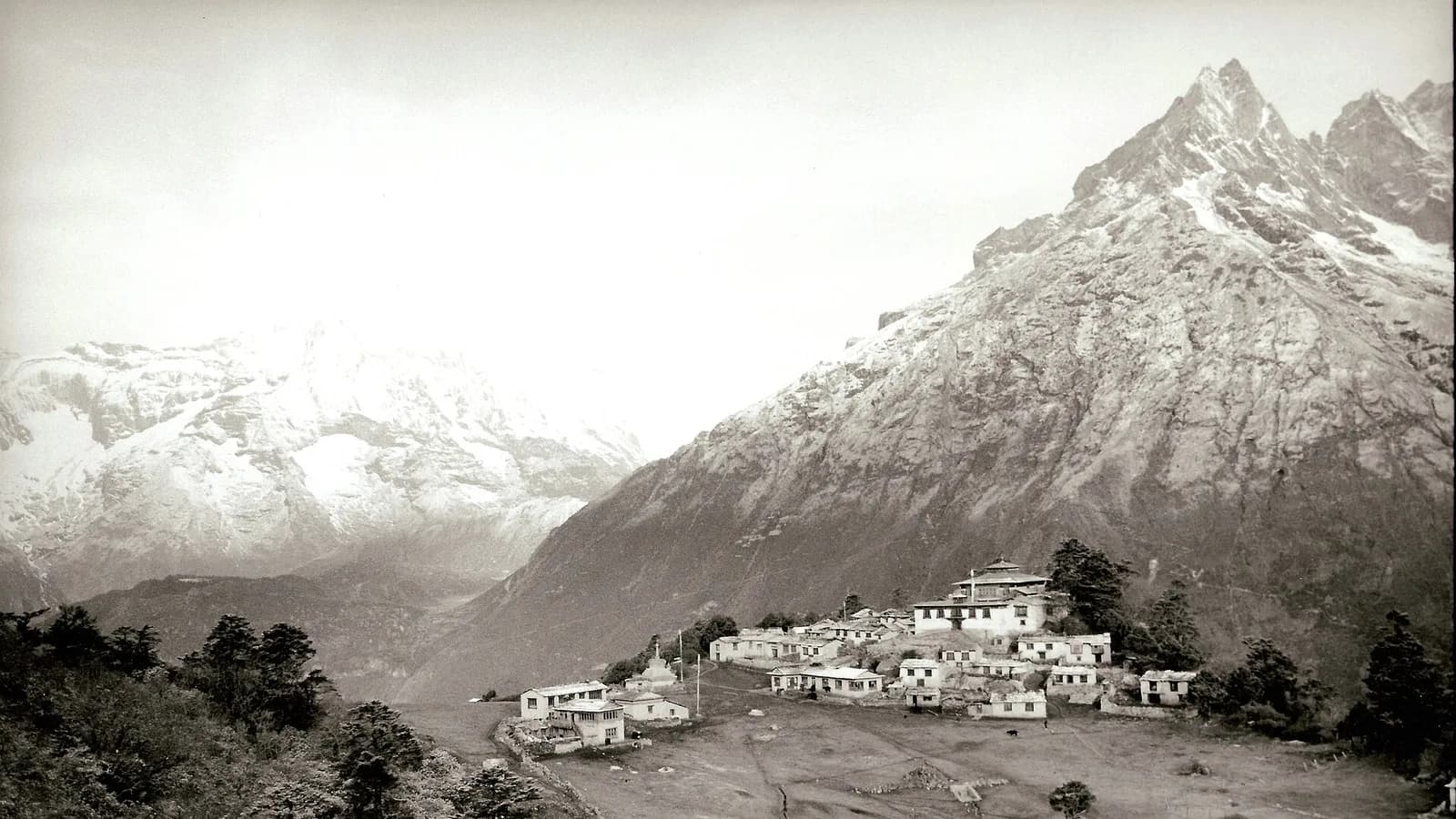
Not every monastery stay is in the valley. In the Everest region, Tengboche Monastery sits at around 3,867 m on the classic Everest Base Camp trek route. Trekkers commonly pause here, and the monastery is the stage for the spectacular Mani Rimdu festival each autumn, when masked monks perform ritual dances. Accommodation in this area is in trekking lodges rather than formal guest rooms inside the monastery, but the experience of attending early prayers with the Himalaya as a backdrop is unforgettable. For festival timing, see the note in the table below and confirm close to your dates, as it follows the Tibetan lunar calendar.
What a typical day looks like
Days are early and structured, though the exact shape depends on whether you are on a taught course or a simpler guest stay. The pattern below reflects a course-style day at a Kathmandu Valley monastery.
| Time of day | Typical activity | | --- | --- | | Before dawn | Wake; first meditation or prayer session | | Morning | Breakfast, then teaching or guided meditation | | Midday | Simple vegetarian lunch; rest or personal practice | | Afternoon | Discussion groups, study or work practice | | Evening | Dinner, then evening meditation or chanting | | Late evening | Silence begins; lights out |
At Kopan, for instance, a course day is described as running from about 6.30 am to 9 pm with an expectation that you attend all sessions, and with silence observed from late at night until after the following lunch. On a lighter guesthouse stay, such as at Namo Buddha, you can typically join the monks' prayer sessions and eat with the community without the full course discipline.
Food and accommodation
Meals are vegetarian, plain and usually included in the rate — often a version of the national staple, dal bhat, alongside simple breakfasts. Rooms range from basic shared dormitories to private rooms with hot water at the more developed guesthouses. Bring a torch, warm layers for cold mornings, modest clothing and earplugs if you are a light sleeper. Wi-Fi and creature comforts are limited by design.
Costs: what to budget
A monastery stay is among the more affordable meaningful experiences in Nepal, but rates vary by monastery, room type and whether teaching is included. The figures below are drawn from the monasteries' own and reputable third-party descriptions; always reconfirm the current price when you book, as these can change.
| Option | Indicative cost (as of mid 2026) | Notes | | --- | --- | --- | | Kopan Monastery rooms | About USD 7 to 20 per day, three meals included | Mostly during courses or private-stay periods | | Namo Buddha new guesthouse | About NPR 3,500 per day (~USD 27), meals included | Private rooms, hot water | | Namo Buddha old guesthouse | About NPR 3,000 per day (~USD 23), meals included | Shared bathrooms | | Vipassana course (Goenka) | Donation only, no set fee | Ten-day silent course; separate tradition |
Beyond the room rate, budget for transport to and from the monastery, any course or registration fees, a small donation, and incidentals. Tipping is not expected in the way it is in a hotel, but a respectful donation toward the monastery's upkeep is always appreciated.
Etiquette: being a respectful guest
A monastery is a place of practice, not a museum, and a little awareness goes a long way. The points below summarise widely published guidance for visiting Buddhist monasteries in Nepal and the wider Himalaya. They overlap with general temple etiquette for tourists, but monasteries have their own emphases.
Dress and the body
- Cover your shoulders, chest and knees; avoid tight or revealing clothing.
- Remove shoes before entering temple halls, and take off your hat and sunglasses too.
- Do not point the soles of your feet toward altars, statues or monks; sit cross-legged or with feet tucked away.
- Some traditions advise leaving leather items outside out of respect.
Movement, sound and objects
- Walk clockwise around stupas, shrines and the interior of temples.
- Keep quiet when monks are praying or reciting; silence is part of the practice.
- Do not touch statues, sacred objects, prayer flags or texts.
- A respectful greeting is palms together at the chest with a slight bow.
Photography
Photography is often restricted inside prayer halls, and you should never photograph people praying or meditating without clear permission. Some monasteries ban interior photos altogether or ask a small fee; ceremonies in particular should be watched, not filmed. When unsure, ask, or simply put the camera away. If you want to go deeper into the beliefs behind these customs, our overview of Buddhism in Nepal gives useful context.
How to plan and book
Booking a monastery stay is straightforward if you start early and go to the source. The single most reliable step is to use each monastery's own website or official contact channel rather than third-party booking sites, because availability, prices and rules are set by the monastery and change without notice.
A simple planning checklist
- Decide the type of stay you want: a taught course, a simple guesthouse stay, or a personal retreat.
- Pick an area — valley monasteries for easy access, Pharping for quiet, mountain monasteries as part of a trek.
- Check the monastery's course calendar or guest policy and contact them well ahead for dates and rooms.
- Confirm the current rate, what meals and teaching are included, and any silence or attendance rules.
- Pack modest clothing, warm layers, a torch and an open, flexible attitude.
If a full monastery stay feels like a big leap, an alternative is to combine day visits with a separate meditation retreat in Nepal, or to try a structured silent course such as Vipassana. Many travellers build up gradually — a temple visit, then a short course, then a longer stay on a later trip.
Is a monastery stay right for you?
If you are drawn to Nepal for more than mountains and momos, a monastery stay offers something a guidebook cannot: a few days inside a way of life that has continued largely unchanged for generations. It asks for humility, early mornings and a willingness to be quiet, and it gives back perspective, calm and a genuine encounter with Himalayan Buddhism. Go in respectfully, follow the house rules, support the community that hosts you, and you will leave with the kind of memory that outlasts the photographs you were probably not allowed to take.
Sources
- Kopan Monastery — Type of Stay
- Kopan Monastery — Course Calendar
- Kopan Monastery — Dress Guideline
- Thrangu Tashi Yangtse Monastery, Namo Buddha — official site
- rinpoche.com — Guest Houses (Pharping / Asura Cave area)
- Neydo Tashi Choling Monastery — Buddhist Monasteries directory
- Nekhor — Asura & Yangleshö Caves, Pharping
- Asia Experiences — Dress codes for temples and monasteries
- Shikhar Adventure — Mani Rimdu Festival 2025, Tengboche
Frequently asked questions
- Can tourists stay overnight in a monastery in Nepal?
- Yes, several monasteries welcome guests, though policies differ. Kopan Monastery near Boudhanath accommodates visitors mainly during its courses and designated private-stay periods, while Thrangu Tashi Yangtse at Namo Buddha runs guesthouses open to short-term visitors. Always check the monastery's own website or contact them before turning up.
- How much does a monastery stay in Nepal cost?
- It varies by place and room. Kopan lists rooms from roughly USD 7 to 20 per day including three meals (as of mid 2026), and the Namo Buddha guesthouses quote about NPR 3,000 to 3,500 per day with meals, around USD 23 to 27 (as of mid 2026). Vipassana courses in the Goenka tradition take donations only. Confirm the current rate when you book.
- What should I wear at a Buddhist monastery in Nepal?
- Dress modestly and cover your shoulders, chest and knees. Avoid tight or revealing clothing, and remove your shoes, hat and sunglasses before entering a temple hall. Some sources also note avoiding leather items inside out of respect. When in doubt, copy what resident practitioners are wearing.
- Do I have to be Buddhist to do a monastery stay?
- No. Introductory courses and guest stays are generally open to people of any faith or none and are framed as study and meditation rather than conversion. You are simply expected to follow the schedule, observe silence when asked, and respect the community's rules while you are a guest.
- Is photography allowed inside monasteries?
- Often not inside prayer halls, and you should never photograph people who are praying or meditating without consent. Some monasteries ban interior photos entirely or charge a small fee. Look for signs, ask first, and put the camera away during ceremonies.
- When is the best time for a monastery stay in Nepal?
- Autumn, around October to November, and spring, around March to April, bring the clearest skies and mildest weather. Winter stays are quiet but cold in the early-morning sessions, and the summer monsoon is humid. Popular programmes such as Kopan's November course fill up months ahead, so book early.
- Which monasteries near Kathmandu accept guests?
- Within easy reach of the capital are Kopan Monastery above Boudhanath, Thrangu Tashi Yangtse at Namo Buddha near Dhulikhel, and several monasteries and retreat centres around Pharping to the south. Each has its own booking process, so contact them directly rather than relying on third-party listings.
- What is a typical daily schedule like?
- Expect an early start, often before dawn, with several meditation or prayer sessions, simple vegetarian meals, periods of silence and some teaching or chanting. Kopan's course day runs from about 6.30 am to 9 pm, and many programmes ask for silence from late evening until after the next morning's session.
Related posts
Boudhanath Stupa: Architecture & Symbolism Guide
How to read the Boudhanath stupa — its mandala shape, the Buddha eyes, the 13 golden steps, and the meaning behind the clockwise kora walk.
Read postBuddha Statue Nepal: A Traveller's Guide to the Best
Where to see the most striking Buddha statue sites in Nepal, from the giant golden trio at Swayambhu to the stone Buddha of Mustang.
Read postBuddhism in Nepal — A Traveler's Guide to Its Roots
Buddhism in Nepal began at Lumbini and split into three living traditions. Where to see it, what it means, and how to visit with respect.
Read post