Manaslu Trek Permit Cost 2026: Fees & Rules
A clear 2026 breakdown of the Manaslu trek permit cost — RAP, MCAP, ACAP and local fees, the new solo rule, and how to budget per person.
On Manaslu, the permits are the paperwork that buys you one of Nepal's last quiet circuits.
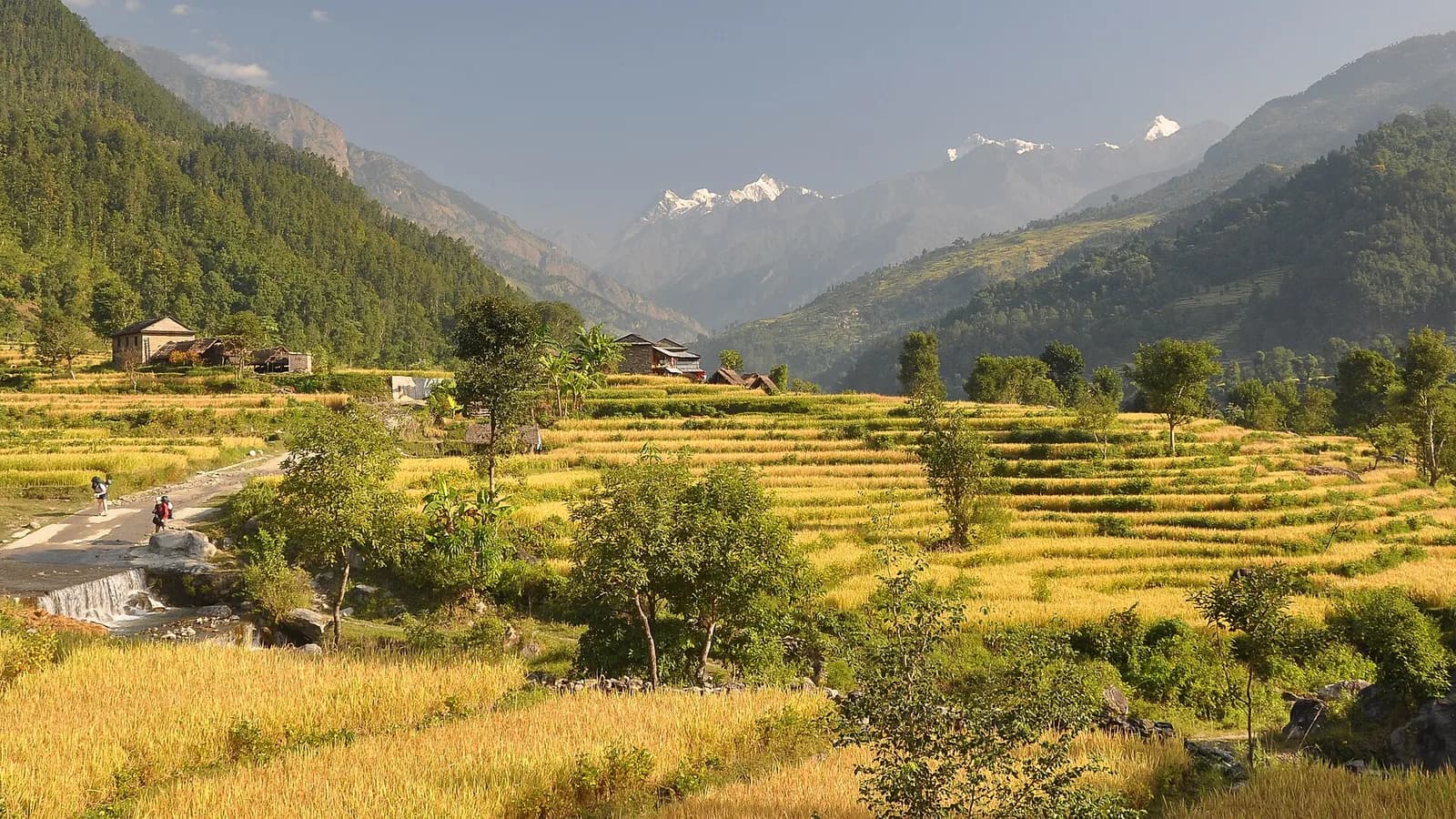
Planning a trip around the world's eighth-highest mountain means getting your head around the Manaslu trek permit cost before anything else, because this is a restricted-area route and the paperwork is both compulsory and a real line in your budget. Unlike the Annapurna or Everest regions, you cannot simply turn up and walk — Manaslu sits close to the Tibetan border, so Nepal controls access through a special permit issued only via registered agencies.
This guide breaks down every fee you will actually pay in 2026: the Restricted Area Permit (RAP), the two conservation-area permits (MCAP and ACAP), local municipality charges and the optional Tsum Valley add-on. It also covers the March 2026 rule change for solo trekkers and how the permits feed into your overall trip cost. If you want the wider picture of the route itself, our Manaslu Circuit trek guide covers the trail, the Larkya La pass and the best season; this article zooms in on the money and the rules.
Key takeaways
- The Restricted Area Permit (RAP) is the big cost and is priced per week, by season — roughly USD 100 for the first 7 days in autumn, USD 75 off-season (as of June 2026).
- You also need MCAP and ACAP, each about NPR 3,000 per foreigner — both one-time fees, no daily charge.
- A licensed guide via a registered agency is mandatory, even after the March 2026 rule let individuals apply for the permit.
- You cannot buy the restricted permit yourself; only a government-registered trekking agency can apply on your behalf.
- Budget roughly USD 145–175 per person in core government permits for a typical autumn circuit, plus extras for Tsum Valley and local fees.
- Carry Nepali rupees in cash for the small municipality entrance fee collected on the trail.
Why Manaslu needs special permits
Manaslu (8,163m) lies in the Gorkha district north-west of Kathmandu, hard against the Tibetan frontier. Because of that border sensitivity, the Nepalese government classifies the upper Budhi Gandaki valley as a restricted area. The permit system serves two purposes at once: it manages border security and it keeps trekker numbers low, which is exactly why the circuit still feels wild and uncrowded compared with Nepal's busier trails.
The practical upshot is that the permits are non-negotiable and are checked at several posts — typically around Jagat, Samdo and Larkya Phedi — where you must show both your paperwork and proof you are trekking with a licensed guide. There is no informal way around this, and being turned back at a checkpoint for missing documents would wreck the trip.
The Manaslu Restricted Area Permit (RAP)
The Restricted Area Permit, sometimes written as MRAP, is the headline cost and the one that varies most. It is priced for a first block of 7 days with a per-day charge for any time beyond that, and the rate changes with the season.
| Permit | Season | First 7 days | Each extra day | | --- | --- | --- | --- | | Manaslu RAP | Sep–Nov (autumn) | USD 100 | USD 15 | | Manaslu RAP | Dec–Aug (off-season) | USD 75 | USD 10 |
All figures above are per person and as of June 2026. Autumn — the prime trekking window — is the most expensive because demand peaks then; the December-to-August band, which covers winter, spring and the summer monsoon, is noticeably cheaper.
Because most itineraries spend 9 to 10 days inside the restricted zone, you will usually pay the 7-day base rate plus two or three extra days. In autumn that works out to roughly USD 130–145 for the RAP alone; off-season it is closer to USD 95–105. Plan your day count honestly, as the per-day surcharge adds up if you build in extra acclimatisation or buffer days.
How the seasonal split works
The cut-off is straightforward: the higher rate applies across the September–November autumn season, and the lower rate covers everything from December through August. If your trek straddles the boundary — say a late-November start — your agency will advise which rate applies based on your permit-issue date.
Conservation area permits: MCAP and ACAP
On top of the restricted permit, the Manaslu Circuit passes through two conservation areas, each with its own entry permit. These are flat, one-time fees with no per-day component.
| Permit | Foreigner fee | SAARC nationals | | --- | --- | --- | | Manaslu Conservation Area Permit (MCAP) | ~NPR 3,000 | ~NPR 1,000 | | Annapurna Conservation Area Permit (ACAP) | ~NPR 3,000 | ~NPR 1,000 |
Figures as of June 2026. The MCAP covers the core of the trek inside the Manaslu Conservation Area. The ACAP is needed because the circuit finishes by dropping down to Dharapani, which sits inside Annapurna Conservation Area territory — so even a pure Manaslu loop ends up touching the Annapurna permit zone. In US-dollar terms each lands somewhere around USD 22–30 depending on the exchange rate; if you want to understand how that conversion moves, see our note on Nepali currency and the rupee.
Both conservation permits are usually arranged at the same time as your restricted permit, so in practice you hand everything to one agency and they bundle the paperwork.
Local and municipality fees
Beyond the national permits, a rural municipality entrance fee is commonly collected on the trail — typically around NPR 2,000 for foreigners, often taken in cash at the Jagat checkpoint where the restricted area begins. It is modest next to the RAP, but it is a cash-only charge, so make sure you carry enough Nepali rupees rather than relying on cards, which are useless once you leave the road head.
This local fee has become a standard part of the Manaslu cost picture and is separate from the conservation permits. Treat it as a small but real add-on when you tally your budget.
The Tsum Valley add-on
Many trekkers combine Manaslu with a side trip into the Tsum Valley, a strikingly preserved Tibetan Buddhist sanctuary branching off the main route. Tsum is itself a restricted area, so it needs its own separate permit in addition to the Manaslu RAP.
| Permit | Season | First 7 days | Each extra day | | --- | --- | --- | --- | | Tsum Valley RAP | Sep–Nov | USD 40 | USD 7 | | Tsum Valley RAP | Dec–Aug | USD 30 | USD 7 |
Per person, as of June 2026. If you plan the combined Manaslu and Tsum Valley itinerary, you pay both restricted permits — they do not substitute for one another. The conservation-area permits (MCAP and ACAP) still apply on top, so the combined trek is meaningfully pricier on paperwork alone. The reward is one of the quietest, most culturally intact corners of the Nepal Himalaya.
The 2026 solo trekker rule, explained
For years, the Manaslu restricted permit could only be issued to a group of at least two foreign trekkers, which left solo travellers scrambling to pair up. That changed on 22 March 2026, when Nepal's Department of Immigration eased the rule so that an individual can now apply for the Manaslu Restricted Area Permit without first finding a second person.
There is a crucial catch, though: this did not make Manaslu a free-and-independent trek. A licensed guide, hired through a government-registered Nepali agency, remains legally mandatory and is enforced at the checkpoints between Jagat and Dharapani. So in practice you still walk with a guide whether or not you have other trekkers alongside you — the change simply removes the old two-person headache for solo travellers.
The same change rippled across several of Nepal's restricted regions, broadly aligning the rules. If you are weighing a different restricted-area route, our Upper Mustang trek permit guide walks through that region's distinct (and pricier) permit, which still works on a group-and-guide model.
How to get the permits
You cannot obtain the Manaslu restricted permit yourself. By law it must be processed through a government-registered trekking agency that applies to the Department of Immigration on your behalf. This is the single biggest reason almost everyone books Manaslu as an organised trek rather than a fully independent one — choosing a reliable operator matters, and our guide to picking a trekking agency in Nepal covers what to look for.
What you need to provide
To get the paperwork moving, have these ready in Kathmandu:
- A passport valid for at least six months, plus your Nepal visa.
- Several passport-sized photos for the permits.
- Travel insurance details that explicitly cover high-altitude trekking and, ideally, helicopter evacuation.
- Your planned itinerary and trek dates, which set your RAP day count.
The agency does the actual filing, but clean passport scans and a couple of spare photos speed things up. Because the restricted area sits at serious altitude, sensible cover is essential — see our overview of trekking insurance and helicopter evacuation before you commit.
Budgeting the full picture
Permits are only one slice of the total. Here is a rough sense of the core government permit cost for a typical autumn Manaslu Circuit of around 9 to 10 days in the restricted zone, per person and as of June 2026:
| Item | Approx. cost (autumn) | | --- | --- | | Restricted Area Permit (RAP) | USD 130–145 | | MCAP | ~NPR 3,000 (≈USD 23–30) | | ACAP | ~NPR 3,000 (≈USD 23–30) | | Municipality fee | ~NPR 2,000 (≈USD 15) | | Permit subtotal | ~USD 190–215 |
Off-season the RAP portion drops by around USD 35–40, pulling the subtotal down accordingly. These numbers are permits only — they do not include your guide's daily fee, porters, food, lodging, transport to the trailhead or the Tsum Valley extension. Guide and porter wages are a separate and important cost; our piece on tipping guides and porters in Nepal explains the going rates and customs.
Compared with Nepal's other big-name treks, Manaslu's permit bill sits above the Annapurna and Everest regions because of the restricted-area surcharge but well below Upper Mustang. If you are still deciding which circuit to do, our Manaslu vs Annapurna Circuit difficulty comparison and the Everest Base Camp permits guide put the costs and effort side by side.
A note on exchange rates and timing
Most Manaslu fees are set in US dollars (the RAP and Tsum Valley permits) or Nepali rupees (MCAP, ACAP and the municipality fee). The dollar-denominated permits stay fixed regardless of the rupee, while the rupee fees shift slightly in dollar terms as the exchange rate moves. Carry enough cash in rupees for the local charges, and budget the dollar permits at the headline rate. Permit fees are reviewed periodically by the Nepalese authorities, so always reconfirm the exact figures with your agency close to departure — treat the numbers here as a well-sourced 2026 baseline rather than a locked quote.
Sources
- Manaslu Circuit Trek Permit Cost Guide (Updated 2026) — Nest Adventure
- Manaslu Trek Permit Cost 2026 — Green Valley Nepal Treks
- Manaslu Trek Permit Cost (Updated 2026) — Mount Mania
- Manaslu Circuit Trek Permits, Cost & Solo Rules: The 2026 Guide — Best Heritage Tour
- Manaslu Circuit Trek Permits — Solo Trekking Rule (March 2026 Update) — Himalayan Social Trekking
- Immigration Eases Solo Restricted Area Trekking Rules 2026 — Nepal Gateway Trekking
- Tsum Valley Trek Permit Cost & Regulations (Updated 2026) — Nepal Trekking Experts
- Manaslu Trek Permit Fees — Glorious Himalaya
Frequently asked questions
- How much does the Manaslu trek permit cost in total?
- For a typical autumn trek of around 9 to 10 days inside the restricted zone, the core government permits add up to roughly USD 145 to 175 per person — the Restricted Area Permit plus MCAP and ACAP. Off-season the same set is cheaper. All figures are as of June 2026 and exclude your agency, guide and Tsum Valley extras.
- What is the Manaslu Restricted Area Permit fee?
- From September to November it is about USD 100 per person for the first 7 days plus roughly USD 15 for each extra day. From December to August it drops to about USD 75 for the first 7 days plus USD 10 per extra day. These are the figures quoted by Nepali agencies as of June 2026.
- Do I still need MCAP and ACAP on top of the restricted permit?
- Yes. The Manaslu Conservation Area Permit (MCAP) is about NPR 3,000 and the Annapurna Conservation Area Permit (ACAP) is also about NPR 3,000 per foreigner, because the circuit exits through Annapurna territory near Dharapani. Both are one-time fees with no daily charge, as of June 2026.
- Can I get a Manaslu permit as a solo trekker now?
- Since a rule change on 22 March 2026, an individual can apply for the Manaslu Restricted Area Permit without first finding a second trekker. You still cannot walk it truly alone, though — a licensed guide hired through a registered Nepali agency is legally required and checked at posts between Jagat and Dharapani.
- Can I buy the Manaslu permit myself in Kathmandu?
- No. The restricted permit can only be issued through a government-registered trekking agency that applies to the Department of Immigration on your behalf. You cannot walk into the immigration office and buy it as an individual, which is why almost everyone books through a Kathmandu agency.
- How much extra is the Tsum Valley permit?
- Adding the Tsum Valley side trip needs its own restricted permit, roughly USD 40 per person for the first week in autumn or about USD 30 off-season, plus around USD 7 per extra day. It is separate from the main Manaslu Restricted Area Permit, so budget for both if you plan to combine them.
- Are there any local fees beyond the national permits?
- Yes — a rural municipality entrance fee of around NPR 2,000 for foreigners is commonly collected in cash, often at the Jagat checkpoint. It is small next to the restricted permit but worth carrying rupees for, since card payment is not an option on the trail.
- What do I need to bring to get the permit issued?
- Your passport with at least six months of validity, a Nepal visa, passport-sized photos and travel-insurance details that cover high-altitude trekking. Your agency handles the actual application, but having clean scans and a couple of spare photos ready speeds things up in Kathmandu.
Related posts
Manaslu Circuit Trek: Route, Permits & Larkya La Guide
A complete Manaslu Circuit trek guide — the route around the world's 8th-highest peak, Larkya La pass, 2026 restricted-area permits, costs and best season.
Read postManaslu Trek: A Practical Planning Companion
A practical Manaslu trek companion — getting there, the Tsum Valley extension, wildlife, day-by-day feel and how to decide if it suits you.
Read postDolpo Trek: Nepal's Wild Trans-Himalayan Frontier
A guide to the Dolpo trek in far-west Nepal: Upper vs Lower Dolpo, Phoksundo Lake, restricted-area permits, the 2026 rules, best season and access.
Read post