Lukla Flight Cost 2026: Fares, Routes & Tips
Lukla flight cost explained for trekkers: 2026 one-way fares, the Ramechhap diversion, helicopter prices, baggage limits and why delays happen.
The short hop to Lukla is the priciest 30 minutes you will buy in Nepal — and the mountains, not the airline, decide when you actually leave.
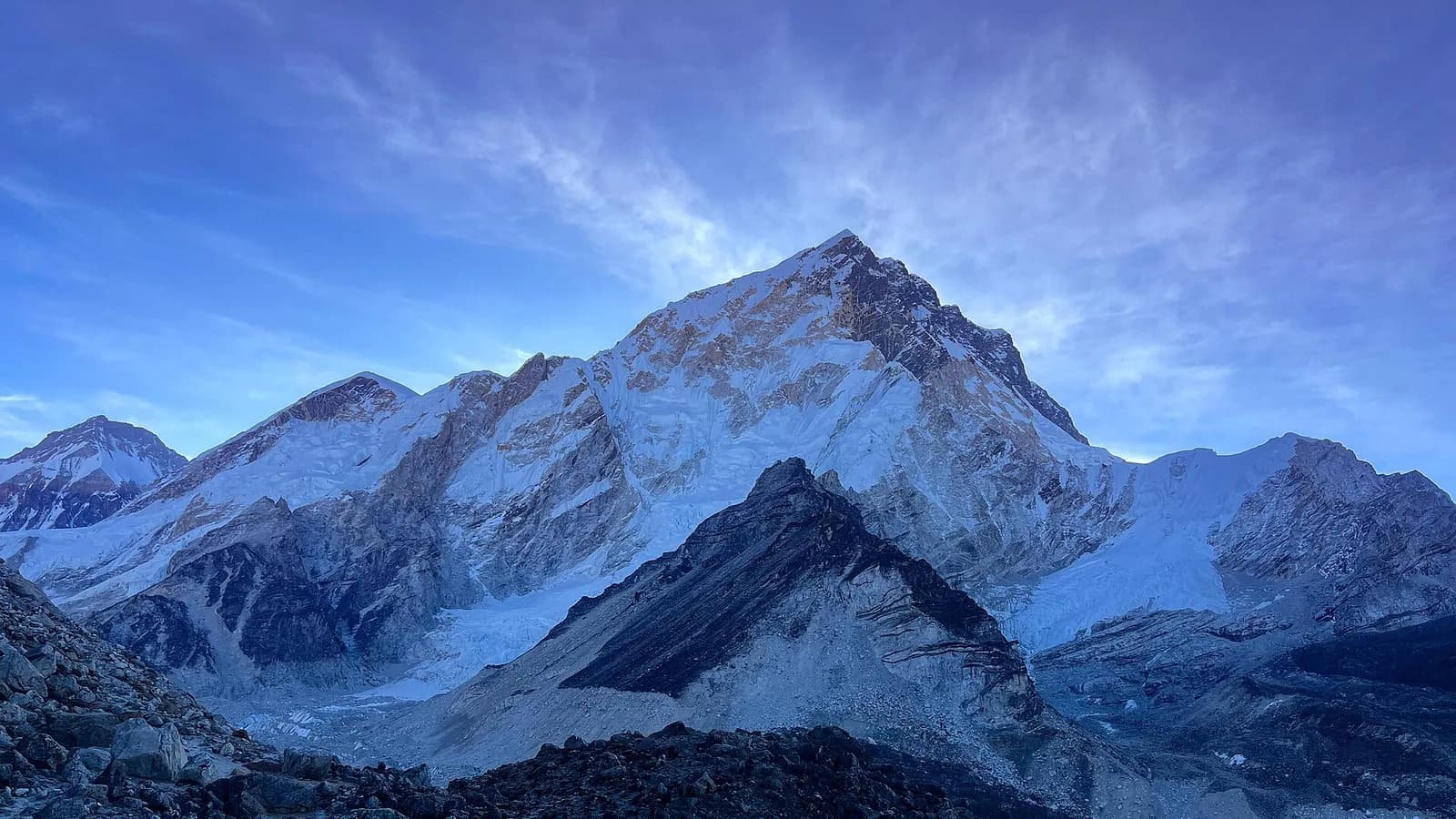
Few short flights anywhere in the world carry the mystique — or the price tag per minute — of the hop into the Everest region. The Lukla flight cost is one of the first numbers most Everest Base Camp trekkers try to pin down, and it is also one of the most confusing, because the fare, the departure airport and even the aircraft can change with the season. This guide breaks down what foreign trekkers actually pay in 2026, why the flight so often leaves from a small airfield four hours east of Kathmandu rather than the capital itself, and how to plan around the delays that come with landing at the world's most famous mountain airstrip.
Key takeaways
- A one-way fixed-wing seat between Kathmandu and Lukla is generally quoted around USD 215 to 230 for foreign tourists (as of early 2026), with the seasonal Ramechhap leg often lower.
- In the busy spring and autumn trekking seasons, most Lukla flights shift to Manthali Airport in Ramechhap, adding a four-to-five-hour road transfer from Kathmandu.
- The baggage limit is strict — about 15 kg total including hand luggage — with excess charged per kilogram.
- A helicopter seat is far pricier: roughly USD 500 to 650 shared, or around USD 2,900 to 3,000 for a private charter (as of 2025).
- Delays and cancellations are routine because flights run by visual rules; buffer days are essential.
- Lukla's airstrip sits at 2,845 m with a 527 m sloping runway, which is exactly why weather rules everything.
What a Lukla flight actually costs in 2026
The headline number most trekkers want is the one-way fare for the short fixed-wing flight between the Kathmandu valley and Lukla. Across reputable Nepali operators in 2026, the foreign-tourist fare for the direct Kathmandu–Lukla sector is generally quoted in the band of USD 215 to 230 one-way (as of early 2026). Like almost all domestic air travel in Nepal, this sits under a nationality-based pricing system, so Nepali citizens pay a much lower rupee fare for the same seat. The airline checks your passport at the counter, and if you somehow booked the local fare you will be asked to settle the difference before boarding.
When flights operate instead from Ramechhap (Manthali Airport) during peak season — more on why below — the flight-only fare is often quoted lower, frequently in the region of USD 175 to 200, with the Kathmandu–Ramechhap road transfer typically sold as a small add-on (commonly around USD 20 for a shared jeep). The combined door-to-door cost ends up broadly similar to the direct fare once you add the transfer, so do not assume the Ramechhap route is dramatically cheaper overall.
Because these fares move with demand, season and airline, treat every figure here as an indicative range rather than a fixed quote. Confirm the live price on the operating airline's site or a trusted Nepali aggregator before you pay. If you want the wider picture on how Nepal's two-tier air fares and baggage rules work, see our overview of domestic flights in Nepal.
Who flies the route
The Lukla sector is the preserve of Nepal's short-takeoff specialists rather than the big ATR operators that run the Pokhara trunk route. The carriers you are most likely to fly are Tara Air, Summit Air and Sita Air, using small fixed-wing aircraft suited to the tiny mountain strip. The big domestic names, Buddha Air and Yeti Airlines, dominate larger routes but are not the ones putting you down at Lukla.
Why your flight leaves from Ramechhap, not Kathmandu
This catches almost every first-time Everest trekker off guard. During the heaviest trekking months — broadly spring (around April–May) and autumn (around October–November) — Nepal's Civil Aviation Authority shifts the bulk of Lukla flights away from Kathmandu's Tribhuvan International Airport and runs them out of Manthali Airport in Ramechhap instead.
The reasoning is operational. Kathmandu has a single runway shared by all international and domestic traffic, and in peak season the sheer volume of Lukla flights created chronic congestion, with delays that could stretch from one to two hours before you even reached the mountain weather window. Flying from Manthali, which sits about 130 km northeast of Kathmandu, gives a much shorter round trip to Lukla, frees up far more daily slots, and means aircraft can exploit the calm early-morning conditions before cloud builds. The trade-off lands squarely on you: a road transfer of roughly four to five hours from Kathmandu, usually starting in the pre-dawn dark.
Planning around the Ramechhap transfer
If your trek falls in peak season, build the transfer into both your budget and your body clock. Practical points:
- Expect a very early start — many transfers leave Kathmandu around 1–2 a.m. to make a first-light flight.
- Some trekkers prefer to drive out the evening before and sleep in basic lodging near Manthali to avoid an all-night drive.
- The mountain road is long and winding; pack motion-sickness remedies if you are prone.
- Off-season (notably winter and the quieter monsoon shoulders), flights more often run directly from Kathmandu, skipping the transfer entirely.
Helicopter: the expensive, flexible alternative
When fixed-wing flights back up — and in peak season they do — many trekkers look at helicopters, either to guarantee a departure or simply to skip the Ramechhap drive. The flexibility is real, but so is the cost.
For the Lukla–Kathmandu direction, a shared (group) seat is commonly quoted in the region of USD 500 to 650 per person (as of 2025), while a private charter for up to about five passengers is typically quoted around USD 2,900 to 3,000. Pricing on the Kathmandu–Lukla direction is broadly comparable, and rates can climb further during peak demand or when a backlog of weather-stranded trekkers all want out at once. A helicopter flight is roughly a 45-to-50-minute trip and seats a maximum of about five passengers.
| Option (per person, one way) | Indicative range | Notes | | --- | --- | --- | | Fixed-wing, Kathmandu–Lukla direct | USD 215–230 | Off-peak; foreign-tourist fare (early 2026) | | Fixed-wing, Ramechhap–Lukla + transfer | ~USD 175–200 + ~USD 20 | Peak season; add road transfer | | Helicopter, shared seat | ~USD 500–650 | Flexible weather window (2025) | | Helicopter, private charter | ~USD 2,900–3,000 total | Splits across up to ~5 passengers |
Helicopters cope better with marginal weather than fixed-wing aircraft and can often slot into shorter clear windows, which is the main reason stranded trekkers pay the premium. They are not immune to weather, though — if the cloud is solid, nothing flies. For a fuller look at scenic and charter heli options in the Everest region, see our guide to the Everest helicopter tour.
Baggage limits and hidden extras
The Lukla flight is one of the strictest in Nepal for baggage, because aircraft performance off a tiny high-altitude strip depends on keeping weight down. The standard allowance is about 15 kg total per passenger, typically divided into roughly 10 kg of checked baggage and 5 kg of hand carry. Go over and you are charged per kilogram (a small per-kg fee), and during busy periods genuinely overweight bags can be offloaded for safety — sometimes without much warning.
A few ways to stay inside the limit without leaving gear behind:
- Wear your heaviest items — boots, down jacket, camera — on the plane, as they do not count toward the weighed allowance.
- Leave non-trekking clothes and valuables in a left-luggage store at your Kathmandu hotel, which most are happy to hold.
- If you trek with a porter, remember the 15 kg limit still applies per person on the flight, so coordinate what goes up.
These weight rules are part of a broader set of considerations for the trail. Our Everest Base Camp packing list is built around exactly this kind of weight discipline.
Why delays happen — and how to protect your trip
No conversation about the Lukla flight cost is complete without the delay tax, because a "cheap" ticket is worth little if you miss a connecting international flight. Lukla operations run under visual flight rules: pilots must actually see the runway and the surrounding terrain, with no instrument landing system to fall back on. Cloud, fog or strong wind at either Lukla or the departure airport will ground flights, and the airport's own published figures note that visibility problems close it a large share of the time during the monsoon, cancelling a correspondingly large share of flights.
Practical defences that experienced trekkers swear by:
- Book the earliest slot of the day. The weather window is usually best soon after dawn and deteriorates as cloud builds.
- Build buffer days into your itinerary — a common rule of thumb is to keep one to two spare days before any fixed onward flight home.
- Avoid a same-day international connection out of Kathmandu on the day you fly down from Lukla.
- Keep a helicopter budget in reserve if your schedule is tight, so a multi-day backlog does not strand you.
Weather is the dominant variable across the whole Everest trek, not just the flight. If you are still choosing dates, our guide to the best time for an Everest Base Camp trek walks through the seasonal trade-offs.
The airstrip that makes it all so dramatic
Part of why the flight commands such attention — and such caution — is the airport itself. Tenzing-Hillary Airport, universally called Lukla, sits at an elevation of about 2,845 m (9,334 ft) and has frequently been described as one of the most demanding airports in the world. Its single runway is only about 527 m (1,729 ft) long with a pronounced 11.7% gradient: aircraft land uphill to help them brake on the short surface and take off downhill to gain speed before the ground drops away. There is high terrain at both ends and effectively no room for a go-around once committed to the approach.
The airport was renamed in 2008 to honour Tenzing Norgay and Sir Edmund Hillary, the first climbers confirmed to have summited Everest, both of whom were closely tied to the development of this region and its airstrip. Knowing the runway's constraints helps the rest of this guide make sense: the strict weight limits, the dawn departures and the constant weather sensitivity all flow directly from the physics of landing here.
Putting it together: budgeting your Lukla flight
For most independent trekkers, the realistic round-trip air budget for the Lukla sector — counting both directions and, in peak season, the Ramechhap transfers — lands in the low-to-mid hundreds of US dollars, before any helicopter contingency. If you are pricing a whole trip, fold this into the bigger picture: our breakdown of the Everest Base Camp trek cost in 2026 shows where the flight sits among permits, guides and teahouse costs, and the Everest Base Camp permits 2026 guide covers the fees you pay on top.
Two final budgeting reminders. First, confirm that any package fare quotes the foreign-tourist rate, not the local fare, so there are no surprises at the counter. Second, treat the airfare as only one line in a flight budget that should also include a buffer-day allowance and, ideally, a helicopter reserve for the season when the clouds simply will not lift.
Sources
- Tenzing-Hillary Airport — Wikipedia
- Kathmandu to Lukla Flight Price 2026 — Pride Nepal Travel & Tours
- Lukla Flight Information 2026 — World Alpine Treks
- Lukla Flights now Rerouting from Manthali for the Trekking Season — Breeze Adventure
- Ramechhap–Lukla Flights Resume for Trekking — Tourism Info Nepal
- Lukla Flight: Complete Guide to Flying into Tenzing Hillary Airport — Mosaic Adventure
- Lukla to Kathmandu Helicopter Flight — Sharing Ride Cost — Nepal Helicopters
- Kathmandu to Lukla Helicopter Flight, Cost & Booking — Nepal Helicopters
Frequently asked questions
- How much does a Lukla flight cost in 2026?
- For foreign tourists a one-way fixed-wing seat between Kathmandu and Lukla is generally quoted around USD 215 to 230 (as of early 2026), while the seasonal Ramechhap to Lukla leg is often quoted lower, in the region of USD 175 to 200 plus a road transfer. Prices vary by airline, season and how early you book, so always confirm the live fare before paying.
- Why do Lukla flights leave from Ramechhap instead of Kathmandu?
- During the busy spring and autumn trekking seasons the civil aviation authority shifts most Lukla flights to Manthali Airport in Ramechhap to ease congestion at Kathmandu's single-runway airport. Shorter round trips mean more daily slots and fewer weather-related cancellations, at the cost of a long pre-dawn road transfer from Kathmandu.
- How long is the drive from Kathmandu to Ramechhap?
- The road transfer from Kathmandu to Manthali Airport in Ramechhap is roughly four to five hours, covering about 130 kilometres northeast of the capital. Most trekkers leave Kathmandu in the small hours of the morning to catch an early Lukla flight, since the mountain weather window is best soon after dawn.
- What is the baggage weight limit on a Lukla flight?
- The standard allowance is about 15 kg total per passenger, typically split into roughly 10 kg of checked baggage and 5 kg of hand carry. Excess weight is charged per kilogram, and during busy periods overweight bags can be offloaded for safety, so weigh your duffel before you travel and wear your heaviest gear on the plane.
- How much is a helicopter from Lukla to Kathmandu?
- A shared seat on a Lukla to Kathmandu helicopter is commonly quoted in the region of USD 500 to 650 per person, while a private charter for up to about five passengers is often quoted around USD 2,900 to 3,000 (as of 2025). Prices rise in peak season and when demand spikes after weather-grounded fixed-wing flights, so confirm the live rate before booking.
- Why is the Lukla flight so often delayed or cancelled?
- Lukla flights operate by visual rules, so pilots need clear sight of the strip and surrounding peaks. Cloud, fog or wind at either end will ground the aircraft, and during the monsoon visibility problems close the airport a large share of the time. Booking the earliest flight of the day and building buffer days into your itinerary is the standard defence.
- Is the Lukla flight included in trek packages?
- Many organised Everest Base Camp packages bundle the round-trip Lukla flight into the price, but not all do, so read the inclusions carefully. If you book independently, factor in both the airfare and, in peak season, the Ramechhap road transfer and possibly a night near the airport. Always check whether the quoted package fare uses the foreign-tourist rate.
- Can I reach Lukla without flying?
- Yes. You can drive and then trek in from roadheads such as Salleri or Jiri, adding several days of walking before you reach the classic Everest trail, which some trekkers value as gentler acclimatisation. This avoids the airfare and the flight uncertainty but costs more time on the ground.
Related posts
Buddha Air: A Tourist's Guide to Nepal's Top Airline
A traveller's guide to Buddha Air — routes, ATR fleet, the Everest mountain flight, fares, baggage rules and booking tips for Nepal's largest airline.
Read postDomestic Flights in Nepal: Buddha Air, Yeti & More (2026)
A tourist's guide to domestic flights in Nepal — Buddha Air and Yeti Airlines routes, two-tier fares, baggage rules, Lukla and mountain flights, and booking tips.
Read postEBC Trek by Road: Reach Everest Base Camp Without Flying
How to do the EBC trek by road — driving Kathmandu to Salleri, Phaplu or Surke by jeep, then walking to Everest Base Camp. Routes, costs, days and seasons.
Read post