Buddha Air: A Tourist's Guide to Nepal's Top Airline
A traveller's guide to Buddha Air — routes, ATR fleet, the Everest mountain flight, fares, baggage rules and booking tips for Nepal's largest airline.
When the road wants a whole day and the bus might not move at all, a 25-minute Buddha Air hop quietly changes the shape of your trip.
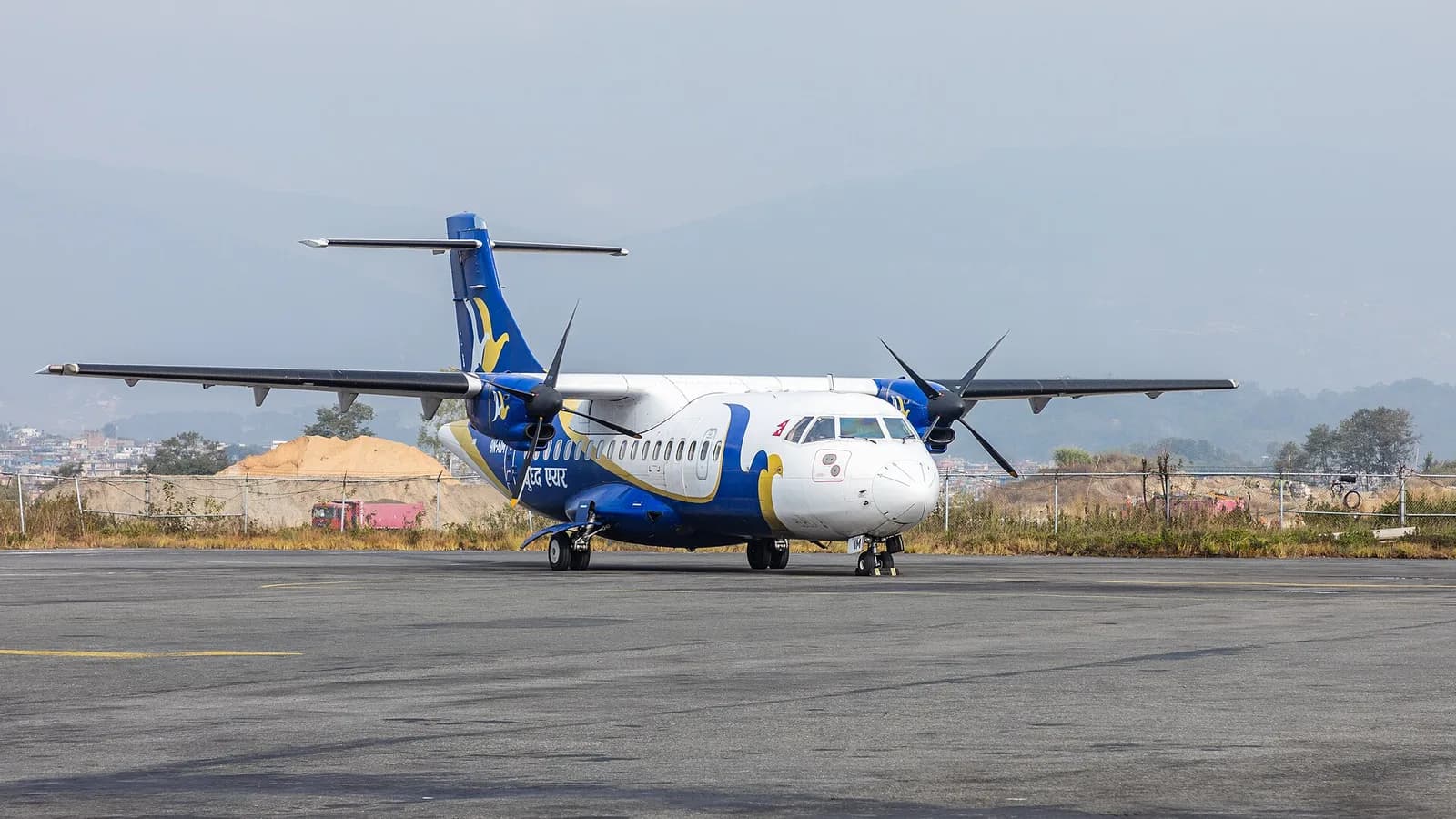
If you spend more than a few days in Nepal, there is a good chance you will end up on a Buddha Air turboprop at some point — watching the terraced hills drop away beneath an ATR wing as a journey that would have eaten a whole day on the road shrinks to a 25-minute hop. Buddha Air is the country's largest domestic airline, and for tourists it is the workhorse that links Kathmandu to Pokhara, Chitwan, Lumbini and the eastern cities, as well as the operator behind Nepal's famous scenic Everest flight. This guide walks through what the airline actually is, where it flies, how its fares and baggage rules work, and the practical quirks worth knowing before you book.
If you want the wider picture of every carrier in the country, our overview of domestic flights in Nepal sets the scene; this article zooms in on Buddha Air specifically.
Key takeaways
- Buddha Air is Nepal's largest domestic airline, with roughly 60 to 65 percent of the market and over 160 flights on a typical day (as of 2025).
- It flies a fleet of around 18 ATR turboprops (ATR 72-500 and ATR 42-320) to about 15 domestic destinations plus Varanasi and Kolkata in India.
- The airline operates Nepal's well-known Mount Everest sightseeing "mountain flight," with a guaranteed window seat for every passenger.
- Nepal uses nationality-based pricing, so foreign tourists pay a higher fare than locals and need their original passport at check-in.
- Baggage allowance is tied to your fare class on domestic routes, broadly 15 to 25 kg checked.
- Flights are weather-dependent; book the earliest slot and leave a buffer day before any onward connection.
Who Buddha Air is
Buddha Air was established in April 1996 and began operations in 1997 with a single aircraft, growing over the following decades into the dominant name in Nepalese domestic aviation. It is a privately owned company headquartered in the Kathmandu Valley, and it crossed its 25-year milestone in recent years as the country's busiest carrier.
The scale today is substantial. As of 2025 the airline operated a fleet of around 18 aircraft, ran well over 160 flights on a typical day, and held somewhere in the region of 60 to 65 percent of Nepal's domestic market — comfortably the largest share of any operator. Cumulatively it has carried more than 23 million passengers over its history. For a traveller, the practical meaning of all that is simple: on the busiest routes, Buddha Air usually offers the most departures, which gives you the best odds of getting where you need to be even when the weather is misbehaving.
The aircraft you will fly
Buddha Air's fleet is built around French-made ATR turboprops, the twin-propeller regional aircraft you see on short hops all over South Asia. The backbone is the ATR 72-500, a roughly 70-seat aircraft well suited to Nepal's short runways, supported by a handful of smaller ATR 42-320s seating around 47.
| Aircraft | Approx. seats | Typical use | |---|---|---| | ATR 72-500 | ~70 | High-frequency trunk routes such as Kathmandu–Pokhara | | ATR 42-320 | ~47 | Lower-demand and shorter sectors |
These are turboprops, not jets, so they cruise lower and slower than a typical airliner — which, on a clear day over Nepal, is entirely the point. The low cruise gives you a far better view of the foothills and, on the right routes, the snow line beyond. One thing worth setting expectations on: Buddha Air does not fly into Lukla, the Everest Base Camp gateway. That short, sloping cliffside strip is served only by much smaller aircraft from specialist operators. If Lukla is on your radar, our look at whether Lukla airport is dangerous covers what to expect there.
Where Buddha Air flies
The airline's network is centred on Kathmandu's Tribhuvan International Airport and fans out to around 15 domestic destinations, ranging from major tourist hubs to genuinely remote settlements. The routes that matter most to visitors are the short trunk sectors that replace a long day on a mountain road.
| Route | Why tourists take it | |---|---| | Kathmandu – Pokhara | The flagship route to the lakeside city and Annapurna trailheads | | Kathmandu – Bharatpur | Quick access to Chitwan National Park's jungle safaris | | Kathmandu – Bhairahawa | Gateway to Lumbini, the birthplace of the Buddha | | Kathmandu – Biratnagar / Bhadrapur | Reach the far east without a multi-day overland slog | | Kathmandu – Tumlingtar / Nepalgunj | Springboards for remote trekking regions |
The single busiest sector is Kathmandu to Pokhara, flown many times a day; the flight itself is around 25 minutes against the best part of a day by road. We break the choice down in detail in our Kathmandu to Pokhara flight guide, but the short version is that flying saves a huge amount of time while the bus stays far cheaper and never gets fogged out.
International routes
Beyond Nepal, Buddha Air operates cross-border flights to India. It serves Varanasi, the Hindu holy city on the Ganges, and in October 2025 it resumed direct flights to Kolkata after a roughly six-year gap, beginning with three return services a week. These give pilgrims and tourists a convenient air link without backtracking through Delhi, though schedules are limited, so check current frequencies when you plan.
The Everest mountain flight
For many visitors, Buddha Air's single most memorable product is not a city hop at all — it is the Mount Everest sightseeing flight, a scenic loop from Kathmandu that cruises east along the Himalaya toward Everest and turns back without landing anywhere.
What to expect:
- A flight of roughly 50 minutes to an hour in the air.
- A guaranteed window seat for every passenger, since the entire purpose is the view.
- A very early departure, typically around dawn, when the peaks are at their clearest.
- A parade of giants on a good day — peaks above 8,000 m including Cho Oyu, Shishapangma, Lhotse and Everest itself.
Cabin crew typically rotate passengers forward in small groups for a head-on look at the range, and because the ATR cabin is slim, nobody is left without a clear line of sight. Foreign-tourist fares have generally sat in the region of USD 190 to 230 per person (as of 2025), depending on season and how early you book — treat that as a ballpark and confirm the live figure on the airline's site. Like everything that depends on Himalayan weather, the earliest flights of the day, and the clearer autumn and winter months, give you the best odds of a cloud-free Everest. For the broader options, including how the flight compares to land-based viewpoints, see our guide to the Everest mountain flight.
Fares: why your price differs from a local's
This is the detail that surprises almost every first-time visitor, so it is worth being plain about. Like the rest of Nepal's airlines, Buddha Air uses nationality-based pricing:
- Nepali citizens pay the lowest, locally set fare in rupees.
- Indian nationals often have a separate intermediate fare.
- Other foreign tourists pay a higher fare, frequently quoted in US dollars.
This is entirely normal and openly published on the booking pages — it is not a scam or a hidden surcharge. What does cause grief is travellers who try to book the cheaper "Nepali" fare to save money. At check-in the airline inspects your original passport, and if your ticket class does not match your nationality you will be sent to the counter to pay the difference in cash before boarding. Book the correct fare from the start and the airport is painless.
Fares also climb steadily as peak season and the big festivals approach, so the earlier you book in autumn, the better. For how a flight or two fits into the cost of a whole trip, our Nepal travel budget guide puts the numbers in context.
Fare classes and what they include
Buddha Air sells several domestic fare classes, and the headline difference between the cheap and the flexible ones is not just price — it is how much baggage you get and how easily you can change your plans. Cheaper fare classes come with a smaller checked allowance and tighter change rules; the more expensive "normal" fare gives you the most generous baggage and flexibility. We cover this in the baggage section below, but the takeaway is to read what your specific fare includes before you click buy.
Baggage rules worth knowing
Buddha Air's domestic baggage allowance is tied to your fare class rather than being a single flat number, which catches people out. As a rough guide (as of 2025):
| Fare type | Approx. checked allowance | |---|---| | Normal fare | ~25 kg | | Mid-tier fares | ~20 kg | | Cheapest fares | ~15 kg |
On top of the checked allowance you may carry roughly 5 kg of cabin baggage. On the international flights to India, the allowance is typically around 20 kg checked plus 5 kg cabin.
A few practical points:
- Weigh your bag before the counter. Excess baggage is charged per kilogram, and it adds up fast with trekking gear.
- Carry your original passport. Foreigners cannot check in without it, and it is also how your fare class is verified.
- Domestic terminals are basic. Arrive with time to spare and do not assume card payment will work for excess fees — keep some rupees handy.
- Consolidate heavy gear. If a flight is one leg of a trek, store anything non-essential in Kathmandu rather than paying to fly it around.
Safety, delays and the weather veto
Most domestic flying in Nepal — Buddha Air included — operates in conditions where the pilot needs to see the terrain and the peaks, so weather holds a genuine veto over the schedule. Fog sitting over Kathmandu at dawn, or cloud parked on a route, and a flight simply does not depart. This is why cancellations and delays are a normal part of flying here, especially during the monsoon (roughly June to August), while autumn tends to be the most dependable window.
A few habits make this manageable rather than stressful:
- Always book the earliest flight of the day. Mornings are clearest, and delays cascade as the day wears on.
- Build in a buffer day. Never schedule your Pokhara or eastern return for the same day as an international flight home — give yourself slack for a cancellation.
- Know your rights. If your flight is cancelled for weather, you are generally entitled to a refund or a seat on the next available service, handled at the airport counter.
None of this is a reason to avoid flying — it is a reason to plan around it. As with any airline, individual incidents have occurred over the years; the sensible response for a traveller is simply to keep slack in the itinerary and fly early in the day.
Booking a Buddha Air ticket
You have several straightforward ways to get a seat:
- The Buddha Air website. It sells directly online and clearly displays the foreign-tourist fare, which makes it the cleanest option for getting the right fare class.
- Nepali ticketing aggregators. Local platforms let you compare timings and fares across airlines on a single route, handy for slotting a flight into a tight itinerary.
- Your hotel or a Thamel travel agency. Convenient and human, though you may pay a small markup for the service.
- Your trekking or tour agency. If a flight is part of a larger package, they will usually fold it in and handle the logistics.
Two habits pay off. Book early in peak season, because fares only rise as the autumn trekking rush and the big festivals approach — they rarely drop at the last minute. And double-check your departure time the day before, especially for early-morning flights where a delayed start can have knock-on effects.
Flying into Pokhara
If your Buddha Air ticket takes you to Pokhara, it is worth knowing the city now has a newer facility, Pokhara International Airport, on the edge of town. For practical purposes most domestic services and the bulk of tourist traffic still move as they always have, and the city remains an easy place to arrive into for the lakes and the Annapurna region. Our guide to Pokhara International Airport covers the current state of play, and once you have landed, our roundup of things to do in Pokhara takes over.
Is Buddha Air worth it?
For the long sectors that would otherwise swallow a day of winding mountain road — Kathmandu to Pokhara, to the eastern cities, or out to a remote trailhead — flying Buddha Air is genuinely transformative, turning a gruelling overland slog into a short morning hop, often with a Himalayan view thrown in for free. The trade-offs are real and familiar: you pay a tourist premium over local fares, the baggage allowance depends on the fare you chose, and the weather can rewrite your plans at short notice. Manage those three things — book the correct fare, pack within your allowance, and keep a buffer day — and Nepal's busiest little turboprops become one of the smoothest parts of the whole trip.
Sources
- Buddha Air — Wikipedia
- Buddha Air — Our Aircrafts
- Buddha Air — History
- Buddha Air — Mount Everest Sightseeing Flight
- Buddha Air — Baggage Information
- Buddha Air — Flight Routes
- ATR Aircraft Dominate Buddha Air's Fleet (New Business Age)
- Buddha Air Flight Route Destinations Map in 2025 (Brilliant Maps)
- Nepal Domestic Flight Baggage Allowance 2026 (Pride Nepal Travel)
- Domestic Airlines in Nepal: Fares, Baggage & Refunds (TripTurbo)
Frequently asked questions
- Is Buddha Air the biggest airline in Nepal?
- Buddha Air is the largest domestic carrier in Nepal, holding roughly 60 to 65 percent of the domestic market. It runs the most frequent service on the busy Kathmandu to Pokhara route and operates a fleet of around 18 ATR turboprops with over 160 flights on a typical day (as of 2025).
- Where does Buddha Air fly?
- Buddha Air covers around 15 domestic destinations across Nepal, from major hubs like Pokhara, Bharatpur and Bhairahawa to remote strips such as Tumlingtar. Internationally it flies to Varanasi and, since October 2025, again to Kolkata in India. It does not fly into Lukla, which needs smaller aircraft.
- How much does the Buddha Air Everest mountain flight cost?
- Foreign-tourist fares for the Mount Everest sightseeing flight have generally sat in the region of about USD 190 to 230 per person (as of 2025), varying with season and how early you book. Always confirm the live price on the Buddha Air website, as figures move and special offers come and go.
- Does Buddha Air guarantee a window seat on the mountain flight?
- Yes. The whole point of the Everest sightseeing flight is the view, so Buddha Air guarantees every passenger a window seat. Cabin crew also bring small groups forward to the cockpit area for a head-on look at the peaks, and the slim ATR cabin means nobody is stuck without a clear view.
- Do foreigners pay more than locals on Buddha Air?
- Yes. Nepal uses nationality-based pricing, so there is a lower fare for Nepali citizens, often a separate fare for Indian nationals, and a higher fare for other foreign tourists. Your original passport is checked at the counter, so book the fare class that matches your nationality from the start.
- What is the Buddha Air baggage allowance?
- On domestic routes the checked allowance depends on your fare class, broadly from about 15 kg on the cheapest fares up to around 25 kg on a normal fare, plus roughly 5 kg of cabin baggage (as of 2025). International flights to India carry about 20 kg checked plus 5 kg cabin. Check your fare rules before you pack.
- Why do Buddha Air flights get delayed or cancelled?
- Most flights in Nepal rely on the pilot seeing the ground and the peaks, so fog over Kathmandu or cloud on a route can ground a service, especially in monsoon. Book the earliest slot of the day, keep a buffer day before any onward connection, and you are entitled to a refund or rebooking if weather cancels your flight.
- How do I book a Buddha Air ticket as a tourist?
- You can book directly on the Buddha Air website, which clearly shows the foreign-tourist fare, or use a reputable Nepali ticketing aggregator to compare timings. A Thamel travel agency or your hotel can also book for you for a small markup. Book early in peak season, as fares only rise toward the autumn trekking rush.
Related posts
Domestic Flights in Nepal: Buddha Air, Yeti & More (2026)
A tourist's guide to domestic flights in Nepal — Buddha Air and Yeti Airlines routes, two-tier fares, baggage rules, Lukla and mountain flights, and booking tips.
Read postFlights to Kathmandu: Airlines, Hubs & Tips 2026
A practical guide to flights to Kathmandu in 2026 — which hubs connect you, the airlines, when fares dip, and what to expect at the airport.
Read postinDrive Nepal: A Tourist's Guide to the App (2026)
How inDrive Nepal works for travellers — naming your fare, cities served, payment, insurance, safety, and how it compares to Pathao and Yango.
Read post