Holi in Nepal — A Practical Visitor's Guide
Planning Holi in Nepal? When the festival of colours falls, where to celebrate in Pokhara and Kathmandu, what to wear, and how to stay safe and clean.
Spend the morning of Holi at Pokhara's Lakeside and you will leave drenched in colour, deafened by music, and grinning under a layer of pink.
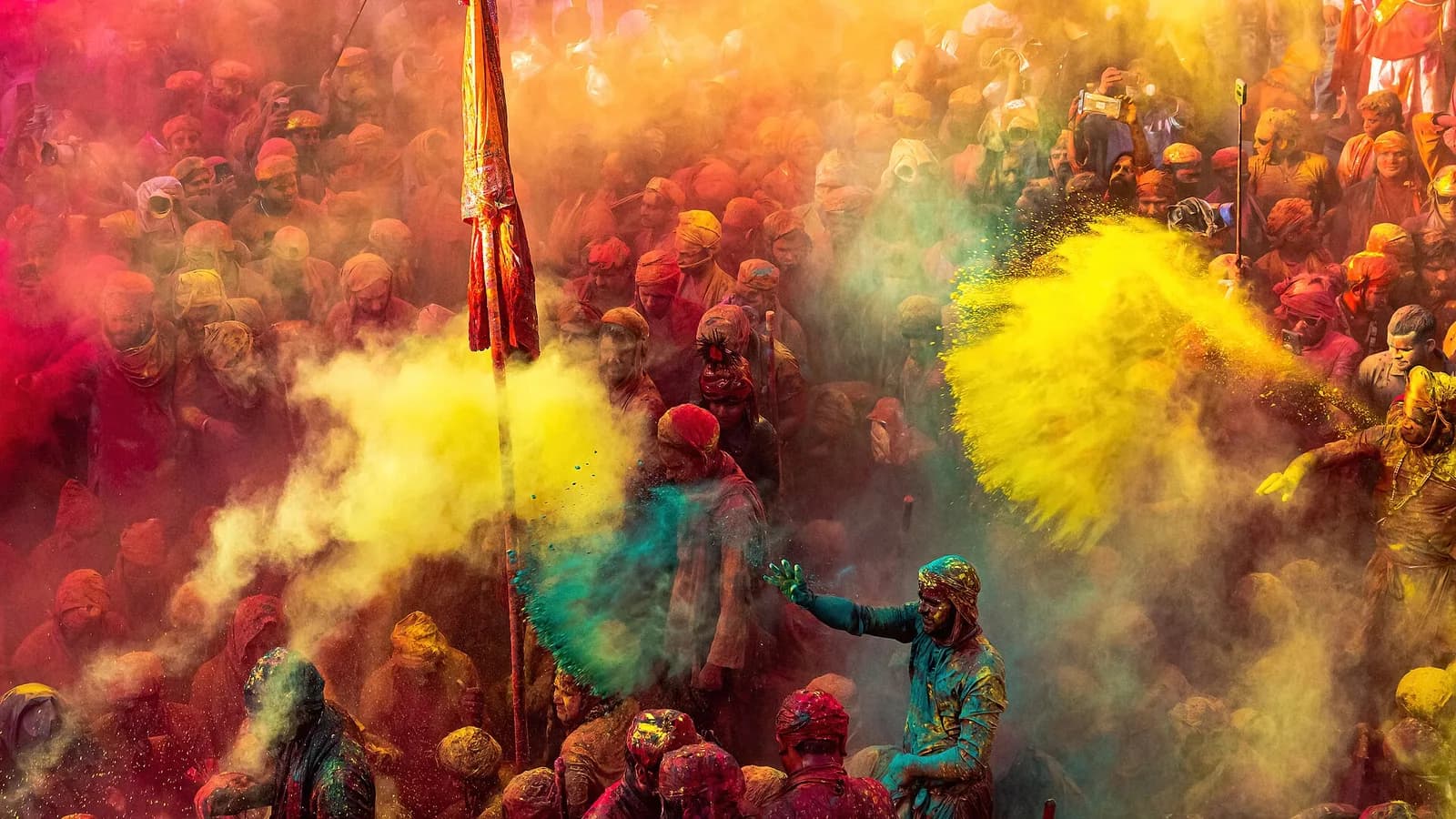
Few festivals are as easy to fall in love with as Holi in Nepal — a single riotous spring day when whole streets dissolve into clouds of pink, green, and yellow powder, water balloons arc overhead, and music pours from every doorway. It is joyful, accessible, and unlike anything else on the calendar. But it is also the one festival where a little preparation makes an enormous difference between a great day and a ruined camera. This is the practical visitor's guide: when Holi falls, where to be, what to wear, and how to come out the other side happy, clean-ish, and with your valuables intact.
It is the planning companion to our Holi in Nepal versus India comparison, which weighs the two countries' celebrations against each other. If you have already decided on Nepal, this page gets you ready for the day itself.
Key takeaways
- Holi, called Fagu Purnima, falls on the full moon of Falgun — in February or March, with dates that shift yearly.
- Hills celebrate one day before the Terai, and Nepal as a whole is one day ahead of India.
- Pokhara's Lakeside is the most tourist-friendly celebration; Kathmandu's Thamel is the lively runner-up.
- Wear old white clothes, sunglasses, and oil your hair — the colored powder stains everything permanently.
- Keep valuables zipped away, apply colors only with consent, and watch for pickpockets in crowds.
- Be deliberate about thandai, which is sometimes served with cannabis-infused bhang.
When Holi falls in Nepal
Holi is a spring festival on a lunar date, so it has no fixed Western day. In Nepal it is officially Fagu Purnima, tied to the full moon of Falgun, the lunar month that bridges February and March. As a season it marks the end of winter and the arrival of spring; as a date it must be confirmed year by year.
There is one timing quirk worth knowing, because it has practical consequences. Nepal does not celebrate all at once:
- The hill regions — including Kathmandu and Pokhara — celebrate on the full-moon day.
- The Terai plains celebrate the following day.
- And Nepal as a whole runs one day ahead of India.
This staggering means a well-planned traveler can string Holi across regions. You could play in Pokhara or Kathmandu one day, then catch the Terai version, or cross toward the Indian border for another round the day after. For the cross-border angle in full, see our Holi Nepal versus India guide.
| Detail | What to know | | --- | --- | | Nepali name | Fagu Purnima | | Lunar timing | Full moon of Falgun | | Western window | February or March | | Hills (Kathmandu, Pokhara) | Full-moon day | | Terai plains | One day after the hills | | Versus India | Nepal is one day earlier | | Date stability | Shifts each year — always verify |
Where to celebrate
Holi is nationwide but wildly different in intensity by region, so where you stand matters more than for most festivals.
Pokhara Lakeside — the easy choice
Pokhara's Lakeside is the most tourist-friendly Holi in Nepal, full stop. The main lakeside road typically closes to traffic, DJs set up along the strip, and powdered color and water fly in every direction — thrown by locals, tourists, and businesses alike. Restaurants, bars, and hotels with pools turn into Holi hubs, and the celebration generally winds down by late afternoon as the temperature drops. Foreign visitors are warmly welcomed and the atmosphere is festive but contained. If it is your first Holi, this is where to have it. Plan the rest of your visit with our guide to things to do in Pokhara.
Kathmandu Thamel — the lively runner-up
In the capital, the tourist district of Thamel and the historic Durbar Square areas come alive with street parties and color-throwing. It is a notch more crowded and intense than Pokhara because the spaces are tighter, but it remains accessible and energetic — a strong option if Kathmandu is where you are based.
The Terai — the traditional version
Down in the Terai plains, towns like Lumbini, Janakpur, and Birgunj celebrate Holi a day later and in a style closer to the Indian tradition — more religious in tone and less oriented toward tourists. It is more culturally authentic but a less obvious fit for a first-timer, and solo travelers may prefer to pair up there.
Trekking regions — the quiet version
Up in the mountain villages, Holi is a gentle, family-scale affair — a little color exchanged among relatives, none of the big open-air parties. If you happen to be on a trek, expect a quieter, more intimate observance.
What to wear and bring
The single most useful Holi rule: assume everything you wear will be destroyed. The dyed powder stains clothing permanently and will tint your hair and skin for a day or two.
- An old white t-shirt — white makes the colors look spectacular, and you will not mourn it. Bring one per person.
- Cheap trousers and old shoes or sturdy sandals you can throw away or hose down.
- Sunglasses — the powder gets into eyes constantly; this is the most-skipped essential.
- Oil for your hair and skin — rub coconut or olive oil in before heading out; it stops much of the dye from setting and makes washing off far easier. Braiding or tying up long hair helps too.
- A water-resistant phone case or zippered dry bag — water balloons and powder are merciless on electronics; treat a "raincoat for your camera" as mandatory.
- A small amount of cash in a zipped front pocket — and nothing valuable you would hate to lose.
- A clean backup outfit waiting at your hotel for the evening.
Staying safe and respectful
Holi in Nepal, and Pokhara especially, is generally a safe and good-natured event, including for solo female travelers. A few habits keep it that way:
- Ask before you color someone. Applying powder to strangers — particularly women — should be done only with a clear yes. The same courtesy applies to you; a polite "no" is respected.
- Guard against pickpockets. Festival crowds are a classic target. Keep cash zipped and valuables at the hotel — see our rundown of common tourist scams in Nepal.
- Mind the thandai. The traditional Holi drink, thandai, is a chilled spiced-milk drink with nuts and saffron — delicious and harmless on its own. But in some places it is served laced with bhang, a cannabis preparation. If you do not want a surprise, ask explicitly for it bhang-free, especially near tourist areas.
- Stay hydrated and sun-aware. It is a long, active afternoon in spring sun; drink water and take breaks.
- Keep it consensual and light. The spirit of Holi is play, not aggression. Avoid anyone who seems to be pushing it too far.
The food and the feel of the day
Holi has its own sweets. Look for gujiya, a sweet stuffed dumpling, and malpua, fried sweet pancakes, alongside the chilled thandai. Many restaurants in Pokhara and Kathmandu run Holi specials through the day.
By evening you will be coated head to toe in color, your hair tinted for a few days, pleasantly exhausted in the way of a long sunny afternoon. The powder is mostly cornstarch with food-grade dyes; it rinses off skin in a shower or two but stains fabric for good — which is exactly why you wore the throwaway white shirt. Spring is also simply one of the better times to be in Nepal, with mild weather and clear-ish skies bracketing the festival.
A quick day-of checklist
- Confirm the exact date for your year — remember the hills go first, then the Terai, then India.
- Book a Pokhara Lakeside room for the night before if that is your base.
- Lay out the old white shirt, sunglasses, oil, and dry bag the night before.
- Leave valuables in the hotel; carry only a little zipped cash.
- Decide your thandai stance in advance and order accordingly.
- Have a clean change of clothes ready for the evening.
The takeaway
Holi in Nepal is one of the most joyful, accessible festival experiences a visitor can have — and Pokhara's Lakeside in particular is hard to beat for color, music, and a genuinely welcoming crowd. Get the date right, dress to be ruined, oil your hair, zip your valuables away, and watch your thandai, and you are set for one of the best single days of a Nepal trip. For how this all compares to celebrating across the border, read our Holi in Nepal versus India guide next.
Sources
Frequently asked questions
- When is Holi celebrated in Nepal?
- Holi in Nepal, known as Fagu Purnima, falls on the full moon of the lunar month of Falgun, which lands in February or March. The hill regions including Kathmandu and Pokhara celebrate one day before the Terai plains, and Nepal as a whole observes Holi a day before India. The exact date shifts yearly, so confirm it.
- Where is the best place to celebrate Holi in Nepal?
- Pokhara's Lakeside is the most tourist-friendly Holi in the country, with the main strip closing to traffic and open-air parties along the lake. Kathmandu's Thamel district is the next biggest, livelier but more crowded. The Terai towns celebrate in a more traditional, religious style closer to the Indian version.
- What should I wear for Holi in Nepal?
- Wear cheap, old clothes you are happy to ruin, ideally a white t-shirt so the colours show vividly. Add sunglasses to keep powder out of your eyes and closed old shoes or sturdy sandals. The dyed powder stains clothes permanently, so never wear anything you care about keeping.
- Is Holi safe for tourists in Nepal?
- Pokhara's Holi is generally safe and welcoming, including for solo female travellers, with festive but contained crowds. Apply colours to strangers only with permission, keep valuables in a zipped pocket, and watch for pickpockets in dense crowds. Be cautious about thandai near tourist areas, as some versions contain bhang.
- How do I get the Holi colours off afterwards?
- Rub coconut or olive oil into your hair and onto exposed skin before going out, which stops much of the dye from setting. Colours then wash off skin in one or two showers, though they stain clothes for good. Braiding or tying up long hair and wearing a cap also limits how much powder reaches your scalp.
- What is thandai and should I be careful with it?
- Thandai is a chilled, spiced milk drink made with nuts, fennel, cardamom, and saffron, traditionally served at Holi. In some places it is offered mixed with bhang, a cannabis preparation. If you do not want that, order thandai explicitly bhang-free, especially around tourist areas where it can catch visitors by surprise.
- Does Nepal celebrate Holi on the same day as India?
- No. Nepal generally celebrates Holi one day before India. Within Nepal, the hill regions such as Kathmandu and Pokhara mark it a day ahead of the Terai plains. This staggering means an organised traveller can experience Holi on consecutive days across regions or across the Nepal-India border.
Related posts
Holi Date in Nepal: When Fagu Purnima Falls Each Year
The Holi date in Nepal shifts yearly with the Falgun full moon. See the 2025 and 2026 dates, why hills and Terai differ, and how to plan around it.
Read postKathmandu to Pokhara Bus: 2026 Road & Booking Update
A 2026 update on the Kathmandu to Pokhara bus — how the highway widening changed the trip, current fares, and how to choose between bus, flight and car.
Read postKathmandu to Pokhara by Car: A Practical Guide
Going Kathmandu to Pokhara by car? Real distance, driving time, private-hire costs, the Prithvi Highway route, stops, and monsoon road tips.
Read post