Family Friendly Treks Nepal: Easy Routes With Kids
A practical guide to family friendly treks in Nepal: the easiest low-altitude routes, the right age for kids, permits, costs and seasons.
The best family trek in Nepal is rarely the highest one — it is the short, low route where everyone still has energy to enjoy the view.
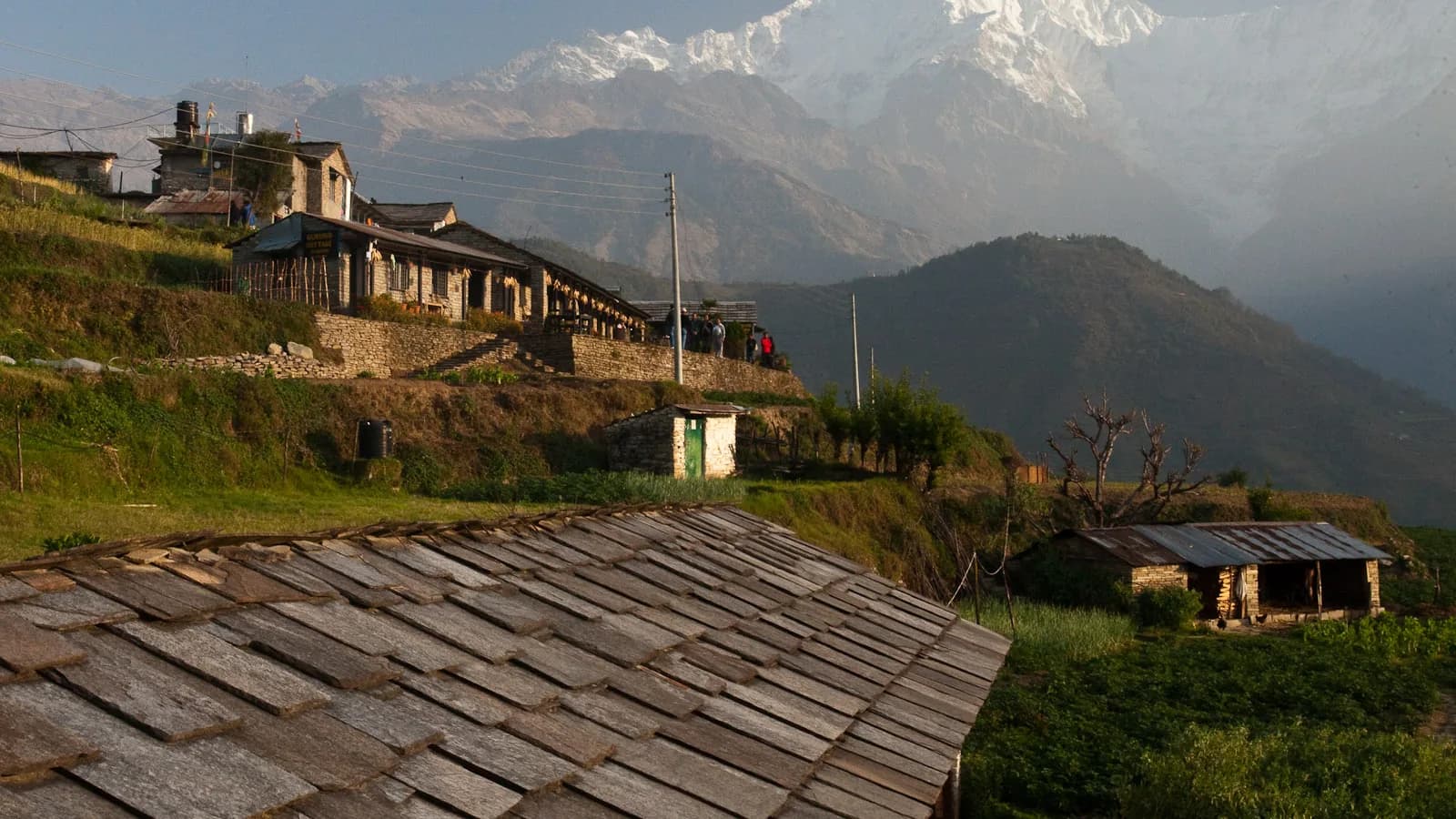
Choosing among the family friendly treks Nepal offers is mostly about restraint: the best route for a family is rarely the highest or the longest, but the one where the walking days are short, the altitude stays low, and every member of the group still has the energy to enjoy a sunrise. Nepal is unusually good for this. Within a day of Pokhara or Kathmandu you can be on a gentle trail through terraced fields and rhododendron forest, sleeping in a simple teahouse with a hot plate of dal bhat in front of you and an 8,000-metre peak on the horizon.
This guide covers the easiest established routes for children, the age and altitude rules that keep a family trek safe, the permits and rough costs involved, and how to pace the trip. All practical details below come from recent trekking and family-travel sources, linked at the end. None of it is medical advice — confirm health questions, especially anything about altitude and children, with a doctor or travel clinic before you go.
Key takeaways
- The safest family treks stay low — generally below about 3,500 metres — with short days of roughly four to five hours of walking.
- Many guides suggest age seven or eight as a comfortable starting point for multi-day trails; younger children can join short, low walks if carried.
- Ghorepani Poon Hill is the classic family loop from around age eight; Australian Camp, Dhampus and the Royal Trek suit younger kids and first-timers.
- Children under ten are commonly fee-exempt on permits such as the Annapurna Conservation Area Permit, though the permit card still has to be issued.
- Autumn and spring give the clearest views and most comfortable weather; a licensed guide is strongly advised and now required on many routes.
What makes a trek "family friendly"
A trek earns the family-friendly label by combining a few practical features rather than any single one. The most important is altitude. Children can acclimatise less efficiently than adults and, especially under about eight, may struggle to put early altitude symptoms into words, so reputable guidance is to keep family treks low — typically below 3,500 metres for under-tens — and to ascend gradually with rest days built in. Where you can, sleep a little lower than the highest point you reach during the day.
The second feature is the length of each walking day. On family routes the daily effort is usually around four to five hours, which leaves time to rest, explore a village and let children set part of the pace. The third is infrastructure: popular family trails are dotted with teahouses offering twin rooms, hot meals and a warm dining hall, so you are never far from food, water and a place to stop. For more on how that lodging works, see our guide to teahouse trekking in Nepal.
How young is too young?
There is no legal minimum age for trekking in Nepal, and the right answer depends on the child and the trail. A common view among guides is that children of about seven or eight make the best multi-day trekking partners, because they have the stamina for several hours of walking and can describe how they feel. Shorter, lower hikes suit younger children, and toddlers as young as one or two can join very gentle walks if carried in a backpack carrier or by a porter. At the other end, higher and harder routes above roughly 3,500 metres are generally reserved for older teens and adults, and many operators will not take children under about twelve to fourteen on high-altitude treks such as Everest Base Camp.
The best easy treks for families
The routes below are all well-established, low to moderate in altitude, and served by teahouses. Walking times are typical figures and vary with group pace and the exact itinerary your agency designs.
| Trek | Typical length | Approx. max altitude | Good for | Base | |------|---------------|----------------------|----------|------| | Australian Camp & Dhampus | 2-3 days | ~2,100 m | Younger kids, first trek | Pokhara | | Royal Trek | 3-4 days | low foothills | Gentle culture walk | Pokhara | | Ghorepani Poon Hill | 4-5 days | 3,210 m | Ages ~8+, sunrise views | Pokhara | | Ghandruk village | 2-3 days | ~2,000 m | Short Gurung-village trek | Pokhara | | Nagarkot–Chisapani | 2-3 days | ~2,300 m | Quick trip near Kathmandu | Kathmandu |
Ghorepani Poon Hill — the classic family loop
The Ghorepani Poon Hill trek is the route most families build their first Himalayan trek around. It is widely described as a sweet spot from about age eight: a loop of roughly four to five days through Gurung villages and rhododendron forest, with a pre-dawn climb to the Poon Hill viewpoint at 3,210 metres for a sunrise panorama over Annapurna, Dhaulagiri and the fishtail peak of Machhapuchhre. The highest point stays just over 3,200 metres, the walking days are manageable, and teahouses line the trail. A typical loop runs from Nayapul up through Tikhedhunga and Ulleri to Ghorepani, over to Tadapani, and down through the village of Ghandruk. Our dedicated Ghorepani Poon Hill trek guide covers the itinerary in detail.
Australian Camp and Dhampus — gentle and very close to Pokhara
For younger children or a first taste of trekking, the Australian Camp and Dhampus route is hard to beat. It is a short trek near Pokhara — commonly done as a one- or two-night outing — that climbs from the roadhead at Kande to the meadow viewpoint of Australian Camp at about 2,055 metres, then on to the Gurung village of Dhampus. The whole route stays under roughly 2,100 metres, which removes most altitude worry, and the daily walking is gentle while still delivering big views of the Annapurna massif and Machhapuchhre. It is a natural choice if you want to carry a small child or keep the commitment low.
The Royal Trek — easy culture in the foothills
The Royal Trek is a relaxed, low-elevation walk through Gurung villages in the hills east of Pokhara, named for a British royal visit. With little altitude and easy terrain, it is pitched squarely at families and trekkers who want scenery and village life without a demanding climb. It pairs well with time around Pokhara and makes a soft introduction for children new to multi-day walking.
Ghandruk village — a short Gurung-village trek
Ghandruk is one of the largest and prettiest Gurung settlements in the Annapurna foothills, with stone houses, terraced fields and close-up mountain views. You can reach it as a short two- to three-day trek in its own right, or as the descent leg of the Ghorepani loop. The modest altitude and short distances make it a gentle, culturally rich option for families.
Near Kathmandu — Nagarkot and Chisapani
If your time is anchored in Kathmandu rather than Pokhara, the Nagarkot–Chisapani hike is a popular two- to three-day option just outside the valley, partly skirting Shivapuri National Park, with ridge views toward the Himalaya on clear mornings. It is a quick way to get children onto a trail without a long transfer. The hill town of Nagarkot itself is known for sunrise views, and nearby Dhulikhel offers similar gentle day-hiking, so a family can combine easy walking with comfortable lodging close to the capital.
Permits and rough costs
Most family routes in the Annapurna region need two pieces of paper: the Annapurna Conservation Area Permit (ACAP) and a trekkers information card. The encouraging part for families is that children under ten are generally exempt from the fees, even though the permit card itself still has to be issued in their name. Always treat the figures below as a guide and let a licensed agency confirm current rates and arrange the paperwork for your group, since the permit system has changed repeatedly in recent years.
| Item | Approx. fee (foreign adult) | Children under 10 | |------|------------------------------|--------------------| | Annapurna Conservation Area Permit (ACAP) | USD 30 (as of 2025) | Free; permit still issued | | Trekkers information card | ~NPR 2,000 (as of 2025) | Commonly exempt |
Beyond permits, your real budget goes on teahouse food and rooms, a licensed guide, and an optional porter or child carrier. A guide is now required on many trekking routes and is strongly recommended with children, both for safety and because a good guide can recognise early signs of altitude sickness and adjust the plan. Families travelling with toddlers often hire a porter specifically to carry a child carrier on the gentler trails.
When to go and how to pace it
Timing matters more with children than with anyone else, because comfort and clear views keep morale up. The two best windows are autumn, from late September to November, and spring, from March to May, when the weather is mild, the skies are clearest and the trails are at their most pleasant. The June-to-August monsoon brings rain, mud, leeches and cloud-obscured peaks, while deep winter is cold and can be snowy on higher trails. For a fuller breakdown, see our guide to the best season to trek in Nepal.
Pacing is the other half of a successful family trek. Keep walking days short, build in genuine rest, and on any route that gains height, limit single-day elevation gains and add acclimatisation days. Let children help set the rhythm, carry their own small daypack with snacks and water, and stop often. Above all, treat their symptoms seriously: tiredness, tears, loss of appetite, poor sleep, headache or nausea are reasons to stop ascending and, if needed, descend.
Altitude care for children — the short version
The single most important safety topic on any trek with kids is altitude, so it is worth keeping a few principles front of mind. Stay low where you can, ascend slowly, and never push a child upward through symptoms. Because children under about eight may not describe how they feel, watch their behaviour and appetite closely. Our altitude sickness guide for Nepal trekking goes into prevention and warning signs in more depth, and a paediatrician's input before a higher trip is well worth it.
Small touches that make it work
A few practical habits make a family trek far smoother. Pack layers and rain protection regardless of season, plenty of high-energy snacks, rehydration salts and any usual medicines, and a sleeping bag liner for teahouse beds. Stick to freshly cooked hot food and safe water, which on the trail usually means dal bhat, noodle soups and other cooked dishes rather than raw salads. Learning even a handful of Nepali words turns trail encounters into a highlight for kids, so it helps to skim our list of Nepali phrases every trekker should know before you set off. And if you want to weave the trek into a wider trip, our Nepal with family guide covers wildlife, cities and the gentler non-trekking days that pad a trip out nicely.
Done with restraint, a family trek in Nepal becomes the part of the trip the kids remember best: a sunrise over the high peaks, a friendly teahouse dog, and the simple pride of having walked there on their own two feet.
Sources
- Trekking in Nepal with kids — Nepal Trekking Planner
- Best Family Treks in Nepal — Escape Himalaya
- Trekking in Nepal with kids — Mosaic Adventure
- Age Limit for Trekking in Nepal — Himalayan Recreation
- Ghorepani Poon Hill Trek itinerary and altitude — Himalaya Trip
- Dhampus–Australian Camp easy trek for families — Trekking in Nepal
- Annapurna Conservation Area Permit (ACAP) guide 2025 — Explore All About Nepal
- Nepal trekking permits and fees — Follow Alice
- TIMS Card — Nepal Tourism Board
Frequently asked questions
- What is the best family friendly trek in Nepal?
- For most families the Ghorepani Poon Hill loop in the Annapurna region is the sweet spot from about age eight, with short walking days, comfortable teahouses and a famous sunrise viewpoint. Younger children do better on lower, shorter walks like Australian Camp and Dhampus near Pokhara, or the gentle Royal Trek.
- What age can children start trekking in Nepal?
- There is no legal minimum, but many guides suggest children of about seven or eight cope best with multi-day trails because they have the stamina and can describe how they feel. Toddlers can join very short, low walks if carried, while high routes above roughly 3,500 metres are generally kept for older teens and adults.
- Is altitude dangerous for kids on Nepal treks?
- It can be, so the safest approach is to keep family treks low. Children can struggle to communicate symptoms and may acclimatise less efficiently, so guides often advise staying below about 3,500 metres for under-tens, ascending slowly and building in rest days. If a child has headache, nausea or unusual tiredness, stop going up.
- Do children need trekking permits in Nepal?
- Usually yes for the document, but often not for the fee. In the Annapurna Conservation Area children under ten trek free yet still need the permit card issued, and under-tens are commonly exempt from the trekkers information card. Rules change, so let a licensed agency confirm and arrange permits for your group.
- How much do family treks in Nepal cost?
- Costs vary widely by route, length and operator, so treat any figure as a guide and confirm current rates. As examples, the Annapurna Conservation Area Permit was about USD 30 for foreign adults (as of 2025) and the trekkers information card around NPR 2,000 for foreigners (as of 2025), with under-tens generally free. Teahouse food, guides and porters add to this.
- Which season is best for trekking with family in Nepal?
- Autumn from late September to November and spring from March to May give the mildest weather, clearest mountain views and the most comfortable walking for children. The summer monsoon brings rain, leeches and cloud, while deep winter is cold and snowy on higher trails, so the two shoulder seasons are easiest with kids.
- Can young children be carried on Nepal treks?
- Yes. Families with toddlers often hire a porter with a child carrier or use a comfortable backpack carrier on short, low routes, which lets very young children join gentle walks near Pokhara. Keep days short, pace gently and choose trails well below altitude risk when carrying a small child.
- Do we need a guide for a family trek in Nepal?
- A licensed guide is strongly recommended with children and is now required on many trekking routes. A good guide handles permits, knows the trail and teahouses, sets a sensible pace and can spot early signs of altitude sickness, which matters most when younger children may not describe symptoms clearly.
- Are teahouses suitable for families with kids?
- On popular family routes, yes. Teahouses on the Ghorepani, Ghandruk and Australian Camp trails offer simple twin rooms, hot meals such as dal bhat and noodle soup, and a warm dining room, which works well for families. Bring a sleeping bag liner, snacks and a few small comforts for younger children.
Related posts
ABC Trek: A Plain-English Guide to Annapurna Base Camp
The ABC trek (Annapurna Base Camp) explained — the route, how many days it takes, difficulty, the best seasons, and what daily trail life is really like.
Read postAnnapurna Base Camp Helicopter Tour: Which Option?
An Annapurna Base Camp helicopter tour can be a seat-in landing flight, a private charter, or a trek-up fly-down combo. Here is how to pick the right one.
Read postAnnapurna Base Camp Trek Cost: The Honest 2026 Breakdown
What the Annapurna Base Camp trek cost really comes to in 2026 — permits, guide and porter fees, daily teahouse spend, and the line items quotes skip.
Read post