EBC Trek: What 'EBC' Means & Quick Orientation
Confused by 'EBC trek'? Here is what EBC means, how high it is, what it costs, and the season, permit and Lukla basics for the Everest Base Camp trek.
EBC is just three letters for one long, patient walk to the foot of the world's highest mountain.
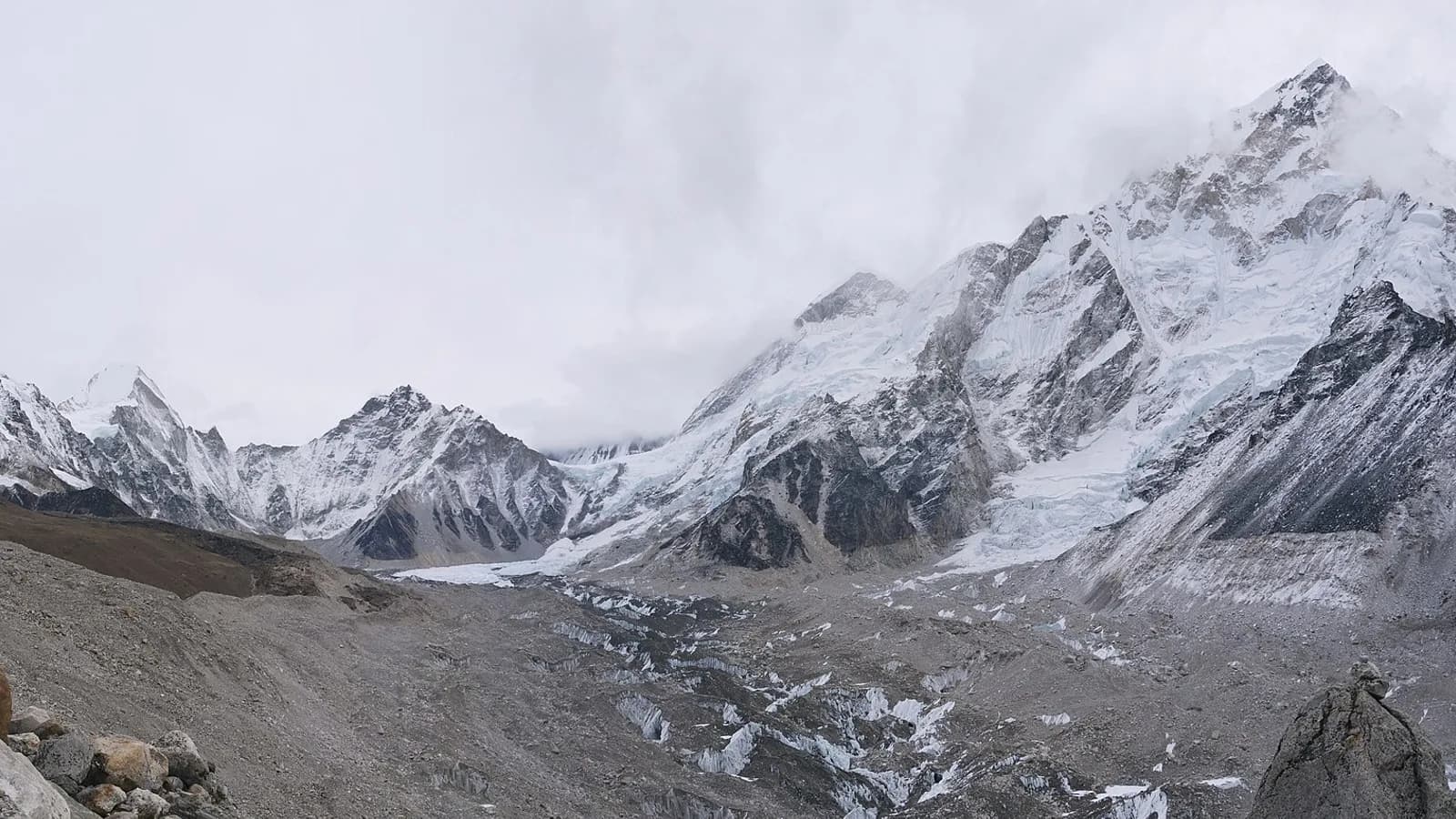
If you have started reading about Nepal trekking, you have probably seen the letters EBC everywhere — in trip names, packing lists, and forum threads — often without anyone stopping to explain them. This short guide decodes the EBC trek jargon: what EBC actually stands for, how it differs from climbing Everest, and the handful of numbers (height, days, season, permits) that make the rest of the planning make sense.
For the full day-by-day plan, costs, and preparation, this post points you to our complete Everest Base Camp trek guide. Think of what follows as the orientation page you read first.
Key takeaways
- EBC means Everest Base Camp — a trekking destination at the foot of Mount Everest, not a climb of the mountain itself.
- The EBC trek is the round-trip walk to reach it: about 12–14 days from Lukla, roughly 130 km there and back.
- Base Camp sits at ~5,364 m; trekkers usually also climb Kala Patthar (~5,545 m) for the classic Everest view.
- There is no technical climbing — the real challenge is altitude, handled by a slow ascent and acclimatization days.
- You need two permits (national park + Khumbu municipality); the trip hinges on the weather-dependent Lukla flight.
What "EBC" actually means
EBC stands for Everest Base Camp. It is the cluster of campsites on the Khumbu Glacier, at the foot of Mount Everest, that mountaineering expeditions use as their staging area during the climbing season. The rest of the year there is no permanent settlement there — it is glacial moraine, ice, and stone.
When travellers say they are doing "the EBC trek," they almost always mean the walk to Base Camp and back as a trekking holiday, not a summit attempt. You reach the site, take your photos at the famous marker, and turn around. In Nepali, Everest is called Sagarmatha, which is why you will also see the area labelled Sagarmatha National Park on maps and permits.
A few related acronyms you will bump into:
| Term | What it means | |---|---| | EBC | Everest Base Camp (Nepal / south side, ~5,364 m) | | Kala Patthar | The viewpoint hill above Gorak Shep (~5,545 m) | | AMS | Acute Mountain Sickness (altitude sickness) | | TIMS | Trekkers' Information Management System card | | Lukla | The mountain airstrip where the trek begins and ends |
EBC trek vs climbing Everest
This is the single most common mix-up, so it is worth being blunt about it. The EBC trek and an Everest expedition are completely different undertakings:
- The EBC trek is a high-altitude walk. There is no rope work, no crampons, and no climbing skill required — if you can walk five to seven hours a day on rough trails for two weeks, you have the fitness. It is something an ordinary, reasonably fit traveller can complete.
- Climbing Everest means going far above Base Camp through the Khumbu Icefall and into the death zone above 8,000 m. It is a multi-week mountaineering expedition that costs many times more, demands serious experience, and carries real risk to life.
In short: reaching EBC on foot is a bucket-list walk; standing on the summit of Everest is a serious climb. This guide — and the EBC trek generally — is about the walk.
The numbers that matter
Most of the planning confusion disappears once you have these figures in your head. They vary slightly by source and by the exact lodges you use, but the commonly cited ranges are:
| Metric | Figure | |---|---| | Typical duration (from Lukla) | ~12–14 days | | Door-to-door package | ~13–16 days | | Round-trip distance | ~130 km (~65 km each way) | | Everest Base Camp elevation | ~5,364 m (17,598 ft) | | Highest point (Kala Patthar) | ~5,545 m | | Lukla airstrip elevation | ~2,840–2,860 m | | Oxygen at Base Camp | roughly half of sea-level |
The elevation gain from Lukla to Kala Patthar is spread over more than a week. That gradual climb — not raw fitness — is what makes the trek achievable for non-mountaineers, and why rushed itineraries are risky.
Why Kala Patthar matters
Here is a detail that surprises many first-timers: Everest's summit is not clearly visible from Base Camp itself. The best mountain view comes from Kala Patthar, the dark hill above the last settlement, Gorak Shep. That is why almost every itinerary builds in a pre-dawn climb up Kala Patthar — the EBC photo and the best Everest photo come from two different spots.
Altitude is the real challenge
Because there is no technical climbing, the thing that actually decides who reaches Base Camp is altitude. At 5,364 m the air holds roughly half the oxygen of sea level, and Acute Mountain Sickness (AMS) is the biggest single risk on the route.
The good news is that altitude is manageable with a sensible plan:
- Ascend slowly. Most itineraries gain height gradually and include acclimatization days, typically at Namche Bazaar and Dingboche.
- Do not rush. Some operators sell 10-day itineraries, but compressing the schedule cuts acclimatization and raises the risk of AMS. The standard 12–14 days exists for a reason.
- Know the symptoms. Headache, nausea, dizziness, and poor sleep are warning signs; the safest response to worsening symptoms is to descend.
For a deeper look at the terrain, daily walking hours, and fitness, see our Everest Base Camp trek difficulty guide, and read up on altitude sickness on Nepal treks before you go.
Permits and the Lukla flight
Two pieces of logistics underpin every EBC trip.
Permits
You need two permits for the Everest region:
- The Sagarmatha National Park entry permit, to enter the protected area around Everest.
- The Khumbu Pasang Lhamu Rural Municipality entry permit, the local entry fee collected for the Khumbu.
A TIMS card is generally not required in the Everest region, unlike some other Nepal treks. Permit fees are set in Nepali rupees and change from time to time, so treat any figure you read as a starting point and confirm the current fee in Kathmandu, Monjo, or Lukla. Recent guidance describes the combined government permit cost as roughly USD 75–100 per trekker (as of 2026), but verify before you pay. Our Everest Base Camp permits 2026 post covers the paperwork in detail.
The Lukla flight
The EBC trek classically starts and ends with a short flight into Lukla, a small mountain airstrip carved into a hillside. Flights run in the morning only, because cloud and crosswinds build through the day, and delays and cancellations are common — they are part of the trek, not a rare exception.
The practical takeaways: never book a tight onward connection after your trek, and keep a spare buffer day in Kathmandu at the end. If the airstrip's reputation worries you, our is Lukla airport dangerous post puts it in context, and you can read about the surrounding Sagarmatha National Park too.
When to go
Two seasons dominate the EBC calendar:
- Spring (March–May): stable weather, warming temperatures, and the busy Everest climbing season is in full swing higher up.
- Autumn (September–November): clear skies and crisp views; October is famous for the most reliable, stable conditions.
The June–August monsoon brings cloud, rain, and the highest rate of Lukla flight disruption, so it is the window most trekkers avoid. Winter is doable but cold, with some lodges closed at altitude. For a fuller breakdown, see best time for the Everest Base Camp trek.
A quick orientation, then the full plan
If you remember nothing else: EBC = Everest Base Camp, the trek is a long walk rather than a climb, the destination sits near 5,364 m, and the whole trip turns on altitude and the Lukla flight. With those four ideas in place, the rest of the planning — the day-by-day route, costs, kit, and fitness — becomes far easier to follow.
When you are ready for that detail, start with the complete Everest Base Camp trek guide, then work through the trek itinerary and the packing list.
Sources
- How to Obtain Everest Base Camp Trek Permits and Fees in 2026 — Himalayan Recreation
- Nepal trekking permits and fees (2026) — Follow Alice
- Everest Base Camp Trek Difficulty — Discovery World Trekking
- Altitude Sickness on the Everest Base Camp Trek — EBC Trek Guide
- Everest base camps — Wikipedia
- How High Is Everest Base Camp? Complete EBC Trek Guide 2026 — Nepal Tibet Trekking
- Everest Base Camp Trek Distance — Nepal Hiking Team
Frequently asked questions
- What does EBC stand for?
- EBC is shorthand for Everest Base Camp, the trekking destination at the foot of Mount Everest in Nepal's Khumbu region. The 'EBC trek' is the walk to reach it and back.
- How high is EBC?
- Everest Base Camp sits at about 5,364 m (17,598 ft) on the Nepal side. Most trekkers also climb the nearby Kala Patthar viewpoint at roughly 5,545 m for the best view of Everest itself.
- How long is the EBC trek?
- The classic route is usually 12 to 14 trekking days from Lukla and back, around 130 km round trip. Door to door from Kathmandu, most packages run 13 to 16 days once buffer days for the Lukla flight are added.
- Is EBC the same as climbing Everest?
- No. The EBC trek is a high-altitude walk with no rope work or technical climbing. Climbing to Everest's summit is a separate, far more expensive and dangerous mountaineering expedition.
- What permits do you need for the EBC trek?
- Two: the Sagarmatha National Park entry permit and the Khumbu Pasang Lhamu Rural Municipality entry permit. A TIMS card is generally not required in the Everest region. Always confirm current fees before you go.
- When is the best time to do the EBC trek?
- Spring from March to May and autumn from September to November are the prime windows. October is famous for the clearest, most stable skies. Avoid the June to August monsoon when cloud and flight delays peak.
- Is the EBC trek dangerous?
- There is no technical climbing, so the main risk is altitude sickness, which a slow ascent and rest days manage well. The Lukla flight is weather-dependent and prone to delays, so always keep a buffer day.
Related posts
Everest Base Camp Trek: A Complete 2026 Guide
Plan the Everest Base Camp trek with this 2026 guide to routes, permits, seasons, altitude, costs, fitness, and the Lukla flight — all in plain English.
Read postIs Everest Base Camp Worth It? An Honest Look
Is Everest Base Camp worth it? An honest, sourced look at the cost, difficulty, scenery and crowds to help you decide before you commit to the trek.
Read postABC Trek: A Plain-English Guide to Annapurna Base Camp
The ABC trek (Annapurna Base Camp) explained — the route, how many days it takes, difficulty, the best seasons, and what daily trail life is really like.
Read post