Skydiving Everest: The Himalayan Jump Explained
Skydiving Everest is a tandem or solo jump from a helicopter near the world's highest peak, landing at Syangboche. Altitudes, season, cost and safety.
It is the rarest jump on Earth: exit a helicopter at around 21,000 feet beside the Himalaya and parachute toward one of the highest landing zones in the world.
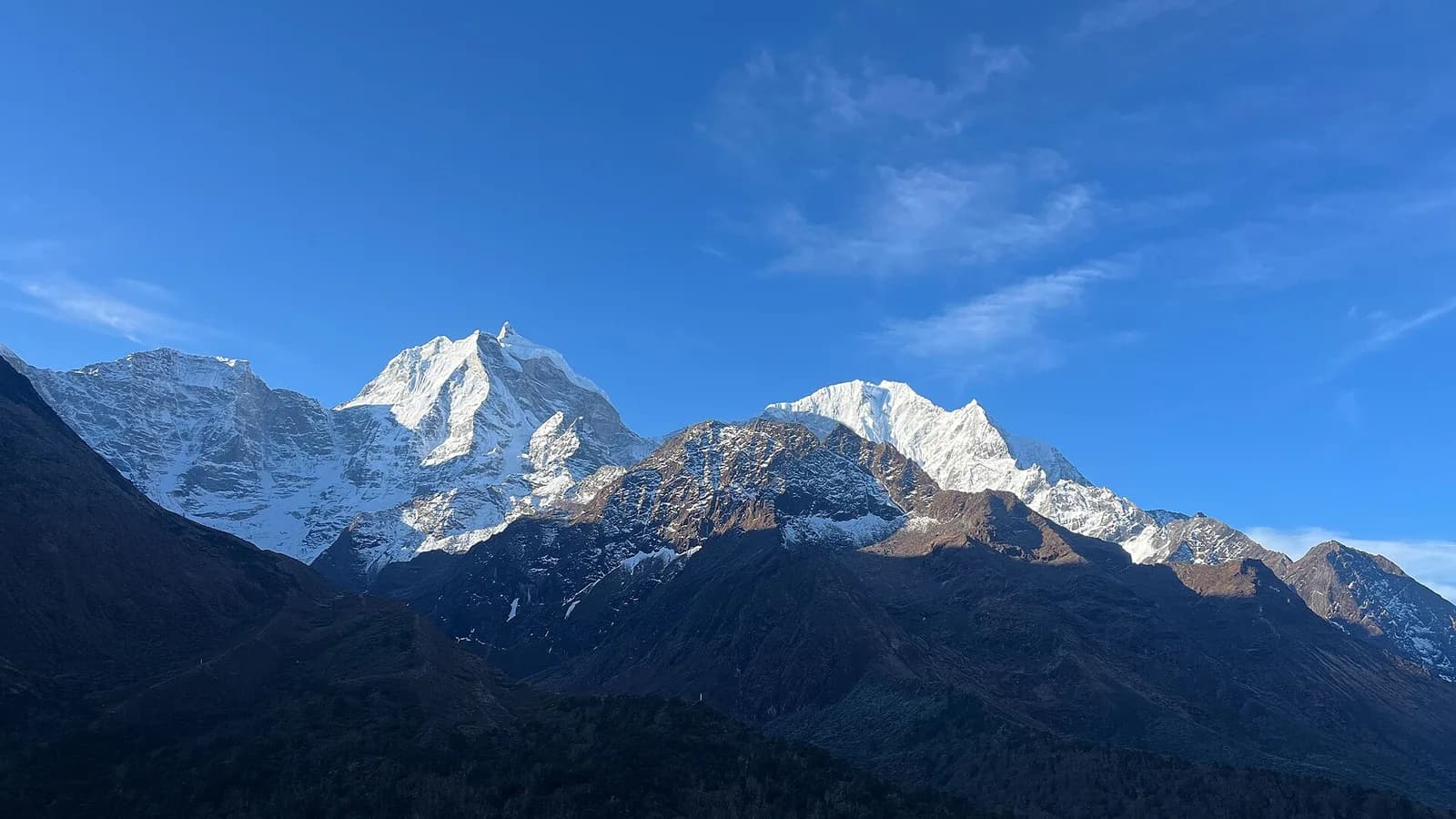
Skydiving Everest is about as rare and extreme as adventure travel gets. It is not a jump you book on a whim at a local airfield; it is a tightly scheduled Himalayan expedition in which you leap from a helicopter hovering near the world's highest mountain and parachute down to one of the highest landing zones on the planet. For most travellers it sits firmly in the bucket-list category, but it helps to understand exactly what it involves, where it happens, how the altitude changes everything, and what separates the headline marketing from the verifiable facts.
This guide explains the Everest skydive in plain terms: the altitudes, the landing zones, the season, the history, the safety set-up and the more affordable alternative. Prices and operating details change, so treat figures here as a guide, stamped with the date, and confirm directly with operators before you book. Sources are linked at the end.
Key takeaways
- Skydiving Everest is an organised high-altitude expedition in Nepal's Khumbu region, not a routine drop-zone jump; you exit an AS350 B3 helicopter rather than a plane.
- Operators describe an exit altitude of roughly 21,000–23,000 feet, far above a standard ~10,000–15,000 ft tandem, with parachutes opened high (Everest Skydive cites 16,000–18,000 ft).
- The main landing zone is Syangboche (~12,340–12,402 ft) above Namche Bazaar — among the highest drop zones in the world; some editions also used Ama Dablam Base Camp (~15,000 ft).
- It runs only in a narrow annual window, historically autumn (October–November) with occasional spring (May) editions, chosen for calmer, clearer weather.
- The first Everest Skydive event was in 2008; Holly Budge is documented as the first woman to skydive Everest, and that event logged several other firsts.
- It is a premium-priced expedition with no fixed public price from most operators; the Pokhara skydive is the cheaper, more accessible alternative in Nepal.
What "skydiving Everest" actually means
The phrase conjures an image of leaping off the summit, but that is not what happens. Skydiving Everest means a parachute jump staged in the Everest region — the Khumbu — with the world's highest peak as the backdrop, not the exit point. The defining feature is the helicopter exit: rather than climbing for altitude in a fixed-wing aircraft, jumpers ride an AS350 B3 helicopter to height and step out into thin Himalayan air. The AS350 B3 is the same workhorse type used across high-altitude rescue and charter flying in Nepal, prized for its performance where the air is dangerously thin.
From there, the canopy carries you down to a landing zone on the valley floor of the Khumbu, with the giants of the range — Everest, Lhotse, Ama Dablam and their neighbours — filling the view. It is the combination of extreme altitude, helicopter exit, big-mountain scenery and a very high landing elevation that makes this jump genuinely different from a tandem skydive anywhere else, and why outlets such as CNN and Forbes have repeatedly listed it among the world's elite adventures.
The altitudes: exit, opening and landing
Altitude is the whole story here, and it works on three levels.
| Stage | Typical figure (per operators) | For comparison | | --- | --- | --- | | Helicopter exit | ~21,000–23,000 ft | Standard tandem ~10,000–15,000 ft | | Main parachute opening | 16,000–18,000 ft (Everest Skydive) | Higher than many ordinary jumps even begin | | Landing zone (Syangboche) | ~12,340–12,402 ft | Higher than most mountain drop zones worldwide |
A few points are worth drawing out. First, the exit altitude is roughly double a typical sea-level tandem, which is why the experience is so often described as the "Everest of skydiving." Second, the opening altitude is unusually high: the operator Everest Skydive states main canopies are opened between 16,000 and 18,000 feet above sea level, partly because the landing zone itself is so high that there is far less vertical distance below you than at a normal drop zone. Third, those landing zones — Syangboche at around 12,340–12,402 feet, and the occasionally used spot near Ama Dablam Base Camp at about 15,000 feet — rank among the highest in the world.
Why thin air matters
At these elevations the air is much less dense, so parachutes are larger than usual to generate enough lift, and the canopy flies faster across the ground on approach. Operators use large main parachutes (Everest Skydive references mains of roughly 300–400 sq ft) plus a reserve, and pair every first-timer with an experienced instructor for exactly this reason. The thin air is also why the jump is staged with mountain pilots, supplemental-oxygen logistics for the aircraft phase, and a medical team on the ground — the same altitude that makes the view spectacular is the altitude that makes the operation serious. If you are heading to the Khumbu at all, our altitude sickness guide for Nepal is essential background.
When it happens and how to plan
This is not an on-demand activity. The Everest skydive runs as a scheduled annual expedition within a narrow weather window — historically in autumn, around October and November, with some editions held in spring (May). Operators select these periods for their historically calmer, clearer skies, which are non-negotiable for safe high-altitude helicopter flying and for the mountain visibility that is the entire point of the jump.
Two practical consequences follow. First, dates are fixed and places are limited, so organisers commonly advise booking many months in advance rather than turning up and hoping. Second, like everything in the high Himalaya, the schedule is weather-dependent: jumps can be delayed or shuffled across the available days if conditions close in, so build slack into your itinerary. The same seasonal logic that governs trekking applies here; for the broader picture see our guide to the best season to trek in Nepal.
The expedition, not just the jump
Because of where it takes place, the Everest skydive is sold as a multi-day package, not a single afternoon. A typical programme bundles flights and transfers, time acclimatising in the Khumbu, the jump days themselves, and the return to Kathmandu, with optional add-ons such as an extension trek toward Everest Base Camp. That structure is part of why it is priced as a premium expedition rather than a one-off ticket.
A short history of the Everest skydive
The first Everest Skydive event took place in 2008, beginning with test jumps from about 16,000 feet in May and a full commercial event later that year that used exit altitudes documented at around 29,500 feet. That inaugural season produced a clutch of firsts. Holly Budge of the UK is widely documented as the first woman to skydive Everest, completing a solo jump from high altitude in the region; she has since become known for her mountaineering and conservation work, and describes the skydive on her own website as a formative adventure.
The same pioneering event recorded other milestones, including the first tandem jump staged in front of Everest, and solo and tandem firsts by participants from several countries. In the years since, the expedition has been run repeatedly during its seasonal windows, with operators stating that several hundred jumpers have taken part over the life of the programme. The result is that what began as a record-chasing stunt has matured into a recurring, if still extremely exclusive, organised adventure.
Safety and who can do it
No one should pretend this is low-risk: it is an inherently extreme activity at altitude. What makes it manageable is that the established operators run it as a carefully managed expedition rather than an improvised thrill. That typically means experienced tandem instructors, specialist high-altitude mountain pilots, large canopies plus a reserve parachute, oxygen provision for the aircraft phase, and medical support on the ground.
Tandem versus solo
- Tandem: No previous skydiving experience is required. You are securely harnessed to a qualified instructor who manages the freefall, the parachute and the landing; you receive a briefing and basic training beforehand. This is how the vast majority of visitors do the jump.
- Solo: Reserved for appropriately licensed and experienced skydivers, because handling a high-altitude canopy over mountainous terrain is genuinely demanding. Requirements are strict, so confirm them directly with the organiser well ahead of time.
Insurance and honesty
Two non-negotiables. First, be completely honest on the medical screening — the limits exist to keep you safe at altitude. Second, check your travel insurance carefully: most standard policies exclude skydiving outright, and high-altitude skydiving in a remote region is even less likely to be covered as standard. You will want a policy that explicitly covers the activity and, given the location, emergency helicopter evacuation. Our guides to trekking insurance and helicopter evacuation in Nepal and helicopter evacuation insurance explain what to look for.
What it costs
This is a premium expedition, and most operators do not publish a fixed public price, instead asking interested jumpers to enquire directly for a current quote. Independent guides have described the complete Everest skydive package as a substantial sum in US dollars — running from a high four-figure to a five-figure amount — precisely because it bundles helicopter time, complex logistics, accommodation, meals and support over several days in one of the most challenging flying environments on Earth.
The honest answer is that there is no single reliable headline price, and any number you see online should be treated as indicative only. Always confirm the exact, up-to-date cost and exactly what is included — flights, transfers, accommodation, the jump itself, photos and video — at the time of booking (as of June 2026). For context on the wider cost of high-mountain helicopter activities, our Everest helicopter tour guide is a useful reference point.
The cheaper alternative: skydiving over Pokhara
If the Everest skydive is beyond your budget or experience level, Nepal offers a more accessible option: a tandem skydive over the Pokhara valley. It is generally cheaper and easier to arrange than the Everest expedition, trading extreme Himalayan altitude and remoteness for lake-and-mountain views at a much lower elevation, with the Annapurna range on the horizon. Like the Everest jump, the Pokhara skydive has typically run only within a limited seasonal window, so it still needs planning ahead.
For travellers chasing a Himalayan adrenaline hit without the Everest price tag, Pokhara is the usual starting point — and it sits alongside the area's other signature thrills. See our guides to paragliding in Pokhara for the gentler aerial option, and bungee jumping in Nepal for the country's big jumps. And if you would rather keep both feet near the ground while still getting the mountain views, the Everest mountain flight and the classic Everest Base Camp trek remain the most popular ways to get close to the world's highest peak.
Sources
- Everest Skydive — official site
- Everest Skydive — skydive details
- Everest Skydive — 2008 event and firsts
- Seven Summit Treks — skydiving in Nepal (Everest & Pokhara)
- Holly Budge — first woman to skydive Everest
- Skydiving Over Everest: A Comprehensive Guide — What The Nepal
- Skydiving in Nepal: the ultimate guide — Mountain Tiger Nepal
Frequently asked questions
- What is skydiving Everest?
- It is a specialised high-altitude skydive run as an organised expedition in the Everest region of Nepal, not a routine drop-zone jump. Instead of climbing in a fixed-wing aircraft, jumpers exit an AS350 B3 helicopter hovering at high altitude near the Himalaya and parachute down to land at Syangboche, above Namche Bazaar. Both tandem jumps with an instructor and solo jumps for licensed skydivers have been offered. It is marketed as one of the most extreme adventure experiences in the world rather than a casual activity.
- How high is the Everest skydive?
- Operators describe an exit altitude of roughly 21,000 to 23,000 feet from the helicopter, with the exact height depending on weather and conditions on the day. That is far higher than a standard tandem skydive, which is usually around 10,000 to 15,000 feet. Because of the altitude, the main parachute is opened high as well; the operator Everest Skydive states opening altitudes of between 16,000 and 18,000 feet above sea level, which is itself higher than many ordinary jumps even begin.
- Where do you land when skydiving Everest?
- The main landing zone is Syangboche, listed by operators at around 12,340 to 12,402 feet, on the ridge above Namche Bazaar in the Khumbu. Some editions have also used a landing zone near Ama Dablam Base Camp at about 15,000 feet. These are among the highest drop zones in the world, which is a large part of what makes the jump unusual. The thin air affects how the canopy flies and how the landing feels compared with sea-level skydiving.
- Do you need skydiving experience for the Everest jump?
- No previous experience is required for a tandem jump, where you are securely harnessed to a qualified instructor who controls the freefall, the parachute and the landing while you simply enjoy the ride. The operators provide a safety briefing and the necessary training beforehand. Solo jumps are a different matter and are reserved for appropriately licensed and experienced skydivers, since handling a high-altitude canopy over mountainous terrain is demanding. Always confirm current requirements directly with the organiser.
- When does the Everest skydive happen?
- It is not available year-round. The jump runs as a scheduled annual expedition, historically in autumn around October and November, with some editions held in spring in May. Operators choose these windows for their historically calmer, clearer weather, which is essential for safe high-altitude flying and good mountain visibility. Because the event happens only within a narrow seasonal window and places are limited, organisers commonly advise booking many months ahead.
- How much does it cost to skydive Everest?
- It is a premium expedition, and most operators do not publish a fixed public price, asking interested jumpers to enquire directly for a current quote. Independent guides have described the full Everest skydive package as a high four-figure to five-figure sum in US dollars because it bundles helicopter time, logistics, accommodation, meals and support over several days. Treat any figure you see as indicative only and always confirm the exact, up-to-date price and what it includes before committing (as of June 2026).
- Is skydiving Everest safe?
- It is an inherently extreme activity at altitude, but the established operators run it as a managed expedition with experienced tandem instructors, mountain pilots, large high-altitude canopies and a reserve parachute, plus medical support on the ground. Risk cannot be eliminated, so the sensible approach is to choose a reputable organiser, follow every instruction and be honest on the medical screening. Check that your travel insurance specifically covers high-altitude skydiving, as most standard policies exclude it.
- Is the Pokhara skydive the same as the Everest skydive?
- No. Nepal also offers a separate, more accessible skydive over the Pokhara valley, which is generally cheaper and easier to arrange than the Everest expedition, though it too usually runs only in a limited seasonal window. The Pokhara jump trades the extreme Himalayan altitude and remoteness for lake-and-mountain views at a lower elevation. If the Everest skydive is beyond your budget or experience level, Pokhara is the usual alternative for a tandem jump in Nepal.
Related posts
Can You See Everest From Kathmandu? Honest Answer
Can you see Everest from Kathmandu? Not from the city itself, but yes from nearby hills like Nagarkot and Chandragiri on a clear morning. Here's how.
Read postEverest Base Camp Tour: How to Choose in 2026
An Everest Base Camp tour can mean a two-week trek, a luxury trip or a half-day helicopter flight. How to pick the right style and what it costs.
Read postEverest Helicopter Tour: Cost, Landing & 2026 Guide
Everest helicopter tour from Kathmandu — cost, the Kala Patthar landing rules, Hotel Everest View breakfast, weight limits, best season and safety.
Read post