Is the Everest Base Camp Trek Safe? An Honest Guide
Is the Everest Base Camp trek safe? A clear look at altitude, the Lukla flight, insurance and the real risks — plus how trekkers stay safe.
The mountain doesn't kill careless people. Altitude does — and altitude is manageable.
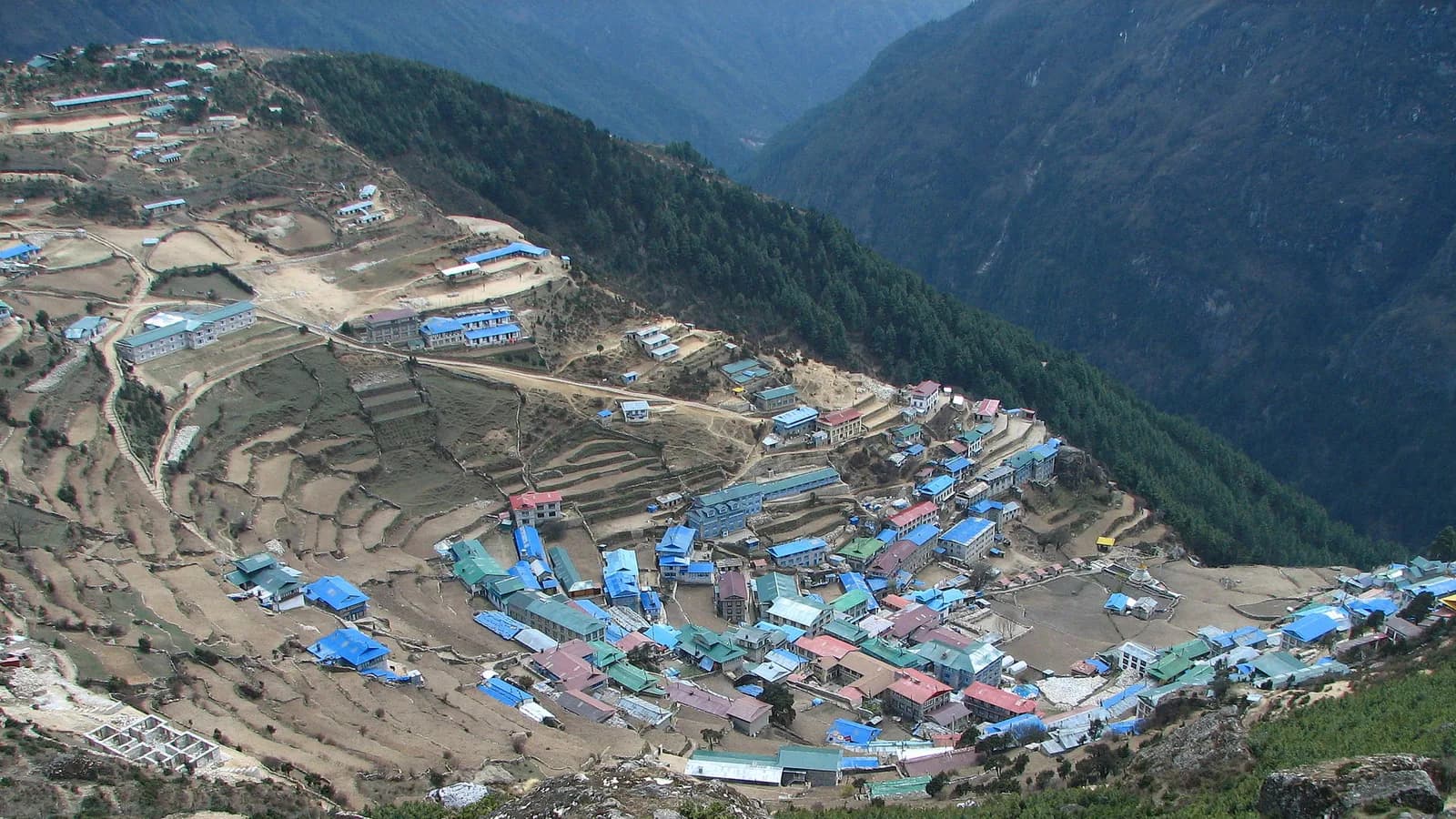
If you are weighing a Himalayan adventure, the first real question is usually this: is the Everest Base Camp trek safe? The honest answer is that it is a well-trodden, achievable journey for fit, healthy people who plan carefully — and that the main risks are predictable and largely manageable. Tens of thousands of trekkers reach Everest Base Camp every season. The danger that does exist comes less from cliffs or wildlife and more from a quieter source: thin air. This guide walks through what actually threatens trekkers, what the numbers and official guidance say, and the specific habits that keep people safe on the way to 5,364 meters.
Key takeaways
- The Everest Base Camp trek is a strenuous high-altitude walk, not a technical climb — no ropes, ice axes or climbing skills are needed.
- Altitude is the dominant risk. The CDC notes altitude illness can approach a 30 percent prevalence at higher elevations on routes like EBC, even with normal acclimatization.
- Most altitude sickness is mild and treatable by resting, hydrating and — critically — not climbing higher until you feel better.
- The Lukla flight has a fearsome reputation but a disciplined safety system; weather delays are common and worth budgeting buffer days for.
- The US State Department lists Nepal at Level 2 — Exercise Increased Caution (issued 31 March 2026) and strongly recommends travel and evacuation insurance.
- A sensible itinerary, proper insurance and a guide who watches for symptoms turn most of the risk into something you can plan around.
What kind of trek is this, really?
Everest Base Camp sits at roughly 5,364 meters (17,598 feet). Reaching it means a round trip of about 130 kilometers on foot over roughly 12 to 14 days, including acclimatization days. There is no climbing in the mountaineering sense — you are walking on trails, crossing suspension bridges, and gaining altitude gradually through Sherpa villages and pine and rhododendron forest.
That framing matters because it sets expectations correctly. The trek does not demand technical skill or prior Himalayan experience. What it demands is steady cardiovascular fitness, patience with a slow ascent profile, and the discipline to listen to your body. For a fuller picture of the route and daily stages, see our Everest Base Camp trek itinerary and the broader Everest Base Camp trek guide.
Altitude: the real risk, explained
If you remember one thing from this article, make it this. The single biggest hazard on the EBC trek is altitude illness, and it does not care about your fitness, your age or how many marathons you have run. The air at base camp holds roughly half the oxygen of sea level, and your body needs time to adapt.
The three forms of altitude illness
Health authorities describe a spectrum, and it helps to know the vocabulary:
| Condition | What it is | Typical signs | | --- | --- | --- | | AMS (Acute Mountain Sickness) | The common, mild-to-moderate form | Headache, nausea, fatigue, poor sleep, loss of appetite | | HACE (High-Altitude Cerebral Edema) | Severe, end-stage AMS affecting the brain | Confusion, loss of coordination, irrational behavior | | HAPE (High-Altitude Pulmonary Edema) | Fluid in the lungs; can occur on its own | Breathlessness at rest, wet cough, extreme weakness |
AMS is common and usually self-limiting. HACE and HAPE are rare on the standard route but are genuine emergencies; both demand immediate descent. The CDC's Yellow Book is blunt that EBC-style itineraries "push the limits" of how fast many people can acclimatize, and that even on standard schedules the prevalence of altitude illness can approach 30 percent at higher elevations.
How trekkers keep altitude manageable
The good news is that the rules for staying safe are well established and simple to follow:
- Ascend slowly. Wilderness medicine guidance, echoed by the CDC, recommends not increasing your sleeping altitude by more than about 500 meters per night once above 3,000 meters, and adding an extra acclimatization night for roughly every 1,000 meters of sleeping-altitude gain.
- Build in rest days. Standard EBC itineraries include acclimatization days at Namche Bazaar (about 3,440 m) and Dingboche (about 4,410 m). Do not skip them to save time.
- Hydrate and skip the alcohol, especially in the first days at altitude.
- Recognize the early signs and never climb higher with worsening symptoms — descent is the most reliable cure.
- Talk to your doctor before you go about preventive medication such as acetazolamide; it is widely used but is a medical decision, not a trail one.
Our dedicated altitude sickness in Nepal trekking guide goes deeper on symptoms, prevention and what descent actually looks like in practice.
The Lukla flight: scary reputation, disciplined reality
Most EBC treks begin with a short flight from Kathmandu (or Ramechhap in peak season) to Tenzing-Hillary Airport at Lukla, perched at about 2,860 meters. Lukla is famous for a short runway — roughly 527 meters — that ends at a steep drop, with a pronounced uphill gradient so aircraft land going up and take off going down.
It looks alarming, and the reputation is not nothing. But the system around it is strict. Operators use specialized short-takeoff-and-landing aircraft built for mountain strips, and pilots must clear demanding experience requirements before they are allowed to fly the route. Flights are scheduled for early morning, when winds are calmest and visibility is best.
The practical risk for most trekkers is not a crash — it is disruption. Cloud, fog and wind routinely delay or cancel Lukla flights, sometimes for a day or more. The safety-minded response is to:
- Trek in the stable seasons (spring and autumn) when flights are most reliable.
- Build buffer days into your trip, especially before an international departure.
- Consider a helicopter alternative if flights are grounded — though that adds cost and has its own weather limits.
For more on getting around the country generally, our overview of domestic flights in Nepal is a useful companion.
What the official guidance says
It is worth grounding the question in primary sources rather than rumor.
The US State Department currently places Nepal at Level 2 — Exercise Increased Caution (issued 31 March 2026). On trekking specifically, it warns that "everyone, regardless of age, experience, or fitness level, should exercise caution when trekking at high altitudes," notes that popular routes cross passes as high as 18,000 feet, and states plainly that without acclimatization, AMS "can be deadly." It strongly recommends travel and evacuation insurance, and advises using only evacuation agencies registered with the Trekking Agencies' Association of Nepal (TAAN).
The CDC frames altitude as the central medical concern for Everest-region trekkers, recommends a measured ascent profile, and encourages travelers on high-risk itineraries to discuss preventive medication and emergency drugs with a clinician before departure.
Neither source describes the EBC trek as off-limits or reckless. Both describe a serious undertaking that rewards preparation — which is exactly the right mental model.
How safe is it, by the numbers?
Hard, single-source statistics for trekking (as opposed to mountaineering above base camp) are limited, so treat figures qualitatively. What is well supported:
- A large majority of trekkers who attempt the route reach base camp, and the overwhelming majority finish without a serious medical incident.
- Mild AMS is common; one figure cited from a study in Wilderness and Environmental Medicine puts AMS symptoms at around 40 percent of trekkers on the route, with most cases mild.
- Serious outcomes are uncommon and are concentrated among trekkers who ascend too fast, ignore symptoms, or have underlying conditions.
The takeaway is not a precise probability but a pattern: the people who get into trouble are usually those who rushed, pushed through warning signs, or skipped insurance. The people who are slow, humble about altitude and well-prepared overwhelmingly come home with a great story.
Other risks worth a sentence
Altitude and flights dominate, but a complete picture includes a few smaller items:
Stomach trouble and water
Contaminated water and food can cause diarrhea, which is miserable at altitude because it dehydrates you. Treat or filter your water and be sensible about food hygiene; our guide on whether the water is safe to drink in Nepal covers this.
Cold and weather
Temperatures drop well below freezing at the higher camps, and weather shifts quickly. Proper layering and a warm sleeping setup are safety gear, not luxuries — see our Nepal trekking packing list.
Trail hazards and fatigue
Uneven trails, the odd landslide-prone section, and yak traffic on narrow paths call for attention rather than alarm. Stay on the uphill side when yaks pass, and do not hike to the point of exhaustion.
General travel safety
Nepal is broadly welcoming to visitors, and the Khumbu is a low-crime area. For the wider context, our overview of whether Nepal is safe addresses crime, scams and solo travel.
Insurance and evacuation: do not skip this
This is the cheapest safety upgrade you can buy. A helicopter evacuation from the high Khumbu can run into tens of thousands of US dollars (as of June 2026), and as the State Department warns, payment is often expected before a medevac if you are uninsured. Make sure your policy:
- Explicitly covers trekking up to at least 5,600 meters.
- Includes helicopter rescue and medical evacuation, not just trip cancellation.
- Is documented with the policy number and emergency contact carried on the trail.
Be aware, too, of a known scam in which some operators push unnecessary helicopter "rescues" to bill insurers. A guide with no stake in your evacuation, and a clear-eyed descent-first mindset, are your best defenses. Our deep dive on Nepal trekking insurance and helicopter evacuation explains what to look for and the traps to avoid.
Guide or no guide?
From a pure safety standpoint, the case for a guide is simple: the person developing altitude sickness is often the last to notice. Subtle confusion or poor judgment is obvious to an experienced companion and invisible from the inside. A guide also manages logistics when a Lukla flight collapses and removes the pressure of navigating an emergency in an unfamiliar place.
There is also a legal dimension. Nepal requires foreign trekkers to use a licensed guide in national parks and protected areas, though enforcement in the Khumbu has been uneven. We unpack the rule, the workarounds and the real-world enforcement in do I need a guide for the Everest Base Camp trek.
Final word
So, is the Everest Base Camp trek safe? For a healthy, reasonably fit person who respects the altitude, ascends slowly, carries proper insurance and travels in the right season, it is a manageable and deeply rewarding journey rather than a gamble. The risks are real but knowable, and nearly all of them respond to the same boring, effective discipline: go slow, stay hydrated, listen to your body, and never climb higher when something feels wrong. Prepare like that, and the mountain gives you one of the great walks on Earth.
Sources
Frequently asked questions
- Is the Everest Base Camp trek safe for beginners?
- Yes, for fit beginners who respect the schedule. It is a long high-altitude walk, not a technical climb, but altitude is the great equalizer — fitness does not protect you, so a slow itinerary with built-in rest days matters more than experience.
- What is the most dangerous part of the EBC trek?
- Altitude is the leading risk by a wide margin. The Lukla flight gets the headlines, but acute mountain sickness — and rarely its severe forms, HACE and HAPE — causes most serious incidents and evacuations on the route.
- How likely am I to get altitude sickness on the way to base camp?
- Mild acute mountain sickness is common on the EBC route; the CDC notes the prevalence of altitude illness can approach 30 percent at higher elevations even on standard schedules. Most cases are mild and resolve with rest, hydration and not climbing higher.
- Is the flight to Lukla dangerous?
- Lukla has a short sloped runway and unpredictable mountain weather, so delays and cancellations are common. Operators use specialized aircraft and require highly experienced pilots, and flights are typically scheduled for the calmer early-morning hours.
- Do I need travel insurance for the Everest Base Camp trek?
- Yes. The US State Department strongly recommends travel and evacuation insurance for Nepal, and a helicopter rescue can cost tens of thousands of dollars — payment is often expected before a medevac if you have no coverage. Confirm your policy covers trekking to about 5,600 meters.
- What should I do if I start feeling sick at altitude?
- Stop ascending and tell your guide or companions. Rest, hydrate and avoid alcohol; if symptoms do not improve or get worse, descend. Worsening confusion, breathlessness at rest or a wet cough are emergencies that require immediate descent and help.
- When is the safest time to do the Everest Base Camp trek?
- Spring (March to May) and autumn (late September to November) offer the most stable weather and clearest skies, which also means more reliable Lukla flights. Winter is cold and snowy at altitude, and the summer monsoon brings cloud, rain and flight disruption.
- Is it safe to trek to Everest Base Camp alone?
- Nepal requires foreign trekkers to use a licensed guide in national parks, and from a safety view a guide or companion who can spot early altitude symptoms is a genuine advantage, because the affected person is often the last to notice.
Related posts
Everest Base Camp Trek Difficulty: How Hard Is It?
An honest look at Everest Base Camp trek difficulty — altitude, daily hours, the up-and-down trail, fitness needed, and why slow beats strong.
Read postEverest Three High Passes: Pass-Day Survival Guide
A field guide to the Everest Three High Passes — what Kongma La, Cho La and Renjo La pass days really demand, plus fitness, gear and turnaround calls.
Read postEverest vs Annapurna Difficulty: An Honest Compare
Everest vs Annapurna difficulty compared by altitude, days, terrain and risk — across base camps, passes and easy treks, so you pick the right trail.
Read post