Everest Base Camp Without Flying: The Overland Route
How to reach Everest Base Camp without flying — Jiri and Salleri jeep routes, the classic Hillary trail, extra days, altitude perks and real trade-offs.
Skip the Lukla airstrip and you trade two nervous flights for a week of green hills, old pioneer trails and lungs that are ready for thin air.
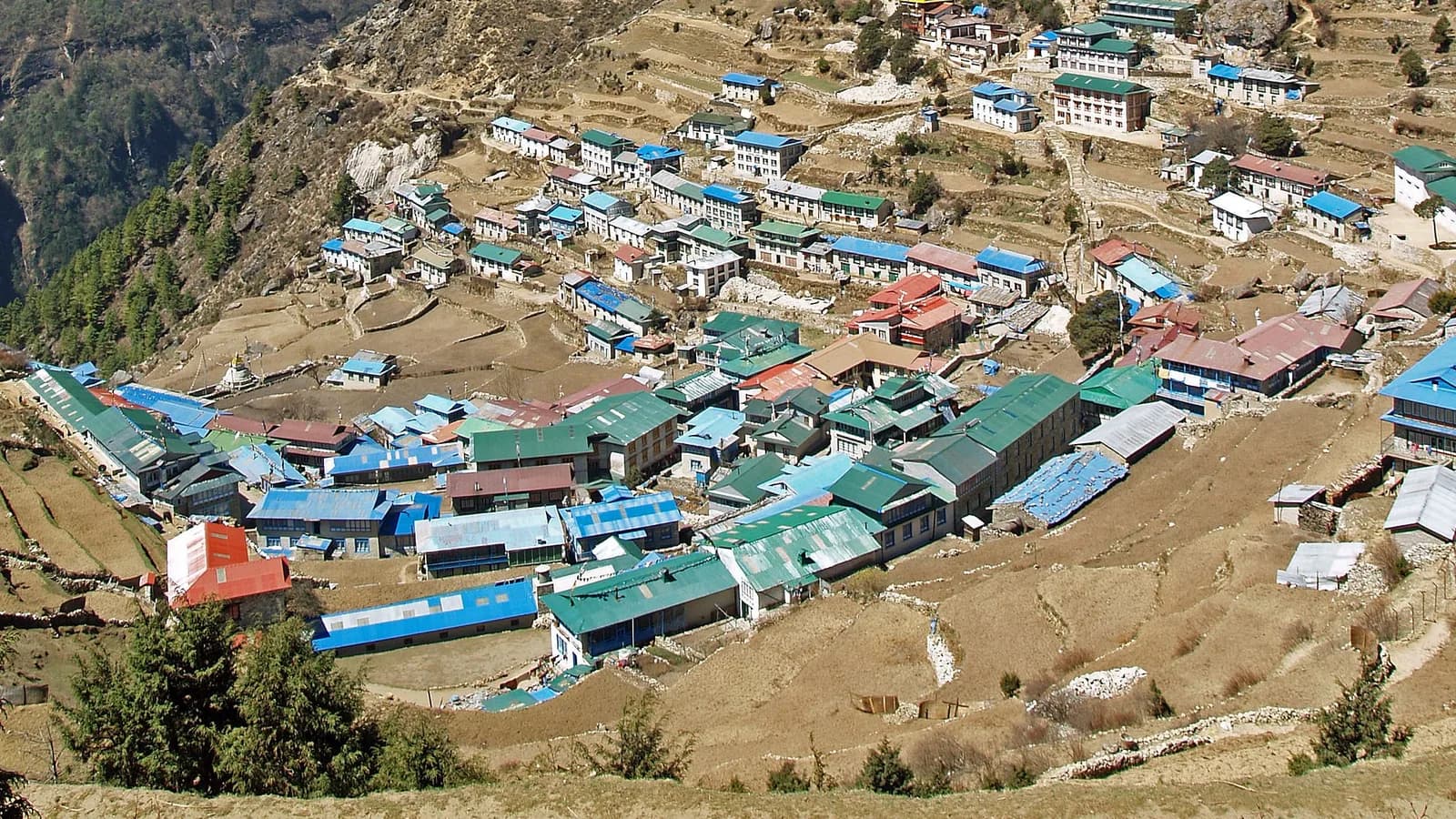
Most people picture the Everest Base Camp trek beginning with a white-knuckle flight onto a tiny mountain airstrip at Lukla. It does not have to. You can reach Base Camp without flying at all — by driving out of Kathmandu to a road head in the Solukhumbu foothills and walking in from there, either along the historic trail the 1953 pioneers used or via a shorter jeep approach that has opened up as roads have crept deeper into the hills.
This guide covers why trekkers choose the overland route, the main road-head options, how many days each adds, and the honest trade-offs in time, cost and comfort. Distances and prices come from established Nepali trekking operators and recent reporting (linked at the end); roads and fares change here from season to season, so treat every figure as a starting point and confirm before you commit.
Key takeaways
- You can skip the Lukla flight entirely by driving to Salleri, Phaplu or Surke and walking in to join the standard trail.
- The full Jiri route is the classic, scenic option but adds roughly a week, landing you around 18 to 24 days door to door.
- The jeep-to-Salleri or jeep-to-Surke approach is faster than Jiri and can get walking time close to the flying itinerary.
- Kathmandu to Salleri/Phaplu is about 270 km and 9 to 11 hours by jeep; pushing on to Surke is rougher and longer.
- Walking in from a lower road head means more days under 3,000 m, which generally helps acclimatization ahead of Namche.
- You save on flight cost and weather risk, but extra trail days mean the total budget often evens out.
Why skip the Lukla flight at all
The Lukla flight is iconic for a reason — and not always a good one. Tenzing-Hillary Airport sits in a narrow valley where weather changes fast, and flights only run in calm, clear morning windows. In the busy spring and autumn seasons a large share of flights are delayed, and during monsoon and winter cancellations are routine. A blown-out flight schedule can swallow a day or more at each end of your trip.
There are three core reasons trekkers choose to go overland instead:
- Reliability. A jeep leaves on roads, not weather windows. You avoid the scenario of sitting in Kathmandu or Ramechhap for two days waiting for clouds to lift.
- Cost. A shared jeep seat to the Solukhumbu road heads costs a fraction of a Lukla flight. (More on the numbers below.)
- Acclimatization. Lukla sits at about 2,840 m, so flying in drops you straight into thinner air. Walking up from a road head around 2,300 to 2,500 m, with days in the foothills first, gives your body a gentler ramp.
If you would rather understand the flight itself before deciding, our Everest mountain flight guide explains how these short Himalayan hops work and why they are so weather-sensitive.
Option 1: The classic Jiri route
This is the original walk-in — the trail Edmund Hillary and Tenzing Norgay used on their 1953 expedition, back when there was no airstrip at all. You drive from Kathmandu to Jiri (or a little further to Bhandar/Shivalaya), then trek several days through the middle hills before joining the standard Everest trail near Lukla or Phakding.
What the Jiri walk-in is like
The foothill section is green and quiet — terraced fields, rhododendron forest, river crossings and small Sherpa and Rai villages, with almost none of the crowds you meet higher up. It is also genuinely undulating. You cross passes such as Lamjura La (~3,530 m) and Taksindu La before the trail funnels into the Dudh Koshi valley and meets the main route. Reported trekking distance for the Jiri-to-Base-Camp section is around 185 km / 115 miles, and most itineraries run 17 to 24 days depending on pace and rest days.
Who it suits
The Jiri route rewards people with time, decent stamina and an appetite for traditional trail over convenience. The big practical bonus is acclimatization: by the time you reach Namche, you have already spent days walking up and down through the hills, so you tend to arrive better adjusted than someone who flew straight to Lukla that morning.
Option 2: Jeep to Salleri or Phaplu
As roads have pushed further into Solukhumbu, a faster overland option has appeared. You take the BP Highway from Kathmandu to Salleri — the district headquarters of Solukhumbu — or nearby Phaplu, then start walking from there. This cuts out the longest foothill days of the Jiri route while still avoiding the flight.
The drive
The road to Salleri/Phaplu is roughly 270 km and largely blacktopped. Operators quote around 9 to 11 hours for the jeep, leaving Kathmandu in the early morning. Phaplu is effectively the gateway to the Everest region, with a small airport a few kilometres from Salleri.
The walk
From Salleri/Phaplu you trek down toward the Dudh Koshi through villages such as Ringmu, Nunthala, Kharikhola and Bupsa, where you join the old Jiri trail, and continue past Surke to Phakding to merge with the classic Lukla route. The whole trip typically runs 14 to 18 days. You still get several walking days at lower elevation before Namche, so the acclimatization benefit largely survives — with fewer total days than the full Jiri trek.
Option 3: Jeep almost to Lukla (Surke)
The most aggressive overland shortcut is to drive nearly all the way to Lukla. The road now reaches Surke (also spelled Surkhe), a village roughly 45 minutes to an hour's walk below Lukla. From Surke you simply walk up to the main trail — no plane, and only a short climb to rejoin the standard route at or near Lukla.
The catch: a long, rough drive
The trade-off is the drive itself. Going all the way from Kathmandu to Surke can take anywhere from 12 to 18 hours total, and the stretch beyond Salleri is off-road and slow. Most people split it across two days, overnighting around Salleri or Thamdanda. Shared jeeps to Surke or Salleri generally leave Kathmandu very early, between roughly 4 and 6 a.m.
This option saves the most walking while still skipping the flight, but it is the least comfortable on wheels. If your main goal is simply to avoid the airstrip and keep the trek length close to a normal itinerary, this is the one to weigh up.
Comparing the routes
The table below summarises the overland options against the standard flying trek. Times are approximate and drawn from operator itineraries; your exact days depend on pace, rest days and road conditions.
| Approach | Road head | Drive from Kathmandu | Typical trip length | Best for | |---|---|---|---|---| | Classic Jiri route | Jiri / Shivalaya | ~7–9 hr | ~18–24 days | History, scenery, strongest acclimatization | | Jeep to Salleri/Phaplu | Salleri / Phaplu | ~9–11 hr | ~14–18 days | Skipping the flight without the full Jiri detour | | Jeep to Surke | Surke (below Lukla) | ~12–18 hr (often 2 days) | Close to standard | Minimal extra walking, no flight | | Standard flying trek | Lukla (by air) | 25–40 min flight | ~12–16 days | Speed, if flights cooperate |
Costs and trade-offs
The transport maths is straightforward: a shared jeep seat to the Solukhumbu road heads costs a fraction of a Lukla flight as of 2025, and a private jeep (split between a group) is still usually cheaper per head than flying. So the journey itself saves money.
The catch is everything around it. Every extra day on the trail adds accommodation, meals, and guide and porter wages, so the longer Jiri route can erase much of the flight saving. In practice you are buying reliability and a gentler altitude profile, not necessarily a smaller bottom line. For a fuller breakdown of trail spending, see our Everest Base Camp trek cost guide, and stamp any figure you are quoted with the rupee amount and the month it applies to — prices drift.
A few honest downsides to weigh:
- More time off work. The full Jiri route needs roughly a week more than flying.
- Long, bumpy drives. The off-road sections beyond Salleri are tiring and dusty.
- Seasonality. Roads can be slower or blocked in monsoon; confirm conditions before booking.
A sensible hybrid: walk in, fly out
You do not have to be a purist. A popular compromise is to go overland in and fly out of Lukla — you get the acclimatization and reliability benefits on the way up, when they matter most, and save days on the way down by accepting a single flight. It is a neat middle path if your schedule cannot absorb the full overland round trip but you still want the slower, gentler ascent.
Planning notes before you go
Whichever route you pick, the rest of the Everest trek logic is unchanged. You still need the standard Everest-region permits, you still want spring or autumn weather, and altitude is still the real test rather than fitness.
- Permits. The Everest region runs on the Sagarmatha National Park entry permit plus the Khumbu municipality permit. See our Everest Base Camp permits guide for current details, and verify fees on arrival.
- Altitude. Walking in helps, but it is not a free pass. Build in rest days and know the warning signs — our altitude sickness guide covers prevention and symptoms.
- Guides and porters. Rules and norms shift; our note on whether you need a guide for Everest Base Camp lays out the current picture.
- The big picture. For the full route, seasons and preparation, start with our complete Everest Base Camp trek guide.
Going overland will not make Everest Base Camp easy — nothing does. But for trekkers who value reliable schedules, quiet pioneer trails and a body that has had time to adjust, skipping the flight can turn the journey itself into one of the best parts of the trip.
Sources
- Adventure Himalayan Travels — Jiri to Everest Base Camp Trek itinerary
- Magical Nepal — Jiri to Everest Base Camp Trek itinerary and cost
- Life Himalaya Trekking — Transportation options from Kathmandu to Salleri (2025)
- Nepal Mother House Treks — Kathmandu to Lukla bus and jeep (Surke)
- Breeze Adventure — Phaplu to Everest Base Camp Trek
- Alpine Ramble — Lukla flights: cancellations, alternatives, time and costs
- Highland Expeditions — Lukla flight delays and backup plans
Frequently asked questions
- Can you trek to Everest Base Camp without flying to Lukla?
- Yes. You can drive from Kathmandu to a road head at Salleri, Phaplu or Surke, then walk in to join the classic trail. The two main options are the historic Jiri route and the shorter jeep-to-Salleri or jeep-to-Surke approaches. Each adds days but removes the Lukla flight entirely.
- Why would anyone skip the Lukla flight?
- Three reasons: cost, reliability and acclimatization. The Lukla airstrip is weather-dependent and delays are common, especially in monsoon and winter. Walking in from a lower road head also means extra days below 3,000 m, so many trekkers arrive at Namche far better acclimatized than those who fly straight in.
- How long does the overland Everest Base Camp trek take?
- Plan on roughly 18 to 24 days door to door from Kathmandu for the full Jiri route, versus about 12 to 16 days for the flying itinerary. The shorter jeep-to-Surke option can bring the walking time close to the flying itinerary while still avoiding the plane.
- How long is the drive from Kathmandu to the Everest road head?
- Kathmandu to Salleri or Phaplu is roughly 270 km and around 9 to 11 hours by jeep on the BP Highway. Continuing all the way to Surke, just below Lukla, can take 12 to 18 hours total and the final stretch from Salleri is rough off-road, so most people break it into two days.
- Is the Jiri to Everest Base Camp route harder than flying in?
- It is longer and involves more total up-and-down through the foothills, including passes like Lamjura La at about 3,530 m. It is not technically harder, but you need more time, more stamina and a bigger budget for extra trail days. The pay-off is gentler altitude gain and quiet, traditional trail.
- Does walking in really help with altitude sickness?
- It can help. Extra days spent walking at lower elevation before Namche give your body more time to adjust, which lowers the risk compared with flying straight to Lukla at 2,840 m. It is not a guarantee — you still need rest days, a slow pace and awareness of symptoms higher up.
- Can I drive out instead of flying out of Lukla too?
- Yes. You can reverse the overland route and walk back down to a road head, or arrange a shared jeep from Surke or Salleri. Some trekkers walk in overland and then fly out of Lukla to save days, accepting one flight rather than two.
- Is the overland route cheaper than flying?
- The transport itself is much cheaper — a shared jeep seat costs a fraction of a Lukla flight as of 2025. But extra trail days add accommodation, food, guide and porter costs, so the total can end up similar. You save on flights and weather risk, not necessarily on the grand total.
Related posts
How to Book the Everest Base Camp Trek (2026)
A practical guide to book the Everest Base Camp trek: when to reserve, choosing a registered agency, deposits, permits, and what a package includes.
Read postEBC Trek by Road: Reach Everest Base Camp Without Flying
How to do the EBC trek by road — driving Kathmandu to Salleri, Phaplu or Surke by jeep, then walking to Everest Base Camp. Routes, costs, days and seasons.
Read postEBC Trek: What 'EBC' Means & Quick Orientation
Confused by 'EBC trek'? Here is what EBC means, how high it is, what it costs, and the season, permit and Lukla basics for the Everest Base Camp trek.
Read post