Dhaka Topi: Nepal's National Cap Explained
What the Dhaka topi is, what it means, how the cloth is woven in Palpa and Terhathum, and where travellers can buy a real one in Nepal.
A small hat that carries a whole country on it — peak for the Himalaya, slope for the hills, flat brim for the plains.
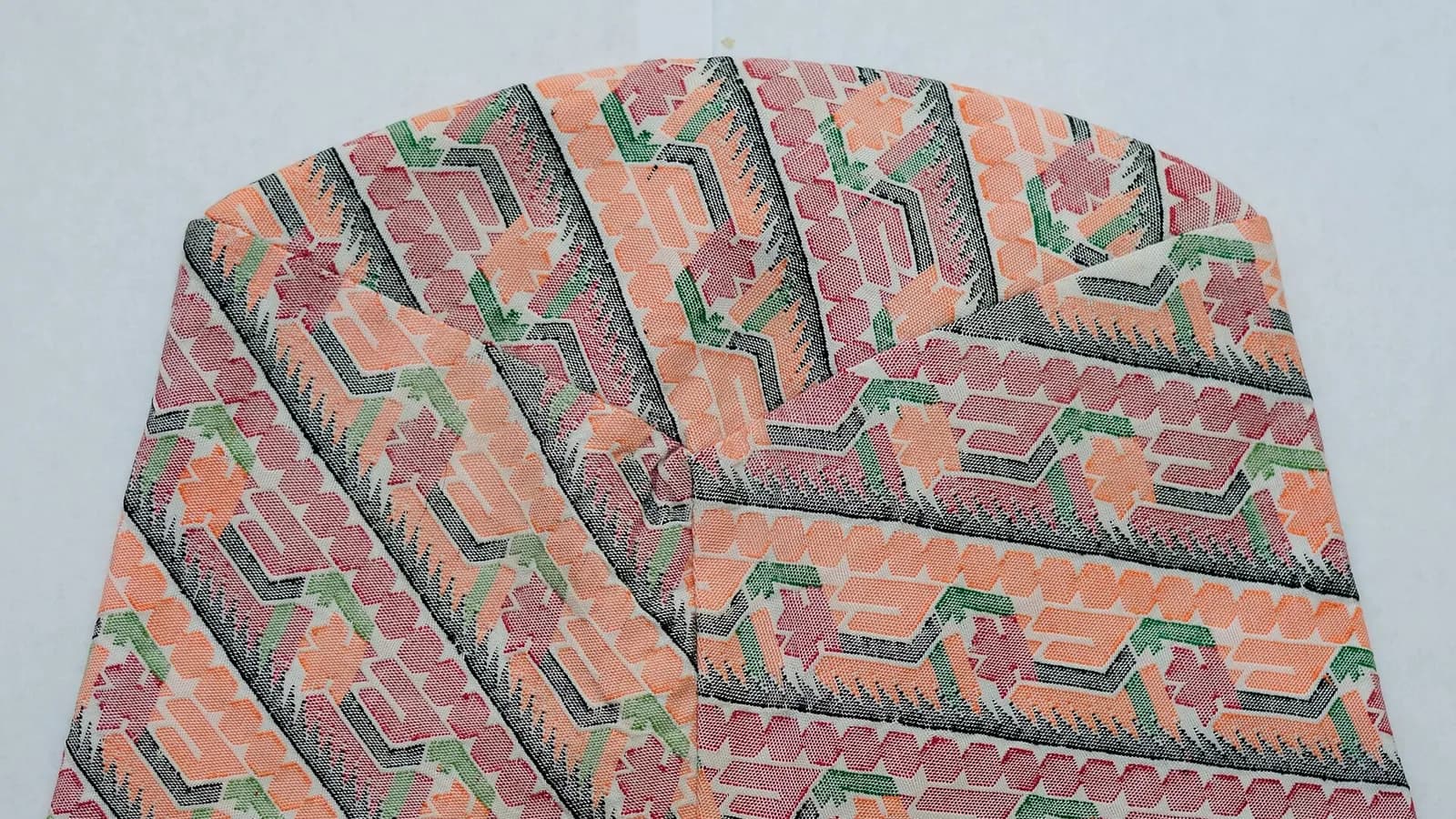
The Dhaka topi is the small, brightly patterned peaked cap you will see on Nepali men at weddings, festivals and official ceremonies — and increasingly on tourists who have taken one home as a souvenir. More than headgear, it is one of the most recognisable symbols of Nepali identity, woven from a hand-made cotton cloth called Dhaka. This guide explains what the cap is, where the famous fabric comes from, what its shape is said to mean, and how to choose and buy a genuine one while you are in Nepal.
Key takeaways
- The Dhaka topi is Nepal's national cap, made from hand-woven Dhaka cloth known for its colourful geometric patterns.
- A widely repeated folk reading sees the cap as a map of Nepal — peak for the Himalaya, slope for the hills, flat brim for the Terai.
- The cloth is woven mainly in Palpa (west) and Terhathum and Dhankuta (east), largely by women on wooden hand looms.
- It became popular as national dress under King Mahendra (reigned 1955–1972) and is given as a gift during Dashain and Tihar.
- Genuine hand-woven Dhaka shows the pattern on both sides; flat, single-sided, very cheap caps are printed imitations.
- A youth campaign promotes a National Topi Day on 1 January to celebrate Nepali identity.
What the Dhaka topi is
A topi is simply a cap in Nepali, and the Dhaka topi takes its name from the cloth it is made of. That cloth — Dhaka — is a hand-spun cotton fabric woven with intricate, colourful inlay patterns, and it is among the most distinctive textiles in the country. The finished cap is stiff, lightweight and peaked, with the bold geometric design wrapping around the band.
For decades it has been treated as part of Nepal's national dress for men, usually worn with the daura-suruwal (the traditional tunic and trousers) and a coat. While the cap is most associated with men, the same Dhaka cloth has always been part of women's wardrobes too, woven into shawls and blouses.
Why the name "Dhaka"?
The origins are debated, and you will hear several stories. One links the name to Dhaka in present-day Bangladesh, the source of the fine cotton thread and weaving tradition that the Nepali version is said to echo, recalling the celebrated Dhakai muslin. Another popular account credits the spread of Dhaka weaving in Nepal to a craftsman who had worked in a Jamdani textile factory in the 1950s. Whatever the precise route, the craft today is firmly Nepali, rooted in specific hill districts rather than imported.
What the cap symbolises
The most commonly told meaning treats the cap as a miniature of Nepal's geography. In this reading:
| Part of the cap | What it is said to represent | | --- | --- | | The raised peak | The high Himalaya | | The sloping middle | The hill (Pahad) region | | The lower flat brim | The Terai (Madhes) plains |
This is folklore rather than an official definition, but it captures why Nepalis feel the cap stands for the whole country. Beyond geography, the topi signals respect and occasion: putting one on is part of dressing properly for a wedding, a religious event or a formal gathering. To learn more about how Nepalis dress for such occasions, see our guides to Nepali culture and the Nepal dress code.
A short history
The cap rose to national prominence in the mid-twentieth century. It became strongly identified with the state during the reign of King Mahendra (1955–1972), a period when the cap was tied to national dress and expected in official photographs for documents. For much of the era that followed, government officials wore it as part of their formal attire, and it became a fixture of public life.
Today the picture is more mixed. Many Nepalis now reach for a cap mainly on special occasions — a cultural programme, a festival, a family ceremony — rather than every day. Even so, it remains a common sight on the streets of Kathmandu, and the cloth itself is enjoying a revival in modern fashion.
The cloth and the weavers
The story of the Dhaka topi is really the story of Dhaka cloth, and that means two regions in particular.
Palpa and Terhathum
Two districts dominate the craft. Palpa, a mid-hill district in western Nepal, gives its name to the well-known "Palpali Dhaka." Terhathum in the eastern hills, along with neighbouring Dhankuta, is the other great centre. Each area has its own patterns, palettes and traditions. Some of the finest cloth is woven by Limbu women of the eastern hills, with Rai women also involved; across the trade, the weavers are overwhelmingly women, and very few men weave.
How it is made
Outside the factory units of Kathmandu, weaving is overwhelmingly home-based in the hills. Genuine Dhaka is produced by hand on a locally made wooden loom, using cotton thread to build up geometrical designs in many colours. It is slow, skilled work: by one account a single weaver may produce only around two metres of cloth in a day. That labour is part of what gives the real fabric its value — and part of why it costs more than a printed copy.
Pressure on the craft
The tradition faces real challenges. Cheaper machine-made fabric imported from India and China imitates the patterns while lacking the hand-woven craftsmanship, and the work is labour-intensive and often poorly paid, prompting some younger people in the weaving districts to look elsewhere or migrate abroad for work. Buying genuine, hand-woven Dhaka is one small way visitors can support the weavers directly.
Dhaka beyond the cap
While the topi is the most famous use, the cloth has never been limited to it. Traditionally it appears in the cholo (a fitted blouse) and in shawls and scarves for women, including the Limbu mechhyamphi shawl. In the 2020s a revival pushed Dhaka well beyond these classics: designers now use it for saris, shirts, suits, wedding outfits, bags and home décor, and younger Nepalis pair Dhaka pieces with casual modern clothes. For travellers, that means a Dhaka souvenir does not have to be a hat — a patterned scarf or panel of cloth travels flat and light.
National Topi Day
The cap even has its own day. A youth-led campaign promotes a National Topi Day on 1 January, encouraging Nepalis to wear the Dhaka topi and other national dress as a statement of cultural pride. The idea grew out of Nepali student and youth groups in the diaspora in the early 2010s before taking root at home, where it is now marked with gatherings, parades and cultural programmes — organisers are careful to frame it as a celebration of Nepali identity rather than a protest against the Western New Year. It is a reminder of how a simple cap has become shorthand for belonging.
Buying a Dhaka topi as a traveller
If you want to bring one home, a little knowledge goes a long way.
Where to look
- Kathmandu: handicraft and fair-trade shops in Thamel and the old market areas such as Asan and Indra Chowk stock caps and Dhaka cloth. See our guide to Nepal souvenirs and what to buy in Nepal for how shopping and bargaining work.
- Near the source: in and around Palpa (Tansen) and Dhankuta/Terhathum, you will find the widest choice and the closest link to the weavers.
Telling real from printed
| Sign | Genuine hand-woven Dhaka | Printed imitation | | --- | --- | --- | | Pattern | Worked into the weave, visible on both sides | Printed on one side; back is plain | | Feel | Cotton, slightly textured | Often flat and synthetic | | Price | Higher, reflecting hand labour | Noticeably cheaper |
A note on price
Prices vary widely by size, fineness and where you buy, so this guide does not quote figures. As a rule, a genuine hand-woven cap costs more than a printed one, and buying from fair-trade shops or close to the weaving districts puts more of that money in the makers' hands. If you are pairing the cap with a few words of the language, our basic Nepali phrases will help you shop and say thank you.
Sources
- Dhaka topi — Wikipedia
- Dhaka fabric — Wikipedia
- Traditional Dhaka Weaving of Tehrathum and Palpa — Wonder Nepal
- Traditional Dhaka-Cloth Weaving — Asia InCH
- The revival of Nepali Dhaka — The Kathmandu Post
- January 1st marks both New Year and Rastriya Topi Diwas — Nepal on the Web
- Topi Diwas — Wikipedia
Frequently asked questions
- What is a Dhaka topi?
- It is the traditional Nepali peaked cap made from Dhaka, a hand-woven cotton cloth covered in colourful geometric patterns. It is widely seen as a symbol of Nepali identity and forms part of the national dress for men.
- Why is it called Dhaka topi?
- Topi simply means cap in Nepali. The Dhaka part refers to the cloth, which is linked by tradition to the fine cotton and thread once associated with Dhaka, now in Bangladesh. Today the weaving is a thoroughly Nepali craft centred on Palpa and Terhathum.
- What do the shapes on a Dhaka topi mean?
- A popular interpretation reads the cap as a map of Nepal: the raised peak stands for the high Himalaya, the sloping middle for the hills, and the lower flat brim for the Terai plains. It is a folk reading rather than an official rule, but it is widely repeated.
- Who wears the Dhaka topi and when?
- It is traditionally worn by Nepali men, especially with formal national dress at weddings, festivals such as Dashain and Tihar, official functions and cultural programmes. Everyday street wear is less common now than it was a few decades ago.
- Where can tourists buy a genuine Dhaka topi?
- Handicraft shops and fair-trade stores in Kathmandu's Thamel and the old market areas stock them, and you will find the widest choice and best prices near the weaving districts of Palpa and Dhankuta. Look for hand-woven Dhaka cloth rather than printed imitation fabric.
- How can I tell a real Dhaka cap from a fake?
- Genuine Dhaka is hand-woven, so the geometric pattern shows on both sides of the cloth and the colours are worked into the weave rather than printed on top. Machine-printed copies look flat, the back is plain, and they are noticeably cheaper.
- Is the Dhaka topi only a hat?
- No. The same Dhaka cloth is woven into shawls, blouses known as cholo, scarves, saris, shirts and accessories. A revival in the 2020s has brought it into modern apparel, including suits and wedding outfits for both men and women.
- Is there a special day for the Dhaka topi?
- Yes. A youth-led campaign promotes a National Topi Day on 1 January, encouraging people to wear the cap and other national dress to celebrate Nepali identity. It grew out of the Nepali diaspora and is now marked with parades and cultural events at home.
Related posts
Nepal Handicrafts: A Traveller's Guide to Crafts
A guide to Nepal handicrafts — pashmina, thangka, metalwork, pottery, Dhaka and felt — where they are made, how to spot the real thing, and where to buy.
Read postBest Things to Buy in Nepal: A Smart Shopper's Guide
The best things to buy in Nepal and how to buy them well — fair-trade artisans, value-for-luggage picks, a shopping-day plan, and tips that respect makers.
Read postDhaka Fabric: Nepal's Handwoven Heritage Cloth
A traveller's guide to Dhaka fabric, Nepal's colourful handwoven cotton textile - its origins, the dhaka topi, patterns, and how to buy the real thing.
Read post