Buy Thangka in Nepal: A Buyer's Workflow (2026)
Want to buy a thangka in Nepal? A practical buyer's guide to choosing a subject, commissioning a custom piece, approving it, and shipping it home.
Anyone can buy a thangka in five minutes. Buying one you will still love in five years takes a few good decisions — and most of them happen before you ever open your wallet.
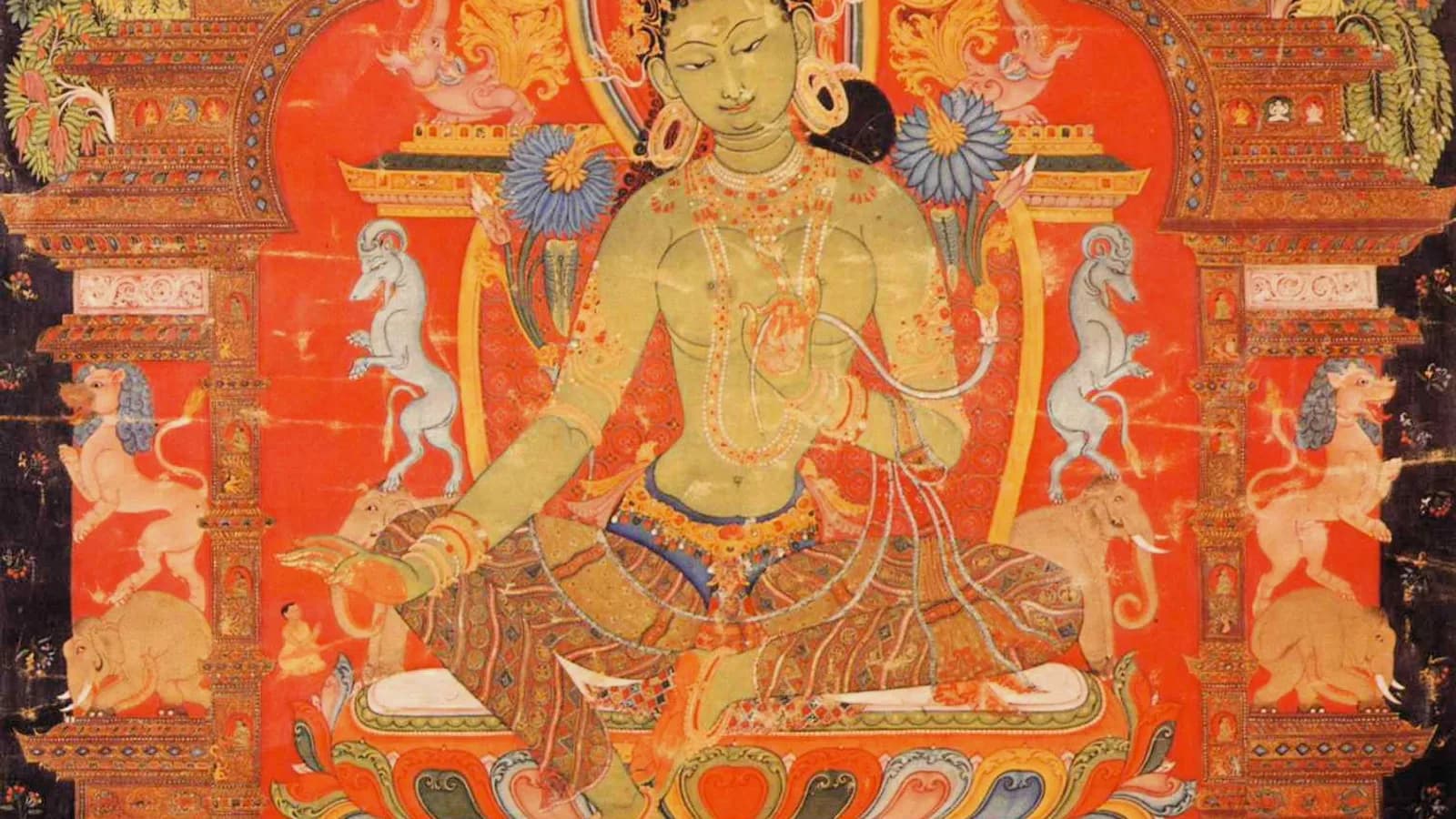
If you want to buy a thangka in Nepal, the painting itself is the easy part — they are everywhere, from Thamel stalls to serious Patan galleries. The hard part is making the few decisions that separate a souvenir you will treasure from one you will quietly regret. This guide is a practical buyer's workflow: how to pick a subject before you walk in, how to commission a custom piece, how to approve it from afar, and how to get it home in one piece.
This is a companion to our full thangka painting buyer's guide, which covers spotting a hand-painted piece from a print, fair prices, and the antique export rule in depth. Here we focus on the process of buying — the order of decisions, not just the warning signs.
Key takeaways
- Choose the subject first. Knowing whether you want a single deity, a mandala, or a Wheel of Life narrows everything and protects you from a hard sell.
- Commissioning is a real option. You can have a thangka painted to order — your deity, your size, your materials — for a higher price and a wait of weeks to months.
- Insist on approval photos for any custom or shipped piece: a full image plus close-ups so you can sign off before it leaves the studio.
- Plan the shipping, keep your receipt, and remember that genuine antiques over ~100 years old legally cannot leave Nepal — buy modern.
- Match the haggle to the venue. Bargain in markets; pay the asking price more readily at a serious gallery for genuine, months-long work.
Decide what you actually want before you shop
The single best thing you can do is arrive with a subject in mind. Sellers are skilled at steering undecided buyers toward whatever suits them, and a thangka chosen that way rarely feels personal afterwards. Thangkas depict a wide range of subjects — individual deities, mandalas, teachers, and symbolic scenes from Buddhist cosmology — so a little orientation goes a long way.
Common subjects and what they mean
You do not need to be a Buddhist to choose a subject whose meaning you connect with. A few of the most popular buys:
| Subject | Associated with | Why buyers choose it | |---|---|---| | Green Tara | Swift compassion, protection, removing obstacles | One of the most loved figures; seen as an approachable, fast-acting protector | | Medicine Buddha | Healing and purification | Popular for those drawn to themes of recovery and well-being | | Mandala | A deity's enlightened qualities, mapped as a diagram | Geometric, meditative, and striking as wall art | | Wheel of Life | Buddhist cosmology and the cycle of existence | Dense, narrative, and rich in symbolism to read over time |
In Tibetan Buddhist practice these images are meditation supports: a practitioner focuses on the detail to internalise a deity's qualities. As a buyer, that is a useful lens even if you only ever hang the piece — pick the quality you would most like reflected back at you, whether that is calm, healing, or protection.
Single deity, mandala, or scene
Beyond the specific figure, decide on the type of composition. A single central deity in open space reads as serene and is easier to live with on a wall. A mandala is geometric and hypnotic. A Wheel of Life or a densely populated scene rewards close looking for years but can feel busy in a small room. Knowing your preference here means you can say "show me your Green Tara thangkas" instead of being shown the whole shop.
Ready-made or commissioned?
Once you know the subject, the next fork is whether to buy something already painted or to have one made for you.
Buying ready-made
Most travellers buy off the wall, and there is nothing wrong with that — galleries in Patan and around Boudhanath hold real, finished work. The advantages are obvious: you see exactly what you are getting, you can apply every authenticity test in person, and you can carry it home yourself. Patan is the traditional heart of thangka and paubha painting, and several studios let you watch artists at work, which is both a lovely hour and the surest authenticity check there is. To understand that craft world, our Patan (Lalitpur) guide is a good primer, and the Boudhanath visitor guide helps you build a gallery visit around the great stupa.
Commissioning a custom thangka
Serious buyers — and anyone wanting a specific deity, size, or level of detail — often commission instead. You discuss your preferences with the artist, who will also advise on the correct iconographic features so the deity is rendered properly, and agree the materials and price up front. The trade-offs:
- You get exactly what you want — your subject, dimensions, and the use of real gold and mineral pigment specified in advance.
- It costs more than a comparable ready-made piece, because it is bespoke labour.
- It takes time. Studio guidance suggests roughly one to two months for a small piece (around 15 by 20 inches), three to six months for a medium one, and eight to twelve months or longer for large or highly intricate work. Start the conversation early in your trip, or arrange it remotely well ahead.
Commissioning suits buyers who know their subject and care about quality more than instant gratification. If you fall in love with a workshop's style but not its current stock, ask whether they take commissions — many do.
How to approve a piece you can't collect in person
This is the step that most protects a remote or shipped purchase, and it is reassuringly standard practice among reputable studios.
Good artists photograph the finished thangka before it ships and send the images for your approval — commonly one full image plus a close-up of each of the four quarters, often a day or two before dispatch. That is your moment to check the things that matter:
- The faces. In genuine work each face is individually painted with fine strokes; this is where skill shows most.
- The gold. Look for warm, slightly textured highlights rather than a flat, uniform sheen.
- The colours and detail. Confirm they match the depth and subject you agreed.
If anything is off, raise it before the piece leaves the studio rather than after it lands on your wall. A seller confident in their work welcomes the check. Pair this with the in-shop tests in our thangka painting guide and you have covered both the in-person and the remote case.
Getting it home: shipping and the rules
A modern thangka is made to be rolled, so it travels well — but a little planning saves trouble.
Carry it or ship it
For a small or medium modern piece, carrying it home rolled (painted-side out, around a tube, to avoid cracking the paint) is simplest. For larger or higher-value work, most established galleries arrange international courier shipping; buyers commonly report delivery within roughly five to ten working days, and fragile art is packed for the journey. If you ship, get a tracking number and keep the seller's contact details.
Paperwork and the antique rule
This is the part casual buyers occasionally trip over. Fine art leaving Nepal can require documentation, and crucially, sacred images, paintings and manuscripts more than about 100 years old are national treasures that cannot legally be exported without clearance from the Department of Archaeology in Kathmandu. The practical buyer's response is simple:
- Buy modern. A new, well-made thangka has no export problem.
- Keep your receipt, and for any valuable piece ask the seller for a short written note confirming it is a modern reproduction — that single line of paper saves a great deal of bother.
- Be sceptical of "antique." New work is sometimes aged and sold as old; a piece described as a genuine antique is both legally fraught and frequently untrue.
Note too that customs in your home country may assess duty on the declared value, and deliveries can face short customs delays. Declare honestly and budget for the possibility. The classic "rare old thangka" routine is a known trap — our Nepal tourist scams guide walks through it among others.
Budgeting and bargaining
Price tracks four things: size, detail, real gold, and mineral pigments. A small, simple, modern thangka is an affordable keepsake; a large, gold-rich, fine piece is a serious purchase. Specialist galleries openly place genuine work in a wide band — roughly US$1,000 up to US$15,000 and beyond for fine collector pieces (as of 2025) — while student and workshop thangkas sit well below that. Because figures move with the market and the exchange rate, treat any number as calibration, not a fixed tariff. The one rule that always holds: a "hand-painted" thangka sold cheaply is a print.
Where the haggle fits
Match your approach to the venue:
- Tourist markets and Thamel: opening prices are inflated and bargaining is expected. Around some Boudhanath thangka schools, buyers report asking prices coming down substantially. A little Nepali helps — see our Nepali numbers and bargaining guide.
- Serious galleries: for a genuine, months-long original, hard haggling is less appropriate. You are paying for real labour and skill, and a fair gallery price reflects that.
A thangka also sits within Nepal's wider craft scene; if you are weighing other keepsakes too, our what to buy in Nepal guide maps the options.
A simple buyer's checklist
Run through this and you will rarely go wrong:
- Pick a subject you connect with before you shop.
- Decide ready-made or commission based on your timeline and how specific you are.
- Apply the authenticity tests in person, or insist on approval photos remotely.
- Agree price, materials and timing in writing for a commission.
- Sort shipping or carry, keep the receipt, and get a written note that it is modern.
- Declare honestly at home customs and store the piece out of sun and damp.
Do that, and you will carry home a genuine piece of living Himalayan tradition rather than a printout — one that means a little more every year. To go deeper on authenticity, prices, and the export rule, read our full thangka painting buyer's guide, and base yourself near the workshops with our where to stay in Kathmandu guide.
Sources
- How to Choose Authentic Nepal Thangka Paintings (2025) — Authentic Thangka
- Nepal Thangka Painting Prices, 2025 Market Guide — Authentic Thangka
- Frequently Asked Questions (commission, approval photos, shipping) — Traditional Art of Nepal
- How to Pack and Prepare Your Artwork for International Shipping from Nepal — Orient Relocations
- Green Tara Thangka: Meaning and Iconography — Enlightenment Thangka
- The Spiritual Significance of Thangka Tapestries — Boudha Stupa Thanka
- Custom formalities (antique export rule) — Nepal Tourism Board
Frequently asked questions
- What is the first decision when you want to buy a thangka?
- Decide on the subject before the shop. Knowing roughly whether you want a single deity like Green Tara or Medicine Buddha, a mandala, or a Wheel of Life scene narrows the choice fast and stops you being talked into whatever a seller wants to move that day.
- Can I commission a custom thangka in Nepal?
- Yes, and many serious buyers do. You agree the deity, size, materials and price with the artist, who will guide the iconography, and they paint it to order. Custom pieces cost more than ready-made ones and take longer, but you get exactly the subject and quality you asked for.
- How long does a commissioned thangka take?
- It depends on size and detail. Listings from Nepali studios suggest small pieces around 15 by 20 inches take roughly one to two months, medium ones three to six months, and large or very intricate works eight to twelve months or more. Plan a commission well before you leave.
- How do I approve a custom thangka I cannot collect in person?
- Reputable artists photograph the finished piece before shipping — commonly one full image plus close-ups of each quarter — and send them for your sign-off, often a day or two before dispatch. Use that moment to check the faces, gold work and colours match what you agreed.
- Can a shop ship a thangka home for me?
- Most established galleries arrange international courier shipping, and a rolled modern thangka travels well. Keep your receipt and any note confirming the piece is a modern reproduction, since fine art leaving Nepal can need paperwork and antiques over about 100 years old cannot be exported at all.
- How much should I budget to buy a thangka?
- It tracks size, detail, gold and pigment quality. Small simple modern pieces are affordable keepsakes, while specialist galleries quote roughly US$1,000 up to US$15,000 and beyond for fine collector work (as of 2025). Treat a very low 'hand-painted' price as a warning that it is a print.
- Should I haggle when buying a thangka?
- In tourist markets opening prices are inflated and bargaining is normal, and around some Boudhanath schools buyers report asking prices coming down substantially. At a serious gallery for a genuine months-long piece, hard haggling is less appropriate — you are paying for real labour and skill.
- Is it rude for a non-Buddhist to buy a thangka?
- No. Thangkas are made partly for sale and support whole communities of artists. Buying one thoughtfully and displaying it with some care is welcomed, and choosing a subject whose meaning you actually like makes the piece more personal rather than less respectful.
Related posts
Thangka Painting: Buying a Real One in Nepal (2026 Guide)
A buyer's guide to thangka painting in Nepal — how to tell a hand-painted thangka from a print, what to pay, and the 100-year antique export rule.
Read postAsan Bazaar Kathmandu: Old Town Market Guide
A visitor guide to Asan bazaar, Kathmandu's oldest market — its six-road square, Annapurna Temple, what to buy, when to go, and how to get there.
Read postBest Things to Buy in Nepal: A Smart Shopper's Guide
The best things to buy in Nepal and how to buy them well — fair-trade artisans, value-for-luggage picks, a shopping-day plan, and tips that respect makers.
Read post