Kathmandu Pollution: Causes and Traveller Tips
What causes Kathmandu pollution, from traffic and brick kilns to winter inversions and wildfires, plus practical tips to plan a healthy visit.
The smog is not an accident of bad luck — it is a bowl-shaped valley, a winter lid, and a city's worth of engines and kilns, all at once.
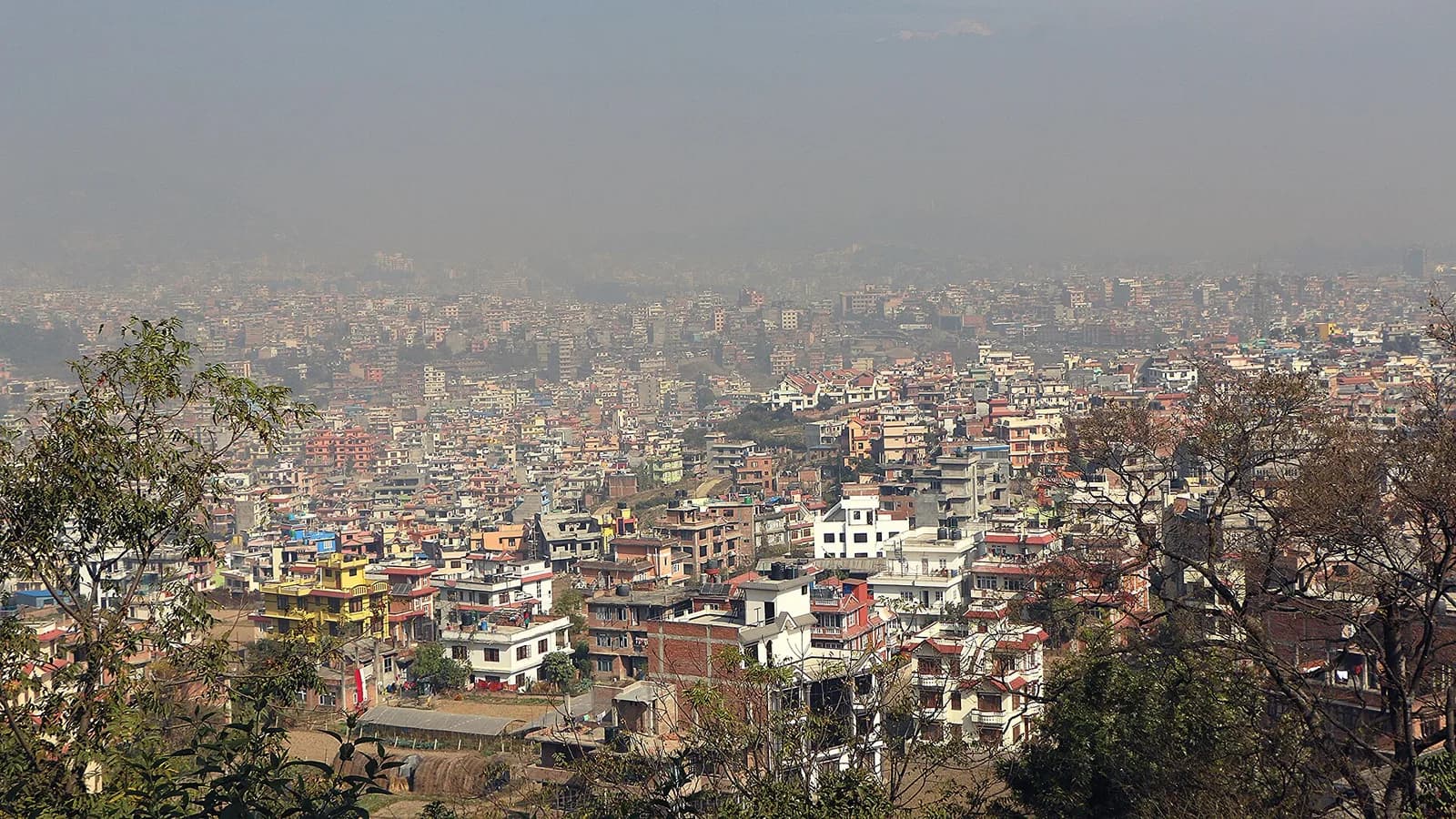
Anyone researching Kathmandu pollution quickly meets the alarming headlines: the city topping global "most polluted" lists, valleys full of smog, residents in masks through the winter. All of that is real — but the more useful question for a traveller is why the air gets that bad, because the causes explain exactly when the problem bites and how to plan around it. This guide breaks down what drives the pollution, from traffic and brick kilns to the valley's own geography, and turns that into practical advice for a healthy visit. For the season-by-season picture of how bad the air gets and how to check it day to day, pair this with our companion guide to Kathmandu air quality.
Key takeaways
- The main causes are vehicle exhaust (the largest source), brick kilns, road and construction dust, and seasonal open burning.
- The valley's bowl shape and winter temperature inversions trap pollution near the ground, so bad days are intense.
- Spring wildfires and transboundary haze from the Indo-Gangetic Plain push the dry-season peaks higher still.
- Pollution is strongly seasonal: worst in the dry months (late autumn–spring), cleanest in the monsoon (June–September).
- The air improves fast once you leave the valley for the hills, Pokhara or the Terai.
- Travellers can manage it with a mask, a daily air-quality check, and an itinerary that limits time in the bowl.
Why Kathmandu's geography makes it worse
Before the human sources, there is the land itself. Kathmandu sits in a bowl ringed by hills at around 1,400 metres, and that shape is half the story. On an open plain, exhaust and smoke disperse with the wind; inside a basin, whatever is emitted tends to stay there when the air is calm. The surrounding ridges limit natural ventilation, so the valley concentrates its own pollution in a way a flatter city never would.
This geography is why the very same emissions produce such heavy smog here. It also explains the single most important fact for a visitor: leave the bowl and the air usually clears quickly. Gain altitude on a trek, reach Pokhara, or drop into the Terai for a safari, and you generally leave the worst of the valley's haze behind.
The winter inversion: nature puts a lid on
Layered on the bowl is a seasonal weather effect that turns bad air into a crisis. In the cold months, temperature inversions form: a layer of warm air settles above the cooler air at the valley floor and acts like a lid, stopping the polluted air below from rising and mixing away. With light winter winds unable to flush the basin, vehicle exhaust, dust and kiln smoke accumulate near the ground for days at a time instead of dispersing.
This is why pollution readings spike on still, cold winter mornings and ease a little as the day warms and the air mixes. The inversion does not create the pollution — the city's engines and kilns do that — but it traps and concentrates it, which is why winter is reliably the hard season for Kathmandu's air.
The human sources
Within the bowl, several local sources do the actual polluting. Together they are what the inversion then traps.
Vehicles — the biggest single source
The largest contributor to Kathmandu's air pollution is vehicle exhaust. Rapid urban growth and limited public transport have driven a surge in private cars and motorbikes, and a significant share of the fleet is ageing and diesel-powered, emitting fine particulates, nitrogen oxides and other pollutants. Traffic is dense, slow and concentrated in the same congested valley that cannot ventilate itself — a combination that puts engine exhaust at the centre of the problem. For getting around with less exposure, our getting around Kathmandu guide covers the transport options.
Brick kilns
Ringing the valley fringe are brick kilns, which fire clay in large furnaces and have long been a major seasonal polluter, releasing particulates and gases like sulphur dioxide. Many operate through the dry winter and spring months — exactly when the inversion is trapping emissions — so their smoke adds directly to the worst-air season. Efforts to push kilns toward cleaner technology have made some progress, but they remain a notable source.
Road and construction dust
A fast-building city generates dust: unpaved or broken roads, near-constant construction and roadworks throw up coarse and fine particles that hang in the dry air. In a basin with little wind to clear it, this construction and road dust is a persistent background contributor, layered on top of the exhaust and smoke.
Seasonal open burning and waste fires
Open burning adds another seasonal load. Agricultural and forest fires, plus the burning of waste, release smoke that drifts into the valley, particularly in the pre-monsoon fire season from roughly February to May. In bad years this can be dramatic: the spring of 2025 saw a severe wildfire season across Nepal that drove valley readings to extreme highs.
The pollution that drifts in from outside
Not all of Kathmandu's smog is home-grown. The valley also receives transboundary haze drifting up from the vast Indo-Gangetic Plain to the south, where crop-residue burning, industry and traffic across a huge populated region generate pollution that crosses borders on the wind. Combined with Nepal's own spring wildfires, this incoming smoke is part of why the dry-season peaks climb so high — and why the problem is regional, not Kathmandu's alone. Our broader Nepal air pollution guide sets the valley in this country-wide and regional context.
When the causes line up — and when they don't
Put the pieces together and the calendar makes sense. The worst air comes in the dry season, from late autumn through spring, when the winter inversion traps local emissions and the spring fire season plus transboundary haze pile on top. The cleanest air comes in the monsoon (June–September), when frequent, heavy rain physically washes particulates out of the air and the inversion lifts; clean monsoon days can read many times lower than a smoggy winter morning.
There is one prized window worth knowing: October and the first half of November, just after the monsoon, when the air has been freshly rinsed but the dry-season smog has not yet built up. You get clean air and the sharpest Himalayan views of the year — which is also why this is Nepal's peak travel season. For the full timing argument, see best month for clean air in Nepal and the wider best time to visit Nepal.
Traveller tips: how to plan a healthy visit
Understanding the causes hands you a clear playbook. You have far more control than the headlines suggest.
- Time your trip if you can. A visit built around October–November gives the best combination of clean air and clear mountain views. The dry winter and spring months carry the highest pollution.
- Spend less time in the bowl. Because the smog is a valley phenomenon, front-load Kathmandu sightseeing into a couple of efficient days, then head for the hills, Pokhara, or a Terai safari, where the air is typically far better.
- Check a live reading each morning. Free indices like IQAir, AQI.in and the aqicn.org network show real-time air quality for Kathmandu; the US Embassy also runs reference-grade monitors. Glance at one daily to decide whether to mask up or shift an outdoor plan. Our Kathmandu air quality guide explains how to read the numbers.
- Carry a proper mask. On poor-air days, a well-fitting N95 or KN95 makes a real difference; a basic cloth or surgical mask does little against fine particulates. See pollution mask Kathmandu for what to pack.
- Adjust by time of day. In the dry season the air is usually worst in the cool, still morning and eases by afternoon, so push hard exertion later in the day.
- Choose your room wisely. An upper-floor room away from a main road, with windows you can close, makes a noticeable difference overnight; our where to stay in Kathmandu guide covers neighbourhoods.
- Mind sensitive travellers. If you have asthma, COPD or a heart condition, take the dry season seriously: bring your medication and a reliable mask, and weight your itinerary toward the cleaner hills and Pokhara.
A reassuring note on mountain views: in the hazy dry season the Himalaya are often invisible from the valley even on rain-free days, because dust and smog sit in the air. If big peaks from the valley rim matter to you, the post-monsoon window is the time to come — see our honest take in is Nagarkot sunrise worth it.
The bottom line
Kathmandu pollution is not a stroke of bad luck but the predictable result of several forces stacking up: heavy traffic and ageing diesels, brick kilns and construction dust, seasonal wildfires and transboundary haze — all trapped inside a bowl-shaped valley under a winter inversion that acts like a lid. Because those causes are seasonal and geographic, the problem is also avoidable in large part: come in the post-monsoon window, keep your valley time efficient, watch a daily reading, carry an N95, and spend most of your trip in the cleaner hills, Pokhara or the Terai. Do that, and the air becomes a manageable footnote rather than the story of your visit. For the day-to-day picture of how bad it gets and how to check it, continue to Kathmandu air quality, and for the national context, see Nepal air pollution.
Sources
- Kathmandu Air Quality Index (AQI) and Nepal Air Pollution — IQAir
- Nepal in the smog: unpacking the air pollution crisis across the country — Nepal News
- Air pollution spikes in Kathmandu Valley; experts call for coordinated action — The Kathmandu Post
- Raging wildfires drive pollution surge in Kathmandu — The Kathmandu Post
- Air Quality Monitor — U.S. Embassy in Nepal
Frequently asked questions
- What causes pollution in Kathmandu?
- The biggest source is vehicle exhaust from a growing fleet of cars, motorbikes and ageing diesel engines, followed by brick kilns, road and construction dust, and seasonal open burning. The valley's bowl shape and winter temperature inversions then trap all of it near the ground.
- Why is Kathmandu's air so bad in winter?
- In winter, cold still air settles in the valley and acts like a lid, a process called a temperature inversion. It traps vehicle exhaust, dust and kiln smoke close to the ground for days at a time, so pollution builds up instead of dispersing.
- Does Kathmandu pollution come from outside the city?
- Partly. Alongside local traffic, kilns and dust, smoke from forest and farm fires across Nepal and transboundary haze drifting up from the Indo-Gangetic Plain add to the load, especially in the pre-monsoon fire season from roughly February to May.
- When is Kathmandu pollution at its worst?
- The dry season from late autumn through spring is worst, combining winter inversions with the spring wildfire season. The monsoon from June to September is cleanest, because frequent rain washes particulates out of the air.
- How can travellers protect themselves from Kathmandu pollution?
- Check a live air quality reading each morning, carry a well-fitting N95 or KN95 mask for poor-air days, keep Kathmandu sightseeing efficient, and spend more of the trip in the hills, Pokhara or the Terai where the air is usually much cleaner.
- Is it safe to visit Kathmandu despite the pollution?
- For most healthy short-stay visitors, yes, with sensible precautions. The pollution is seasonal and concentrated in the valley, so a well-planned trip spends much of its time breathing far cleaner air. People with asthma or heart conditions should plan more carefully.
Related posts
Kathmandu Air Quality: A Visitor's Honest Guide
What Kathmandu air quality is really like for visitors: how bad it gets, the worst and best months, how to check a live AQI, and how to plan around it.
Read postNepal Air Pollution: Causes, Seasons and What It Means
A clear explainer on Nepal air pollution: the real causes, how bad it is by the numbers, the health stakes, and what it means for travellers.
Read postPollution Mask for Kathmandu: What to Wear and When
Choosing a pollution mask for Kathmandu: N95 vs KN95, fit and seal, valves, when you actually need one, and where to buy in the city.
Read post