Everest Sightseeing Flight: Plane Tour Compared (2026)
An Everest sightseeing flight by plane from Kathmandu — compare Buddha, Yeti and Shree, weigh plane vs helicopter, and book the clearest morning.
One clear morning, a turboprop banking east, and the world's highest mountains sliding past the glass — no boots required.
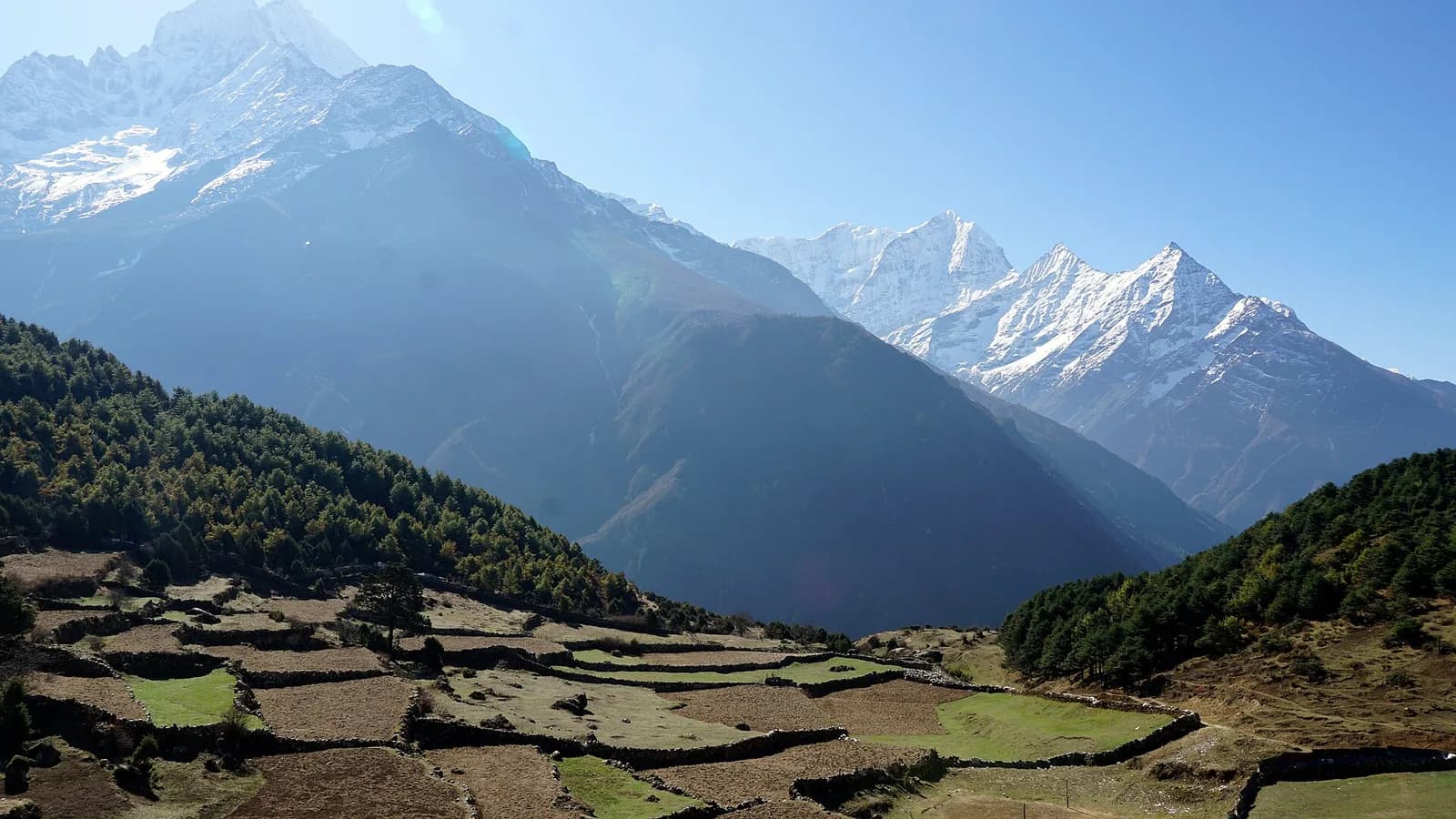
If you want to stand at eye level with the world's highest mountains but cannot spare two weeks for a trek, an Everest sightseeing flight is the answer. It is a roughly one-hour scenic flight by aeroplane that leaves Kathmandu at dawn, cruises east along the Himalaya past Everest and its neighbours, and turns back — every passenger at a window. This guide takes a practical, operator-by-operator angle: how Buddha Air, Yeti and Shree compare, when the plane beats the helicopter, and how to book the clearest possible morning. For the full Buddha Air walkthrough, see our companion guide to the Everest mountain flight.
Key takeaways
- An Everest sightseeing flight is a one-hour aeroplane tour from Kathmandu that shows the peaks from the air with no landing — the fastest way to see Everest.
- Buddha Air, Yeti Airlines and Shree Airlines all fly the route daily in season on ATR turboprops, each with a guaranteed window seat.
- Mid-2025 reseller fares ran roughly US $220–280 per person (as of June 2026); confirm the live price before booking.
- Departures cluster between about 6:00 and 7:30 AM because early light gives the clearest skies.
- The plane is cheaper and quicker; an Everest helicopter tour costs far more but lasts hours and can land at viewpoints.
- Autumn and spring are the best seasons — book the flight early in your stay to absorb a weather cancellation.
What an Everest sightseeing flight actually is
A mountain flight has a single purpose: to keep you alongside the Himalaya for as long as possible. The aircraft takes off from Tribhuvan International Airport, climbs, and flies east along the range so the peaks pass at roughly eye level. There is no stop and no landing — you fly out, the plane banks, and you come home, all within about an hour.
It is the quickest possible Everest encounter. A full Everest Base Camp trek takes the better part of two weeks; even the gentler Everest View trek needs the best part of a week. The sightseeing flight compresses that headline view into one comfortable morning, which is why it suits travellers who are short on time, unable to walk at altitude, or who simply want the aerial perspective in addition to trekking.
The three main operators compared
Three Nepali carriers dominate the Everest sightseeing flight: Buddha Air, Yeti Airlines and Shree Airlines. All fly daily in season, all use ATR-family turboprops, and all guarantee every passenger a window seat. The differences are at the margins — schedule flexibility, cabin feel, and how busy a given morning is.
| Operator | What it is known for | Notes | |---|---|---| | Buddha Air | The most established "Everest Experience"; a wider choice of departure slots | Sells the cabin half full so no middle seats; issues a personalised certificate | | Yeti Airlines | Long-running operator with a strong reputation and flexible rescheduling | Operates ATR 72s on the mountain route | | Shree Airlines | Modern aircraft, often fewer passengers and quieter on weekdays | A good pick if you prefer a less crowded cabin |
These distinctions come from operator and reseller descriptions and shift over time, so treat them as a starting point rather than gospel. In practice the route and the headline sights are nearly identical across the three; your choice often comes down to which carrier has a convenient departure on a clear morning and what your agency quotes. Whichever you pick, confirm the window-seat guarantee, the weather policy and the current fare directly before paying.
Plane vs helicopter: which Everest tour to choose
The two ways to see Everest from the sky are very different products. A sightseeing flight by plane is short, fixed-route and good value; a helicopter tour is longer, pricier and far more flexible, with the ability to land.
| Factor | Sightseeing flight (plane) | Helicopter tour | |---|---|---| | Duration | About 1 hour, no landings | Several hours, with landings | | Landings | None — aerial views only | Viewpoints such as Kala Patthar or the Everest View Hotel | | Cost | Lower; the budget-friendly option | Much higher | | Group size | Shared cabin, every seat a window | Small group or private | | Weather flexibility | Fixed schedule; scrubbed if skies are poor | A short clear window can be enough to fly |
Choose the plane if you are short on time or want the lowest-cost way to see Everest from the air. Choose the helicopter if you want a closer, land-and-explore experience and the budget to match. If the helicopter route tempts you, our guides to the Everest helicopter tour and the Everest Base Camp helicopter tour cover what those longer trips involve, including the landings the plane cannot offer.
What you actually see from the window
On a clear morning the flight is a roll-call of the planet's highest mountains — operators often describe more than twenty snow peaks lined up to the north. The route typically opens with Langtang Lirung, the giant closest to Kathmandu, then runs east past Shisha Pangma, Gauri Shankar and Cho Oyu towards Makalu, Lhotse and Mount Everest itself. The cabin crew usually point out the major summits as they appear.
| What to look for | Why it matters | |---|---| | Langtang Lirung | The first big peak, closest to Kathmandu | | Cho Oyu and Shisha Pangma | Among the world's 8,000-metre giants | | Makalu | The world's fifth-highest mountain, to the east | | Mount Everest and Lhotse | The headline — Earth's highest and fourth-highest peaks |
Exactly which summits are named to you varies with the carrier and the day's visibility, but Everest is always the star, and on a good day the sheer density of high peaks is hard to take in.
When to go: season and time of day
Two things decide whether you get a postcard or a wall of cloud: the season and the time of day.
Best seasons are autumn (roughly September to November) and spring (roughly March to May). After the monsoon clears in autumn the air is washed clean and the peaks are razor-sharp; spring is similarly stable. The summer monsoon (around June to August) is the worst window, with haze and cloud causing frequent delays and cancellations.
Time of day matters just as much. Early-morning departures — which is why carriers leave between roughly 6:00 and 7:30 AM — catch the mountains before the day's heat stirs up cloud. By late morning, build-up over the range often spoils the view, so the dawn slot is not an inconvenience; it is the whole strategy.
Our best time to visit Nepal guide goes deeper on the seasonal rhythm, and Nepal weather by month shows how clear each month tends to be.
What it costs and how to book
Pricing varies widely by operator, season and how you book. As a rough guide, resellers in mid-2025 quoted around US $220 to $280 per person (as of June 2026) for the standard one-hour flight, with separate, lower fares for Indian nationals. Rather than anchor on one number that may already be stale, confirm the live fare directly with the airline or a reputable Nepali travel agency before you commit. What stays consistent is the shape of it: the sightseeing flight is one of the pricier short experiences in Nepal, charged per person in US dollars — yet far cheaper than a helicopter tour or a full trek.
A few booking tips:
- Book early in your Kathmandu stay, not on your last morning, so a weather cancellation leaves spare days to try again.
- Ask about the weather policy up front — reputable operators reschedule or refund flights scrubbed for poor visibility.
- Compare carriers and departure slots; an earlier slot generally means clearer skies.
- Confirm the departure airport and time, and plan to arrive 45 to 60 minutes ahead for check-in and security.
If you are weighing this against other ways into the Everest region, our overview of domestic flights in Nepal explains how the country's short-haul network and its weather-dependent schedules work.
Practical tips for the flight itself
A few small things help you get the most from your hour in the air:
- Sit, then swap. Your window faces the mountains on one leg; the aircraft turns on the return so the other side gets its turn — move across to take photos.
- Mind reflections. Hold your phone or lens close to the glass to cut glare, and turn off the flash.
- Dress in layers. Dawn at Kathmandu airport can be cold; the cabin is comfortable once airborne.
- Manage expectations on clarity. Even in peak season a hazy morning can soften the view — it is the nature of weather-dependent flying.
- Keep the certificate. Most carriers hand one out; it is a fun, free souvenir of a special hour.
Who the sightseeing flight is for
The Everest sightseeing flight is ideal if you:
- Want to see Everest but cannot or do not want to trek.
- Are short on time in Nepal and cannot spare days for a hike.
- Have mobility or health limits that rule out high-altitude walking.
- Simply love mountain scenery and want the aerial angle on top of any trekking.
If you have a week or two and reasonable fitness, consider pairing the flight with the Everest View trek for a slower, ground-level encounter with the same peaks. Many travellers fly first for the overview, then trek for the immersion — the two complement each other well.
Getting to the airport
Because the flight leaves so early, sort your airport transfer the night before. The domestic terminal at Tribhuvan handles mountain flights, and from Thamel it is a short ride that can still crawl in early traffic. Our getting around Kathmandu guide covers ride-hailing apps and taxis so you are not negotiating a fare half-asleep at dawn.
For anyone who wants the Himalaya without the hardship, the Everest sightseeing flight delivers a remarkable amount in a single hour. Pick a clear-season morning, build in a spare day, compare the carriers, and let the world's highest mountains come to you.
Sources
- Buddha Air — Everest Experience: Mount Everest sightseeing flight
- Yeti Airlines — official site
- Mountain Flight Nepal — Shree vs Yeti vs Buddha Air comparison
- Mosaic Adventure — Mount Everest scenic flight from Kathmandu (1-hour tour)
- Adventure Master Trek — Everest helicopter tour vs mountain flight
- Nepal Vehicle Rental — Mount Everest sightseeing flight (Buddha, Yeti, Shree)
Frequently asked questions
- What is an Everest sightseeing flight?
- It is a short scenic flight by aeroplane from Kathmandu that flies east along the Himalaya so you can see Mount Everest and the neighbouring peaks from the air, then returns. There is no landing in the mountains, and the round trip takes roughly an hour. It is the quickest and usually the cheapest way to see Everest without trekking.
- Which airlines fly the Everest sightseeing flight?
- Buddha Air, Yeti Airlines and Shree Airlines all operate daily mountain flights from Kathmandu in season, typically on ATR turboprops. Each guarantees a window seat for every passenger. Buddha Air markets its version as the Everest Experience, but the route and the headline sights are broadly similar across the three carriers.
- How much does an Everest sightseeing flight cost?
- Prices vary by airline, season and how you book, and resellers in mid-2025 quoted roughly US 220 to 280 dollars per person (as of June 2026), with separate fares for Indian nationals. Always confirm the current price directly with the airline or a reputable Nepali agency, since these figures change. It is far cheaper than an Everest helicopter tour.
- Is the plane or the helicopter tour better for seeing Everest?
- The plane is shorter, cheaper and follows a fixed route at altitude, so every seat is a window seat but you do not land. A helicopter tour costs much more, lasts several hours and can land at viewpoints such as Kala Patthar or the Everest View Hotel. Pick the plane for speed and value, the helicopter for a closer, land-and-explore experience.
- What is the best time of day and year for the flight?
- Early morning is best because cloud and haze build over the range as the day warms, which is why most carriers depart between roughly 6 and 7:30 AM. Autumn (around September to November) and spring (around March to May) give the clearest skies. The summer monsoon brings frequent delays and cancellations.
- What mountains do you see on an Everest sightseeing flight?
- On a clear day you can see a long line of Himalayan giants, often described as more than twenty peaks. Operators point out summits such as Langtang Lirung, Shisha Pangma, Cho Oyu, Gauri Shankar, Makalu, Lhotse and Mount Everest itself. The exact peaks named depend on the carrier and the day, but Everest is always the star sight.
- What happens if my Everest sightseeing flight is cancelled for weather?
- Mountain flights only run in clear conditions, so weather delays and cancellations are common, especially in the monsoon. Airlines and agencies generally let you reschedule to another morning or offer a refund when a flight is scrubbed for visibility. Book early in your Kathmandu stay so a cancellation does not cost you the experience.
- Do you get a window seat and a certificate?
- Yes. All three main operators guarantee a window seat for every passenger, and the cabin is arranged so the mountains are clearly visible, with the aircraft turning so both sides get a view. Most carriers also hand each passenger a trip achievement or Everest Experience certificate at the end as a free souvenir.
Related posts
Everest Mountain Flight: Buddha Air Scenic Tour Guide
The Everest mountain flight by Buddha Air — a 1-hour scenic sightseeing flight from Kathmandu. Window-seat guarantee, best season, peaks seen, and tips.
Read postMountain Flight Cost in Nepal: Prices by Airline 2026
What does a mountain flight cost in Nepal? Foreigner vs Nepali fares, Buddha Air pricing, Kathmandu vs Pokhara, and how to book without overpaying.
Read postCan You See Everest From Kathmandu? Honest Answer
Can you see Everest from Kathmandu? Not from the city itself, but yes from nearby hills like Nagarkot and Chandragiri on a clear morning. Here's how.
Read post