Annapurna Permit Cost 2026: ACAP Fees Explained
The Annapurna permit cost in plain terms: ACAP fees for foreigners and SAARC nationals, where to buy it, what TIMS changed, and the guide rule.
One small card, a few thousand rupees, and the entire Annapurna massif opens up in front of you.
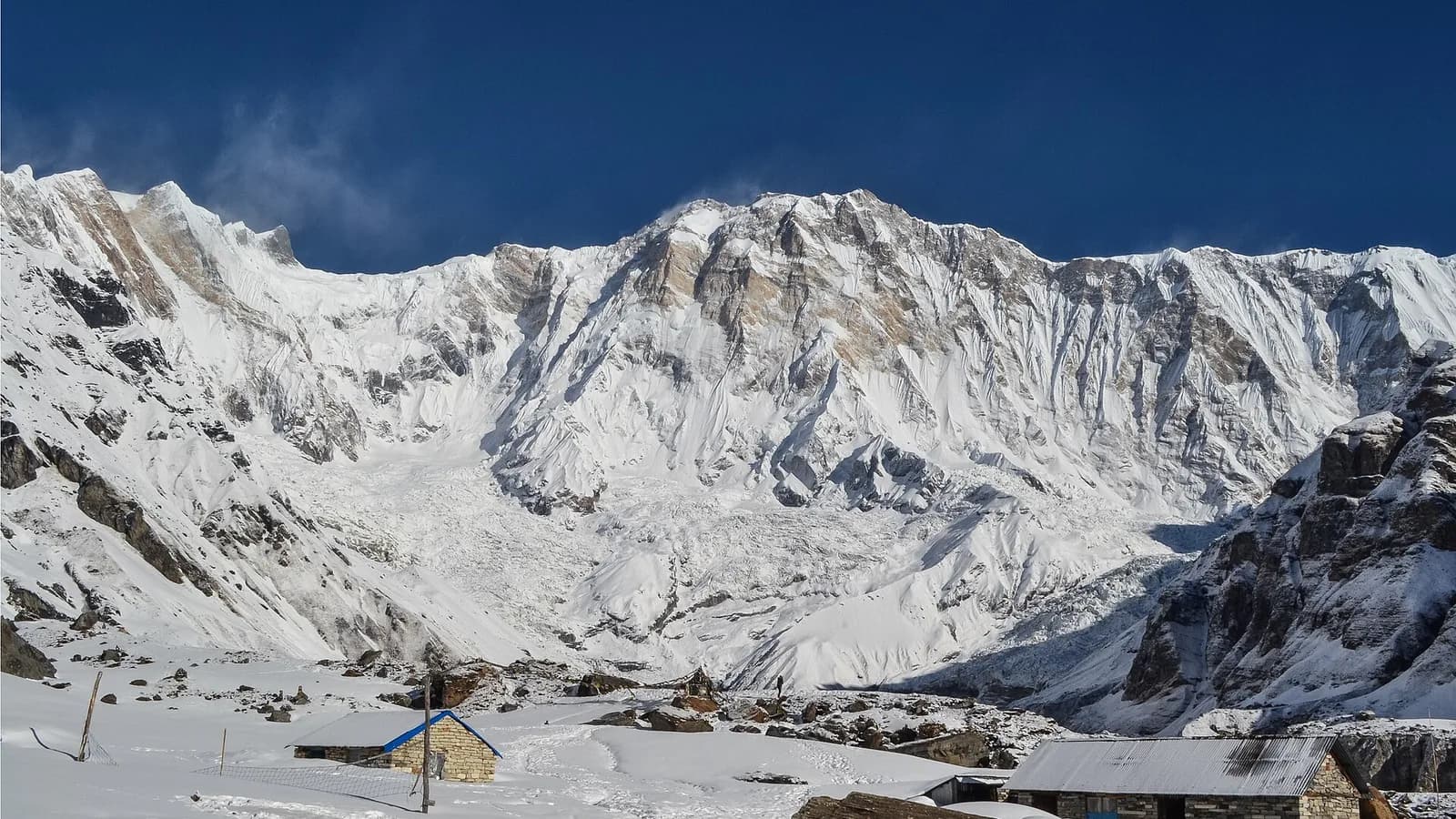
If you are planning a walk into the Annapurna region, the Annapurna permit cost is one of the first numbers you will want pinned down. The good news: it is one of the simpler and cheaper parts of the whole trip. There is really just one core permit for the area, its price is fixed by nationality, and the rules around it got noticeably simpler in 2023. This guide breaks down exactly what you pay, where you pay it, what changed with the old TIMS card, and how the permit fits into the wider budget for treks like the Annapurna Circuit or Annapurna Base Camp.
Key takeaways
- The main Annapurna permit is the ACAP (Annapurna Conservation Area Permit): NPR 3,000 for foreign nationals and NPR 1,000 for SAARC nationals (as of June 2026).
- Children under 10 are exempt from the ACAP fee, though you should still carry their documents.
- The TIMS card is no longer required specifically for the Annapurna region (dropped in 2023) — most checkpoints now only verify ACAP.
- Nepal introduced a mandatory licensed-guide rule for national parks and conservation areas in 2023, so plan around hiring a guide through a registered agency.
- The permit is a one-time entry fee, not a per-day charge, and is valid for the length of your trek.
- The ACAP fee is a small slice of total trek costs — guide wages, food, and lodging add up to far more.
What is the Annapurna permit, exactly?
The single permit that matters for almost everyone is the Annapurna Conservation Area Permit, usually shortened to ACAP. The Annapurna Conservation Area is Nepal's largest protected area, and crossing into it on foot — whether you are heading to Poon Hill, the Annapurna Base Camp sanctuary, or the full Annapurna Circuit — requires this entry permit.
ACAP is issued by the National Trust for Nature Conservation (NTNC), a non-government organisation that manages the conservation area. The fee you pay is not a generic government tax; it funds trail upkeep, conservation work, and community development inside the region. In other words, the rupees you hand over are meant to stay in the mountains you are walking through.
Unlike the restricted-area permits for places like Upper Mustang, ACAP is refreshingly straightforward: a flat entry fee, no daily multiplier, no minimum group size, and no special agency-only requirement for the permit itself.
Annapurna permit cost in 2026
Here is the core figure, broken down by who you are.
| Trekker category | ACAP fee (as of June 2026) | Approx. in USD | | --- | --- | --- | | Foreign nationals | NPR 3,000 | ~USD 23–25 | | SAARC nationals | NPR 1,000 | ~USD 8 | | Children under 10 | Free (exempt) | — |
A few details worth knowing about the price:
- SAARC stands for the South Asian Association for Regional Cooperation. Its member states are Afghanistan, Bangladesh, Bhutan, India, the Maldives, Nepal, Pakistan, and Sri Lanka. If you hold a passport from one of those countries, you pay the lower NPR 1,000 rate.
- The USD figures are approximate and shift with the exchange rate. The rupee amount is what is fixed; always budget in NPR and treat the dollar conversion as a ballpark.
- If you pay online through the official portal, expect a small payment-gateway surcharge of around 2.9% on top of the permit fee.
Compared to most other costs on a Himalayan trek, this is genuinely minor. The permit is closer to the price of a couple of nights in a teahouse than to a major expense.
One-time fee, not a daily charge
A common worry from first-time trekkers is whether the Annapurna permit, like a hotel, costs more the longer you stay. It does not. ACAP is a single entry fee valid for the duration of your trek inside the conservation area. Whether you are in the region for five days or three weeks, you pay once.
This is a real contrast with Nepal's restricted areas. Places like Upper Mustang charge per day and run into hundreds of dollars — see our Upper Mustang permit guide if that is on your radar. For mainstream Annapurna routes, though, ACAP is the only entry permit, and it is one and done.
What happened to the TIMS card?
If you read older blog posts or guidebooks, you will see endless references to the TIMS card (Trekkers' Information Management System) as a second mandatory permit for Annapurna. That guidance is now out of date.
In 2023, Nepal removed the TIMS requirement specifically for the Annapurna region to simplify the process, on the logic that ACAP already covers registration and conservation. In practice, checkpoints along the Annapurna trails now verify your ACAP permit and do not enforce TIMS.
A couple of clarifications so you do not get tripped up:
- TIMS still exists as a national system. It is administered by the Nepal Tourism Board and the Trekking Agencies' Association of Nepal, and for reference its fees are NPR 2,000 for foreign nationals and NPR 1,000 for SAARC nationals (as of June 2026). It simply is not the one being checked on standard Annapurna routes anymore.
- The old green "independent" TIMS card for solo trekkers has been discontinued nationwide. Where TIMS still applies on other routes, it is issued through registered agencies.
Bottom line for Annapurna: budget for ACAP, and treat any source that insists you must also buy TIMS for the Annapurna region as outdated.
The guide rule you should know about
The permit price is only half the planning picture. Alongside the TIMS change, Nepal introduced a broader policy in 2023 requiring trekkers in national parks and conservation areas to be accompanied by a licensed guide, arranged through a government-registered trekking agency rather than hired informally.
This is the part that has caused the most confusion, so a neutral summary:
- The rule is framed as a safety and accountability measure — making sure someone knows where each trekker is.
- It is enforced differently in different places and at different times, and reporting on how strictly it is applied to popular routes like the Annapurna Circuit varies. Some operators describe it as effectively mandatory; some independent trekkers report still walking the main trails without a guide.
- Because the situation can change, the safest approach is to check the current rule with a registered agency or the Nepal Tourism Board before you travel, and budget as if a guide is needed.
If you do hire help, our guide on tipping trekking guides and porters is worth a read, and so is our piece on choosing a trekking agency in Nepal.
Where and how to get the permit
You have a few options, and the right one depends on whether you are trekking independently or through an agency.
In Kathmandu
The NTNC counter inside the Nepal Tourism Board complex at Bhrikutimandap (Pradarshani Marg), near Thamel, issues ACAP permits. Counters generally run Sunday to Friday, roughly 10:00 to 17:00, and are closed on Saturdays and public holidays.
In Pokhara
There is an NTNC office in the Lakeside area, near the tourist police, which is the most convenient pick-up point if you are starting your trek from Pokhara. Same general working days and hours apply.
Through a registered agency
If you book a package trek, the agency almost always arranges the ACAP permit for you as part of the cost, so you may never visit a permit counter yourself. Confirm in writing that the permit fee is included in your quote.
What to bring
To get the permit yourself, carry:
- Your original passport (valid at least six months) plus a photocopy
- Two passport-sized photos
- Your Nepal tourist visa
- Nepali rupees in cash for the fee (counters work in NPR; do not rely on cards)
If you are still sorting out entry, our Nepal visa on arrival guide covers that step.
Buying it at the trailhead vs. in advance
You can buy ACAP at certain entry checkposts to the conservation area, but the strong recommendation is to sort it out in Kathmandu or Pokhara first. Two reasons:
- Penalty pricing. Trekkers caught inside the conservation area without a valid permit can be charged double the standard fee at a checkpost, and may be turned back. Buying ahead avoids that risk entirely.
- Reliability. Counter hours, holidays, and occasional system issues at trailheads can cause delays. Doing it in town, a day before you start, is simpler.
The few minutes it takes to get the permit in Pokhara or Kathmandu is cheap insurance against a bad morning at a checkpost.
How the permit fits the total trek budget
It helps to see the permit in context. For a typical Annapurna trek, the ACAP fee is a rounding error next to guides, lodging, and food. Rough, illustrative ranges (as of June 2026 — treat as estimates, not quotes):
| Cost item | Typical range | Notes | | --- | --- | --- | | ACAP permit | NPR 3,000 (foreigners), one-time | The subject of this guide | | Licensed guide | ~USD 30–35 per day | Often includes the guide's food, lodging, insurance | | Porter | ~USD 20–25 per day | Optional; carries your main pack | | Teahouse food & lodging | Varies by altitude and season | Higher prices the further up you go |
For full, route-specific numbers, see our dedicated breakdowns: Annapurna Base Camp trek cost and the wider Nepal trip cost guide. The takeaway is simple — the permit is one of the smallest line items, so it is rarely worth stressing over the fee itself. What matters more is buying it correctly and on time.
A note on prices and rules changing
Permit fees and trekking rules in Nepal are reviewed periodically, and figures can be revised between seasons. Every price in this guide is stamped as of June 2026 and traced to the sources below. Before you travel, it is wise to reconfirm the current ACAP fee and guide policy with the Nepal Tourism Board, the NTNC, or a registered agency, especially if you are reading this well after the date above.
Sources
- Nepal Tourism Board — TIMS Card
- Nepal Hiking Team — Annapurna Trekking Permits 2026
- Magical Nepal — Annapurna Circuit Trek Permits: Guide, Costs and Rules
- Best Heritage Tour — Is Solo Trekking Banned? Mandatory Guide Rule & 2026 Permits
- Namaste Nepal Trekking — Hire Guide and Porter in Nepal: 2026 Cost Guide
Frequently asked questions
- How much is the Annapurna permit for foreigners in 2026?
- The ACAP entry permit is NPR 3,000 per person for foreign nationals (as of June 2026), which is roughly USD 23 to 25 depending on the exchange rate.
- Is there a cheaper Annapurna permit for SAARC nationals?
- Yes. Citizens of SAARC countries pay NPR 1,000 for the same ACAP permit, while everyone else pays NPR 3,000 (as of June 2026).
- Do I still need a TIMS card for the Annapurna region?
- No. Nepal dropped the TIMS requirement for Annapurna trekking in 2023, so checkpoints in the area now verify only your ACAP permit.
- Do children need an Annapurna permit?
- Children under 10 years of age are exempt from the ACAP fee, although you should still carry their passport and a photo at checkpoints.
- Where can I buy the ACAP permit?
- You can get it at the NTNC counters inside the Nepal Tourism Board in Kathmandu and at the Lakeside office in Pokhara, or have a registered agency arrange it.
- Is a guide required to trek in Annapurna?
- Nepal introduced a mandatory licensed-guide rule for national parks and conservation areas in 2023, so most trekkers now hire a guide through a registered agency.
- What happens if I trek without an ACAP permit?
- Checkpoints can charge double the standard fee on the spot, and you may be turned back, so it is far cheaper to buy the permit before you start.
- Is the Annapurna permit a one-time fee?
- Yes, the ACAP permit is a single entry fee valid for the duration of your trek and is not charged per day like restricted-area permits.
Related posts
ACAP Permit 2026: Annapurna Trekking Fees & Rules
The ACAP permit is mandatory for every Annapurna trek. Here are the fees, where to buy it, what to bring, and the checkpoint rules trekkers miss.
Read postAnnapurna Base Camp Trek: A Complete 2026 Guide
Plan an Annapurna Base Camp trek with up-to-date facts on permits, the route, altitude, seasons, and safety for first-time Himalayan trekkers.
Read postAnnapurna Base Camp Trek Cost: The Honest 2026 Breakdown
What the Annapurna Base Camp trek cost really comes to in 2026 — permits, guide and porter fees, daily teahouse spend, and the line items quotes skip.
Read post